Why Do You Need to Let Meat Rest After Cooking?
The Science of Juiciness
The puddle on your cutting board is dinner escaping. Here’s what actually happens inside a steak in the minutes after it leaves the heat — and why the most-repeated explanation for resting is only half right.

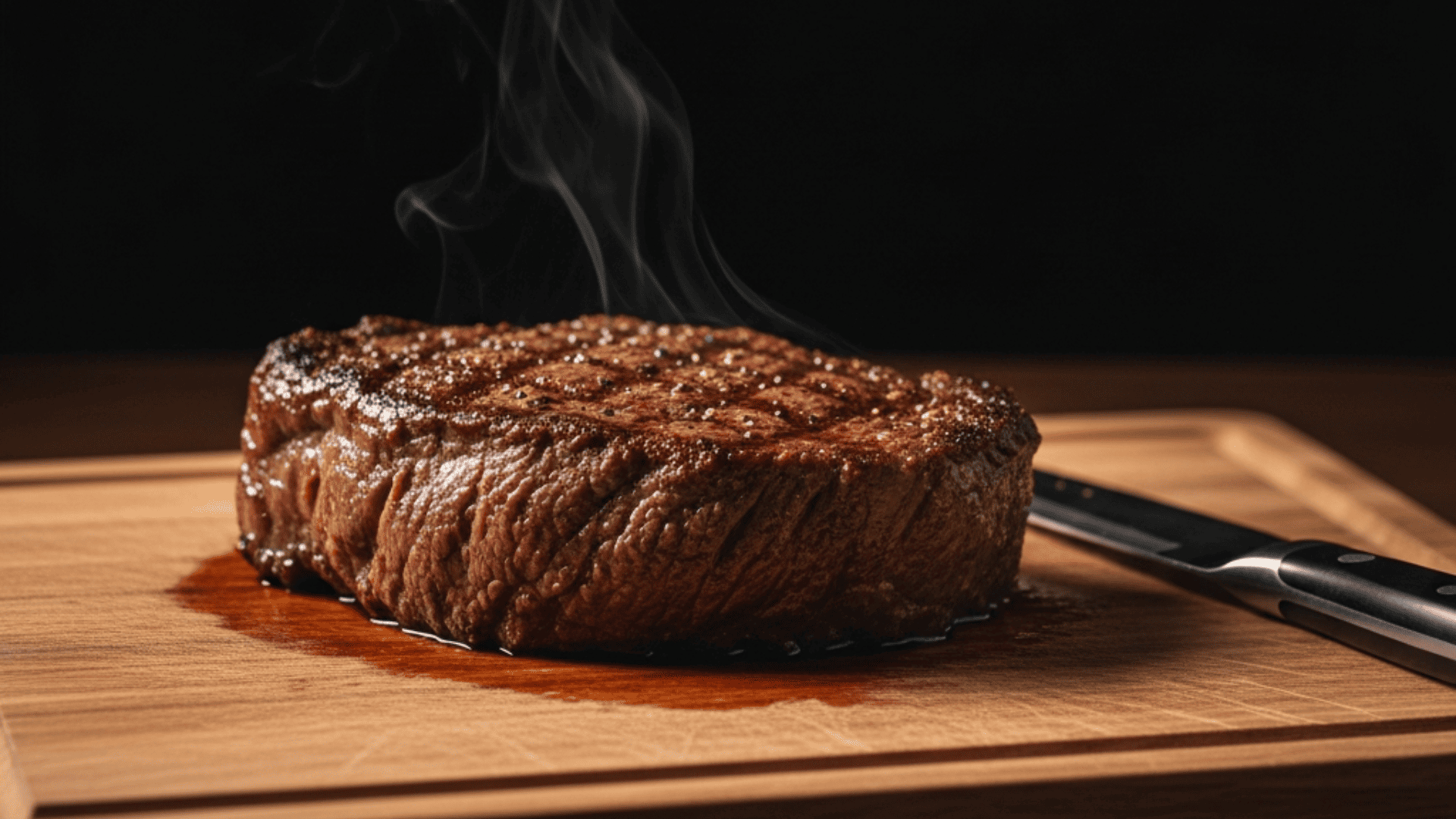
That glistening surface isn’t a flaw. It’s the meat doing exactly what it’s supposed to before you cut.
Everyone has done it at least once. The steak comes off the heat smelling like a steakhouse, you’re hungry, the knife is right there — so you cut. And a small flood spreads across the board. Pink, glossy, gone. The meat you eat a minute later is good. It just isn’t as good as it was about to be.
“Let it rest” is the most repeated instruction in cooking, and one of the least explained. The usual line — that the juices “redistribute” — gets passed around so casually that almost nobody asks what it actually means, or whether it’s even true.
It turns out the real reason is more interesting than the slogan. There’s physics in that puddle — heat, pressure, and a protein most people mistake for blood — and once you understand it, you’ll never rush a roast again. There’s also an honest counterargument worth knowing. We’ll get to that too.
What’s Actually Inside a Steak — And Why It’s Mostly Water
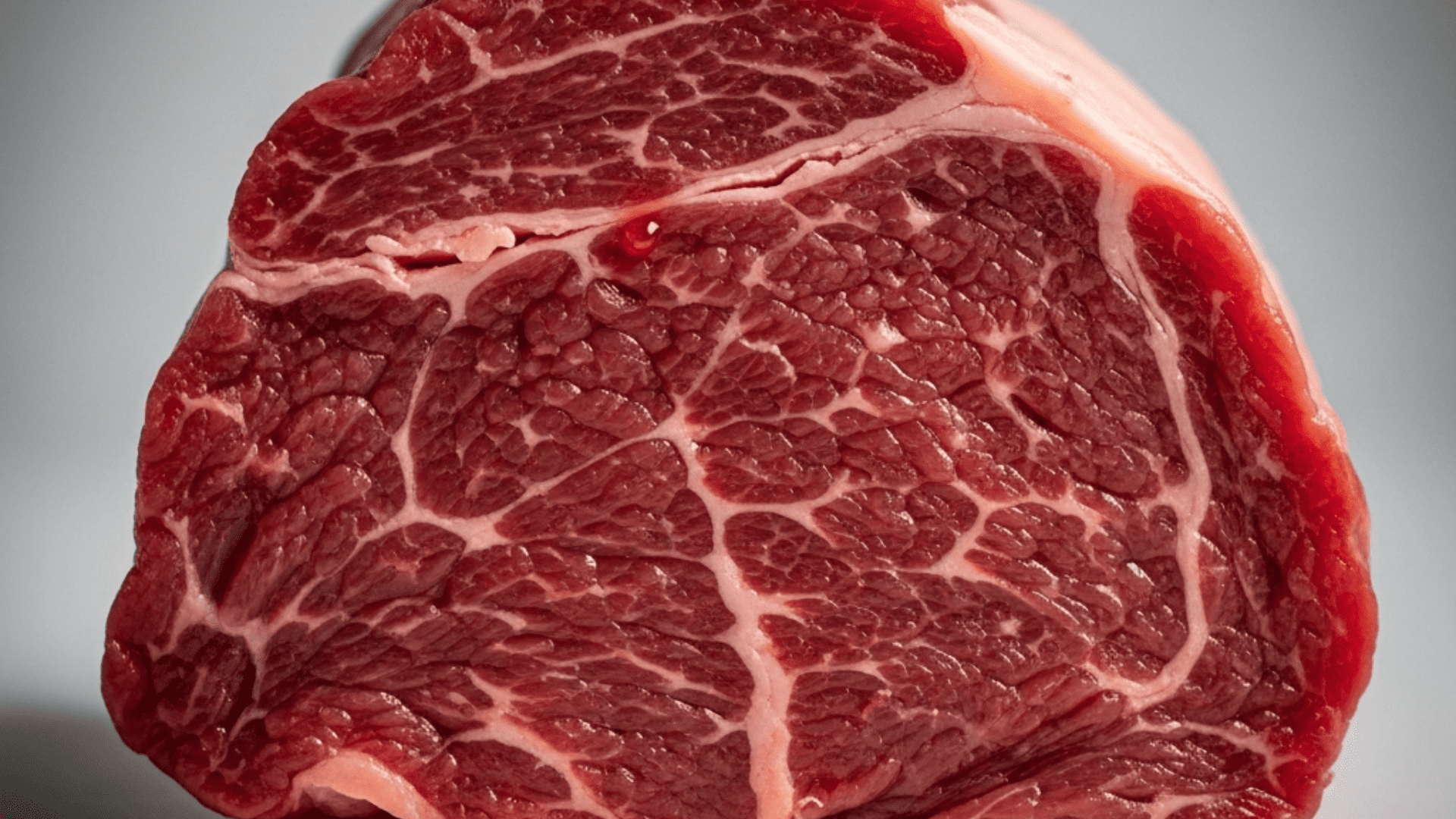
The grain you see is bundles of muscle fiber — and each one is a tiny, water-filled tube.
A raw steak is roughly three-quarters water. Not pooled like a glass of it — held inside long, thin muscle fibers bundled together like a packed handful of drinking straws. That trapped water, carrying dissolved proteins, salts, and flavor, is what we taste as “juiciness.” Lose it, and you’re chewing fibers.
First, the most useful myth to retire: the red liquid is not blood. Almost all blood leaves at slaughter. What pools on your plate is water mixed with myoglobin — a protein whose job is to ferry oxygen through muscle, and whose iron turns red on contact with air, the same trick that makes blood red. More myoglobin means darker meat, which is why beef runs deep red and chicken breast runs pale.
Myoglobin denatures — changes shape and loses its red — at around 140°F (60°C). That single fact explains the entire rare-to-well-done color ladder: bright red at rare, pink at medium, grey-brown when fully cooked. The “smoke ring” on barbecue is the same protein, chemically frozen pink by compounds in the smoke before heat can brown it. The redness of a rare steak is a pigment doing its job, not undercooked gore.
Meat-science consensus on myoglobin denaturation; see also Harold McGee, On Food and Cooking.
Here’s the part that sets up everything else. When muscle fibers heat up, the proteins inside them contract and stiffen — and as they tighten, they squeeze. The sponge gets wrung. Water that was comfortably held now gets pushed, pressurized, and shoved toward the cooler middle of the cut. A cooked steak, fresh off the heat, is a sponge under tension, brimming and waiting for an exit. Cutting is the exit.
The Real Reason Resting Works — And Why “Redistribution” Is Only Half True
Two things happen the moment meat leaves the heat, and they happen together.
The first is carryover cooking. The hot outer layers keep dumping heat into the cooler center, so the internal temperature climbs even though the meat is off the flame — by a few degrees in a steak, by ten to fifteen in a big roast. This is why the pros pull meat before it hits target. Rest finishes the cooking for free, gently, without the over-browned grey band that comes from leaving it on the heat too long.
The second is the part everyone gets slightly wrong. As the meat cools from the surface in, the violent squeezing of the fibers eases. Pressure drops. The juices, which thicken slightly as they cool, become less inclined to run. The fibers relax enough to hold onto more of what they were forcibly expelling. Slice now, and far less escapes.
The popular story says resting lets juices “flow back” to where they started. But when researchers track moisture in cooled muscle, they don’t find a tidy reverse migration. What they find is subtler: relaxing pressure and rising viscosity mean the liquid simply stops trying to leave, and the fibers recover some of their grip on it. The cook’s word for this is “redistribution.” The more accurate word is “de-pressurization.” Same delicious outcome — less liquid on the board — but a different, and frankly cooler, mechanism.
Carryover cooking and resting fundamentals: University of Wyoming Extension.
Why this matters for how you cook: if you overcook the meat first, no amount of resting saves it. Past a certain temperature the fibers contract so hard and lose so much water that there’s nothing left to reabsorb. Resting is the final step of cooking — not a repair tool for a steak you already pushed to grey.
Pull meat from the heat 5°F below your target for a steak, and up to 10–15°F below for a large roast. Carryover does the rest. A thermometer is worth more here than any recipe’s clock — every cut, oven, and kitchen carries over differently.
What Happens When You Actually Test It — Six Steaks and a Stopwatch
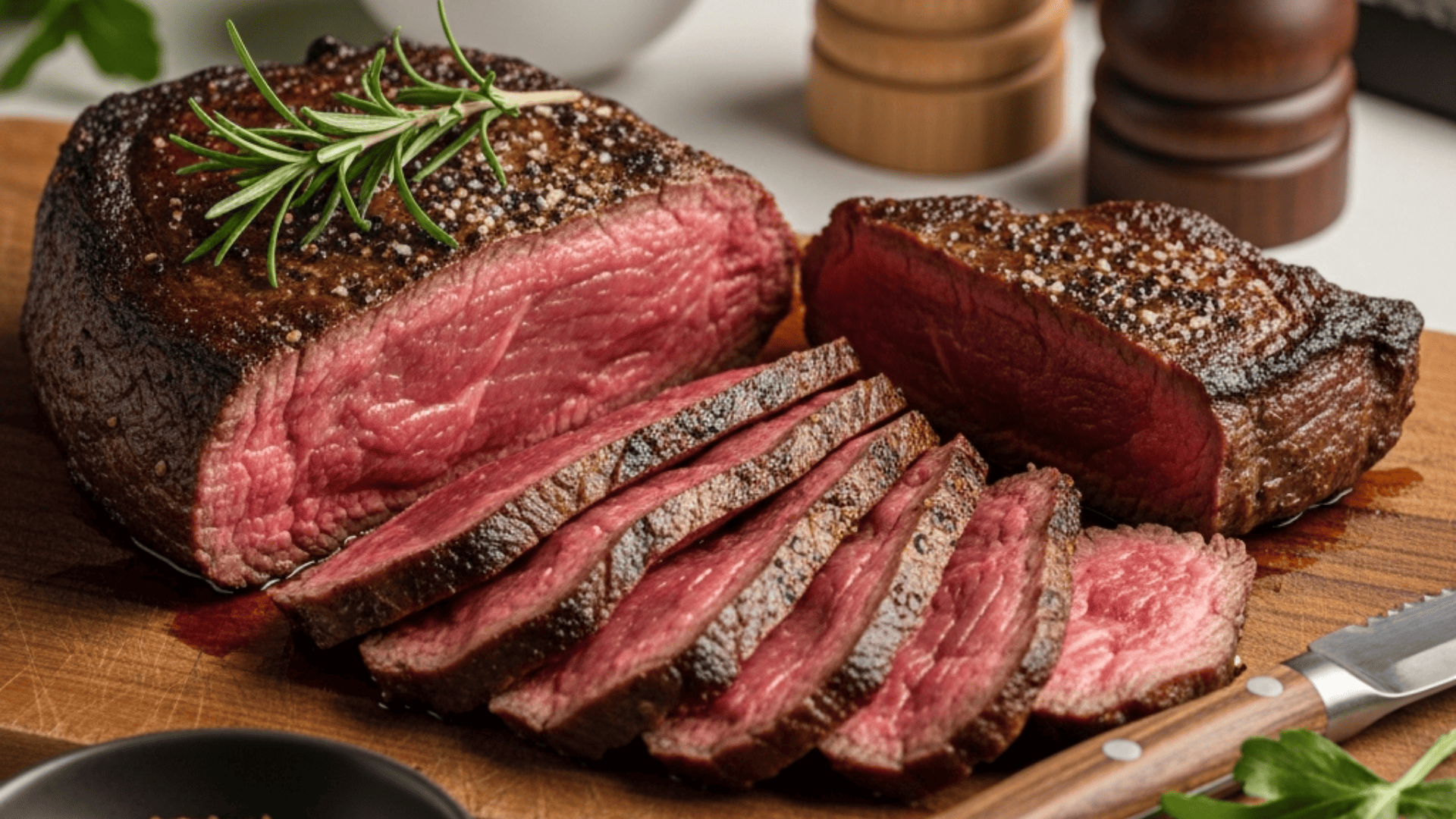
A properly rested steak gives up a fraction of the liquid an impatient one does.
The cleanest test of the resting theory is also the simplest. Cook several identical steaks the same way, then cut them open at different times — one immediately, the next a couple of minutes later, and so on — and measure what leaks out. Food writer J. Kenji López-Alt did exactly this for Serious Eats’ Food Lab: six steaks of matched thickness, all cooked to the same internal temperature, sliced at staggered intervals.
The result you can see with your own eyes. The steak cut instantly bleeds a wide pool. Each one given more time releases visibly less, until a steak rested around ten minutes barely weeps at all. His rule of thumb has stuck around because it’s easy to remember: rest meat for roughly one-third of its total cooking time.
That second number kills a related myth. The old idea that searing “seals in the juices” was tested by weighing seared and unseared steaks: the seared steak actually lost more weight. A crust is delicious and worth chasing — but it’s not waterproof. As food scientist Harold McGee put it, the continual sizzle of meat in the pan is the sound of moisture escaping. Resting, not searing, is what keeps juice inside.
How Long to Rest — And the Foil-Tent Trap
Bigger and thicker means longer. The center of a roast holds more pressure and more heat than a thin steak, so it needs more time to settle. A few rules of thumb circulate among cooks — five minutes per inch of thickness, ten minutes per pound, or simply a third of the cooking time — and they roughly agree.
The foil-tent trap. The instinct is to wrap resting meat tightly in foil to keep it hot. Don’t. A tight wrap traps steam against the surface and turns that hard-won crust soft and soggy — undoing the best part of a good sear. If you tent at all, lay the foil on loosely, like a little roof, so heat is slowed but steam can still leave.
Where you rest matters less than people fear. A warm spot on the counter is fine for most cuts. The same instinct toward patience and restraint runs through a lot of good cooking — it’s the quiet discipline behind the minimalist food traditions that treat cooking as practice rather than rush. The meat is finishing itself. Your only job is to leave it alone.
When Resting Barely Matters — The Case Against the Rule
Good food writing tells you where the experts disagree, and they do here. A vocal camp — led by the team at AmazingRibs, including physicist Greg Blonder — argues that resting is overrated, and they make two fair points.
One: you don’t actually eat a steak all at once. The dramatic puddle appears when you slice the whole thing open immediately. But most people cut one bite, chew, sip, cut another. By the time you reach the far end, that meat has been resting on your plate the whole meal. The loss is real but smaller than the cutting-board demo suggests.
Two: rested meat is cooler meat. Some of the pleasure of a steak is heat — the fat soft, the surface hot. Rest too long and you trade a little juiciness for a noticeably colder bite. For a thin steak you want screaming hot, served fast, the trade isn’t always worth it.
Resting matters most for large roasts you carve all at once in front of guests, and least for a thin steak you eat hot off the pan, one slice at a time. The bigger the cut and the more public the carving, the more a rest earns its keep.
None of this means resting is a myth. It means it’s a tool with a sliding scale of payoff — biggest for the Sunday roast, smallest for the weeknight steak. Which is a more useful thing to know than a blanket commandment you follow without understanding why.
Carryover Cooking — Visualized
Roughly how much a cut’s internal temperature keeps climbing after it leaves the heat. The bigger the cut, the more it carries over — and the earlier you should pull it.
The takeaway: the heavier the cut, the further below target you pull it. A thermometer beats a timer every time.
What the Evidence Actually Supports
Strip away the folklore and the backlash, and four things hold up.
5 Resting Claims the Evidence Quietly Corrects
The kitchen passes these down as gospel. The science is more careful.
Resting Meat FAQ
So why do you need to let meat rest? Because the few minutes after the heat are still part of the cooking. The center keeps climbing to temperature, the pressure that was squeezing the water out finally lets go, and the meat quietly reclaims the juiciness it was about to spill. Cut too soon and you interrupt a process that was working in your favor.
The honest version isn’t a commandment, it’s a dial — turn it up for the roast you carve in front of guests, down for the thin steak you eat hot off the pan. But the instinct underneath it is sound, and a little old-fashioned. The best thing you can do for a piece of meat you’ve already cooked well is the hardest: nothing at all, for a few minutes, while it finishes becoming itself.