The Minimalist Food
Philosophy of Japanese Samurai
Rice. Miso. Pickled vegetables. A cup of tea. What the samurai ate — and why their radical simplicity around food is one of the most quietly revolutionary ideas in culinary history.
I
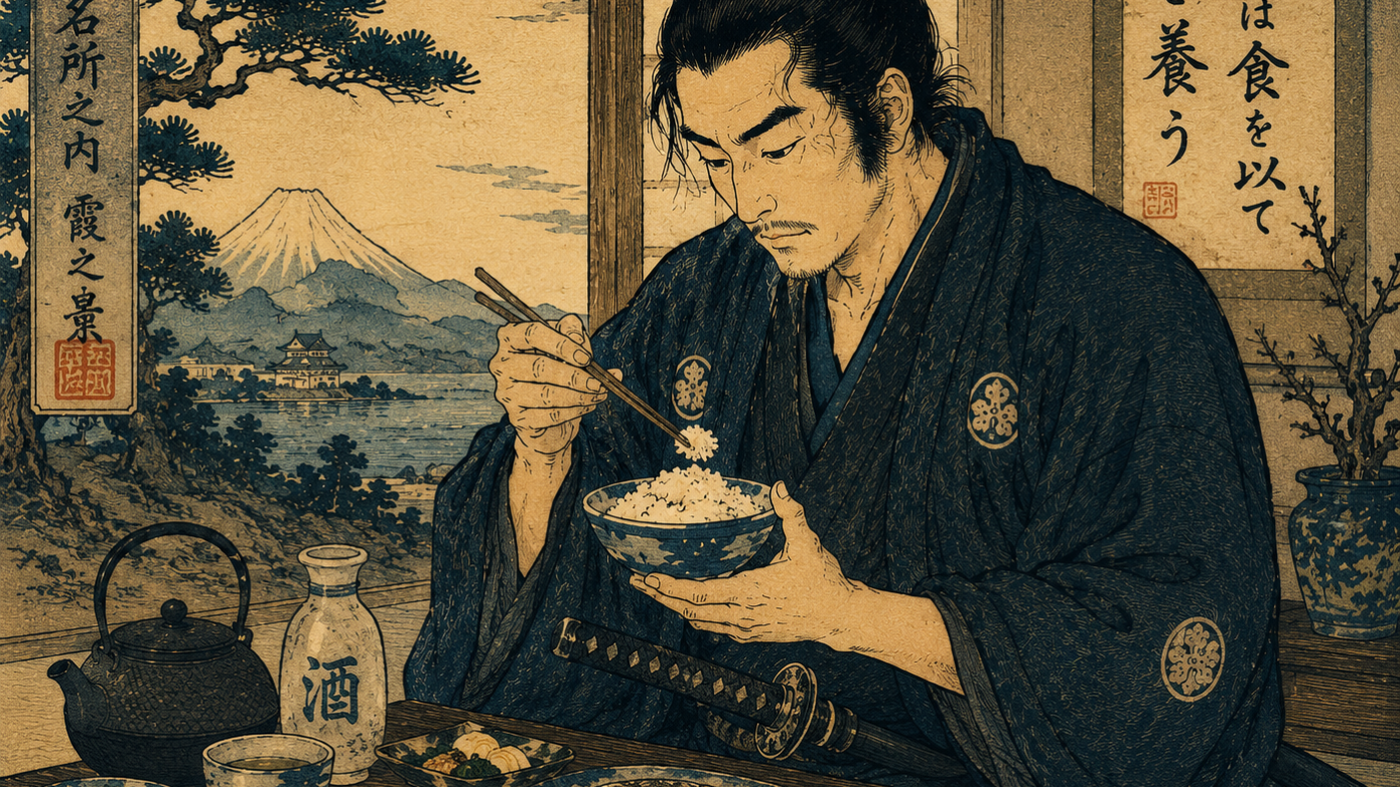
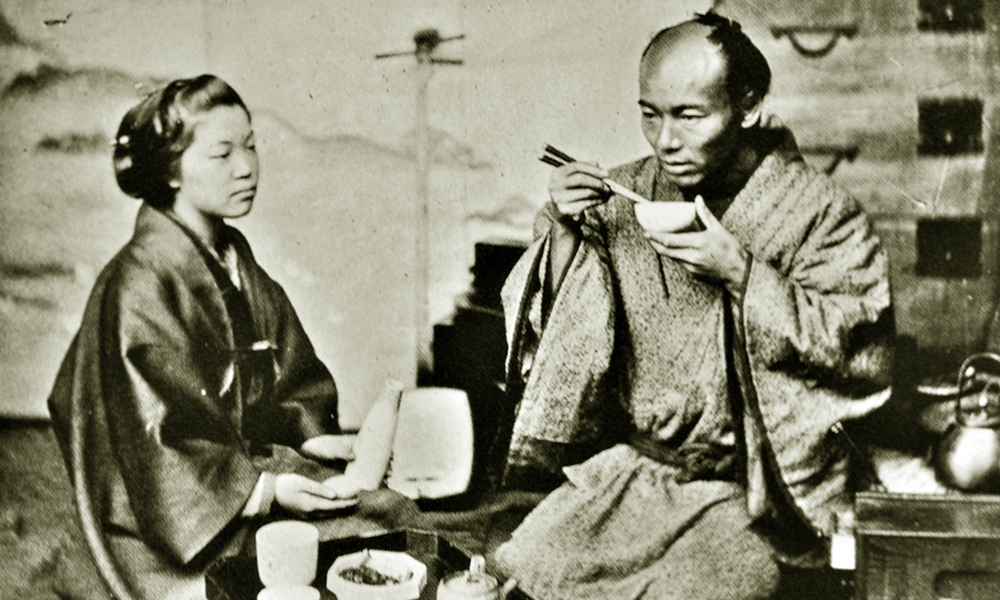
magine a man who trains for hours before sunrise, carries a sword, and holds a philosophy that everything temporary is already enough. Then imagine what he eats for breakfast. Not a feast. Not a performance. A bowl of rice. Some pickled vegetables. A cup of miso that steams quietly in the dark.
This is what samurai ate. And the more you look at it, the more it starts to feel less like history — and more like the most radical food philosophy anyone has ever lived.
We live in an era of extreme food. Towering burgers. 48-ingredient smoothie bowls. Desserts engineered to be louder, more colorful, more overwhelming. And yet something in us keeps reaching for the opposite — for a plain bowl of rice eaten quietly, for a simple broth at the end of a long day, for a meal that asks nothing of you except that you sit down and be present with it.
The samurai understood something about food that most of us are still figuring out. Let’s take it apart.
What We’re Unpacking
What Japanese Samurai Actually Ate — And Why It Surprises Everyone
The popular imagination of Japanese samurai food tends toward dramatic extremes — lavish banquets before battle, or brutal ascetic starvation. The reality is far more interesting, and far more beautiful, than either. According to Japan Times food historians, the core Japanese samurai diet was startlingly consistent across centuries.
The foundation was brown rice — specifically genmai, unpolished rice that retained its bran and germ. Around this anchor: miso soup, pickled vegetables (tsukemono), dried fish or tofu for protein, and seasonal vegetables simply prepared. Serious Eats traces this same structure directly to the traditional Japanese breakfast still eaten across Japan today.
Three meals a day, structured identically. No excess. No spectacle. The meal was not the event — life was the event, and the meal was how you sustained yourself for it.
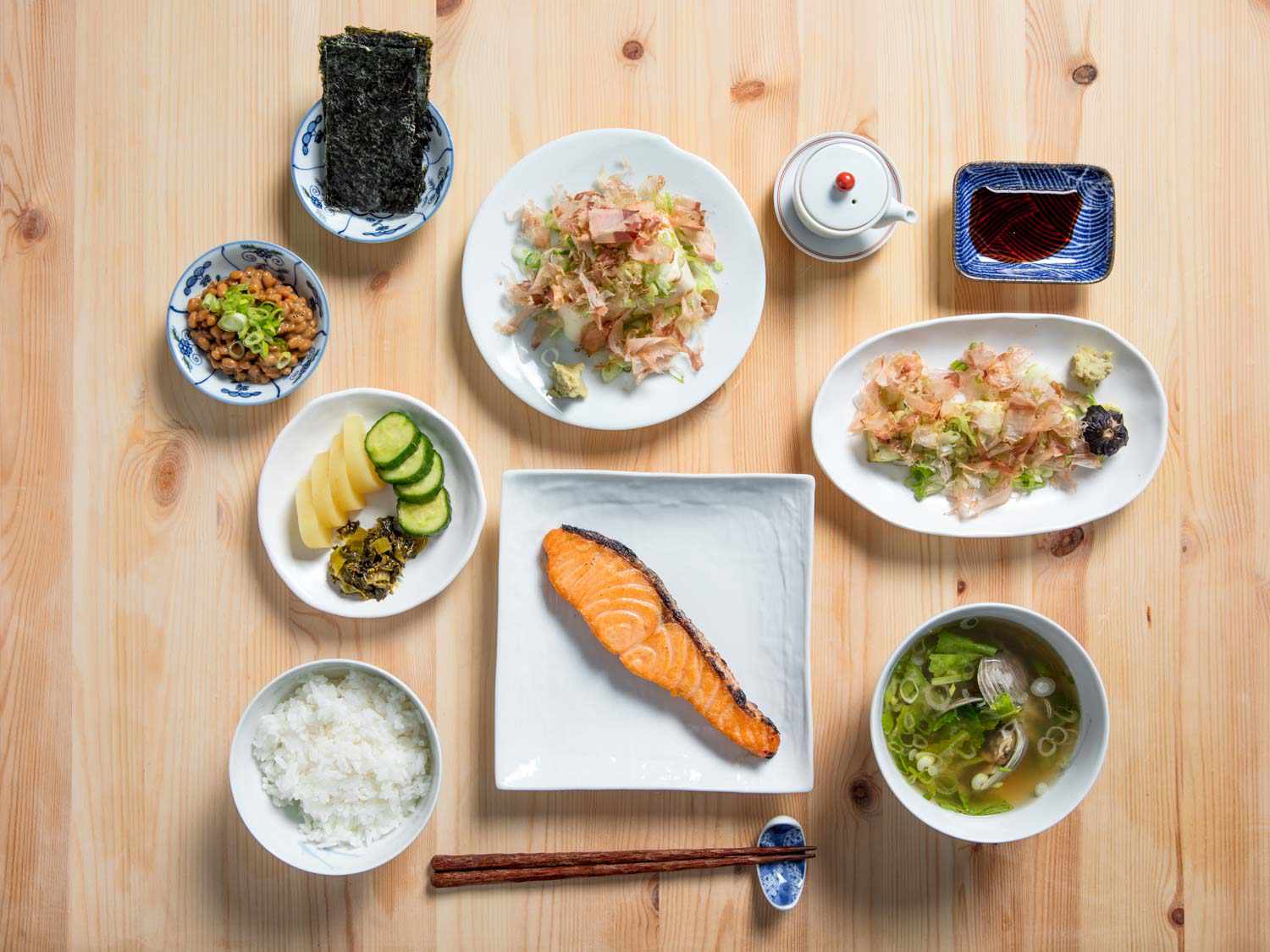
What’s striking is the intentionality. Senior Japanese samurai were not poor. By the Edo period (1603–1868), many lived comfortably and could afford richness. They chose simplicity deliberately — as a practice — the same way they practiced their swordsmanship, their calligraphy, their meditation.
There is a word in Japanese — hara hachi bu — that means “eat until you are 80% full.” According to research published by the National Institutes of Health, this practice in Okinawa correlates directly with the region’s extraordinary rates of longevity. The Japanese samurai believed that a full stomach made the mind slow. They weren’t eating to feel satisfied. They were eating to stay ready.

Ichiju Sansai — One Soup, Three Sides
If there’s a single idea from Japanese samurai food culture that deserves to travel into the 21st century, it’s ichiju sansai. One soup. Three sides. Rice at the center. Everything else in service of that center. Nippon.com has an excellent deep dive into how this meal structure evolved from warrior culture into everyday Japanese life.
The structure is about intentional proportion. Every element has purpose. Nothing is there for spectacle. The soup (almost always miso) provides warmth and depth. The three sides provide color, texture, and nutritional balance — typically something fermented, something protein-based, something seasonal and fresh.
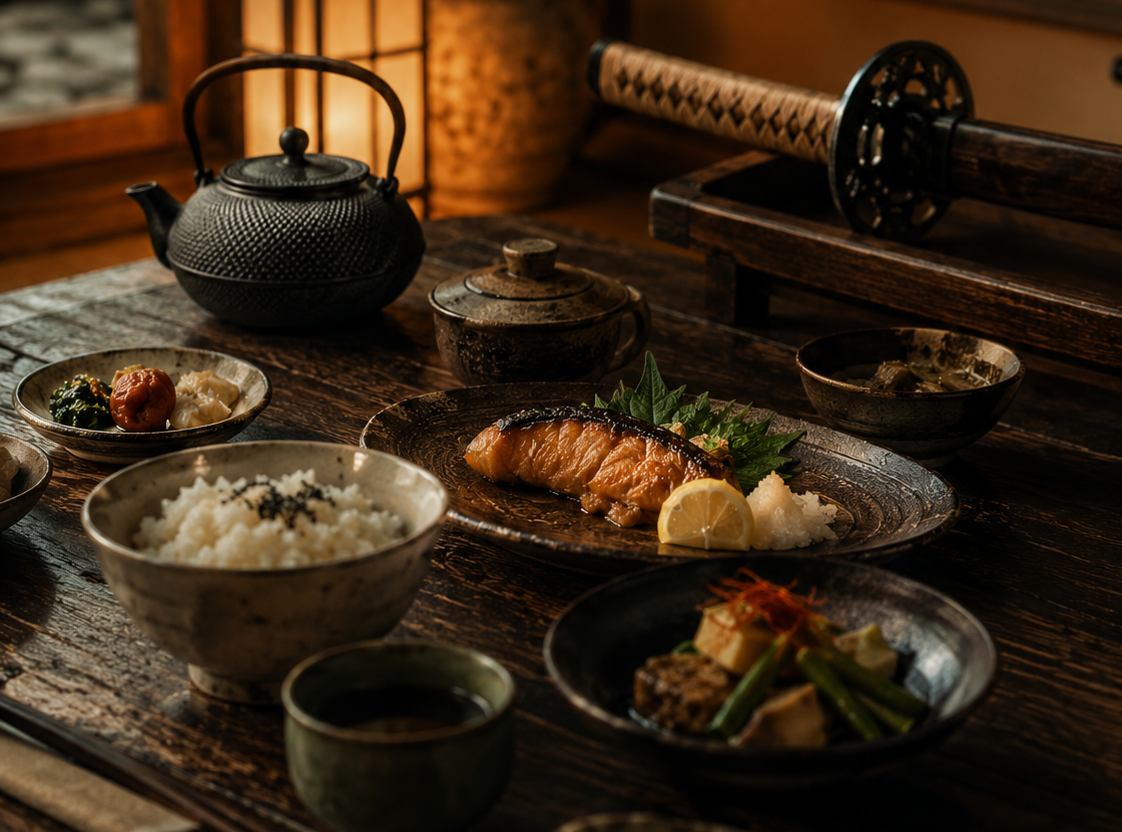
What strikes modern food thinkers is that ichiju sansai solves — without trying to — almost every problem that modern nutrition science has spent decades articulating. Fermented foods. Diverse fiber sources. Moderate protein. Seasonal produce. Mindful portion control. Research from Harvard’s School of Public Health consistently identifies this traditional Asian dietary pattern as among the healthiest documented.
The meal format is still the default structure of a traditional Japanese breakfast today — which is one of the reasons Japan consistently ranks among the world’s longest-living populations. Ichiju sansai didn’t just feed warriors. It built a culture of longevity.
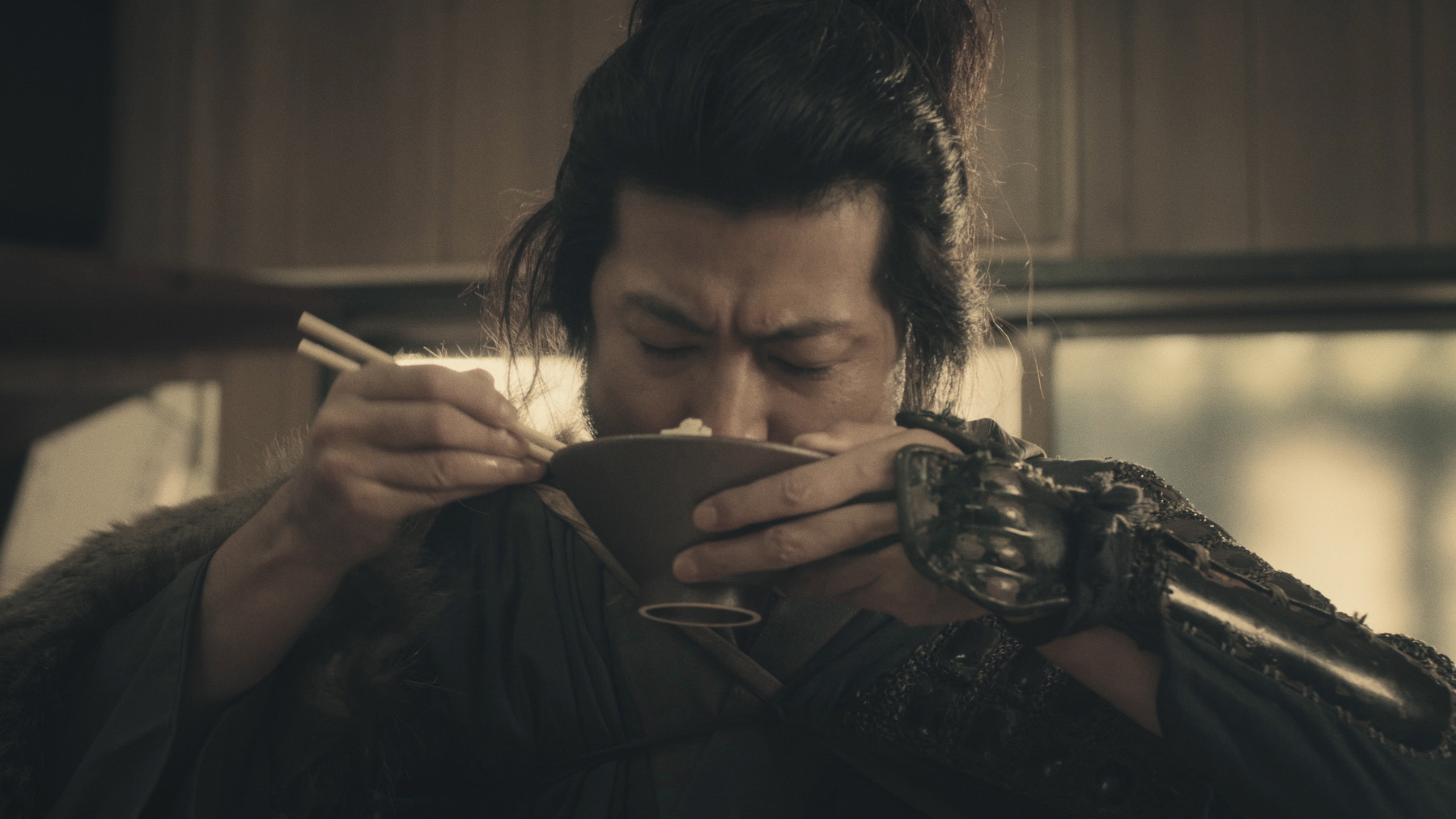
Eating Less — And Feeling More
There is a modern idea that more flavor, more variety, more stimulation equals a better eating experience. The Japanese samurai philosophy suggests the opposite — and neuroscience is slowly, quietly proving them right.
Research in food psychology shows that when meals are highly varied and intensely flavored, we keep eating past fullness because each new flavor resets our appetite. Simple, consistent food satisfies and stops. The samurai’s plain rice wasn’t deprivation — it was precision.
Modern psychology has documented the cognitive cost of choice. Eating the same simple, seasonal meal removes hundreds of daily micro-decisions — what to eat, how much, in what combination — freeing mental energy for everything else. The samurai’s daily ritual was a form of cognitive hygiene.
The samurai’s heavy reliance on miso, tsukemono, and natto aligns precisely with what modern microbiome research identifies as the foundation of mental clarity and emotional regulation. They didn’t have the language for the gut-brain axis. But they had miso soup, every morning.
Hara hachi bu keeps the body in mild alertness. Modern intermittent fasting research confirms: moderate caloric restriction activates autophagy, sharpens cognition, and extends cellular health. They didn’t have the science. They had the discipline.
The samurai didn’t eat simply because they lacked options. They ate simply because they understood something visceral: too much food, like too much of anything, creates noise. And noise is the enemy of presence.
The Tea Ceremony — Where Eating Becomes Meditation
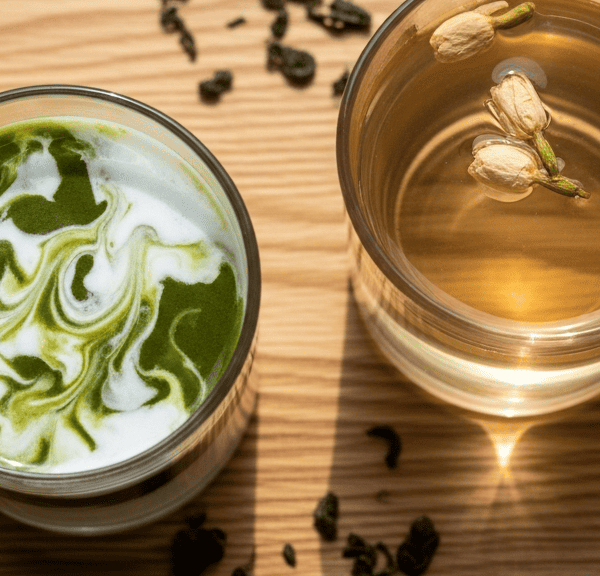
You cannot talk about samurai food culture without talking about tea. Specifically, the chado — the Way of Tea — which the great tea master Sen no Rikyu developed in the 16th century in direct conversation with samurai culture.
The tea ceremony is not, at its heart, about tea. It’s about the four principles Rikyu defined: wa (harmony), kei (respect), sei (purity), jaku (tranquility). The tea is the vehicle through which you practice all four simultaneously.
Many of the most powerful samurai of the Sengoku and Edo periods were devoted tea ceremony practitioners — not as relaxation, but as discipline. Preparing tea with full attention was considered as rigorous as swordsmanship. Both required the same quality of presence.
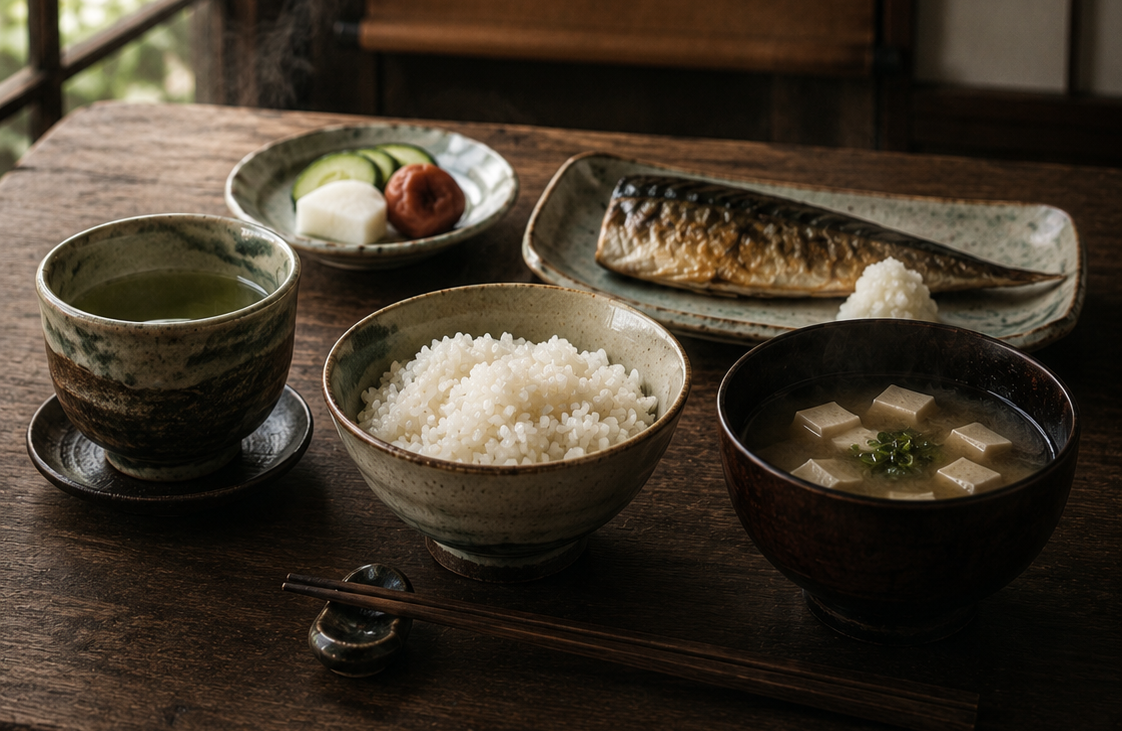
What’s remarkable is that these four principles describe something people are searching for on Pinterest right now — without having words for it. The thousands of “slow morning routine” boards, the “mindful coffee ritual” videos, the “cozy Japanese aesthetic” saves — they are, without knowing it, reaching toward chado. Toward the idea that how you consume something is as important as what you consume.
Why Ancient Japanese Samurai Food Is All Over Pinterest Right Now
Search “Japanese minimalist meal” or “traditional Japanese breakfast” on Pinterest and you’ll find millions of saves. Ceramic bowls with brown rice. Miso in earthenware cups. Pickled radish in a small dish, barely enough for three bites. These images are saved not by people interested in history — but by people who feel, looking at them, that this is how they want their life to feel.
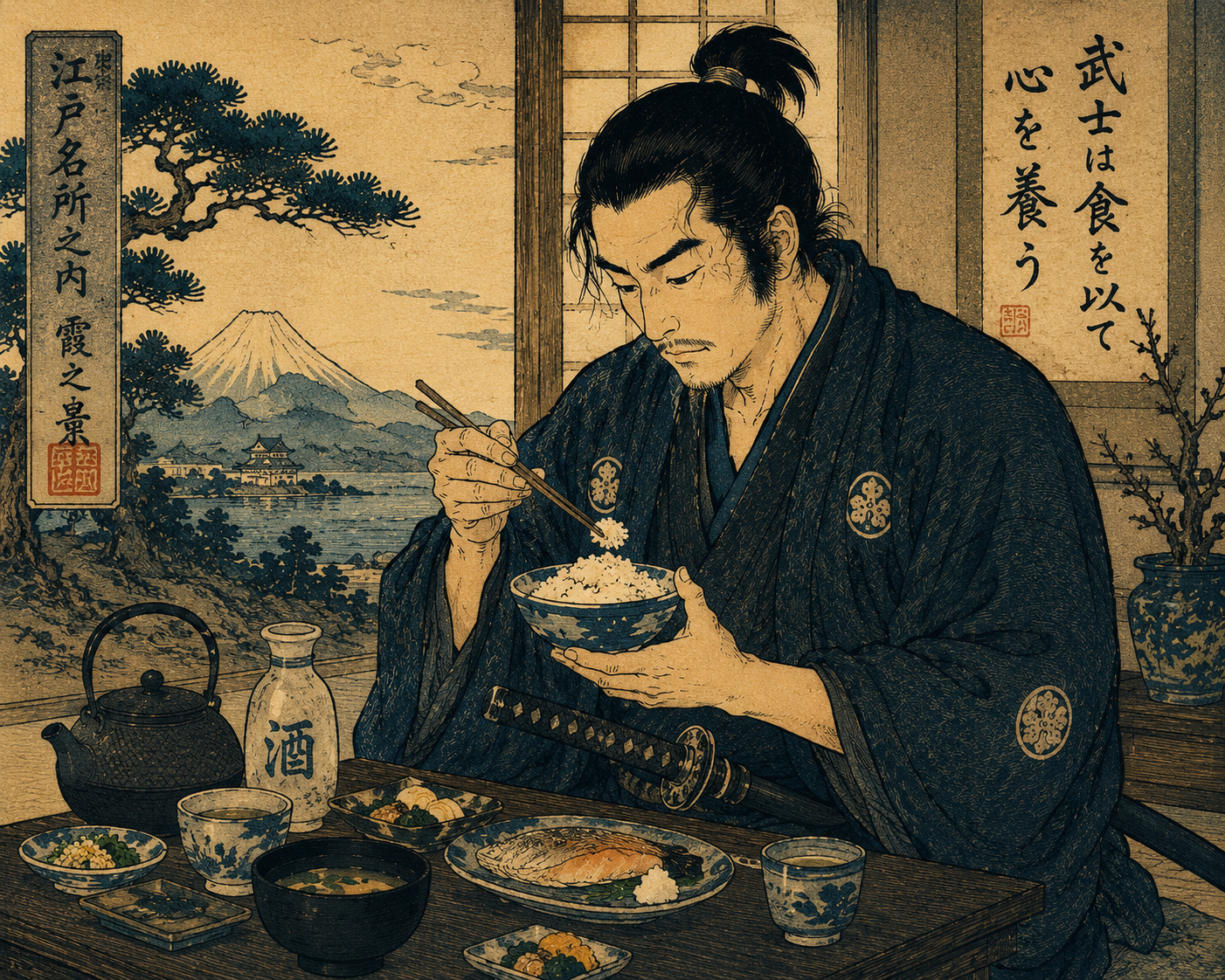
The samurai food aesthetic resonates in 2026 because it offers something the modern food landscape rarely does: visual rest. Everything about the traditional Japanese meal is quiet. The colors are earthy and muted. The portions are modest. The vessels are handmade and imperfect. Nothing is asking for your attention. It’s all simply there. The Guardian explored this trend in depth — the growing movement toward what they call “restorative eating.”
In a world of maximalist food content — rainbow bagels, protest-sized burritos, 72-layer cakes — the minimalist Japanese meal is genuinely countercultural. And counterculture, when it’s also beautiful, always finds its audience.
🍵 Mindful eating
⚔️ Samurai aesthetic
🏯 Edo period food
🎋 Japanese minimalism
🌾 Rice bowl culture
How to Eat Like a Japanese Samurai Tonight
You don’t need a feudal castle or a sword. You need a bowl, some miso, and the willingness to treat a simple meal as something worth paying attention to.

Things People Actually Want to Know
There is something quietly humbling about sitting with a bowl of plain rice and miso and realizing that this — exactly this — was what warriors ate before going into battle. Not to fuel performance. Not to optimize macros. But because simplicity, practiced with intention, is its own kind of strength.
The samurai food philosophy asks nothing dramatic of you. No elimination diets. No expensive superfoods. No 47-ingredient smoothies. Just: choose simple things. Make them with care. Eat them with your full attention. Stop before you’re completely full.
The most radical thing you can do at dinner tonight is nothing. Just sit with a bowl of something simple and actually be there for it.