Why the “Raw Milk” Trend
Is Causing More Harm Than Good
A mason jar, a farmhouse aesthetic, and a hundred-year-old safety process being relitigated on TikTok. Here’s what the CDC’s own outbreak data says — and the bird flu complication most posts never mention.

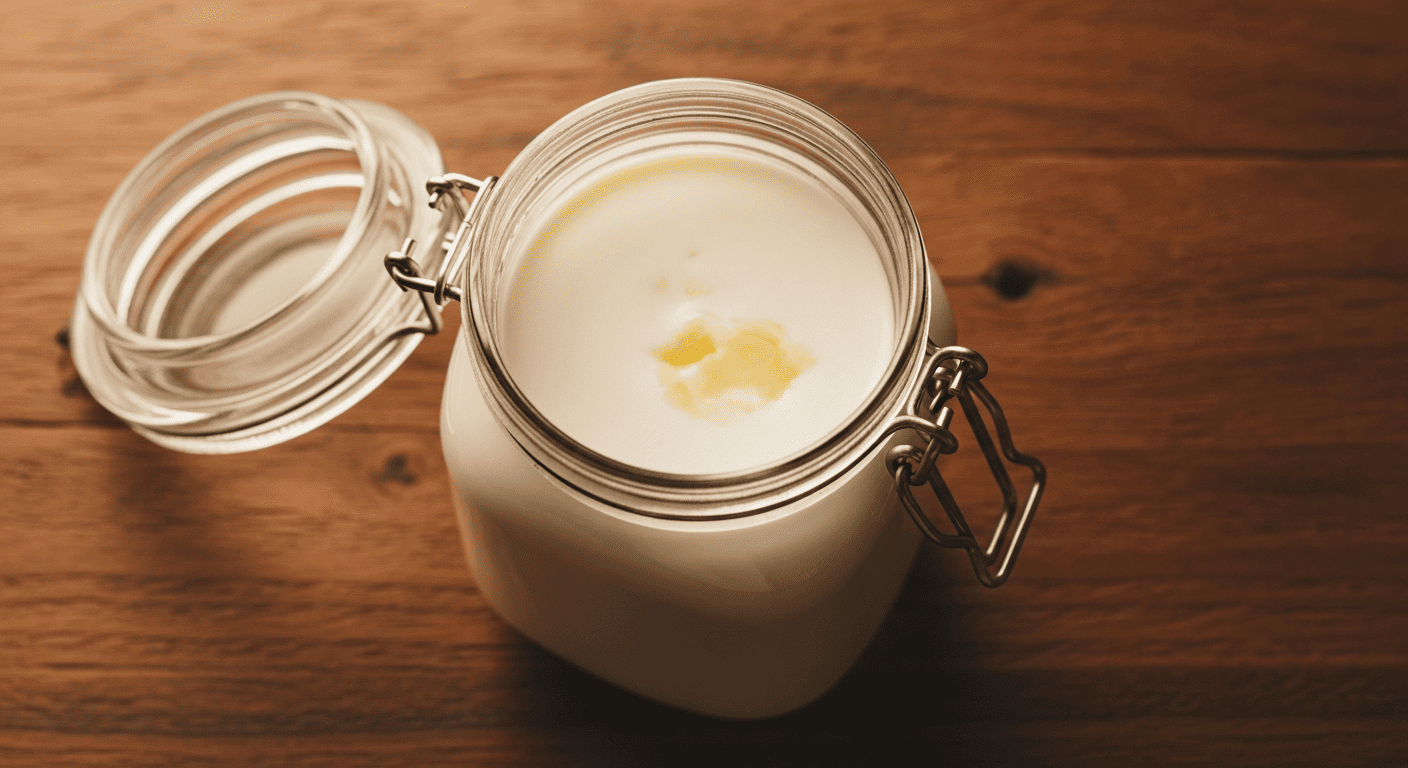
That cream line on top is real. It’s also one of the only differences the naked eye can actually detect.
Somewhere on Instagram right now, a woman in a linen dress is walking across a sunlit field toward a cow named after a saint, a glass jar swinging from her hand. The caption says something about nourishing her family the way it was “meant to be.” The comments are full of heart emojis and questions about where to find a farm like that near them.
Nowhere in that video is the fact that unpasteurized milk is, per the CDC’s own outbreak surveillance, responsible for roughly 840 times more illnesses per serving than the milk sitting one aisle over. Nowhere is the detail that a strain of bird flu capable of infecting mammals has been detected in raw milk from actively infected dairy cows. The aesthetic is complete. The microbiology got left out of frame.
This isn’t a takedown of farms, or of people who genuinely believe they’re doing right by their families. It’s a look at what happens when a hundred-year-old public health success gets rebranded as a conspiracy — and what the numbers actually show once the linen dress comes off.
What Raw Milk Actually Is — And What Pasteurization Does and Doesn’t Remove
Raw milk is exactly what it sounds like: milk straight from a cow, goat, or sheep that has never been heated. No pasteurization, no homogenization step to break up the fat, nothing standing between the udder and the glass except a filter and, ideally, refrigeration.
Pasteurization itself is almost unglamorous in what it does. Milk is heated to a specific temperature for a set number of seconds — hot enough to kill the pathogens that can live in it, not hot enough to meaningfully change its taste, texture, or nutrition. It was never marketed as an improvement. It was a fix for a problem that used to kill children with some regularity.
The American Academy of Pediatrics notes that raw and pasteurized milk contain essentially the same calcium, vitamin D, and protein — and the same allergenic proteins and lactose that trigger sensitivities in some people. What raw milk carries that pasteurized milk doesn’t is the possibility of live pathogens: Salmonella, E. coli, Listeria, and Campylobacter, among others, all of which can survive in milk from animals that show no visible signs of illness.
American Academy of Pediatrics, “Fact Checked: The Dangers of Drinking Raw Milk,” 2025.
Here’s the part that surprises people: a clean, well-run, grass-fed farm is not a guarantee of safety. Bacteria can enter milk from a healthy-looking animal, from the milking equipment, or from manure that never touches the milk directly but contaminates a surface along the way. A single negative test on a single batch says nothing about the batch that follows it. That’s the whole reason pasteurization was adopted as a blanket process rather than a farm-by-farm judgment call.
The Numbers Nobody Puts on a Mason Jar
The clearest evidence doesn’t come from an advocacy group on either side. It comes from the CDC’s own outbreak surveillance system, which has been tracking every documented foodborne illness outbreak in the country for decades — including exactly which food caused it.
A 2017 analysis published in Emerging Infectious Diseases, a CDC-affiliated journal, calculated that unpasteurized dairy products cause roughly 840 times more illnesses and 45 times more hospitalizations than pasteurized dairy, per unit consumed. The comparison is a rate, not a raw count — it accounts for the fact that far fewer people drink raw milk in the first place.
A separate CDC surveillance review found 202 outbreaks tied to raw milk between 1998 and 2018 alone, sickening 2,645 people and hospitalizing 228 — in a period when only a small sliver of the population was drinking it raw at all.
Costard S, et al. Emerg Infect Dis. 2017 · CDC Foodborne Disease Outbreak Surveillance System, 1998–2018
(Emerging Infectious Diseases, 2017)
(same 2017 analysis)
To be fair to the skeptics: this is an incidence rate, and reported outbreaks likely undercount total illness for every food category, not just dairy. But the direction of the evidence has been consistent for more than a decade across multiple independent CDC datasets — not one cherry-picked study. And the people showing up in these outbreak records disproportionately skew young. Children and teens make up a large share of raw milk illness cases, largely because they’re the ones most often served it at home.
The Bird Flu Wrinkle Changing Everything
In early 2024, a strain of highly pathogenic avian influenza — H5N1, the same virus behind the poultry outbreaks that have periodically spiked egg prices — was confirmed in U.S. dairy cattle for the first time. That changed the raw milk conversation from a debate about bacteria into something new entirely: a live, evolving virus question.
Researchers led by Dr. Yoshihiro Kawaoka at the University of Wisconsin-Madison, in NIH-funded work, found that H5N1 survived in refrigerated raw milk for at least five weeks with only a small decline in virus levels. When mice were fed raw milk from an infected cow, all of them showed signs of illness within a day, and the virus was later found throughout their organs.
The CDC has since advised that it does not yet know for certain whether the virus can infect humans through drinking raw milk — but because H5N1 has already turned up in commercially sold raw milk, the agency’s guidance is unambiguous: don’t drink it. Separately, the FDA’s testing program has repeatedly confirmed that standard pasteurization inactivates the virus in commercial milk.
Guan L, et al. N Engl J Med. 2024 · CDC, “Talking to Patients about Unpasteurized (Raw) Milk and HPAI” · FDA H5N1 Dairy Cattle Investigation, ongoing
This is also the part of the story that got genuinely strange. As the CDC was issuing warnings, a subset of online raw milk advocates began framing infection itself as a feature — the idea being that drinking virus-contaminated milk could function as a kind of informal immunization. Public health officials had to issue a specific advisory explaining why deliberately exposing yourself to a virus with pandemic potential is not, in fact, a wellness strategy.
Aging raw milk cheese for 60 days — the standard rule meant to reduce bacterial risk — does not reliably eliminate H5N1 either, according to Cornell University research funded by the FDA. The commercial milk supply remains considered safe because pasteurization works and infected herds’ milk is supposed to be diverted from sale. Raw milk from the same outbreak has no equivalent safeguard.
Why the Trend Exploded Anyway
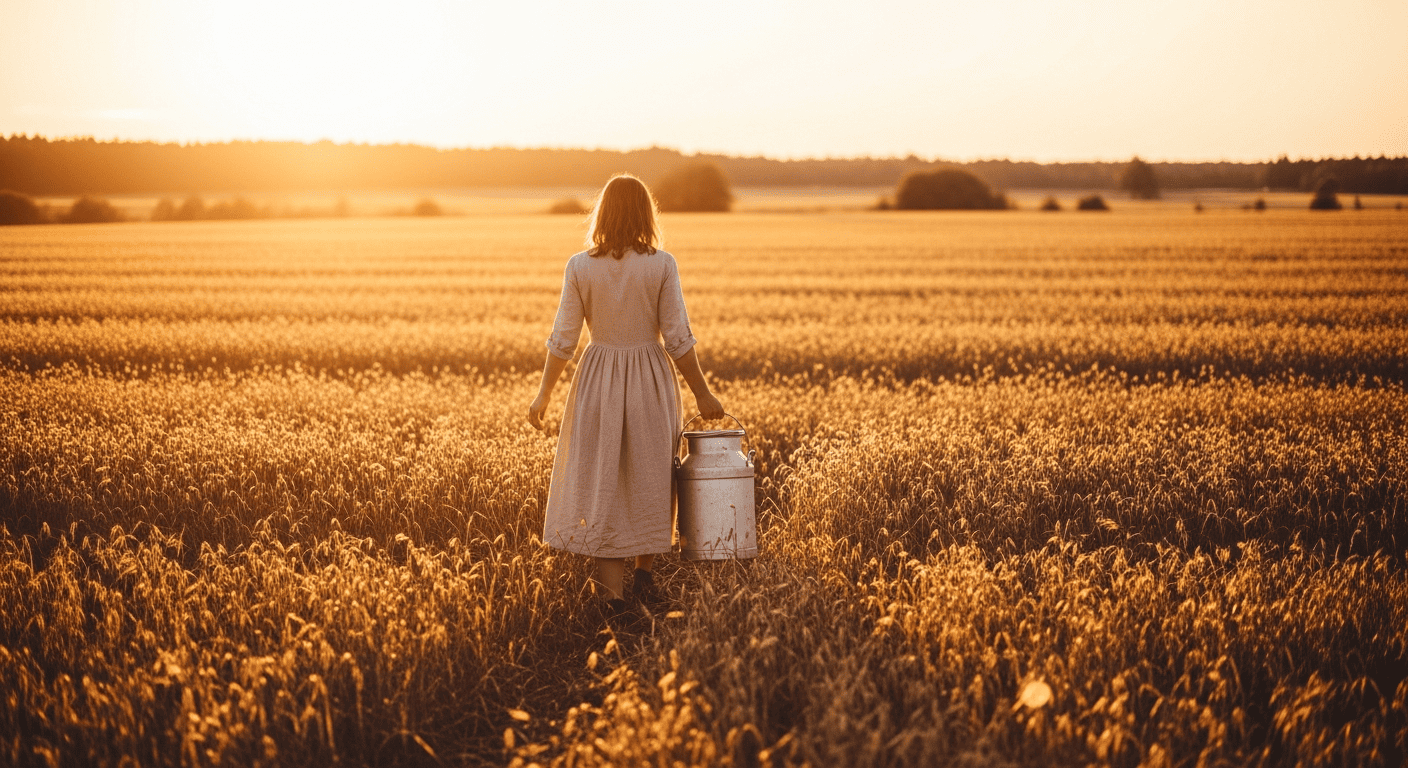
If raw milk were just risky, it would be a niche practice among a small number of farm families, the way it’s been for decades. What made it a trend is that it stopped being about the milk and started being about everything the milk symbolizes: distrust of institutions, nostalgia for an imagined agrarian past, and a specific strain of “tradwife” homesteading content that photographs beautifully.
Wellness influencers with millions of combined followers have documented their raw milk routines in soft, cinematic detail. High-profile farm-lifestyle accounts have built entire e-commerce brands around the aesthetic of it — vintage glass bottles, hand-lettered labels, the promise of a slower life. None of that content is dishonest about what it shows. It’s dishonest about what it leaves out.
There’s also a political layer that arrived quickly. Raw milk got folded into a broader “medical freedom” movement skeptical of public health guidance generally, which meant pushback against raw milk warnings started reading, to some audiences, as another instance of experts being wrong about something. The CDC’s actual data on outbreaks got much less algorithmic reach than a single aesthetically shot farm video.
What the “Benefits” Claims Actually Hold Up
The raw milk case usually rests on three pillars: better nutrition, easier digestion, and beneficial bacteria for gut health. Each one is worth taking seriously rather than dismissing outright — and each one turns out to be thinner than the marketing suggests.
Nutrition: Pasteurization’s heat exposure is brief and precisely calibrated. It doesn’t strip out calcium, protein, or vitamin D in any way that matters nutritionally. The AAP is direct about this: raw and pasteurized milk deliver essentially the same nutrient profile.
Digestion and allergies: The proteins responsible for milk allergies and the lactose responsible for lactose intolerance are unaffected by pasteurization — heat doesn’t remove either one. People who report feeling better on raw milk are experiencing something real, but it’s more plausibly explained by drinking less overall, switching brands, or placebo-adjacent expectation effects than by a chemical change that doesn’t occur.
Gut health and “good bacteria”: This is the claim with the most nuance. Raw milk does contain live microorganisms — but they aren’t reliably the beneficial, probiotic strains people imagine. They’re whatever happened to be present on that day, on that farm, which can include the same pathogens responsible for the outbreak data above. Studies that have found genuine health effects from raw-style milk generally used product that was rendered microbiologically safe through other means first — not the version anyone is actually drinking from a farm stand.
A Small Slice of Consumption, Almost All the Outbreaks
Share of U.S. dairy consumption vs. share of dairy-related outbreak illnesses, by product type.
Note: figures are approximate, illustrative midpoints drawn from outbreak surveillance methodology, not exact yearly percentages.
What the Evidence Actually Supports
Strip away both the farm-aesthetic marketing and the reflexive panic, and four things hold up consistently across decades of public health data.
5 Raw Milk Claims the Evidence Quietly Corrects
Every trend produces its own folklore. These are the five claims most worth checking against the actual data.
Public health guidance is unambiguous, but if a household decides to drink raw milk regardless, a few things meaningfully lower — though never eliminate — the risk:
- Never serve it to infants, young children, pregnant people, older adults, or anyone immunocompromised — the groups every major health agency flags as highest-risk.
- Buy from a source that tests every batch, not just periodically, and ask to see recent results.
- Keep it refrigerated at or below 40°F (4°C) at all times, and treat any off smell, taste, or texture as a reason to discard it.
- Know the early symptoms of foodborne illness — persistent diarrhea, high fever, or bloody stool warrant contacting a healthcare provider promptly, especially in a child.
None of this makes raw milk equivalent in safety to pasteurized milk. It only reduces the odds.
Raw Milk FAQ
None of this is really about milk. It’s about how easily a public health process that quietly worked for a century can be recast as the villain of the story, simply because the alternative photographs better. Distrust of institutions is often earned. It just doesn’t automatically transfer safety onto whatever those institutions warned against.
The linen dress, the sunlit field, the jar swinging in someone’s hand — none of it is lying, exactly. It’s just showing you the one frame where nothing has gone wrong yet. The CDC’s outbreak data is the part of the story that never makes it into the caption.