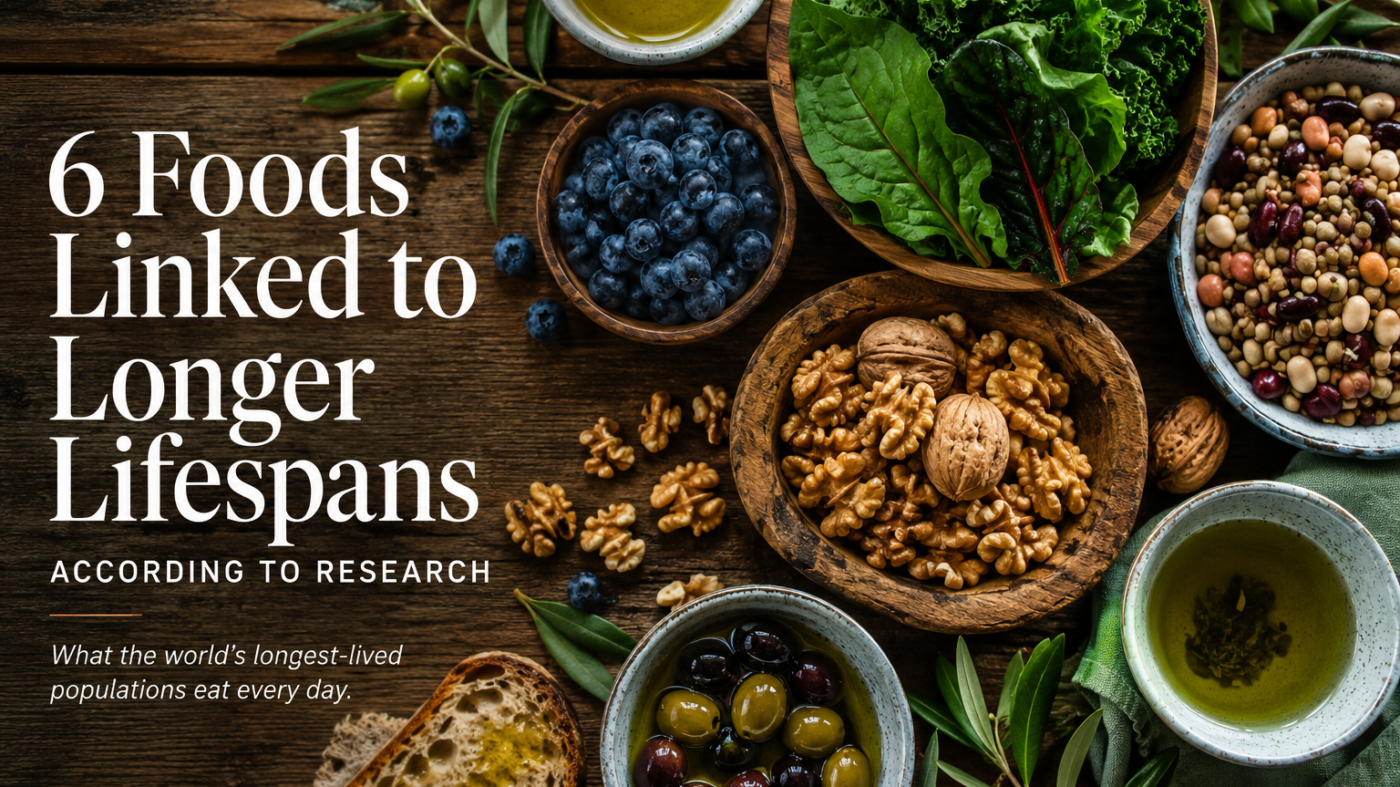
6 Foods Linked to Longer Lifespans,
According to Research
A deep dive into peer-reviewed science — what the world’s longest-lived populations actually eat, which myths the data kills, and how to apply it starting tonight.

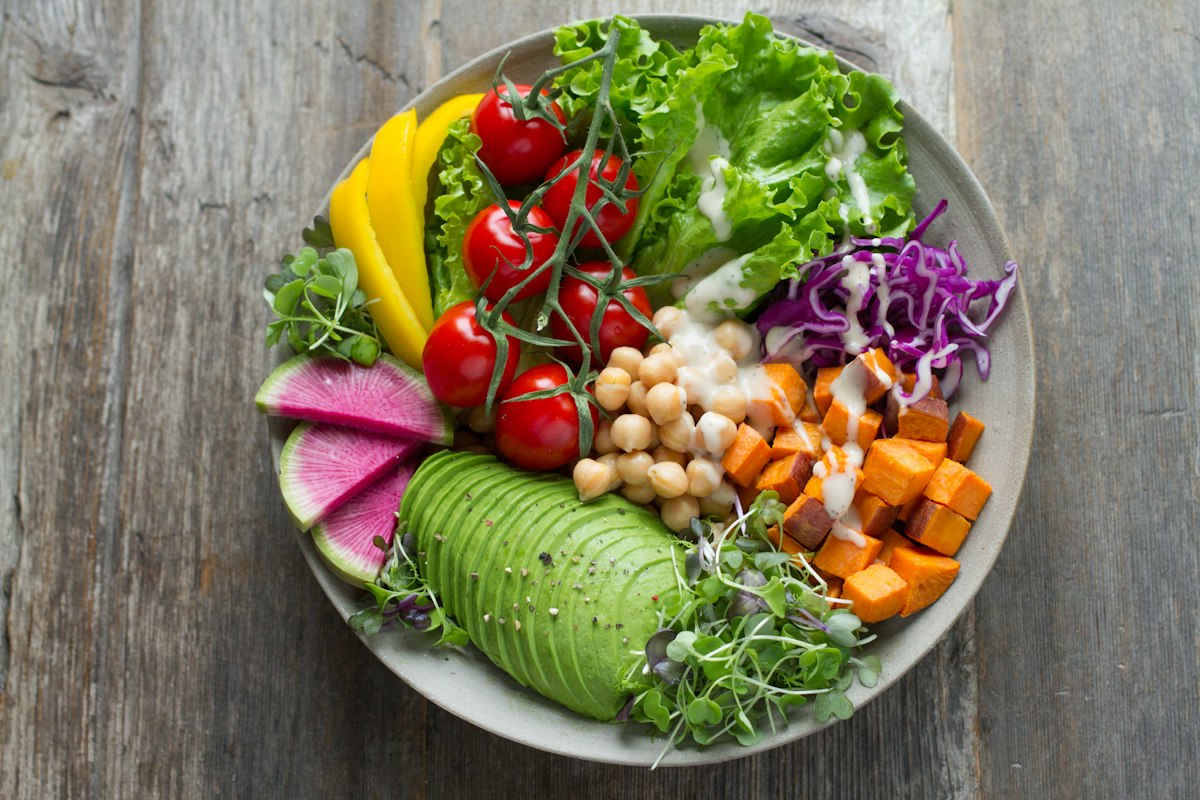
📷 Photo: Unsplash / Ella Olsson — The longevity table has no processed ingredients. It never has.
There are pockets of the world where people live past 100 without trying. Okinawa, Japan. Sardinia, Italy. Ikaria, Greece. Nicoya, Costa Rica. Loma Linda, California. Demographer Dan Buettner mapped them for National Geographic and coined the term Blue Zones. What he found wasn’t extraordinary. It was embarrassingly ordinary.
They ate the same few foods, consistently, for their entire adult lives. No tracking apps. No supplements. No optimization theater. Just real food, eaten slowly, with people they loved.
This article breaks down six of those foods — not with vague promises, but with specific studies, real effect sizes, and honest context most wellness content skips. I’ll also dismantle the five most persistent myths the data has definitively killed.
Olive Oil — The Ingredient That Changed Clinical Nutrition
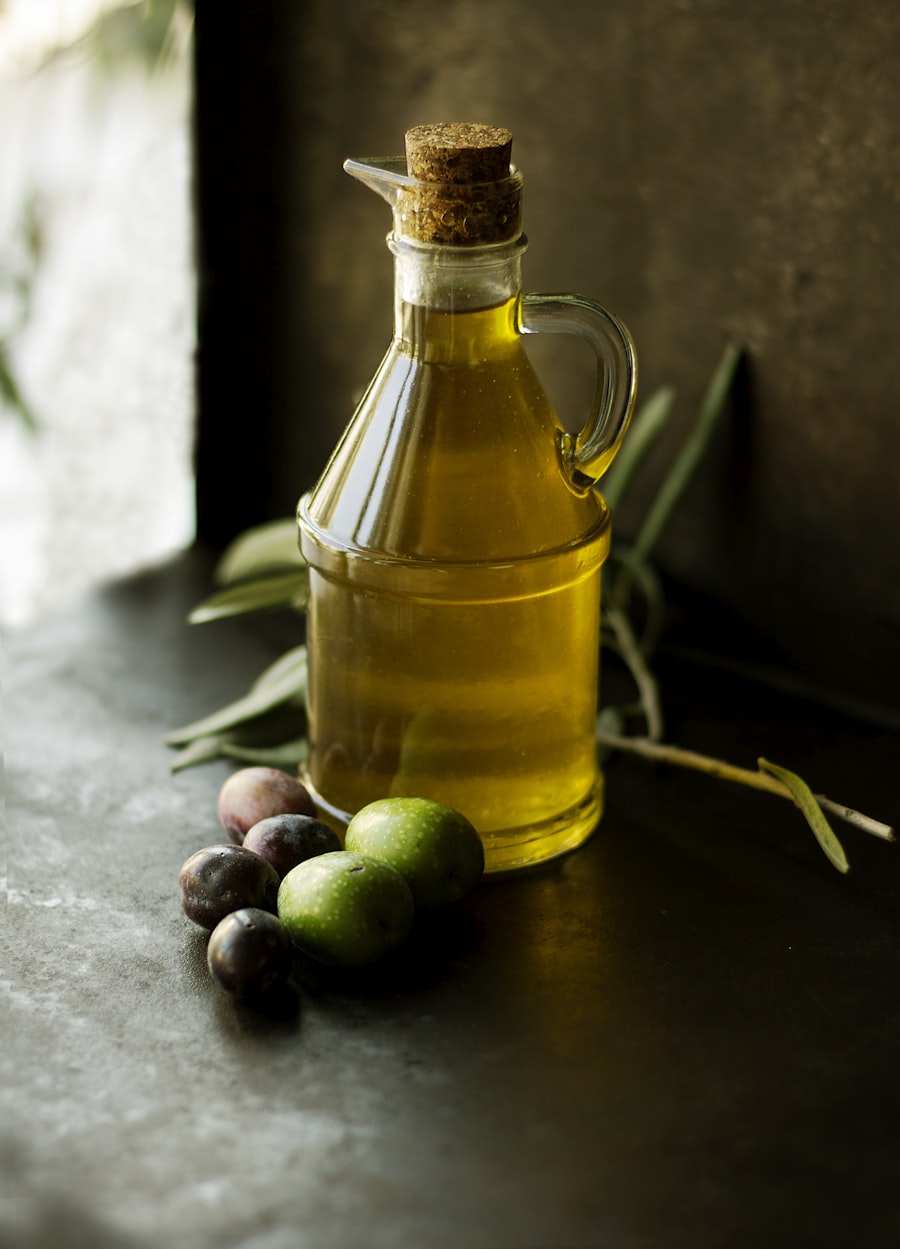
📷 Unsplash / Roberta Sorge — Extra virgin, cold-pressed, used generously. Not a condiment — a staple.
In Sardinia and Ikaria, olive oil isn’t drizzled. It’s poured. Over bread, beans, vegetables, soup — in quantities that would alarm any dietitian trained before 2003. The elders of these communities had no awareness of its biochemistry. They just knew it made food taste alive.
The science eventually caught up. When it did, it was decisive.
The PREDIMED randomized trial followed 7,447 participants at high cardiovascular risk in Spain. The Mediterranean diet group supplemented with extra virgin olive oil (≥4 tbsp/day) showed a 30% relative reduction in major cardiovascular events (heart attack, stroke, cardiovascular death) vs. a low-fat control diet. The trial was stopped early — the benefit was so clear it was considered unethical to withhold from the control group.
Estruch R, et al. N Engl J Med. 2013;368(14):1279–1290. DOI: 10.1056/NEJMoa1200303
A 2022 follow-up in the Journal of the American College of Cardiology tracked 92,383 Americans over 28 years. More than ½ tablespoon of olive oil daily was linked to a 19% lower cardiovascular death risk, 17% lower cancer mortality, and 29% lower neurodegenerative disease death.
Why it works: Extra virgin olive oil contains oleocanthal — a phenolic compound with anti-inflammatory properties structurally analogous to ibuprofen — and oleic acid, which raises HDL cholesterol and prevents LDL oxidation, the specific process that turns cholesterol into arterial plaque.
Sardinian and Ikarian elders consume roughly 4–6 tablespoons of extra virgin olive oil per day — used as both cooking fat and finisher. Not as a supplement. As the default fat for everything, a habit established in childhood and maintained for 80+ years.
Legumes — Present in Every Single Blue Zone Without Exception

📷 Unsplash — Lentils, chickpeas, black beans, soybeans. Different cultures, identical health outcomes.
Of all the dietary patterns Buettner’s research identified across the five Blue Zones, one finding stands above every other: every single community eats legumes as a dietary staple, every single day. Not occasionally. Not as a side. As the anchor of the daily diet. No other food group matches this consistency across cultures.
A 2004 landmark analysis by Darmadi-Blackberry et al. (Asia Pacific Journal of Clinical Nutrition) followed elderly populations across Japan, Sweden, Greece, and Australia and identified legumes as the most consistent dietary predictor of longevity across all populations studied — above vegetables, fish, and every other food category. Each 20g increase in daily legume intake was associated with an 8% reduction in all-cause mortality risk.
Darmadi-Blackberry I, et al. Asia Pac J Clin Nutr. 2004;13(2):217–220. PMID: 15228991
The mechanism: Legumes are extraordinarily high in resistant starch — the type that bypasses your small intestine and ferments in your colon, feeding Bifidobacterium and Lactobacillus. They’re satiating without being calorie-dense. They provide protein and iron without the saturated fat of animal proteins. They cost almost nothing. They are, by any measure, the best food deal in any grocery store.
Blueberries — The Most Studied Small Fruit in Nutrition Science
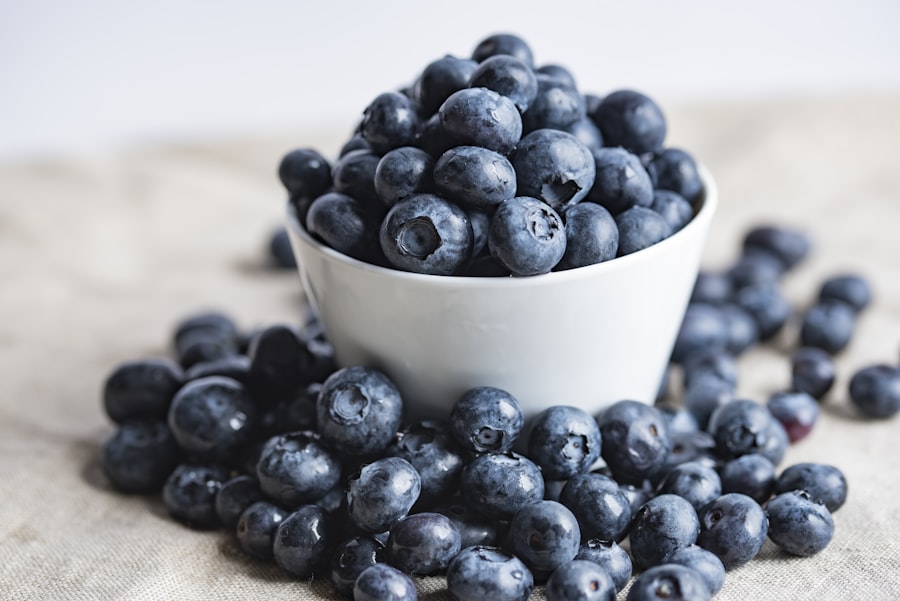
The deep blue-purple pigment in blueberries comes from anthocyanins — flavonoid antioxidants that the USDA consistently ranks among the highest concentration in any widely available food. Crucially, they cross the blood-brain barrier and accumulate preferentially in regions responsible for learning and memory — a property that distinguishes them from most other antioxidants.
Heart: The Cassidy et al. study (Circulation, 2013) tracked 93,600 women over 18 years and found eating blueberries ≥3 times/week was associated with a 32% lower risk of heart attack, attributed to anthocyanin-induced improvement in endothelial function and arterial stiffness reduction.
Brain: A University of Cincinnati RCT (J Agric Food Chem, 2010) found daily blueberry supplementation over 16 weeks improved memory performance in adults with mild cognitive impairment. Rush University estimated regular consumption equivalent to cognitive age being 2.5 years younger chronologically.
Cassidy A, et al. Circulation. 2013;127(2):188–196 · Krikorian R, et al. J Agric Food Chem. 2010;58(7):3996–4000
(Harvard, 93,600 participants, 18 years)
(Rush University Memory Project)
Three servings a week. From a frozen bag on your oatmeal every other morning. There is no easier upgrade in nutritional science than this one.
Walnuts — The Most Studied Nut for Longevity, By Far

📷 Unsplash
Walnuts contain ALA (alpha-linolenic acid) — the plant-based omega-3 — at higher concentration than any other nut. They’re also unusually rich in polyphenols, specifically ellagitannins that gut bacteria convert to urolithins — compounds with documented anti-inflammatory and anti-cancer properties. In Loma Linda, California, Seventh-day Adventists have eaten walnuts daily as part of a plant-forward diet since the 1950s, generating some of the richest longevity cohort data available.
The PREDIMED walnut sub-trial (BMC Medicine, 2013) found participants eating walnuts ≥3 times/week had a 47% lower risk of all-cause mortality during the study vs. those who rarely ate them.
Harvard T.H. Chan’s Nurses’ Health Study analysis of 76,000+ found daily walnut consumption linked to 14% lower all-cause mortality and 20% lower cardiovascular death.
Guasch-Ferré M, et al. BMC Med. 2013;11:164 · Bao Y, et al. N Engl J Med. 2013;369:2001–2011
(PREDIMED, walnuts ≥3×/week)
Green Tea — 40,000 People, 11 Years, and a Very Clear Answer

In Okinawa, green tea is not a wellness trend. It’s simply what you drink — 2–4 cups a day, every day, with the same casual consistency as eating miso soup. The fact that this also happens to be one of the most robustly documented dietary interventions for longevity is entirely incidental to the people doing it.
Kuriyama et al. (JAMA, 2006) — 11-year prospective cohort, 40,530 Japanese adults. Those drinking ≥5 cups/day had a 26% lower cardiovascular death risk (women: 31%) and 16% lower all-cause mortality vs. <1 cup/day. The dose-response was linear and statistically significant.
EGCG and AMPK: The key compound is epigallocatechin gallate (EGCG) — one of the most studied polyphenols in science. It activates AMPK (AMP-activated protein kinase), a cellular energy sensor that triggers autophagy, reduces lipogenesis, and activates longevity pathways identical to those stimulated by caloric restriction. This pathway is the central focus of most longevity biology research.
Kuriyama S, et al. JAMA. 2006;296(10):1255–1265. DOI: 10.1001/jama.296.10.1255
The act of making green tea requires 3–5 minutes of intentional pause. A 2017 review in Frontiers in Psychology found that daily ritual behaviors with low arousal measurably reduce cortisol and perceived stress. Chronic stress independently accelerates telomere shortening and increases all-cause mortality. The pause may matter as much as the polyphenol.
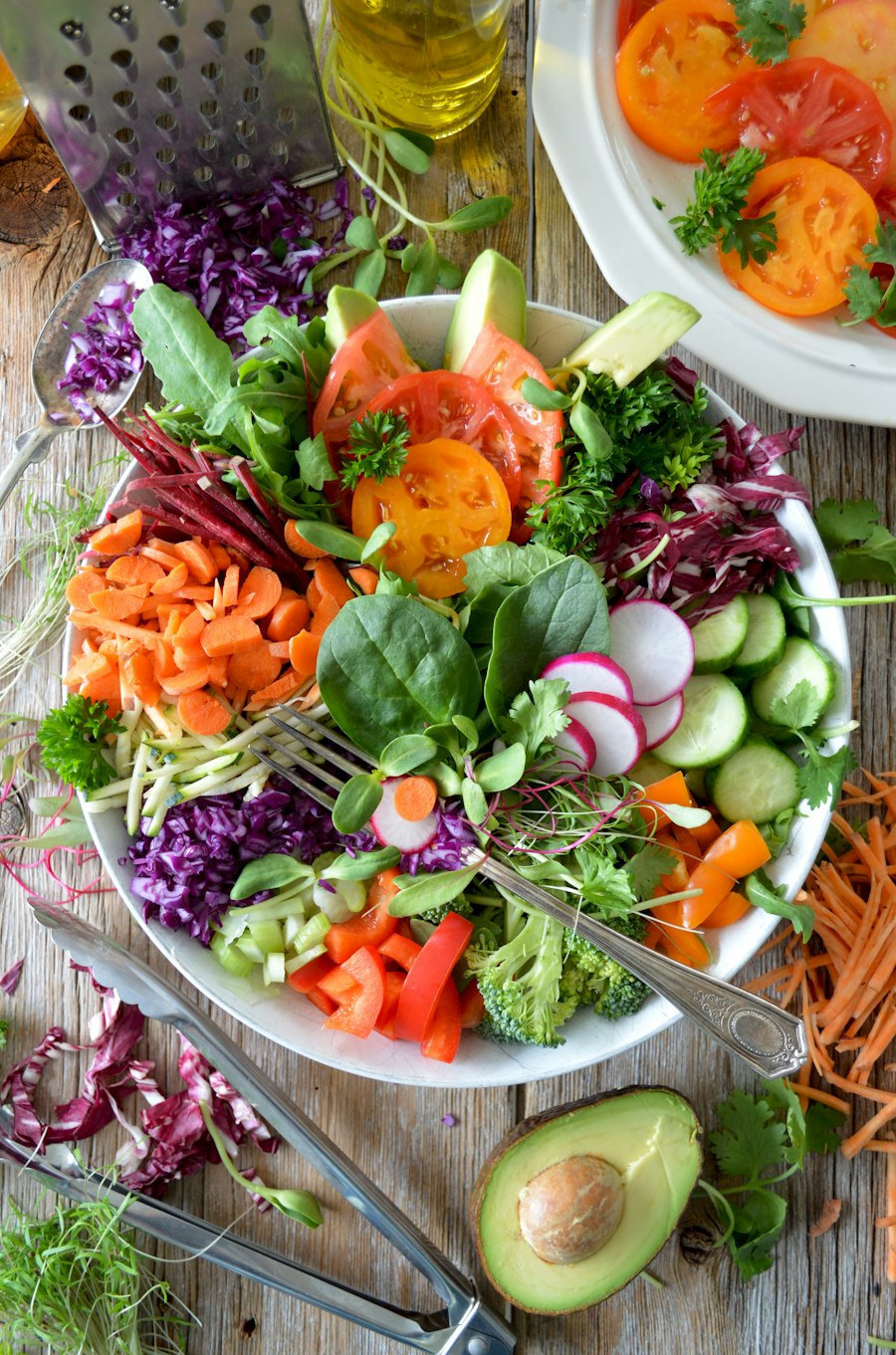
Leafy Greens — Brains 11 Years Younger. Daily. Any Variety.
📷 Unsplash
Every major study of long-lived communities finds the same thing: high consumption of dark, leafy green vegetables — not a specific variety but the category as a whole. In Ikaria, wild greens gathered from hillsides are eaten in quantities that surprise Western nutritionists. More than a dozen varieties, cooked in olive oil, added to soups, eaten as salads. Seasonal, cultural, and entirely non-strategic.
Morris et al. (Neurology, 2018) followed 960 adults aged 58–99 over 4.7 years. Those eating 1–2 servings of leafy greens daily had a rate of cognitive decline equivalent to being 11 years younger than those who ate the least. The protective compounds: vitamin K1, lutein, beta-carotene, and folate — found in meaningful quantities almost exclusively in leafy greens.
Morris MC, et al. Neurology. 2018;90(3):e214–e222. DOI: 10.1212/WNL.0000000000004815
Risk Reduction by Food — Visualized
Relative risk reductions reported in the primary study for each food, vs. control/lowest consumption group.
Note: All figures are relative risk reductions from each food’s primary outcome study. Studies differ in population and methodology. Chart is for illustrative comparison only.
What These 6 Foods Share
Across wildly different cultures and culinary traditions, four shared properties emerge — the same four that inflammation biologists and aging researchers identify as the most important levers in healthy longevity.
Chronic low-grade inflammation — “inflammaging” — is now the central hypothesis in gerontology as the driver of age-related disease. All six foods measurably reduce CRP, IL-6, and TNF-α — the core inflammatory markers.
Gut microbiome diversity is one of the strongest biomarkers of healthy aging. The fiber in legumes, anthocyanins in blueberries, EGCG in green tea — all act as prebiotics in ways that ultra-processed foods actively reverse.
The benefit in every study is associated with regular, near-daily consumption over years — not therapeutic doses or cleanses. The mechanism is cumulative biological adaptation. Blue Zone populations didn’t eat these for health — they ate them because they were cheap, available, and part of tradition. The consistency came naturally.
A 2012 review in Appetite documented that food anxiety and orthorexic behavior measurably increases cortisol and negates dietary benefits. The absence of food-related stress in Blue Zone populations may itself be a longevity mechanism.
5 Longevity Myths the Data Has Killed
These are the most widely repeated beliefs in the longevity space — and the most clearly contradicted by actual evidence.