What Does Lamine Yamal Actually Eat?
Inside the Diet Fueling Football’s Youngest Superstar
Three family cuisines, one academy kitchen, and a growth spurt that has to keep up with a Ballon d’Or-level workload. This is what actually lands on the plate — and why the science says it matters as much as the boots.

Somewhere in a kitchen outside Barcelona, a pot of rice is absorbing a sauce built from ground peanuts, and it is not an accident that this exact dish keeps appearing in interview after interview with the same seventeen-going-on-eighteen-year-old footballer.
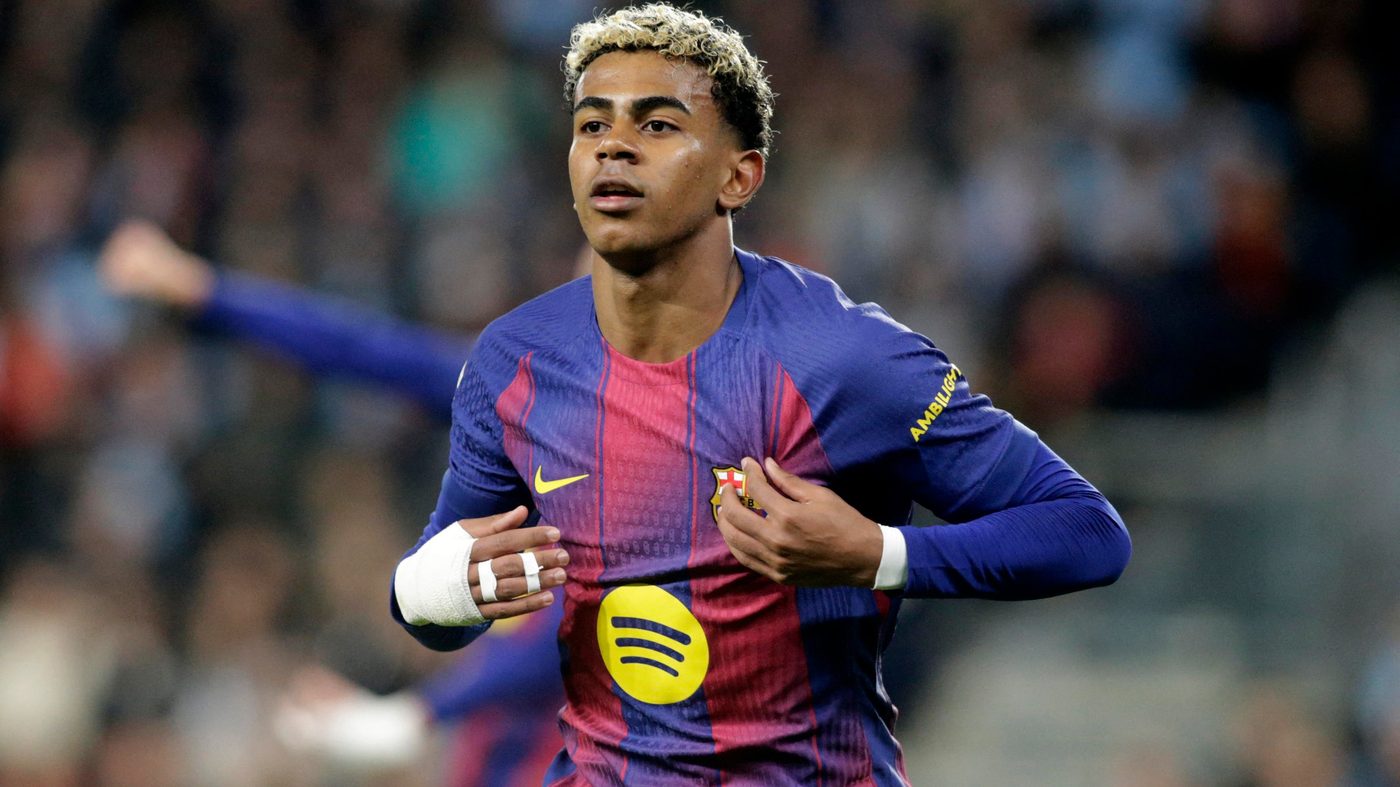
Lamine Yamal is the youngest player to do most of the things he has already done — start a European final, score at a World Cup age group nobody expected, inherit Barcelona’s No. 10. Less discussed is the fact that his body is still doing something none of his headline stats capture: growing.
Feeding a teenager who is simultaneously finishing puberty and playing 50-plus elite matches a season is a genuinely different problem than feeding an adult athlete. This is what that actually looks like — the family table it’s built on, the science behind it, and what any of us could reasonably borrow.
Three Kitchens, One Table — The Food Identity Behind Him
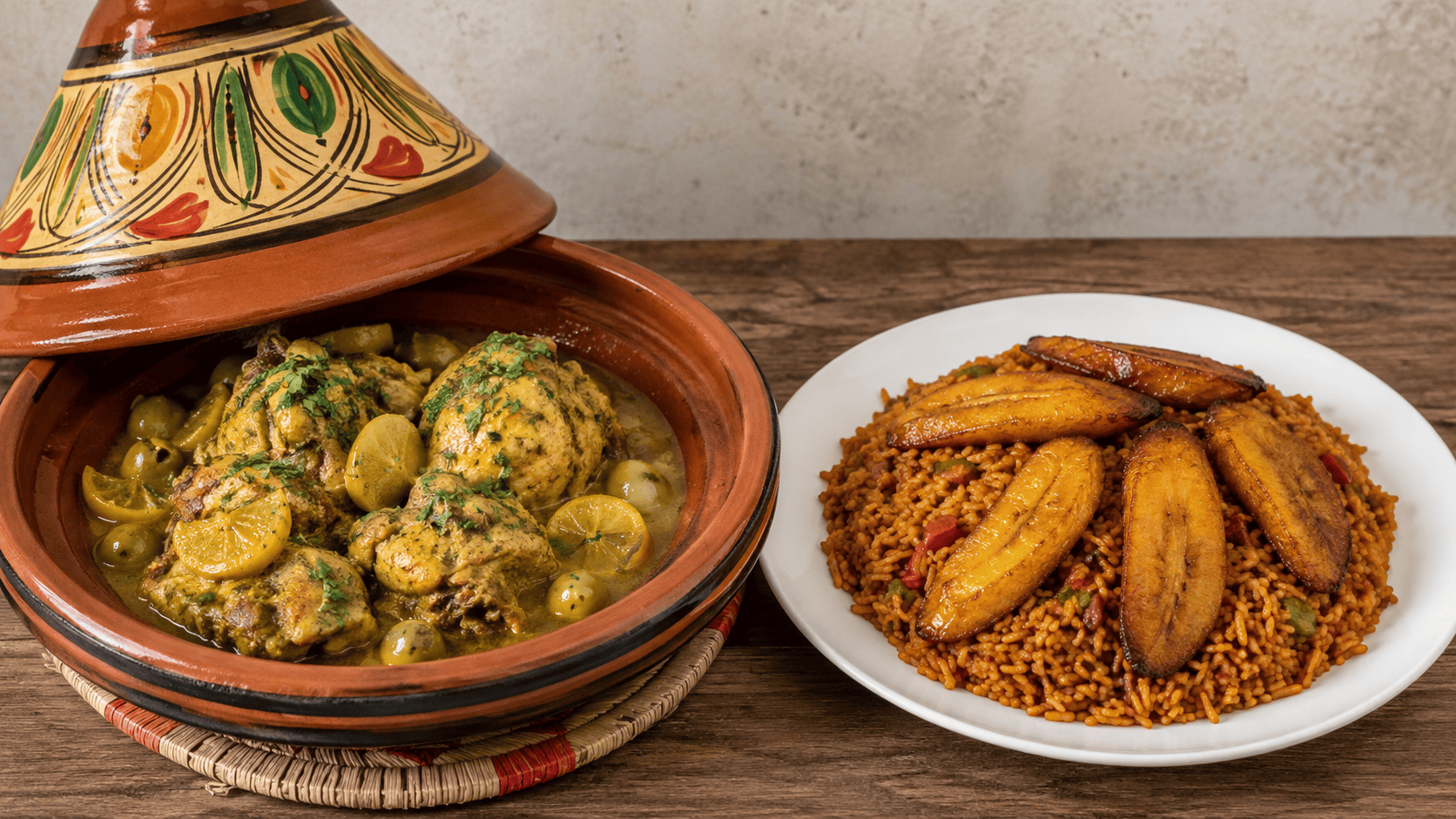
One table, three food traditions, every night.
Most professional footballers eat one cuisine, adapted for performance. Yamal grew up eating three, simultaneously, at the same table. His father’s side traces to Morocco. His mother, Sheila Ebana, is from Equatorial Guinea. Both raised him a few kilometers from Barcelona, inside Catalan food culture.
That is not a footnote. According to a composite profile built from interviews and federation media, family dinner is where all three traditions land on the plate at once — tagine-style stews and couscous from one grandmother’s kitchen, rice and plantain dishes from the other, Catalan staples woven through the week.
Yamal has described his parents’ cooking, across all three traditions, as “the best restaurant in the world.” It’s a small line, but it tells you something most performance-nutrition plans miss: none of this feels like a program to him. It feels like home.
Reported via RFEF official media, 2024, cited in Owaves athlete routine profile
Here’s the part worth sitting with: nutritionally, this multicultural table is unusually well-balanced by accident rather than design — Moroccan cuisine’s grains and legumes, Equatorial Guinean cooking’s starchy roots and groundnut-based sauces, and Catalan cuisine’s fish and olive oil cover a wider nutrient range than most single-tradition diets manage on their own.
The Signature Dish — Chicken, Rice, and a Peanut Sauce That Never Changes
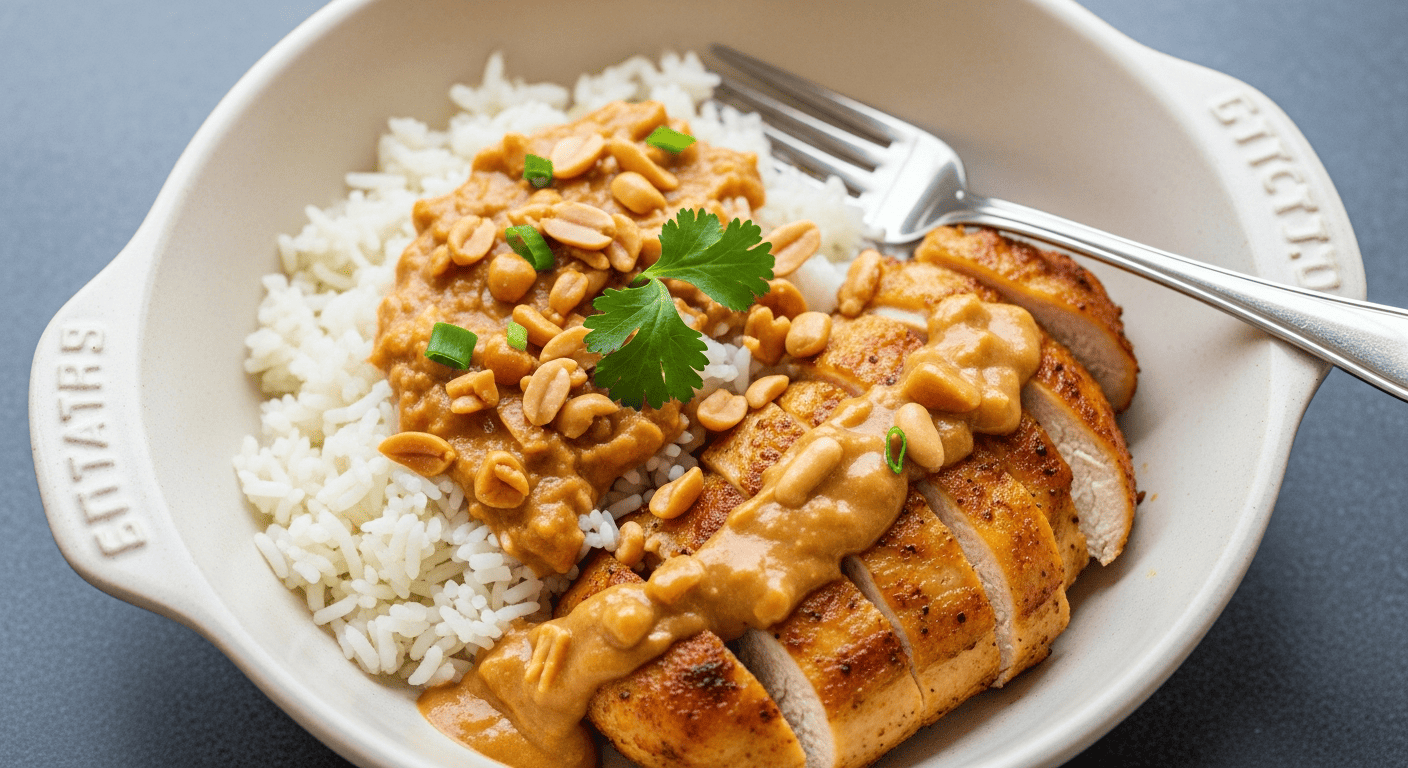
The dish, exactly the same, before every important match.
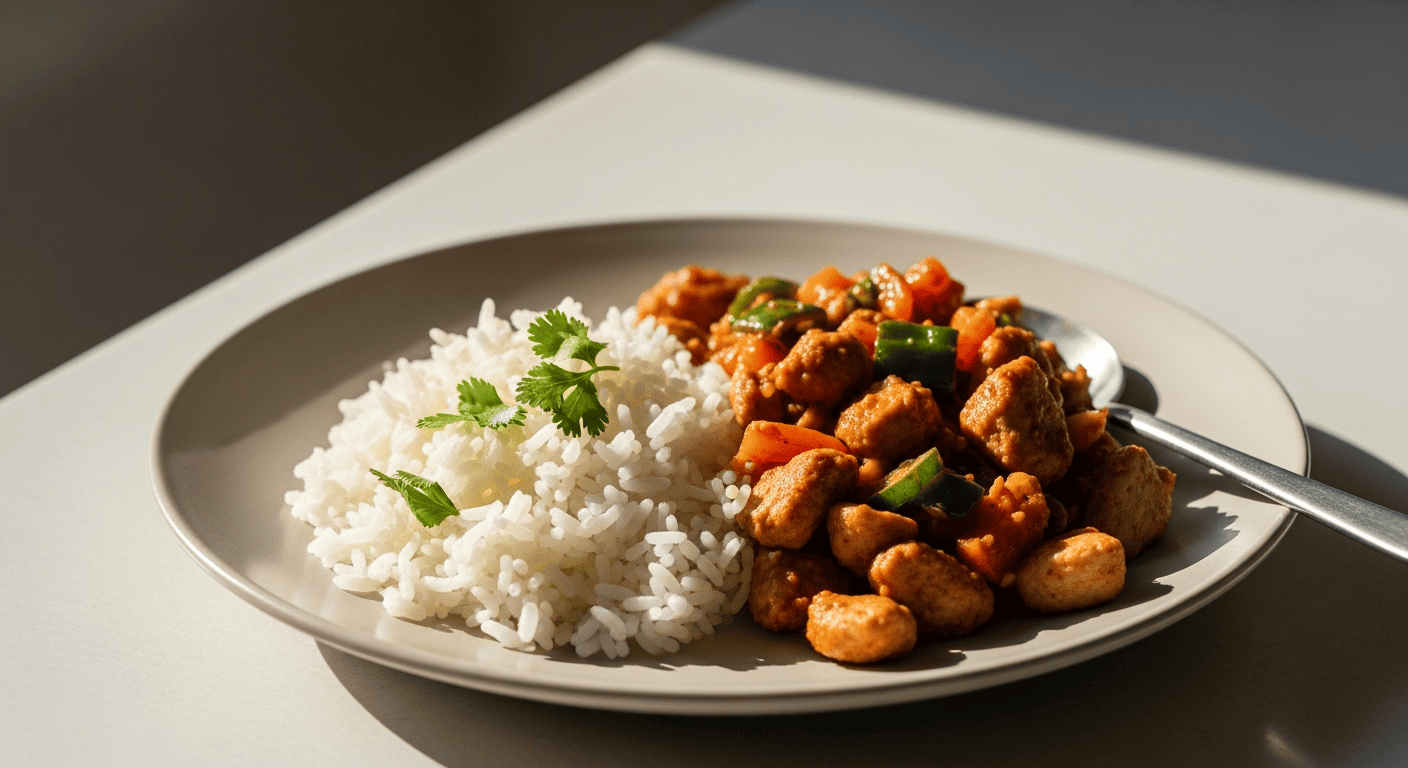
Ask Yamal what he eats before a big game and the answer doesn’t change. Per Spanish reporting on the dish, it’s chicken with rice and a peanut-based sauce — a traditional Equatorial Guinean recipe made by his mother, Sheila Ebana.
The nutrition happens to line up with what a pre-match meal should do. Rice supplies slow-release carbohydrate for sustained energy. The peanut sauce contributes healthy fats, plant protein, fiber, and minerals including magnesium and phosphorus — nutrients tied to muscle function, recovery, and endurance.
Sports nutritionists cited in Spanish coverage of the dish, including Jaume Giménez and May Morón, point to natural peanut butter specifically as a strong energy source around training — provided it’s free of added sugar. The mechanism is unremarkable in the best way: it’s just a nutrient-dense, unprocessed sauce that happens to double as a family recipe.
There’s a psychology to the repetition, too. Elite athletes across sports gravitate toward identical pre-competition meals — not superstition exactly, but the comfort of removing one variable on a day that already asks for total focus. The dish isn’t just fuel. It’s a known quantity on an unpredictable day.
The Messi Rule — Why He Traded Beef for Fish
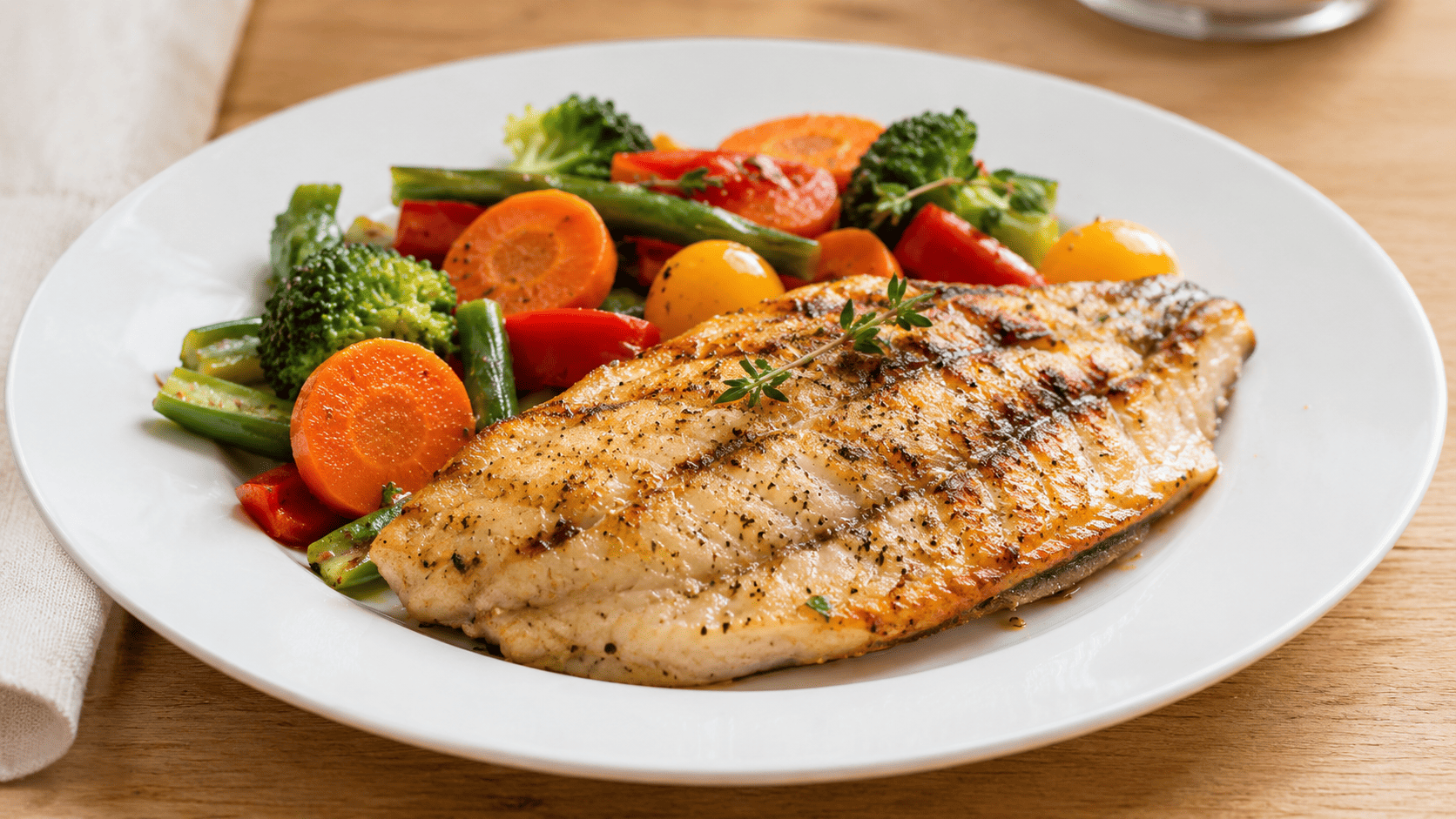
The swap that came from watching how Messi eats.
Not every part of Yamal’s diet was inherited. Some of it he chose. In an interview with Mundo Deportivo, he described cutting back on beef in favor of fish, explicitly modeling the change on Lionel Messi’s own well-documented diet overhaul.
The line that stands out is how he described his old habits: “I ate whatever I saw.” That’s a teenager’s default relationship with food, and it’s most people’s default relationship with food. What’s notable isn’t the fish — it’s the moment of deciding food was worth thinking about at all.
Fish over red meat is a genuinely sound swap for an in-season athlete: leaner protein, omega-3 fats linked to reduced inflammation, easier digestion before training. But the more interesting takeaway is behavioral — the shift didn’t come from a nutritionist’s chart first. It came from watching someone he admired and copying the habit.
Inside La Masia’s Kitchen — Where 300 Young Athletes Eat by Design
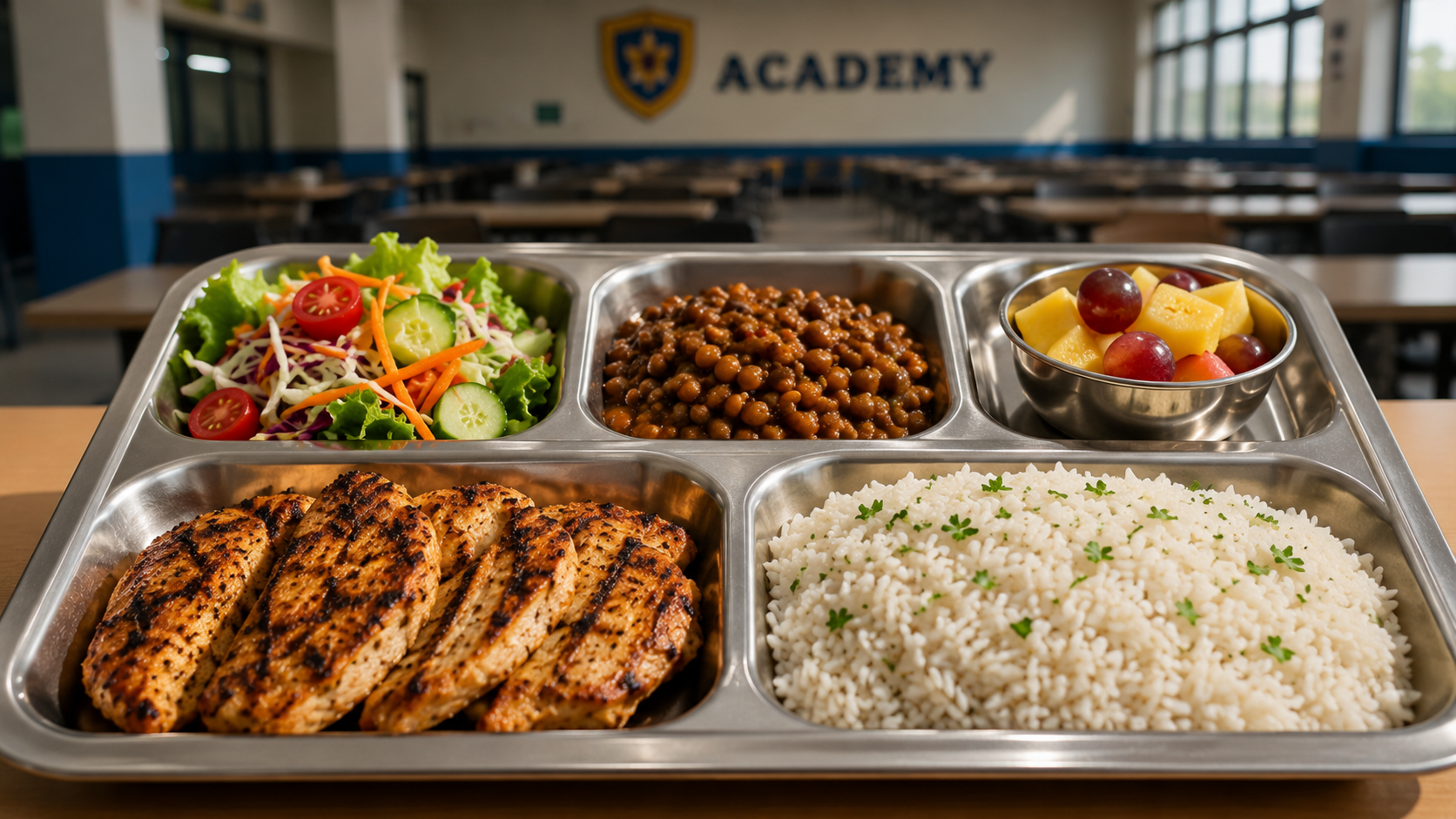
Structured meals for a body still being built.
Barcelona’s academy, La Masia, houses more than 300 young players and employs a staff that includes doctors, psychologists, and dedicated nutritionists and cooks alongside coaches. Nutrition isn’t an afterthought bolted onto training — it’s built into the daily schedule the same way schoolwork is.
Reporting on the club’s approach to Yamal specifically describes a meticulously planned diet: slow-absorbing carbohydrates — cereals, oats, rice, legumes, bread, potatoes, sweet potatoes — prioritized for sustained energy, paired with substantial protein from fish, chicken, and yogurt.
Legumes · Sweet Potato
Yogurt
This is the part that separates a professional academy’s approach from an ordinary teenager’s diet: it’s calibrated, not just healthy. The macronutrient ratios are set for a body that has to grow and perform at the highest level of a global sport, at the same time.
Feeding a Body That’s Still Growing — The Research Behind Adolescent Athlete Nutrition
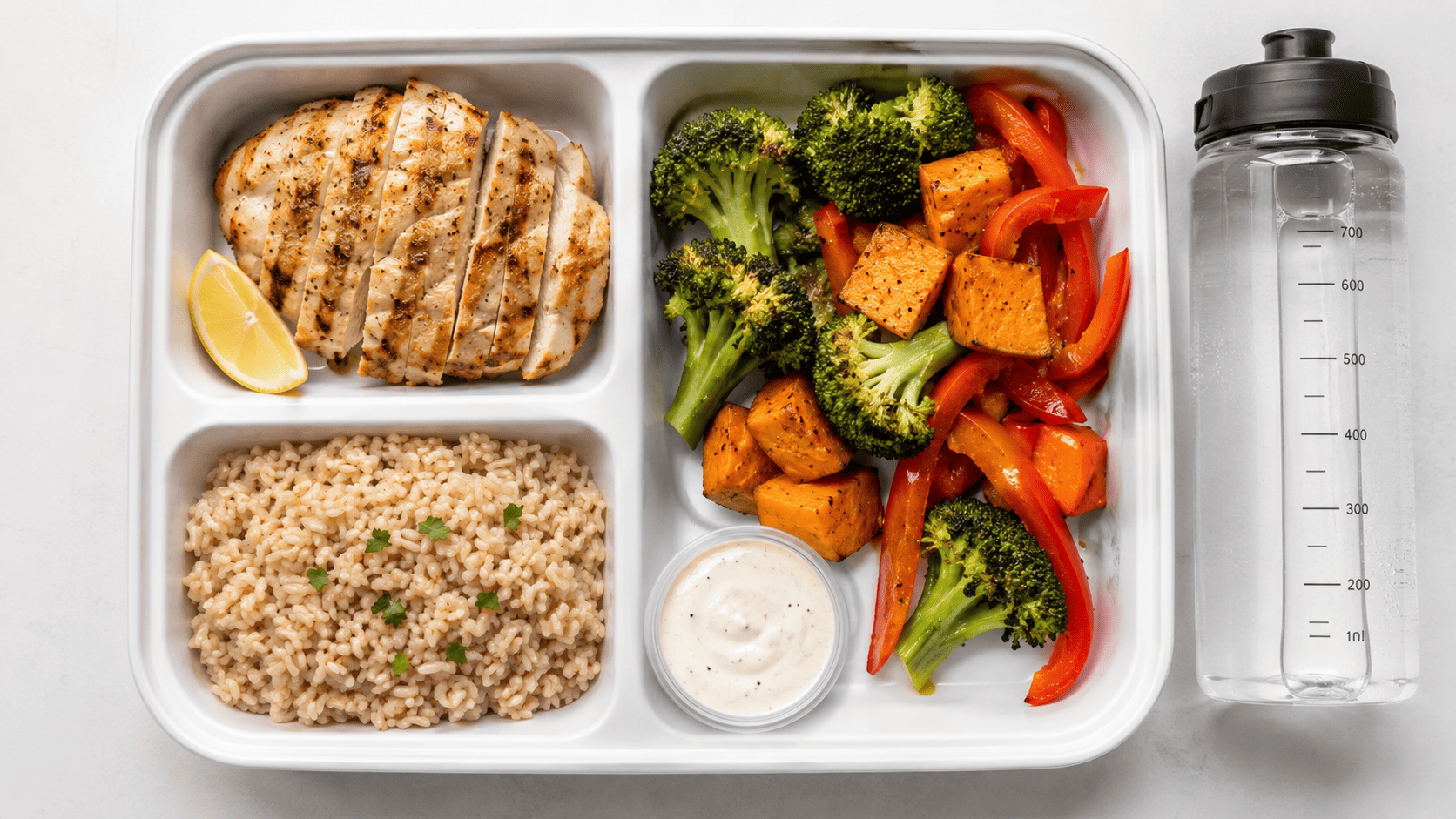
Two jobs, one plate: growth and performance, at once.
This is where the story stops being about one player and starts being about a real gap in sports science. Adolescent athletes face a demand adult professionals don’t: their bodies are trying to grow and perform elite-level sport simultaneously, and getting the fuel wrong has consequences beyond a bad match.
A 2025 review in Nutrients on adolescent athlete nutrition found that low carbohydrate availability during training measurably increases markers of bone resorption in teenage athletes — a 28% jump in one controlled study of 16-year-old soccer players. The review’s core finding: under-fueling during growth years carries risks to bone health, hormonal regulation, and immune function that go beyond simple performance dips.
Multiple authors. Nutrients. 2025;17(17):2792. PMC12430154
Protein needs shift too. General teen recommendations sit around 46–52 grams a day, but young athletes in intensive training can require up to roughly 1.5 grams per kilogram of body weight daily — noticeably more than a sedentary peer, to support both muscle repair and continued growth.
Seen through this lens, La Masia’s carbohydrate-forward, protein-adequate structure isn’t a generic “eat healthy” plan. It’s a direct response to a documented physiological risk that most youth sport, outside elite academies, simply doesn’t account for.
A Day on His Plate — Breakfast to Recovery Dinner
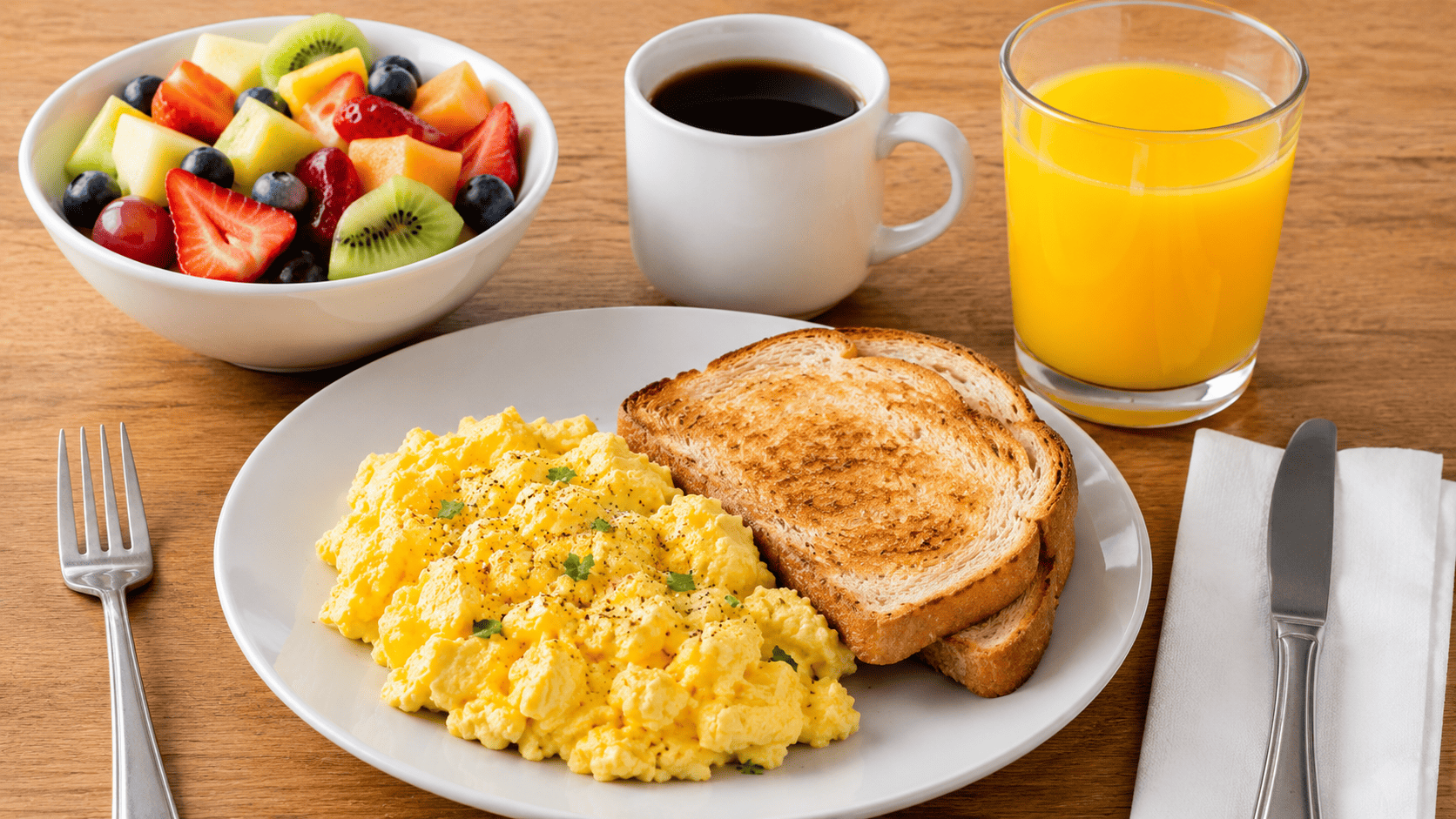
Breakfast, before the drive to training.
Based on a composite routine built from interviews, club media, and verified reporting, Yamal’s food day is unglamorous in the best way — no biohacking, no exotic supplements, just repetition and timing.
Nothing on that list is exotic. What makes it work is that it repeats — the same rough shape, most days, which is a quietly powerful strategy for anyone trying to actually stick to a way of eating rather than just plan one.
Hydration Is the Quiet Half of the Diet
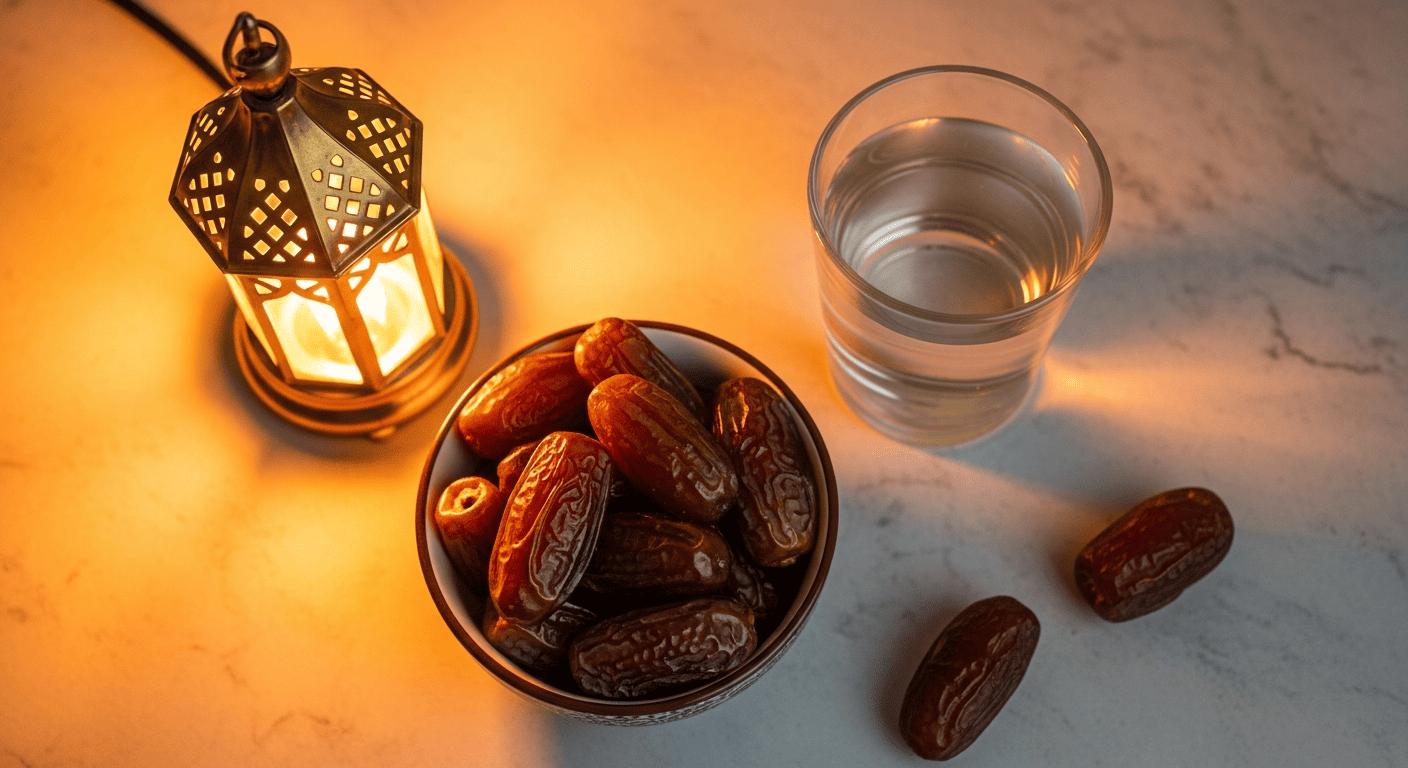
Fluids get less attention than food. They matter just as much.
Food gets the headlines. Fluid replacement rarely does, even though a 2% drop in body water is enough to measurably impair concentration and sprint output — a real problem for a winger whose entire value is built on repeated short sprints and split-second decisions.
Coverage of his match-day preparation consistently mentions electrolyte solutions alongside plain water, particularly around intense training blocks and, as the next section covers, periods of religious fasting where hydration timing becomes a genuine logistical challenge rather than a minor detail.
Ramadan on the Pitch — Adjusting the Rhythm, Not the Discipline
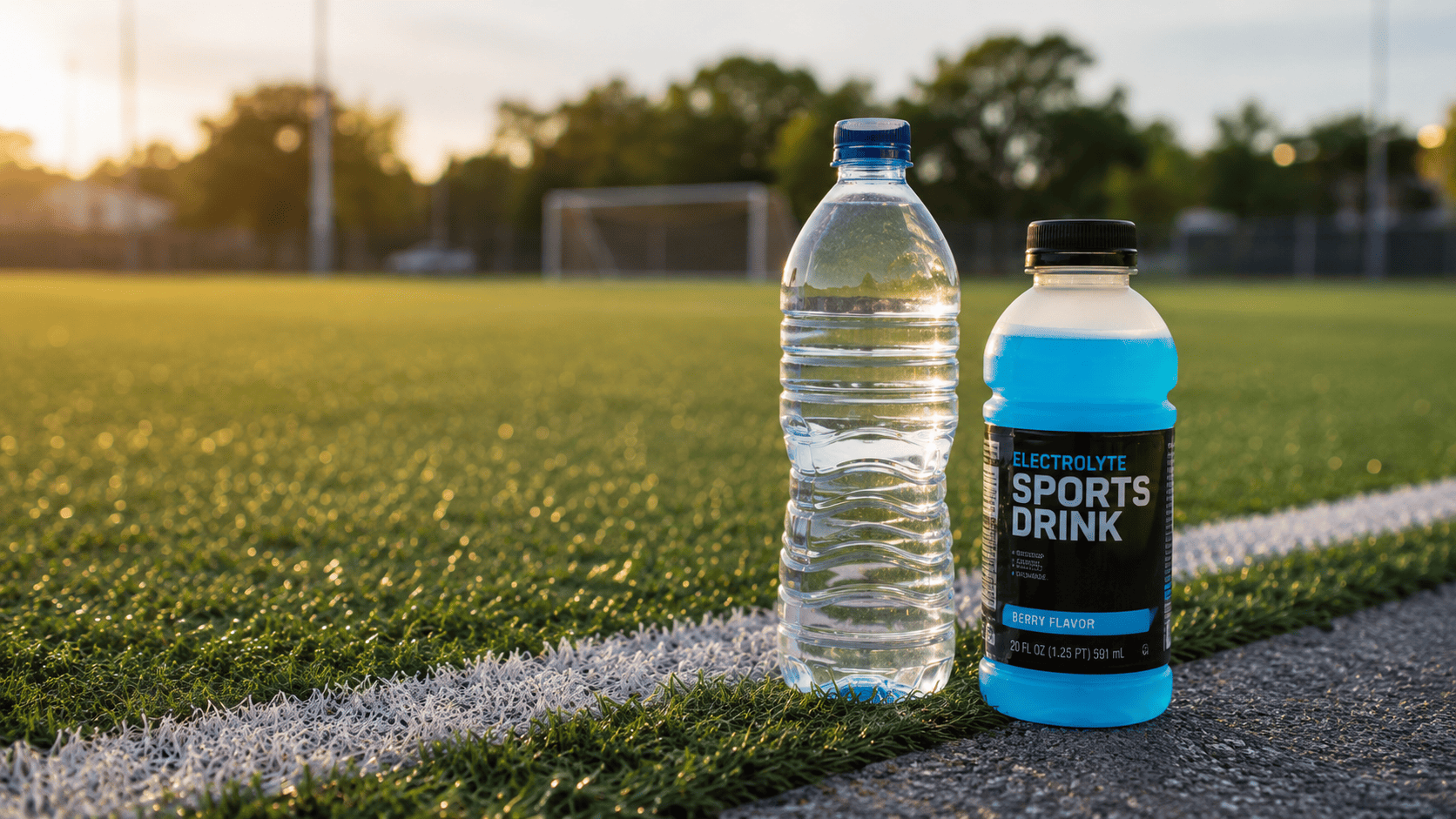
The pre-dawn meal that fuels an entire fasting day of elite training.
Every year, Yamal’s season overlaps with Ramadan, and every year that means training and competing at an elite level while fasting from sunrise to sunset. According to reporting on his approach, the plan centers on two pillars: nighttime nutrition and aggressive hydration during permitted hours, including electrolyte solutions to offset fluid loss from training in a fasted state.
He reportedly wakes around 4 a.m. for a pre-dawn meal that has to carry him through hours of fasting and a full training session. Barcelona’s medical staff, who have supported Muslim players including Ousmane Dembélé and Franck Kessié through the same challenge, adapt the club’s usual nutrition protocols rather than pausing them.
It’s a useful reminder that “the diet” isn’t a fixed script. It’s a framework flexible enough to hold personal faith, family tradition, and elite performance demands at the same time — which, arguably, is a harder engineering problem than any single meal plan.
Sleep Is Part of the Diet — Why 9 to 10 Hours Isn’t Optional

Recovery doesn’t happen at the table. It happens after it.
Nutrition without recovery is half a plan, and sleep is where the food actually does its work — muscle repair, growth hormone release, and the consolidation that lets skills learned in training actually stick. Yamal reportedly targets 9–10 hours of total sleep nightly, among the highest figures tracked across a set of young elite footballers.
That number is both age-appropriate and biologically sound. Adolescents in intensive athletic development need more sleep than adults doing comparable training loads, and later chronotypes — the tendency for teenagers to naturally fall asleep and wake later — mean La Liga’s late-shifted training schedule actually works with his body clock rather than against it.
What His Plate Can Teach the Rest of Us
None of this requires a training complex. Most of it requires a Tuesday.
Strip away the Champions League fixtures and the answer isn’t complicated. Four ideas survive contact with everything above, and none of them require professional resources.
Lamine Yamal Diet FAQ
Take away the goals and the transfer valuations, and what’s left is a much smaller, quieter thing: a teenager whose parents cook three cuisines under one roof, who copied a habit from someone he admired, and who has learned — earlier than most of us do — that the plate and the performance are the same conversation.
None of it requires a training complex to borrow. Just a dish worth repeating, a swap worth keeping, and the discipline to go to bed on time.