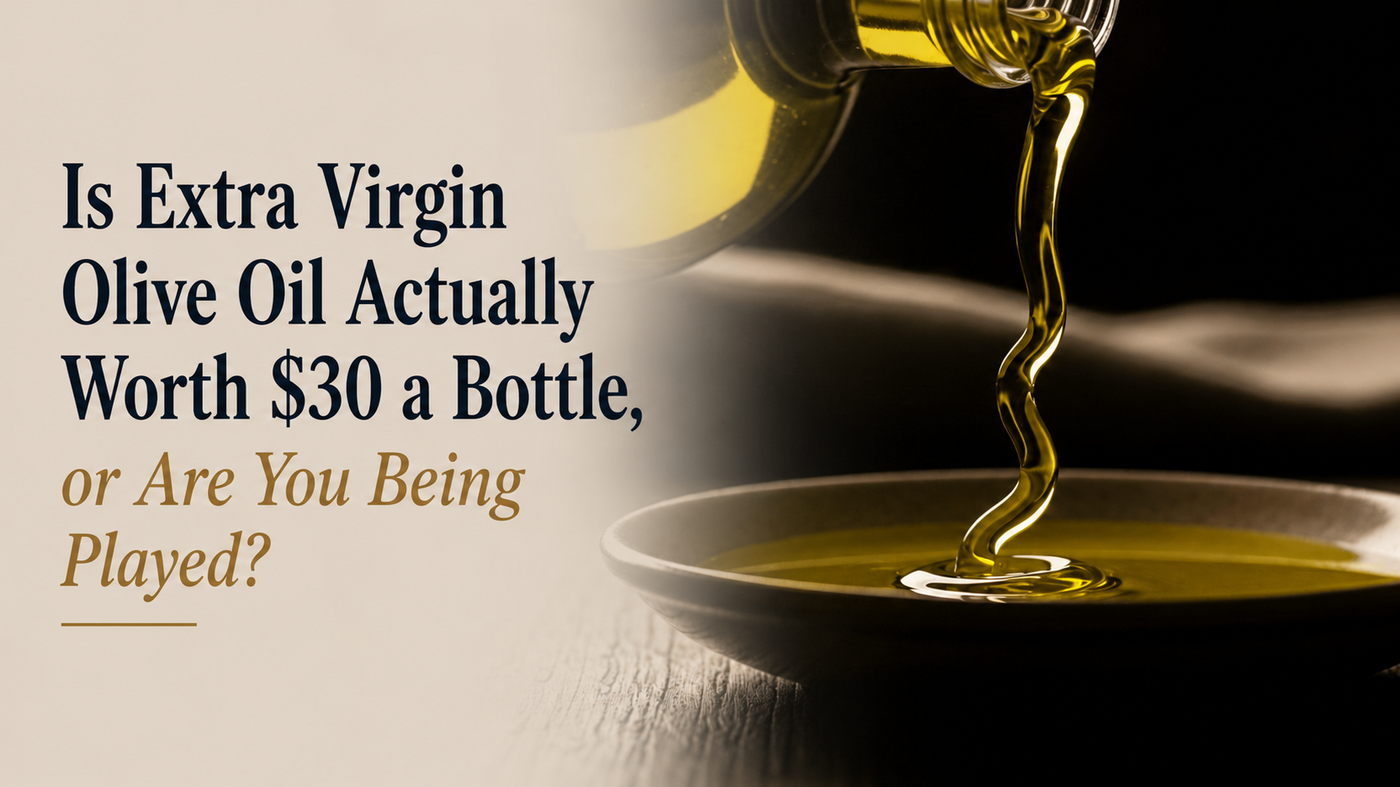
Is Extra Virgin Olive Oil Actually Worth $30 a Bottle,
or Are You Being Played?
Nearly three-quarters of top-selling imported “extra virgin” olive oil failed the actual standard in independent lab testing. Meanwhile, a $9 bottle from Trader Joe’s beat several $25 competitors in a blind tasting. So what, exactly, is the extra $20 buying you?

Stand in the oil aisle long enough and the math stops making sense. Two bottles, same “extra virgin” label, same green liquid, and a $22 gap between them. One promises a stone terrace in Puglia. The other just sits there in a plastic jug, doing its job.
Here’s the uncomfortable part: for years, researchers have been quietly proving that a large share of what’s sold as “extra virgin” in American supermarkets doesn’t actually meet the legal definition of extra virgin at all. Not a marketing exaggeration — a measurable, lab-confirmed failure.
So this article does the unglamorous work: what the price actually buys, what the chemistry actually does, and which of your olive oil assumptions the evidence quietly overturns.
What “Extra Virgin” Is Supposed to Mean — And How Often It Quietly Isn’t
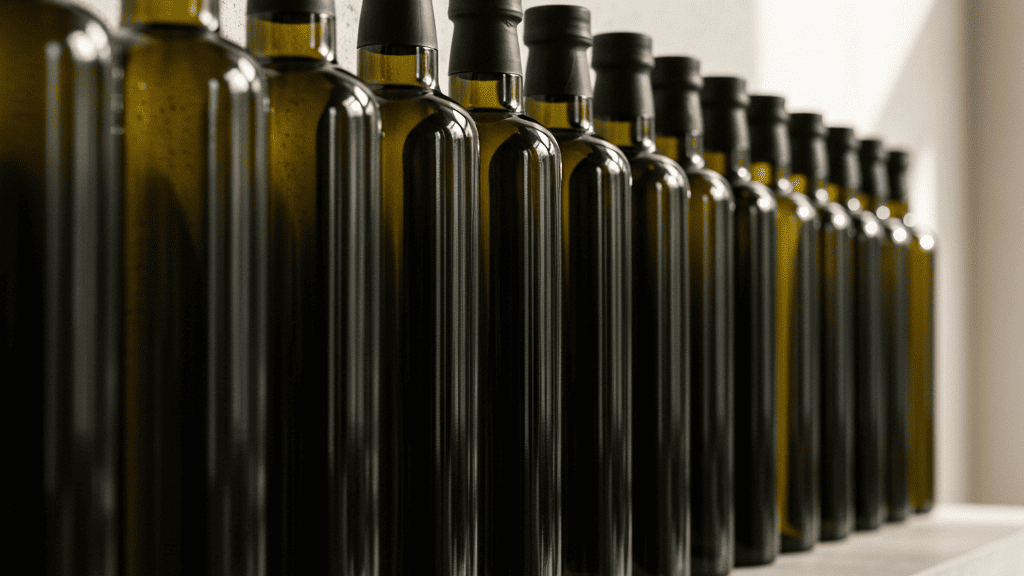
Extra virgin is a legal, testable standard — not a marketing adjective.
“Extra virgin” isn’t a vibe. It’s a specific, testable classification: the oil must come from the first mechanical pressing of olives, extracted without heat or chemical solvents, with free acidity under 0.8%, and — critically — no detectable sensory defects like rancidity, mustiness, or “fustiness,” a fermentation flaw from olives that sat too long before pressing.
That last part is where things fall apart. Chemical tests are relatively easy to pass. Taste is not — and taste is exactly what most retail “extra virgin” oil quietly fails.
A UC Davis Olive Center study, run with the Australian Oils Research Laboratory, tested 134 samples from the top five imported “extra virgin” brands sold in California supermarkets. Under two International Olive Council-accredited tasting panels, 73% of those samples failed to meet extra virgin sensory standards — most commonly for rancidity or fustiness. An earlier phase of the same research found comparable failure rates among imported brands generally, against a far lower failure rate for California-produced oils tested the same way.
UC Davis Olive Center & Australian Oils Research Laboratory, retail olive oil evaluations, 2010–2011
This isn’t a fringe claim — it’s also not unchallenged. The olive oil trade has pushed back hard, and a later court case found the methodology of one of these reports too limited to support a class-action lawsuit built on it. What survives the pushback, though, is the underlying mechanism: sensory defects are common in oil that’s old, poorly stored, or blended with cheaper refined oil to stretch a batch, and no amount of “extra virgin” printed on the label fixes that after the fact.
The honest takeaway isn’t “all olive oil is a scam.” It’s that the label alone tells you almost nothing. A bottle can be technically, legally “extra virgin” and still taste like flat, tired vegetable oil by the time it reaches your cart — and price has surprisingly little to do with which fate it met.
The Chemistry You’re Actually Paying For — Oleocanthal, Polyphenols, and a Landmark Trial
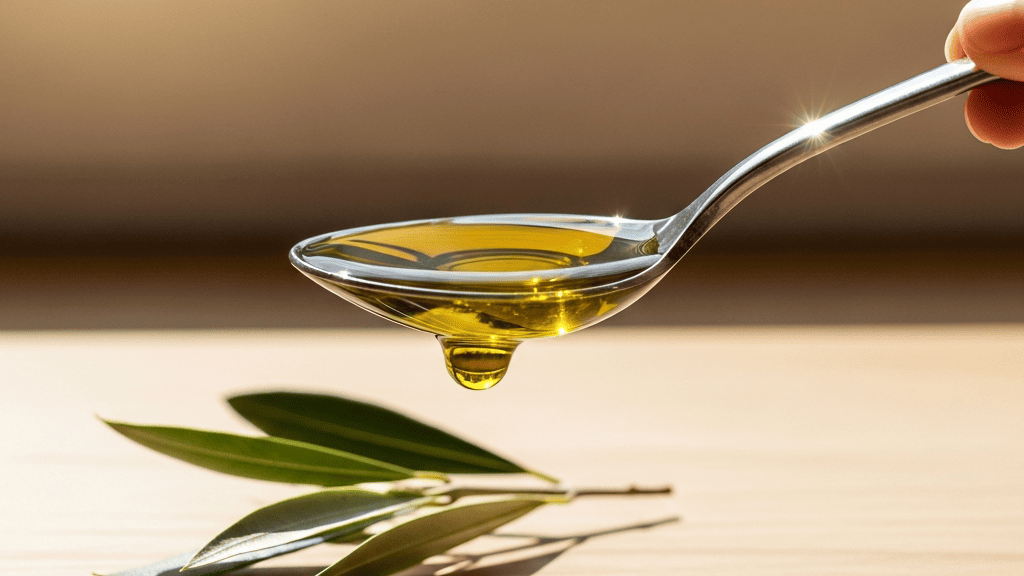
That throat-catching sting has a name, and a mechanism.
If a good olive oil makes you cough a little at the back of your throat, that’s not a defect — it’s a compound called oleocanthal doing exactly what it’s supposed to do. In 2005, researchers at the Monell Chemical Senses Center noticed that fresh extra virgin oil produced a throat sting oddly similar to swallowing liquid ibuprofen, and went looking for why.
Oleocanthal: Monell and University of Pennsylvania scientists confirmed the sting comes from a natural compound they named oleocanthal, and that it inhibits the same COX-1 and COX-2 enzymes as ibuprofen — the mechanism behind ibuprofen’s anti-inflammatory effect. A daily intake around 50g of high-quality oil delivers roughly a tenth of a standard adult ibuprofen dose in oleocanthal, at levels researchers consider comparable to the low, chronic doses used for cardiovascular protection.
The cardiovascular trial: The PREDIMED trial, the largest randomized dietary intervention study of its kind, tracked over 7,400 high-risk adults in Spain. The group assigned a Mediterranean diet supplemented with extra virgin olive oil showed roughly a 31% relative reduction in major cardiovascular events compared with a standard low-fat diet, over a median 4.8 years — a finding the researchers reconfirmed after correcting and republishing the study in 2018.
Fresh JN, et al. Nature. 2005;437:45–46 · Estruch R, et al. N Engl J Med. 2018;378(25):e34
Here’s the catch that matters for your wallet: oleocanthal and its fellow polyphenols are the fragile part. They’re highest right after pressing and degrade with heat, light, air, and time. A technically-extra-virgin oil that’s a year past harvest and has sat under supermarket fluorescents has almost certainly lost much of what made the PREDIMED-style benefits possible in the first place. Freshness, not price, is the variable doing the real work.
PREDIMED’s olive oil group used roughly 4 tablespoons (about 50ml) a day, used liberally in cooking and dressing — not sipped like a tonic. Consistency over years is what the data actually tested, not a single drizzle on a salad.
Price vs. Quality — What Happens When the Label Gets Hidden
Consumer Reports ran the test most of us wish we had time for: dozens of extra virgin olive oils, tasted blind in special blue glasses specifically so the tasters couldn’t be swayed by color, evaluated by trained experts on freshness, fruitiness, bitterness, and pungency.
Of the oils Consumer Reports rated highest, three were designated “Smart Buys” — including a bottle costing roughly 50 cents an ounce. A budget Aldi store brand and several Trader Joe’s bottles under $1 an ounce outperformed some pricier competitors in the same blind panel, while a handful of well-known, mid-priced national brands landed in the lower tier for tasting notably less fresh.
That doesn’t mean price is meaningless — it means price is a weak proxy for the variables that actually matter: how recently the olives were pressed, how the bottle was stored between the mill and your cart, and whether the producer cared enough to avoid cutting corners at any price point. A $9 bottle from a fast-turnover retailer with a recent harvest date can beat a $28 bottle that’s been sitting in a warm warehouse for fourteen months.
(UC Davis Olive Center)
(PREDIMED, NEJM 2018)
None of this makes the $30 boutique bottle a rip-off by default. Competition-verified, single-estate oils genuinely can carry more intact polyphenols and more complex flavor — the honest framing is that price correlates loosely with quality at best, and freshness plus honest labeling correlate with it far better.
3,000 Years on the Table — Why Olive Oil Earned This Much Trust
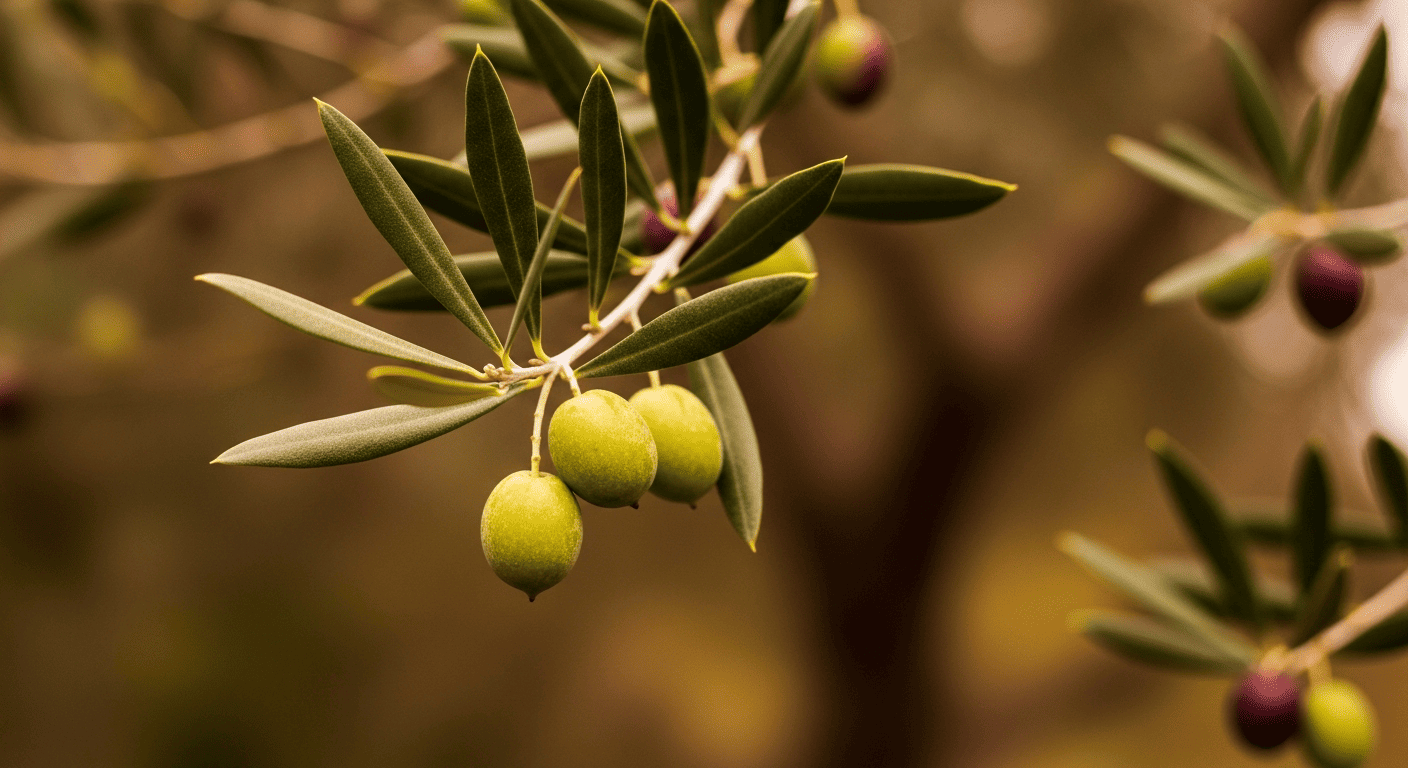
Some of the olive trees still bearing fruit today are centuries old.
Long before anyone measured a polyphenol, olive oil was already the anchor of Mediterranean life — lighting lamps, anointing athletes, sealing trade agreements, and, eventually, dressing nearly everything eaten in Greece, Italy, and the Levant. The tree itself is famously stubborn: some cultivated groves in the region are documented to be many centuries old, still producing fruit season after season.
That deep familiarity is part of why the fraud story stings the way it does. Olive oil earned its reputation as an honest, unprocessed staple over millennia — which is exactly the reputation modern adulteration quietly exploits. When a product’s whole cultural identity is “pure, simple, first-pressed,” a cut corner is harder to notice and easier to get away with.
EVOO is the fat at the center of the Mediterranean eating pattern — the one most consistently linked, across decades of cohort and intervention research, to lower cardiovascular risk. It’s less a supplement and more a foundation ingredient, used generously rather than sparingly.
If Mediterranean-style cooking is new to your kitchen, the shift is smaller than it sounds — it mostly means reaching for simple, olive-oil-forward Mediterranean meals instead of butter- or seed-oil-based defaults, and treating a good bottle as a pantry staple rather than a special occasion.
How to Actually Shop Smart — What to Check Before You Check the Price
If price is an unreliable guide, here’s what actually correlates with a bottle worth buying — in order of how much it matters.
Buy smaller bottles more often rather than one large one that sits half-used for a year, keep it away from the stove’s heat and the window’s light, and treat a strong peppery finish as a good sign, not a mistake in the bottle.
Sensory Failure Rate — Visualized
Share of samples that failed International Olive Council taste-panel standards for “extra virgin” in UC Davis Olive Center retail testing.
Note: Methodology has been publicly disputed by industry groups; figures reflect the original published lab results, and origin doesn’t guarantee freshness at the shelf.
What the Evidence Actually Supports
Strip out both the fear-mongering and the luxury marketing, and four claims survive contact with the research.
5 Olive Oil Claims the Evidence Quietly Corrects
The most-repeated olive oil advice, checked against the actual research.
Olive Oil FAQ
So — worth $30 a bottle? Sometimes. Worth blind trust just because the label says extra virgin? Not even close. The honest verdict is less dramatic than either “total scam” or “worth every penny”: price is a weak clue, freshness is a strong one, and the difference between a great bottle and a wasted one usually comes down to a harvest date most shoppers never think to check.
The next time you’re standing in that aisle, skip the price comparison first. Flip the bottle around, find the date, and let that decide — the flavor, and the chemistry, will follow.