10 No-Cook Mediterranean Meals
For the Days It’s Too Hot to Touch the Stove
Coastal cultures figured this out centuries before air conditioning: when the sun is unreasonable, you don’t fight it in the kitchen. You open a can of good tuna, slice a tomato, and let olive oil do the rest.

There’s a particular kind of stubbornness that shows up on the hottest day of the year: standing over a stove anyway, sweating into a pan of something that didn’t need to be hot in the first place.
People who live where summers are genuinely brutal — Andalusia, the Cyclades, coastal Lebanon — never developed that habit. Their food cultures built entire cuisines around not lighting a fire when the temperature already feels like one. Cold soups. Raw vegetables dressed until they taste like something more. Bread that gets better for having sat in a bowl of tomato juice.
None of it is a compromise. It’s a different kind of cooking — the kind where the knife does the work instead of the flame, and the recipe was finished the moment the ingredients met.
Why Your Body Actually Craves Cold Food — It’s Not Just Preference
Losing your appetite for a hot bowl of anything at 95°F isn’t a mood. It’s thermoregulation doing its job. Every meal you eat generates its own internal heat as your body digests and metabolizes it — a phenomenon researchers call the thermic effect of food.
A long-running body of physiology research, summarized in the NIH’s review of nutrition in hot environments, describes what’s known as the “thermostatic hypothesis” of eating: food intake creates heat as it’s absorbed and metabolized, on top of whatever heat the environment is already contributing, and the body appears to regulate intake partly to avoid an unmanageable heat load. In practical terms, your appetite is quietly doing math you never asked it to do.
National Research Council (US) Committee on Military Nutrition Research. Nutritional Needs in Hot Environments. Washington (DC): National Academies Press.
This is the quiet logic behind every one of these dishes. A cold soup, a raw salad, a plate of cucumber and yogurt — none of them ask your body to generate extra internal heat just to break them down. You’re not just avoiding the stove. You’re eating in a way that doesn’t fight your own thermoregulation.
There’s a second piece, too, and it’s less about physics than about culture: the longest-living populations on record eat, almost without exception, along the Mediterranean coastline — where this no-cook instinct has been standard practice for millennia, not a summer workaround.
A Soup That’s Never Been Near a Stove — Two Ways to Make One
1. Andalusian Gazpacho
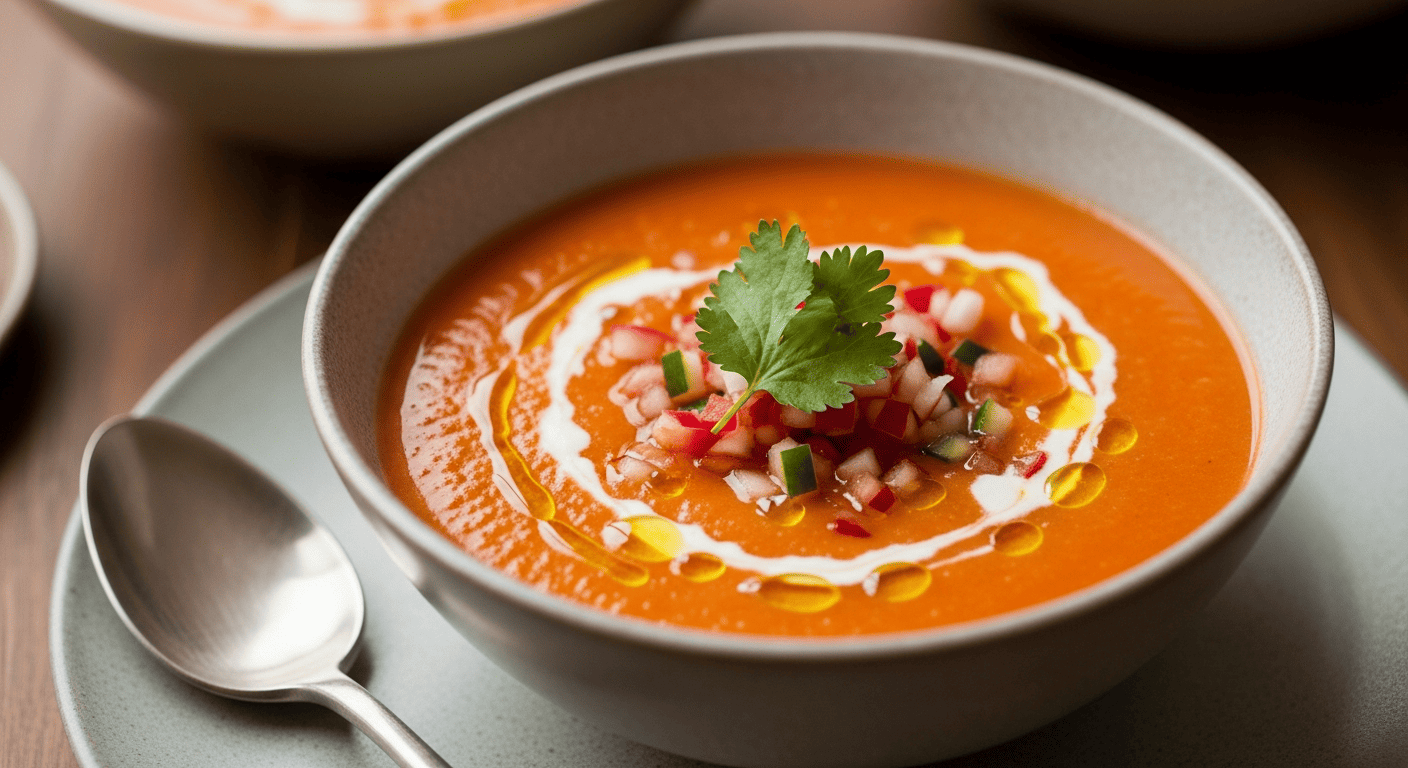
Blend ripe tomatoes, cucumber, green pepper, garlic, sherry vinegar, and a generous pour of olive oil, then chill until it’s cold enough to fog the bowl. Southern Spain has been eating this — in one form or another — since long before tomatoes even existed there. The tomato arrived from the Americas centuries after the dish itself; the original version was a pounded paste of bread, garlic, olive oil, and vinegar, and tomatoes were simply the best thing that ever happened to it.
2. Ajo Blanco (Chilled Almond & Grape Soup)
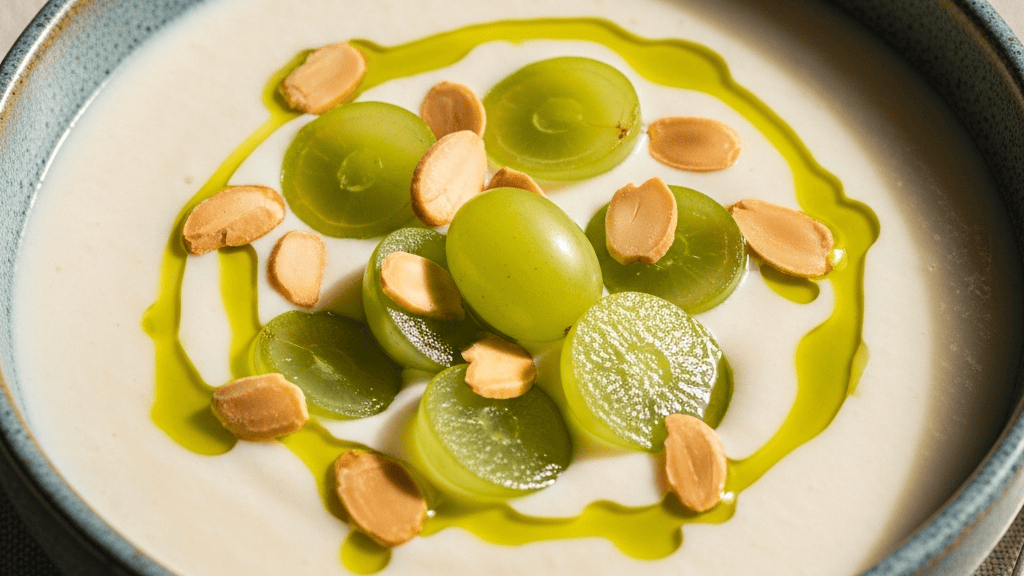
This is the older relative gazpacho quietly outgrew — blanched almonds, bread, garlic, olive oil, and water, blended until silky and finished with a few halved green grapes floating on top. It tastes like almost nothing you’d expect: cool, faintly sweet, savory in a way that’s hard to name. Malaga has been serving it this way since before Columbus made the tomato swap possible.
Both soups improve after a few hours in the fridge — the flavors settle and the temperature drops properly. Make either one in the morning before the heat sets in, and it’s the coolest thing in the house by dinner.
The Salads That Are Actually Meals — Not Side Dishes
3. Horiatiki (Greek Village Salad)
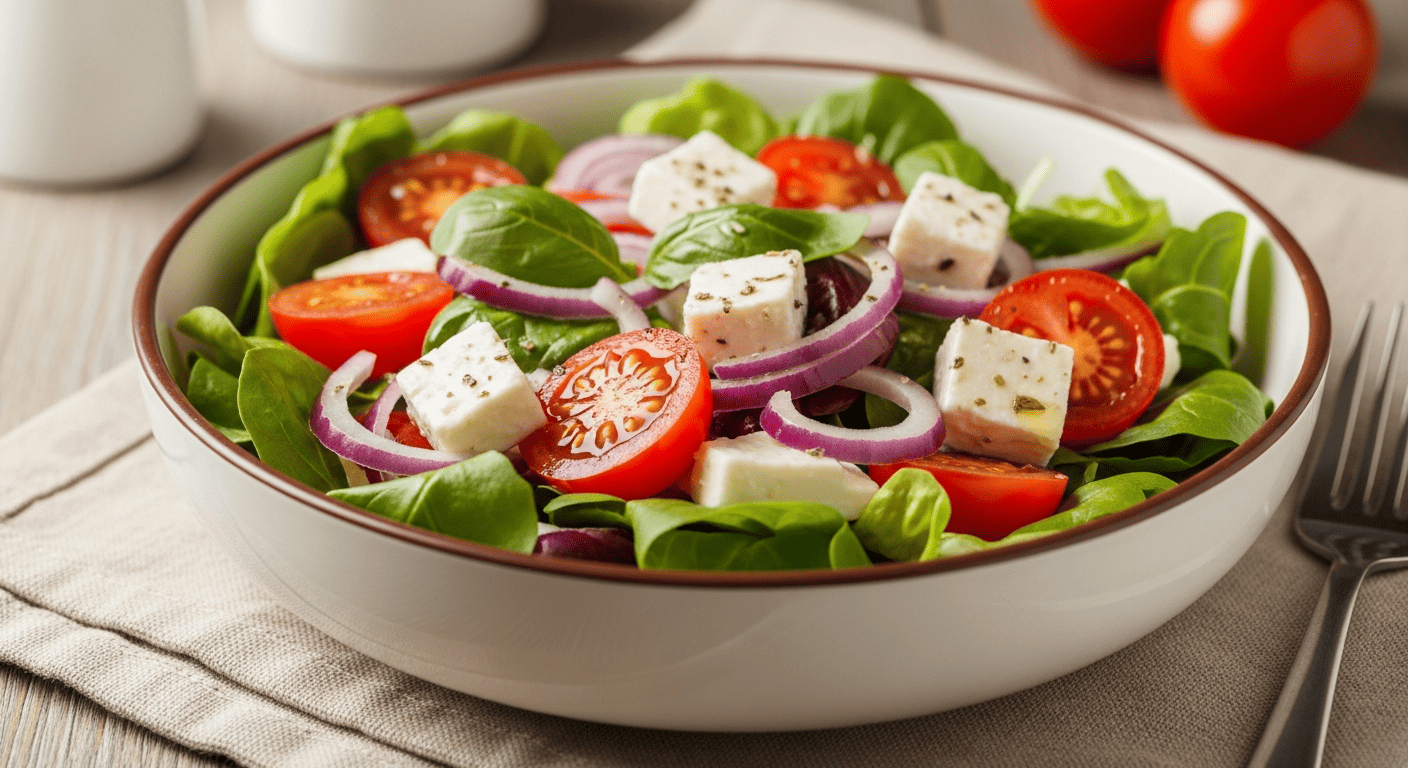
The real version has no lettuce. Just thick-cut tomato, cucumber, green pepper, red onion, kalamata olives, and a slab — not a crumble — of feta on top, finished with oregano and enough olive oil to pool at the bottom of the plate. It’s built to be eaten with bread, mopping up whatever’s left.
4. Watermelon, Feta & Mint Salad
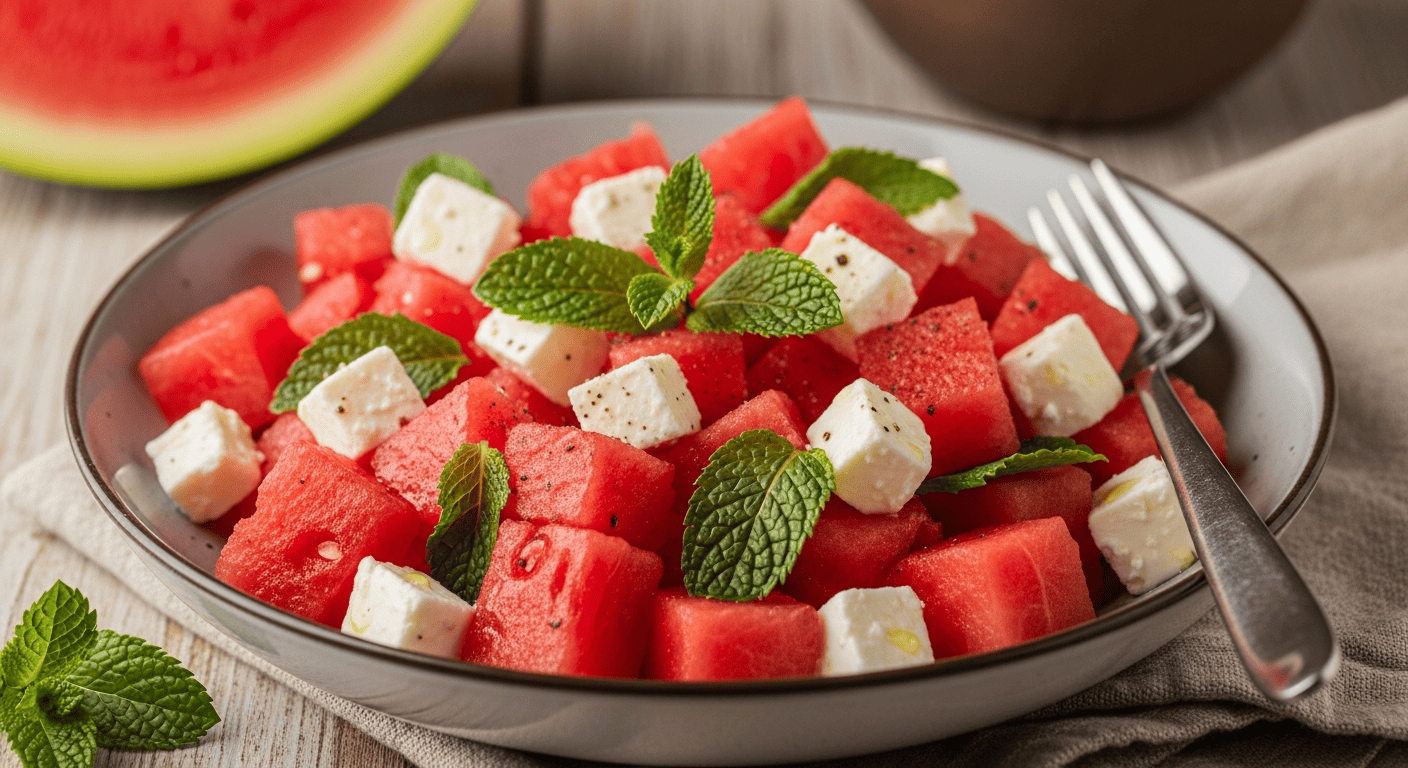
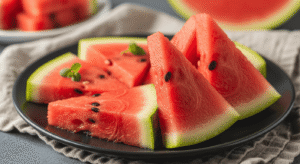
Cubed watermelon, salty feta, torn mint, a squeeze of lime, and a drizzle of good olive oil. The combination sounds accidental until you taste it — the salt pulls sweetness out of the fruit that plain watermelon never shows you. It also happens to be one of the more efficient hydration foods on this list, since watermelon is roughly 92% water by weight.
5. Fattoush (Levantine Bread Salad)
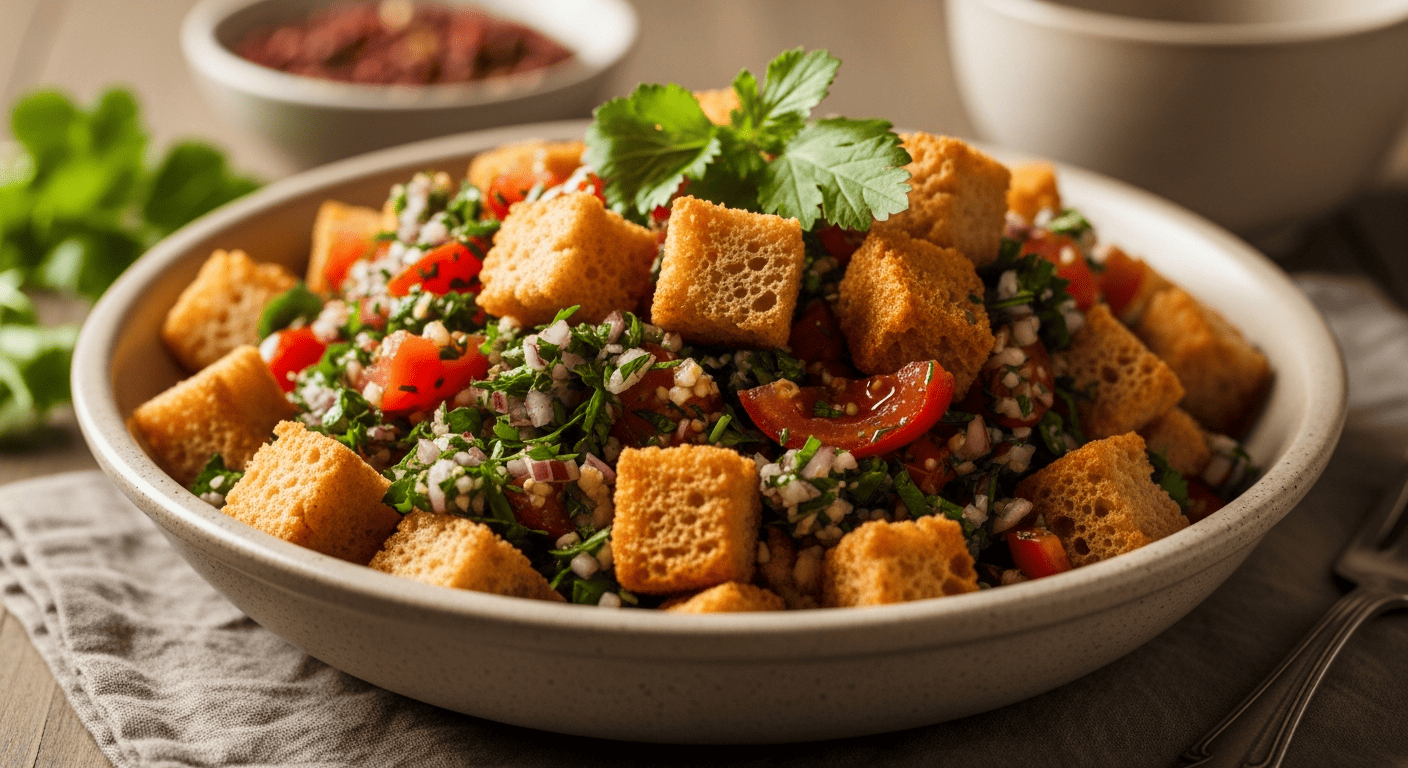
Chopped cucumber, tomato, radish, and romaine tossed with a lemony, sumac-dusted dressing, finished with shattered pieces of toasted or day-old pita. Sumac is the detail that makes it — a tart, slightly fruity spice that stands in for the lemon most Western salads over-rely on. If your pita’s a little stale, this is exactly where it belongs.
6. Tuscan Tuna & White Bean Salad (Tonno e Fagioli)
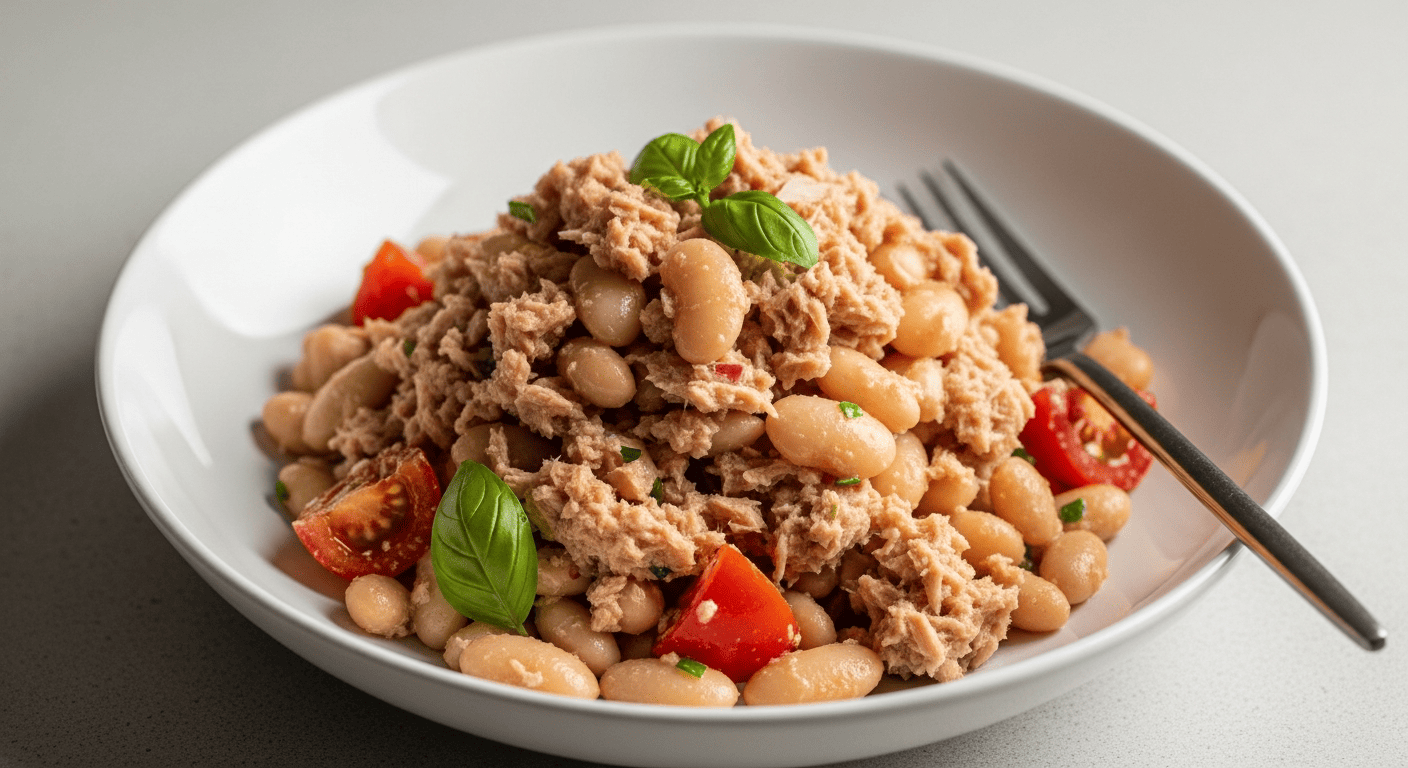
Good canned tuna, cannellini beans, thinly sliced red onion, parsley, lemon juice, and olive oil — stirred together, not fussed over. It’s the closest thing on this list to a pantry emergency meal, and it’s still, technically, fine dining in Tuscany. If you like the no-cook-protein logic here, our no-cook salmon-stuffed avocado recipe runs on the exact same principle.
(PREDIMED trial, ~7,400 adults)
(PREDIMED sub-analysis)
Sources: Estruch R, et al. PREDIMED trial, N Engl J Med / reviewed in Am J Cardiol. · Guasch-Ferré M, et al. BMC Medicine, 2014 — olive oil intake and CVD risk in PREDIMED.
The Ones You Eat With Your Hands — Mezze & Spreads
7. Classic Hummus & Raw Veggie Board
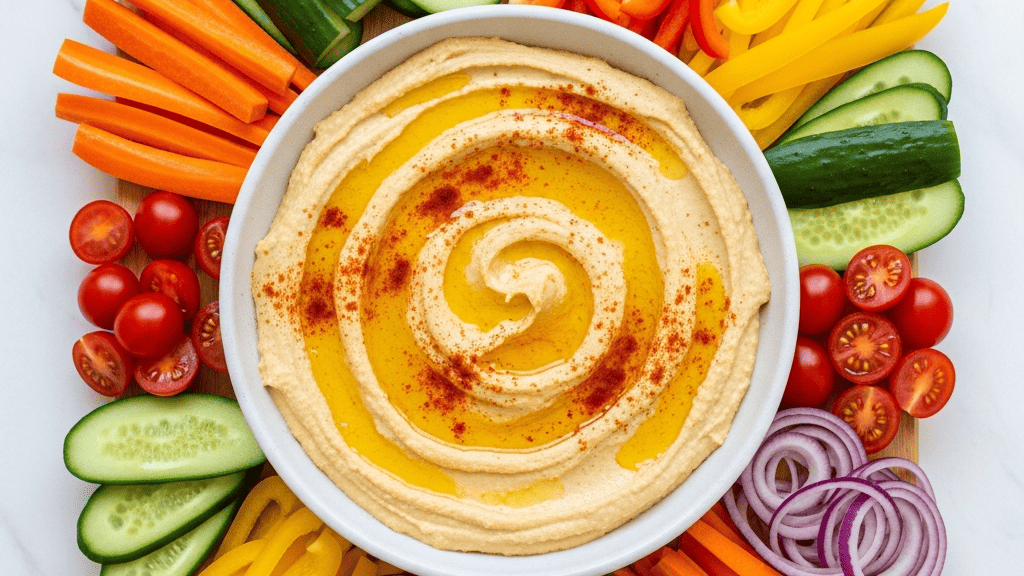
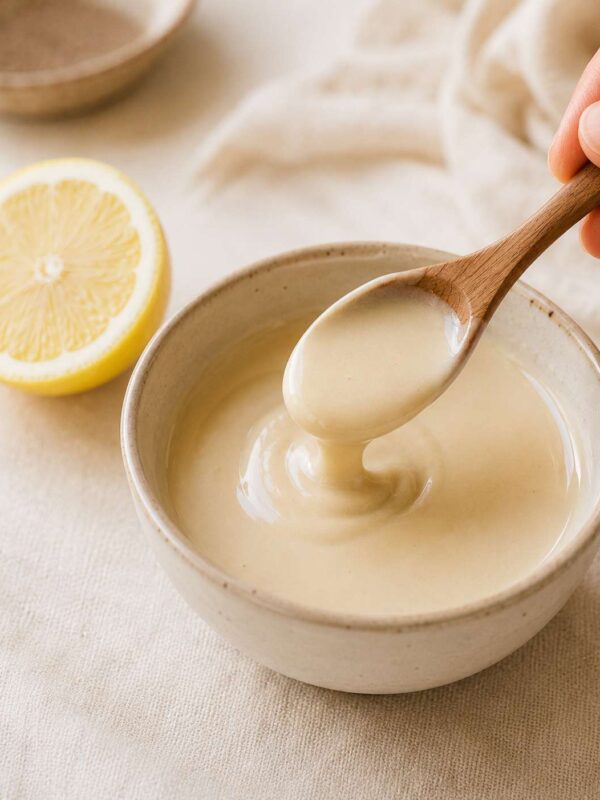
Blitzed chickpeas, tahini, lemon, garlic, and olive oil, surrounded by whatever’s crisp in the fridge — cucumber spears, bell pepper strips, radishes, cherry tomatoes. It scales to a crowd without any more effort than a bigger bowl. Our creamy tahini dressing works as an easy shortcut base if you want the flavor without blending chickpeas from scratch.
8. Tabbouleh
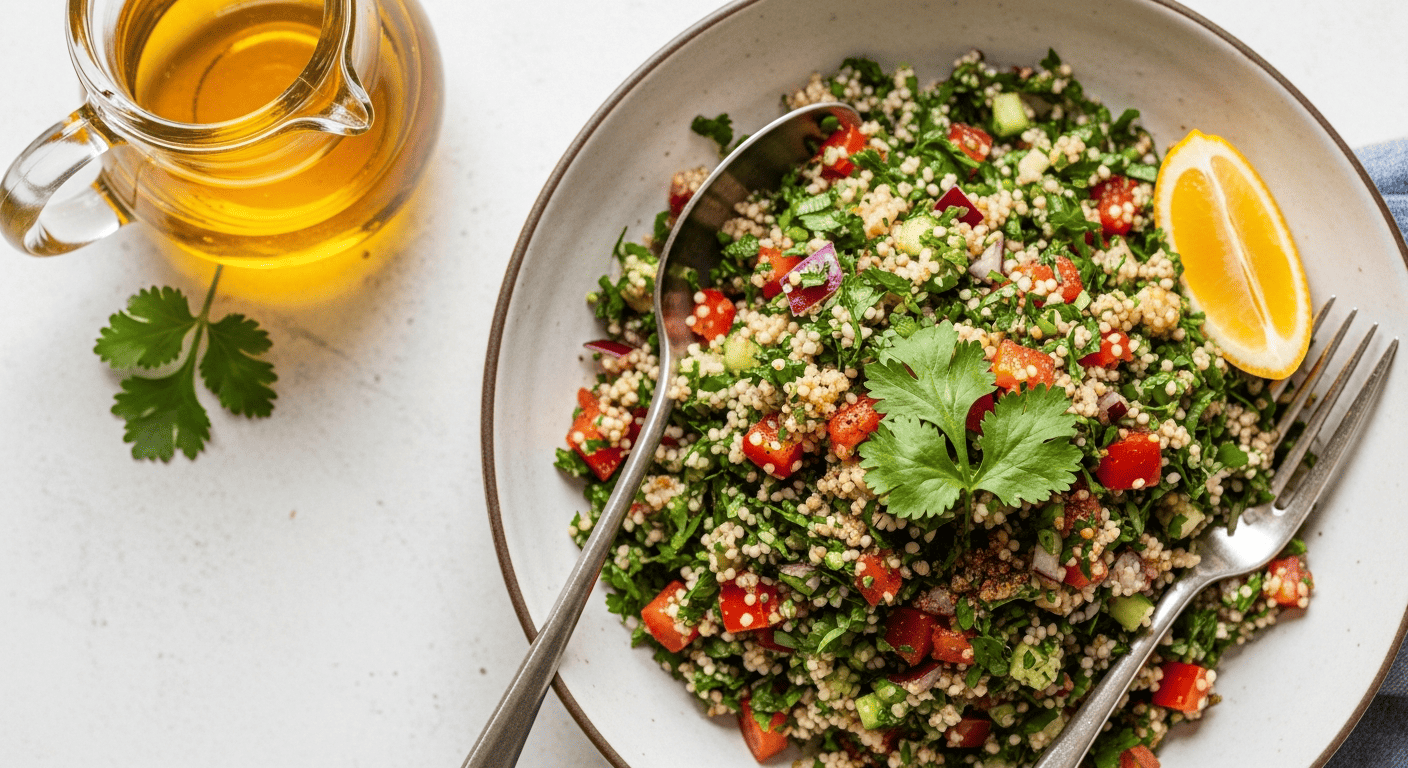
Most people get the ratio backwards. Real tabbouleh is a parsley salad with a little bulgur in it — not the other way around. Finely chopped parsley and mint, diced tomato, a small amount of soaked bulgur, lemon juice, and olive oil. It should look green before it looks like a grain salad.
9. Caprese With Marinated Tomatoes
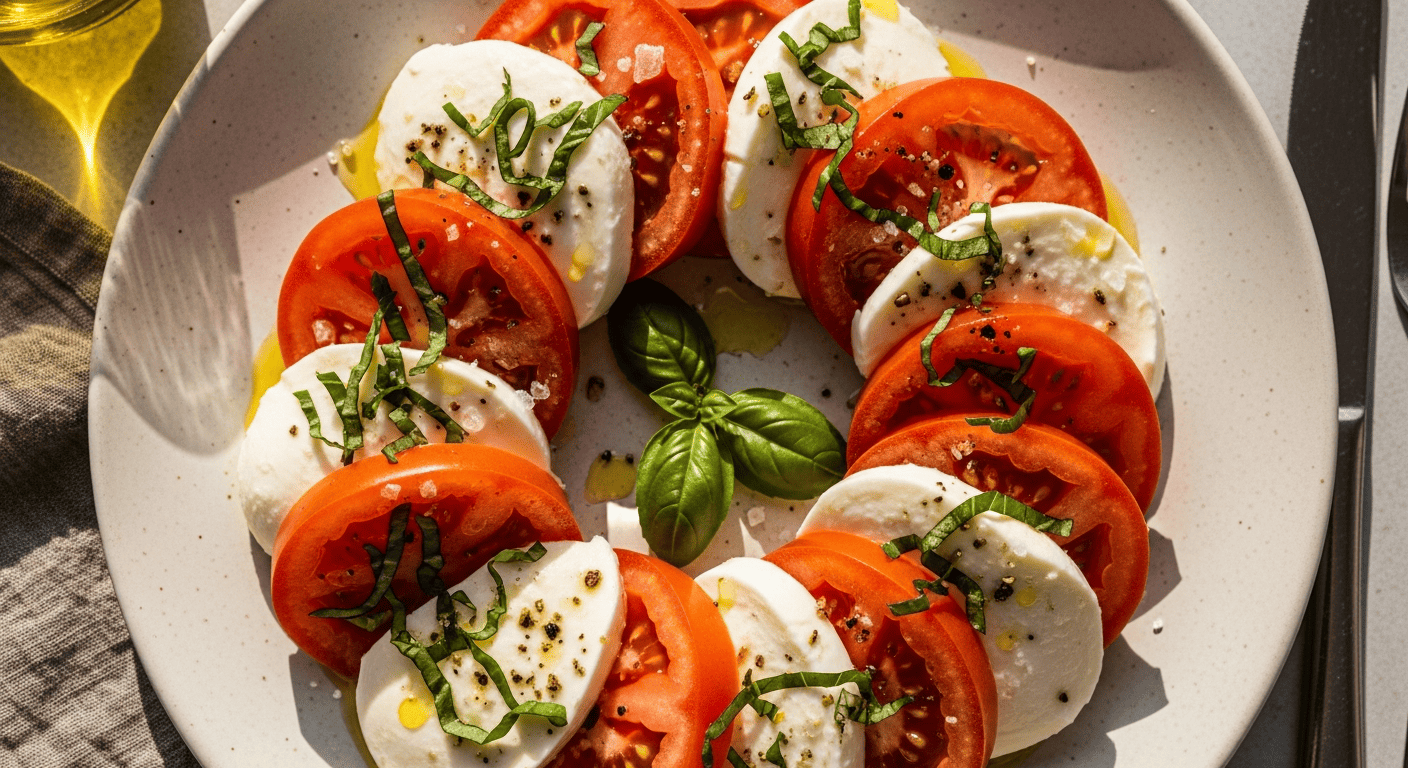
Sliced tomato and fresh mozzarella, torn basil, olive oil, and flaky salt. Let the tomatoes sit in the oil and salt for ten minutes before serving — that short marinating window is the entire secret, and it costs nothing but a little patience.
Sweet, Simple, and Somehow a Full Meal — Greek Yogurt With Honey
10. Greek Yogurt, Honey & Walnut Bowl
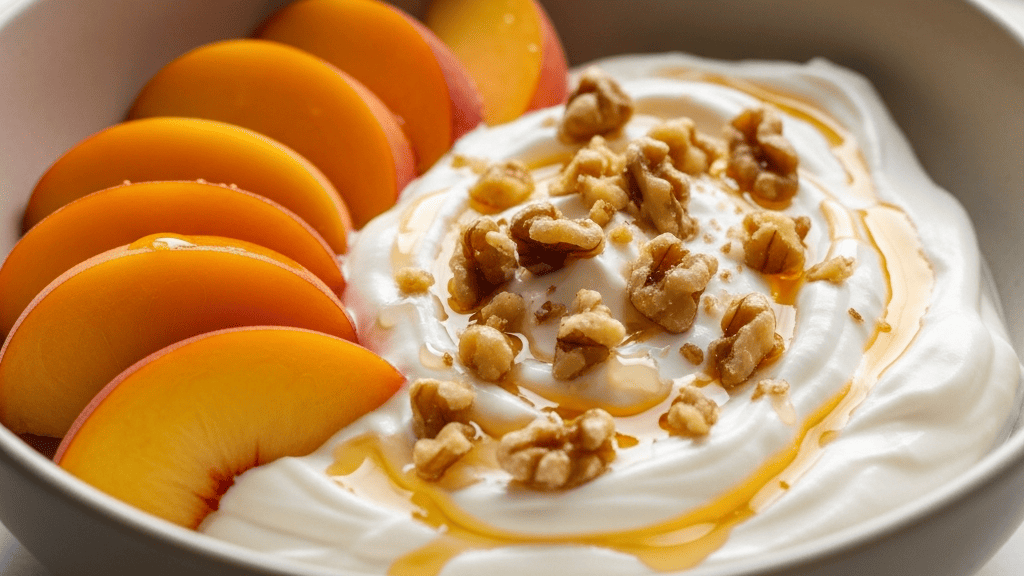
Thick strained yogurt, a spoon of good honey, crushed walnuts, and whatever stone fruit is in season — peaches, figs, apricots. This is breakfast in Athens on a normal Tuesday, and dessert everywhere else. It works at either end of the day precisely because it asks nothing of you except a spoon.
It’s also a quiet closing argument for this whole list: the most Mediterranean thing about Mediterranean food was never the specific ingredients. It’s the confidence that a few good things, left mostly alone, are already enough.
Water Content, By Ingredient
Roughly how much of each ingredient’s weight is water — a big part of why these dishes feel so cooling to eat.
Food generally supplies about a fifth of a person’s daily fluid intake, alongside drinking water and other beverages.
What the Evidence Actually Supports
Not everything about “eating light in summer” is folklore. A few claims here hold up cleanly against the research.
No-Cook Mediterranean FAQ
None of these ten dishes are shortcuts. That’s worth saying plainly, because “no-cook” can sound like a concession — the thing you settle for when you’re too tired or too hot to do it properly. It isn’t. It’s a technique the Mediterranean perfected precisely because heat forced the issue, centuries ago, long before anyone was writing recipes down.
The stove stays off. The tomatoes do most of the talking. And somehow, by the end of a hot afternoon, that’s the meal that actually feels like it was made for you.