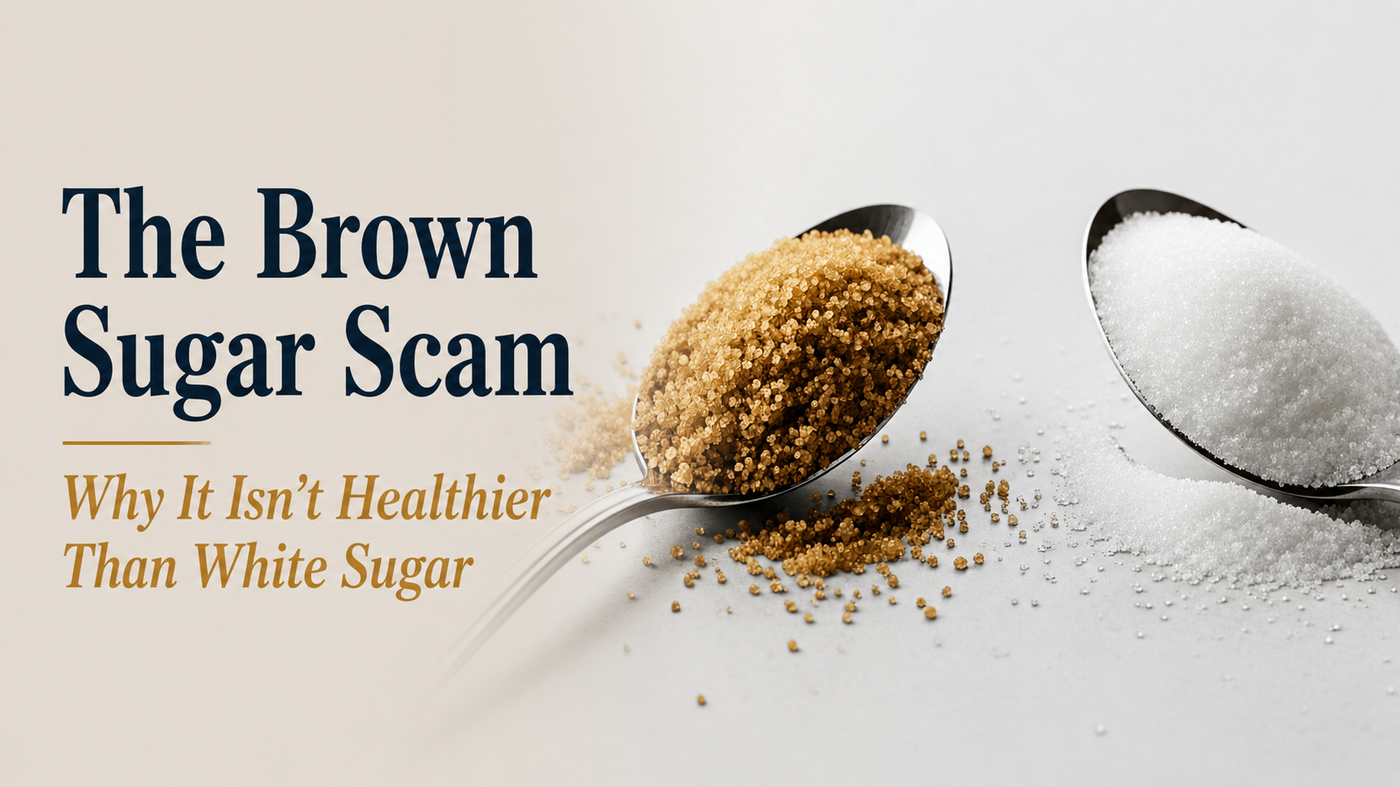
The Brown Sugar Scam
Why It Isn’t Healthier Than White Sugar
It looks more natural. It sounds more wholesome. It costs more at the store. And it is, almost entirely, white sugar wearing a coat of molasses. Here’s what the science actually says — and why the brown fools us so completely.

There’s a small, quiet decision that plays out in kitchens every morning. Two jars on the shelf. One white, one brown. And a hand that reaches, almost without thinking, for the brown one — because brown feels like the grown-up choice. The wholesome one. The one your better self would pick.
It’s the same instinct that reaches for brown bread over white, brown rice over white, the whole-grain version of everything. And with those foods, the instinct is right. The color is a receipt — proof the bran and germ are still there.
With sugar, the receipt is forged. The brown isn’t something that survived refining. In most cases it’s something that was sprayed back on afterward. This is the story of how a cosmetic difference became a health belief — and what the evidence says when you actually weigh the two.
What Brown Sugar Actually Is — And Where That Color Comes From
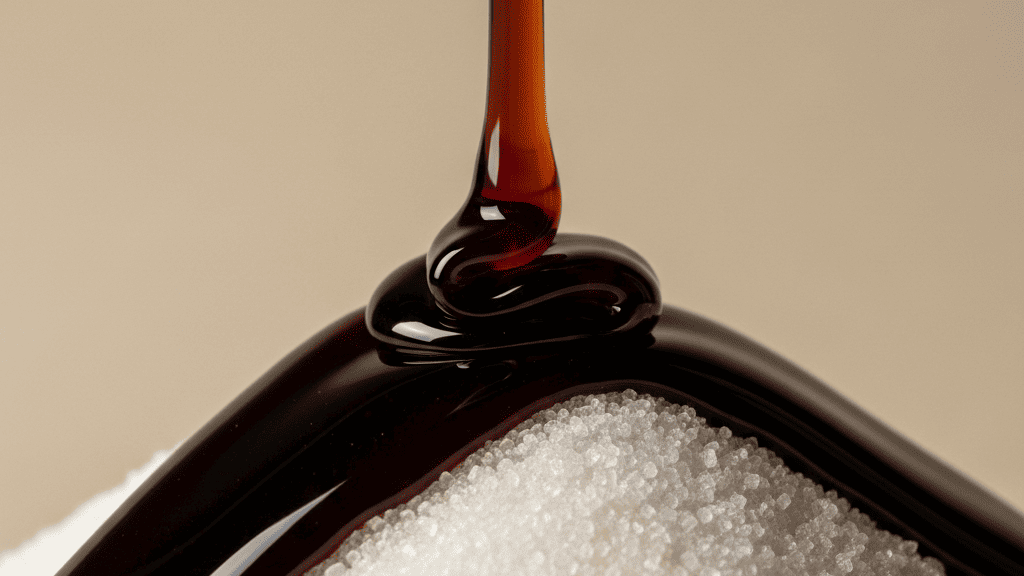
📷 Commercial brown sugar, assembled: refined white crystals, then molasses brushed back in.
Start with sugarcane or sugar beet juice. Boil it, crystallize it, and spin out the crystals in a centrifuge. The clear crystals that remain become white sugar — about 99.95% pure sucrose. The dark, mineral-flecked syrup spun away from them is molasses.
Here’s the part the marketing skips: most brown sugar on the shelf isn’t sugar that “kept” its molasses. It’s fully refined white sugar with a measured amount of molasses added back in. Light brown sugar is roughly 3.5% molasses; dark brown, around 6.5%. The crystals are identical to white. Only the coating changed.
Per the Sugar Association and reporting compiled by Today’s Dietitian, commercial brown sugar is produced by combining refined white sugar with molasses. All brown sugars — light, dark, turbinado, demerara — are essentially defined by how much molasses sits on the crystal, not by being less processed. Even “raw” turbinado has had impurities removed; despite the name, it isn’t raw, unprocessed sugar.
Today’s Dietitian, “Natural Brown Sugars & Syrup Sweeteners,” Oct 2022 · The Sugar Association, Types of Sugar.
There’s a delicious historical irony here. In the 1800s, brown sugar was the cheap sugar — viewed as impure, inferior, even a little dirty, the stuff you bought when you couldn’t afford the gleaming white refined kind. White sugar was the status symbol. The wholesome-brown hierarchy we live by today is a complete reversal, and a fairly recent one. The color means the same thing it always did. We just decided to read it differently.
The Mineral Mirage — Yes, It Has Calcium and Iron. No, It Doesn’t Matter.
This is where the defense usually goes: but brown sugar has minerals white sugar doesn’t. And that’s true. The molasses brings traces of calcium, iron, potassium, and magnesium along for the ride. The problem isn’t whether they’re present. It’s how much.
The European Food Information Council (EUFIC) puts it plainly: while molasses contains minerals, the amounts in brown sugar are extremely small. A tablespoon provides less than 1% of your daily requirement for any of them. To get a meaningful dose, you’d have to eat enough sugar to do far more harm than the minerals could ever offset.
EUFIC, “Is brown sugar healthier than white sugar?” (peer-reviewed misinformation series).
Let’s make that concrete, because the scale is genuinely absurd. A teaspoon of brown sugar contains roughly 0.03 mg of iron. The daily target for an adult woman is about 18 mg.
To hit a single day’s iron from brown sugar alone, you’d need to eat around 600 teaspoons — roughly five cups of sugar, near 10,000 calories of it. A handful of spinach or a bowl of lentils gets you there for a fraction of the calories and none of the sugar. The minerals in brown sugar are real in the way a single raindrop is real water. Technically yes. Practically, no.
Neither sugar contains fiber, protein, or any vitamin in a quantity worth naming. This is why nutritionists call sugar “empty calories” — and brown sugar’s coat of molasses doesn’t fill the cup. It just tints it.
Calories, Blood Sugar & Your Body — Why It Can’t Tell the Two Apart
On calories, the gap is a rounding error. A teaspoon of brown sugar runs about 15 calories; white sugar, about 16 calories. Brown sugar’s molasses brings a little moisture, so per packed teaspoon it sometimes reads slightly lower — but per gram they’re effectively the same, both sitting above 98% carbohydrate as sucrose.
Blood sugar is where the myth fully collapses. Both are nearly pure sucrose, which your gut splits into glucose and fructose the moment it arrives. Sucrose carries a glycemic index of about 65 whether it came from a white jar or a brown one. For someone managing blood sugar or diabetes, swapping white for brown changes essentially nothing.
(both raise blood glucose alike)
So when a recipe, a café menu, or a wellness post implies brown sugar is the “better-for-you” sweetener, it’s selling a feeling, not a fact. The honest framing is the one the major health bodies keep repeating: the type of sugar barely matters. The amount is the entire game.
Why We Believe Brown Is Better — The Psychology of the Wholesome Color
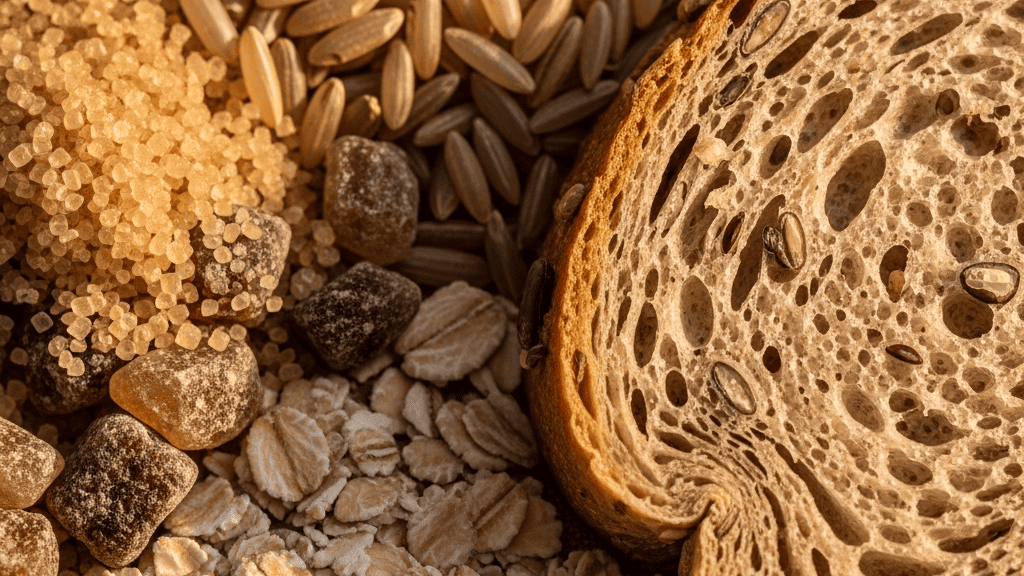
📷 Brown sugar borrows its halo from neighbors that earned theirs honestly.
The belief survives because it’s built on a shortcut that’s usually correct. Across most of the grocery store, brown genuinely does mean “more of the plant kept in.” Whole-wheat bread keeps the bran. Brown rice keeps the germ. Brown eggs, brown flour, brown everything — our pattern-matching brain learned that the darker version is the less-processed version, and it’s right often enough that we stopped checking.
Brown sugar free-rides on that pattern. It looks like it belongs in the wholesome aisle, so the health halo transfers automatically — no label-reading required. Researchers call this a health halo: one wholesome-seeming cue (a color, a word like “natural,” a craft-paper bag) bleeds credibility onto the whole product. Brown sugar may be the purest example in any pantry, because the cue and the reality point in opposite directions.
There’s a second, sneakier force: effortful virtue. Brown sugar costs a little more, clumps, needs softening, looks artisanal. Things that feel slightly harder feel slightly more righteous — the same instinct that makes a hand-whisked drink feel more deserving than an instant one. If you like that idea, you’ll enjoy the science behind why matcha’s slow ritual feels so good, where the preparation does real work the sugar’s color only pretends to.
We don’t actually believe brown sugar is healthy because we’ve read its nutrition panel. We believe it because it’s brown, and brown has earned our trust everywhere else. The marketing didn’t have to lie. It just had to stay quiet and let the color talk.
Where the Nutrients Actually Live — It’s the Molasses, Not the Sugar
To be fair to brown sugar, the minerals it carries are real — they’re just in the wrong drawer. Everything genuinely nutritious about brown sugar comes from the molasses. And molasses, on its own, is a legitimately interesting food.
When sugarcane juice is boiled and the sucrose crystallized out, the minerals that were dissolved in it stay behind in the syrup. Boil it again and again, and you reach blackstrap molasses — the dark, bittersweet, third-boiling residue where the nutrients concentrate.
So there’s a real, narrow truth hiding under the myth: molasses earns some of the credit brown sugar steals. Muscovado — an unrefined sugar where the molasses was never separated out — sits a small step closer to that, with slightly more trace minerals than commercial brown sugar. But “slightly more than almost nothing” is still almost nothing.
If you want molasses’s benefits, eat molasses — a spoon of blackstrap in oatmeal or a marinade. Don’t expect a brown latte or a tray of cookies to deliver them. The nutrients you’re picturing were mostly spun away before the crystals ever reached your jar. For foods where the wholesome reputation actually holds up, our roundup of foods linked to longer lifespans is a better place to spend your attention than the sugar shelf.
A Teaspoon of Brown Sugar vs. Your Daily Minerals
Percentage of an adult’s daily requirement supplied by one teaspoon (4g) of brown sugar. The scale only runs to 1% — and the bars still barely register.
Note: even at a generous reading, no mineral in a teaspoon of brown sugar reaches a third of one percent of what your body needs that day.
What’s Actually True About Brown Sugar
Strip away the halo and the backlash, and four honest statements survive. None of them is “it’s healthier.”
5 Brown Sugar Claims the Evidence Quietly Corrects
The claims most worth puncturing, before they cost you another premium-priced jar.
Brown Sugar FAQ
None of this means brown sugar is bad, or that you’ve been conned into something harmful. It makes warmer cookies and deeper sauces, and there’s nothing wrong with reaching for it because you like what it does to a recipe. The only thing worth letting go of is the quiet belief that the brown jar is the responsible choice.
Because here’s the part the color was always hiding: your body never read the label. It only ever saw the sugar. And maybe the most useful thing brown sugar can teach us isn’t about sweeteners at all — it’s how easily a shade, a texture, a slightly higher price can convince us we’ve made the better decision, long before we’ve checked whether we have.