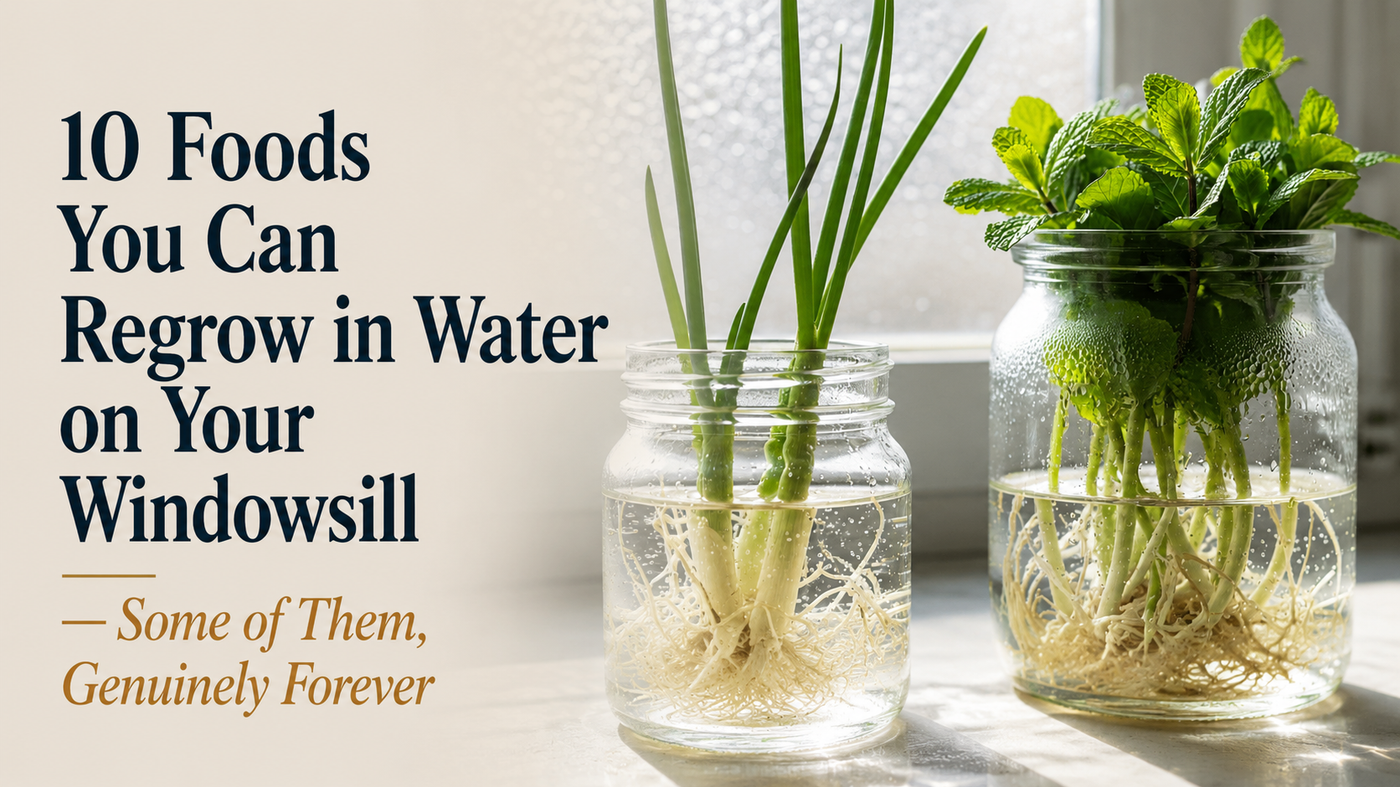
10 Foods You Can Regrow in Water on Your Windowsill
— Some of Them, Genuinely Forever
You bought it once. With a jar of water and a sunny ledge, some of it never has to be bought again. Here’s which scraps actually come back to life — and the honest line between “a few more harvests” and truly endless.

The white root end of a scallion is, right now, sitting in your compost bin or trash, fully alive. Not “fresh.” Alive. Its cells are intact, its growth tissue is unharmed, and it is waiting — with the patience only a plant has — for water and light to tell it the danger has passed.
You didn’t kill it when you cooked with it. You just interrupted it. Give that scrap a jar of water on a bright windowsill and it picks up exactly where it left off, pushing new green out of the same base within days.
This isn’t a hack so much as a loophole in how we shop. A handful of common foods can be coaxed back to life in water alone — and a few of them, the ones nobody expects, will keep going for as long as you let them. Here are the ten worth your windowsill, the honest truth about “forever,” and the two-minute method that works for nearly all of them.
The Compost-Bin Loophole — Why That Scrap Is Still a Plant
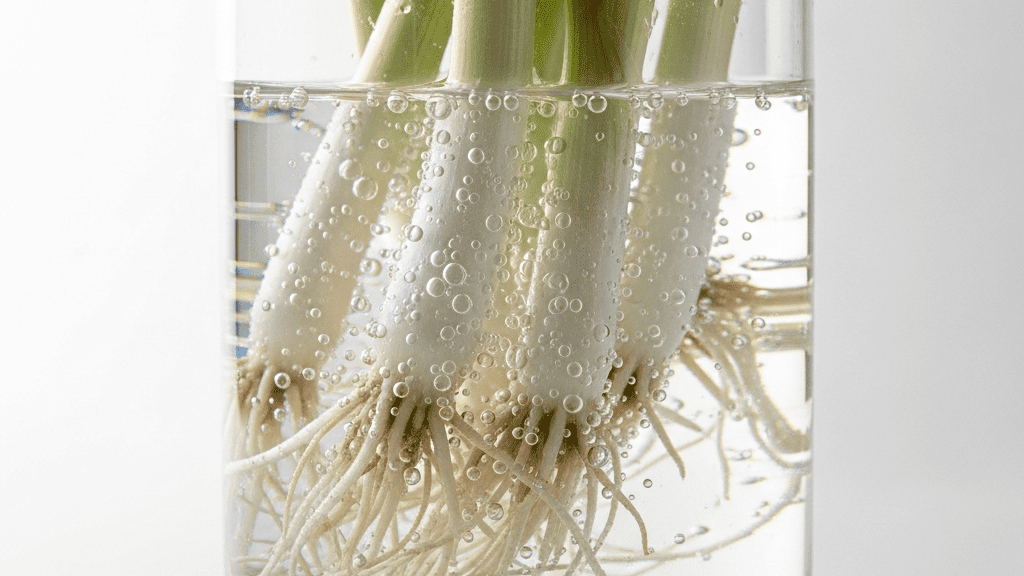
New roots within 48 hours: the base never stopped being a plant.
A scallion isn’t a tube of flavor. It’s a perennial — a plant built to come back year after year. The pale base you trim off holds something called the basal plate: a compressed knot of growth tissue, the same engine that pushes new leaves out of an onion or a tulip. Hand it water and light and that engine simply switches back on.
Leafy bases work on the same principle. At the center of a celery heart or a head of romaine sits the meristem — undifferentiated cells that can become whatever the plant needs next. Cut the stalks away and the meristem, still intact, starts building replacements from stored energy. Herbs do something even cleverer: a cut stem grows brand-new roots straight out of its nodes, a trick botanists call adventitious rooting. That’s not a scrap reviving. That’s a whole new plant being born on your counter.
In the United States, the USDA and EPA estimate that 30–40% of the food supply goes uneaten — and households are the single biggest contributor. A 2025 EPA analysis put the cost at roughly $728 per person a year, about $2,913 for a household of four. A surprising share of that is produce trimmings — the exact parts that, it turns out, were never done growing.
Sources: USDA Food Loss and Waste; U.S. EPA, Estimating the Cost of Food Waste to American Consumers (2025).
So the windowsill jar isn’t really gardening. It’s reframing. The bin stops being where food ends and becomes where the next batch begins. Once you’ve watched it happen even once — once you’ve seen green push out of something you were about to throw away — you don’t fully un-see it. This is the same instinct that draws people to finding free food in unexpected places: the small thrill of getting something for nothing.
Scraps vs. Cuttings — What “Forever” Actually Means
Here’s where most “regrow your groceries forever!” posts quietly lie. The word forever splits cleanly into two very different stories, and knowing which one you’re dealing with is the whole game.
Scraps spend their savings. A scallion base, a celery heart, a lettuce stump — these regrow from stored energy. Water keeps them hydrated, but it carries almost no nutrients. So the base draws on its own reserves, pushes out a flush or two of new growth, and then, depleted, slows and softens. You get a genuine bonus harvest — sometimes several — but in water alone it isn’t literally endless. Move it to a pot of soil and the story changes: now it can feed, and it really can keep going.
Cuttings start over. A sprig of mint or basil placed in water doesn’t lean on old reserves — it grows entirely new roots and becomes a complete, self-sufficient plant. That plant can live for years. And when it gets leggy, you snip a fresh cutting from it and begin again. That is the version of forever that’s actually true.
Roots from a cut stem = a new plant = genuinely forever. Green from an old base = bonus harvests = forever only once you give it soil. Both are worth doing. They’re just different promises — and now you’ll never be fooled by the headline again.
The 10 Foods — Roughly Easiest to Most Surprising
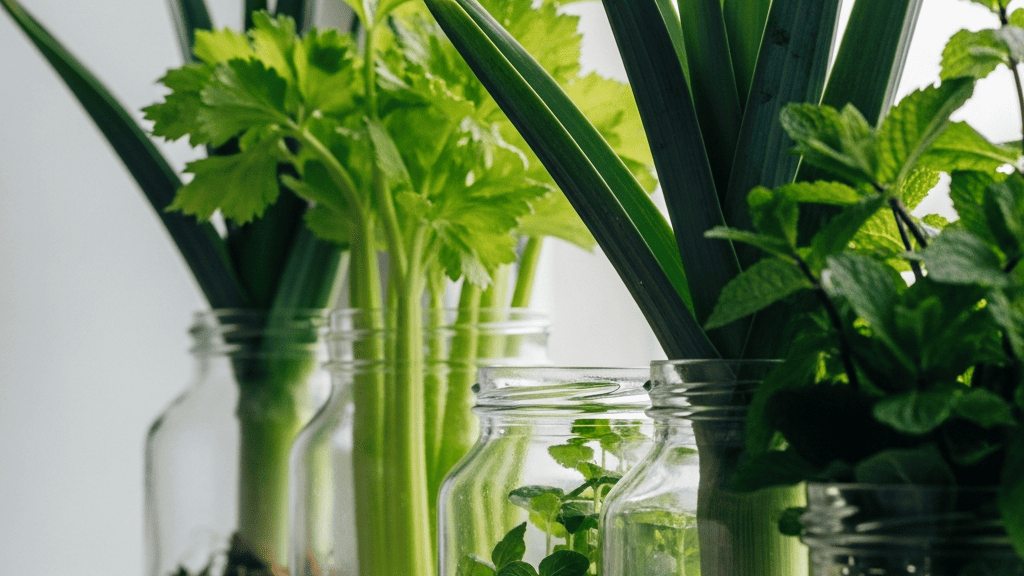
A whole produce aisle, started from things you already paid for once.
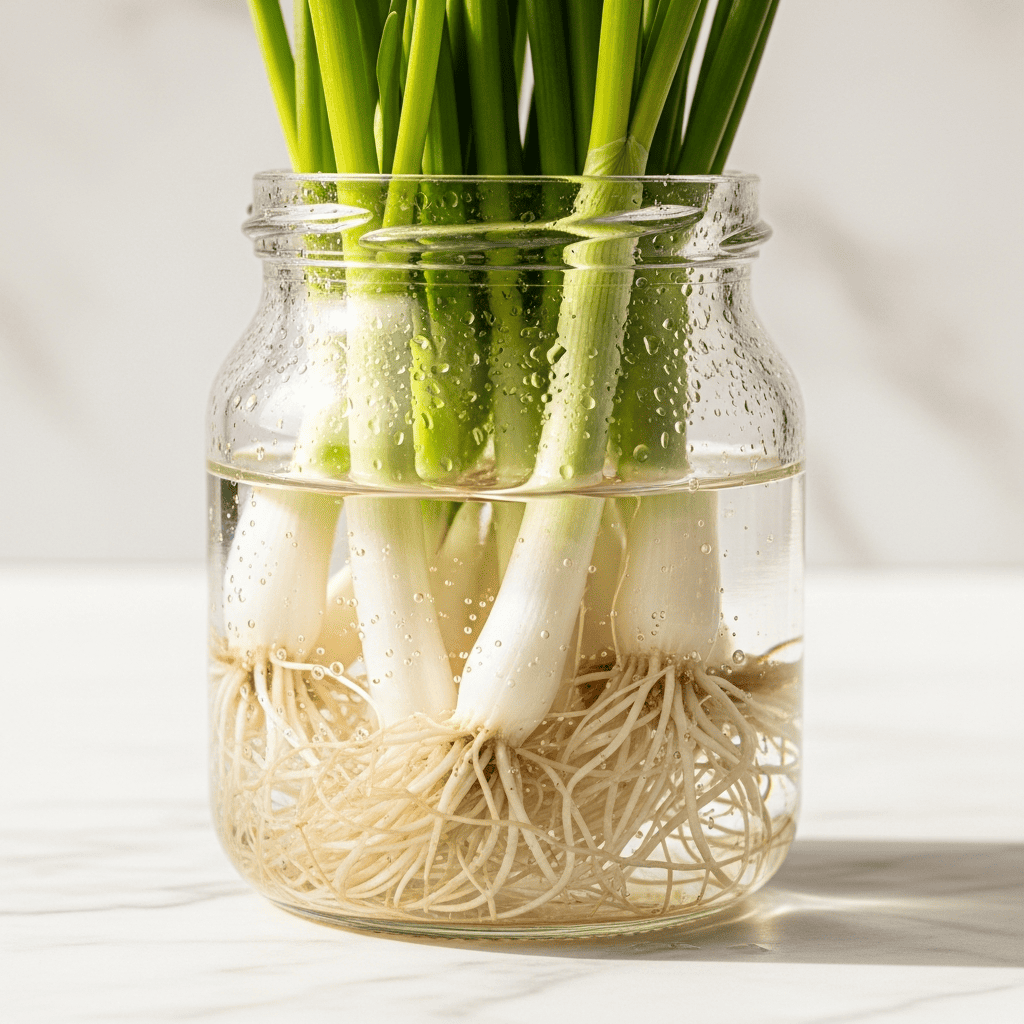
1. Green Onions (Scallions) — the gateway scrap
The one everyone starts with, because it’s almost impossible to fail. Leave 1–2 inches of the white base with the roots, stand it upright in a glass with just enough water to cover the roots, and put it on a bright sill. New shoots appear in as little as three days. Snip the green as you need it; it keeps coming back. In water you’ll get a couple of productive weeks; tuck the base into a pot afterward and it becomes a near-endless supply.
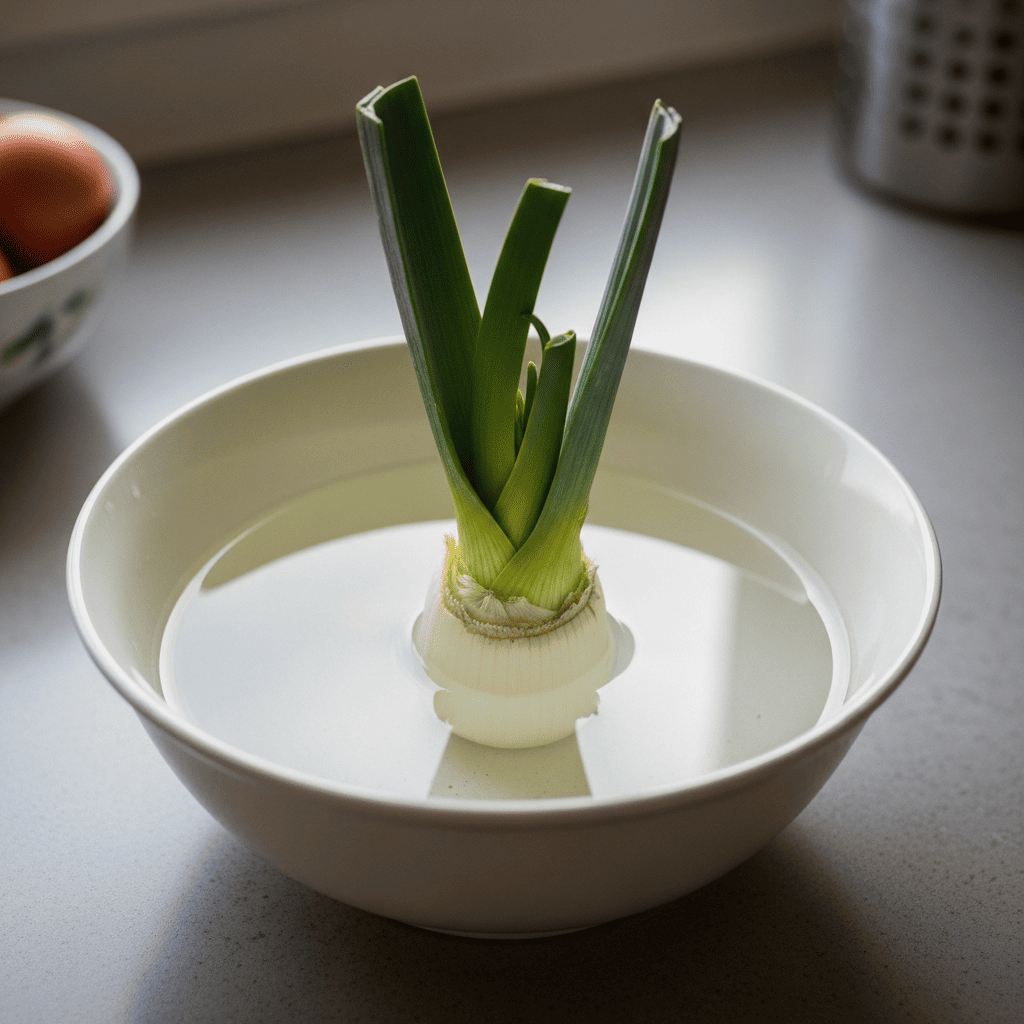
2. Leeks — the scallion’s big, slow sibling
Same allium magic, larger scale. Save the rooty white base of a leek, sit it in shallow water, and a fresh green center pushes up from the middle within a week or two. Slower than scallions, but the regrowth is tender and mild — lovely sliced into a soup that didn’t cost you anything extra.
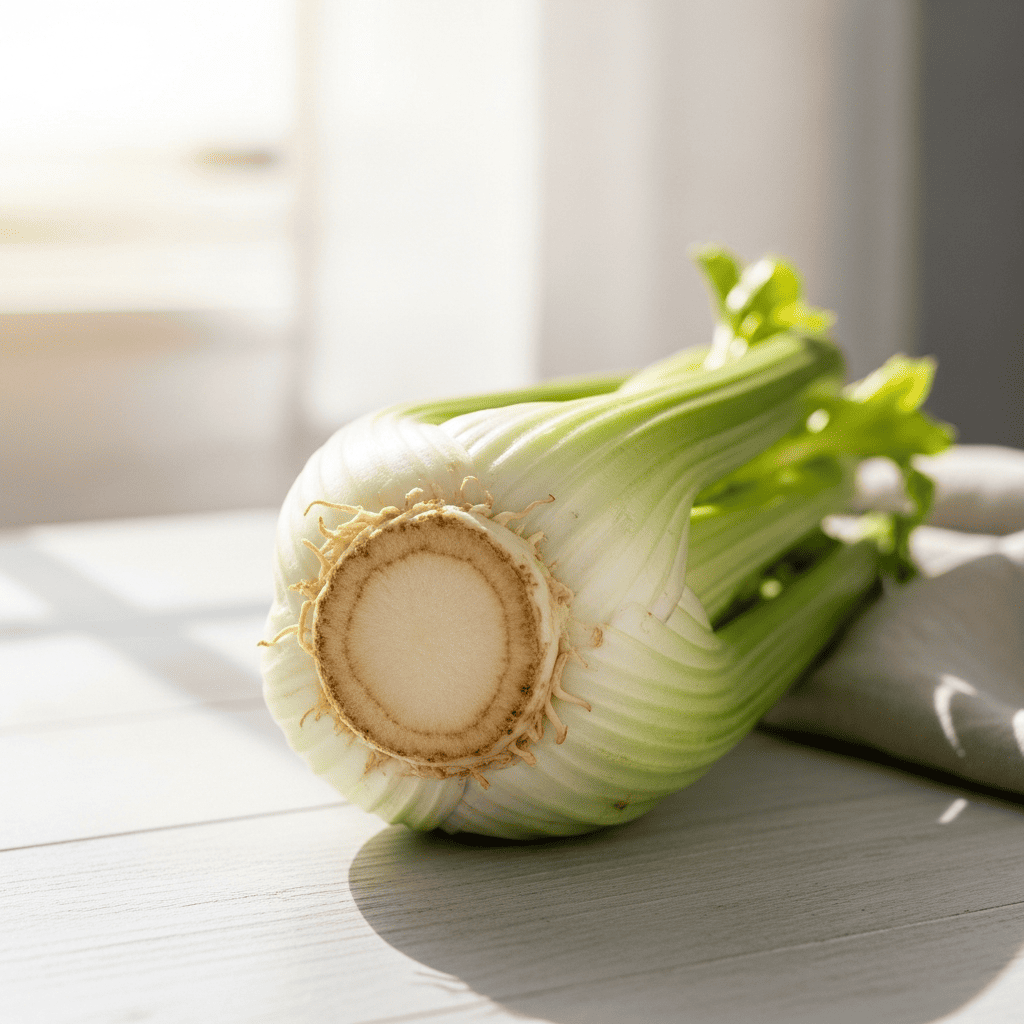
3. Celery — the heart that rebuilds itself
Don’t toss the base. Set the bottom couple of inches in a shallow dish of water, cut side up, and within days a pale yellow-green heart unfurls from the dead center like a small, slow firework. You won’t grow full crunchy stalks in water — those need soil — but the leaves and tender inner heart are perfect for stock, soups, and salads.
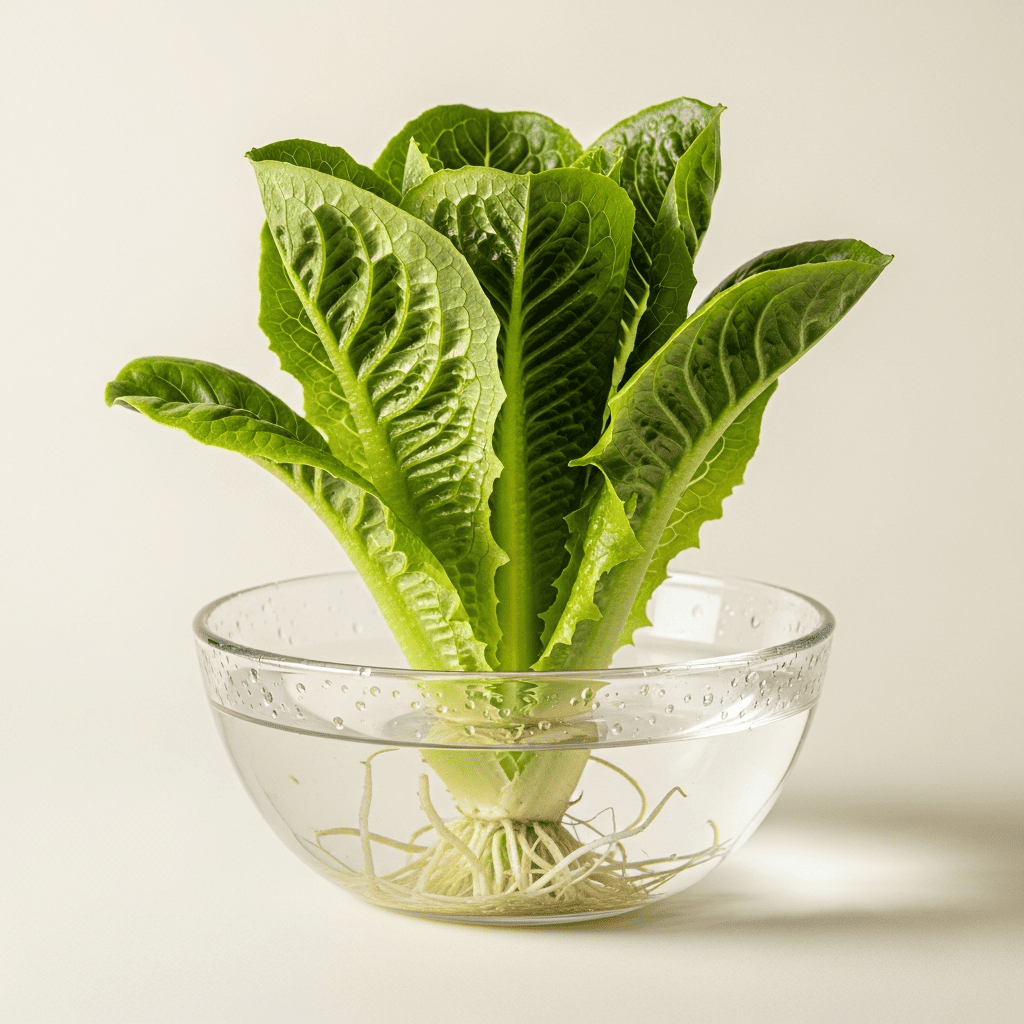
4. Romaine Lettuce — a salad rosette on the sill
The stump you’d normally bin will sprout a soft cluster of new leaves from its core in about a week, sitting in just a centimetre of water. You’ll get a few cut-and-come-again handfuls — enough for a sandwich or a garnish — before it bolts. It’s also genuinely pretty: a tight green rosette that looks like a tiny succulent. Put the leaves to work in a simple fresh salad the same week.
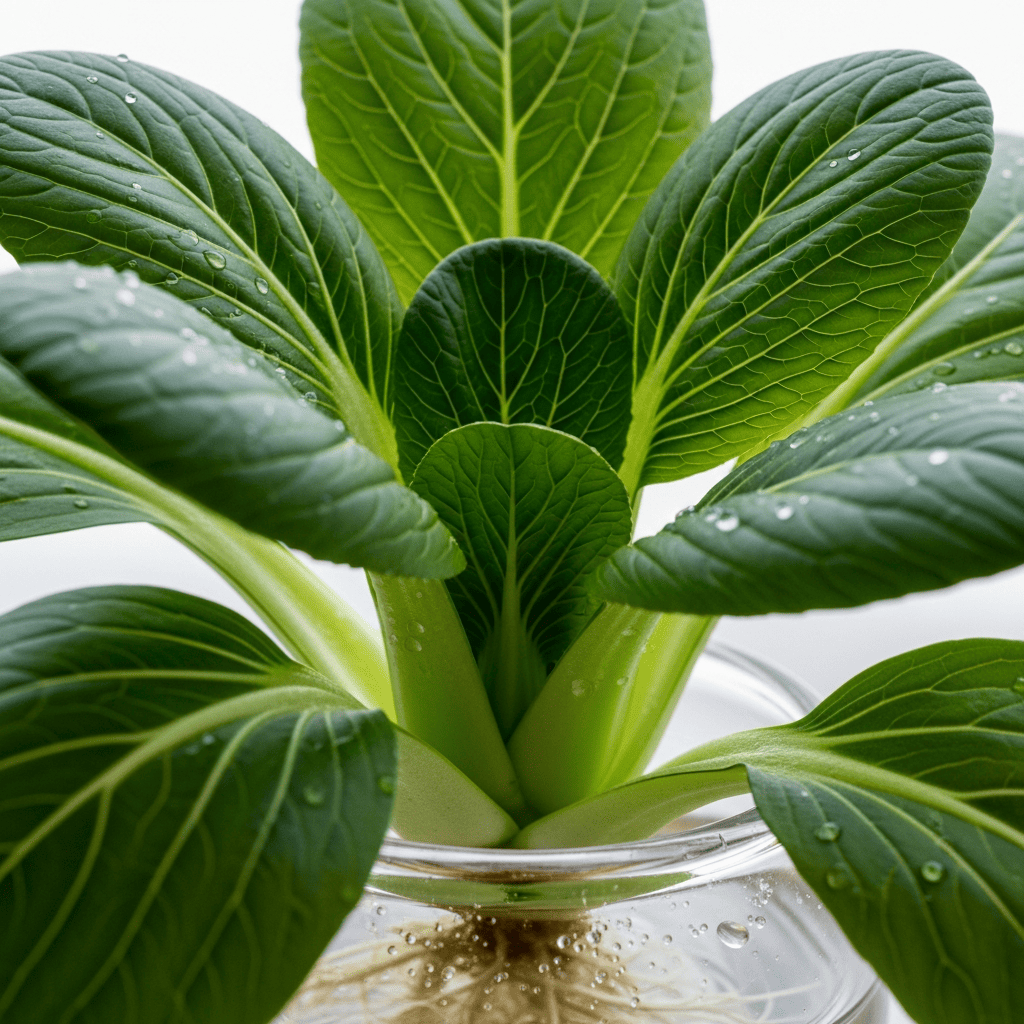
5. Bok Choy — the most dramatic regrower of them all
If you want the fastest reward, this is it. The base of a bok choy throws up a vivid green starburst from its center, visibly larger day by day — the kind of growth you can almost watch happen. Harvest the young leaves for stir-fries, or pot it up once roots appear to keep the show going.
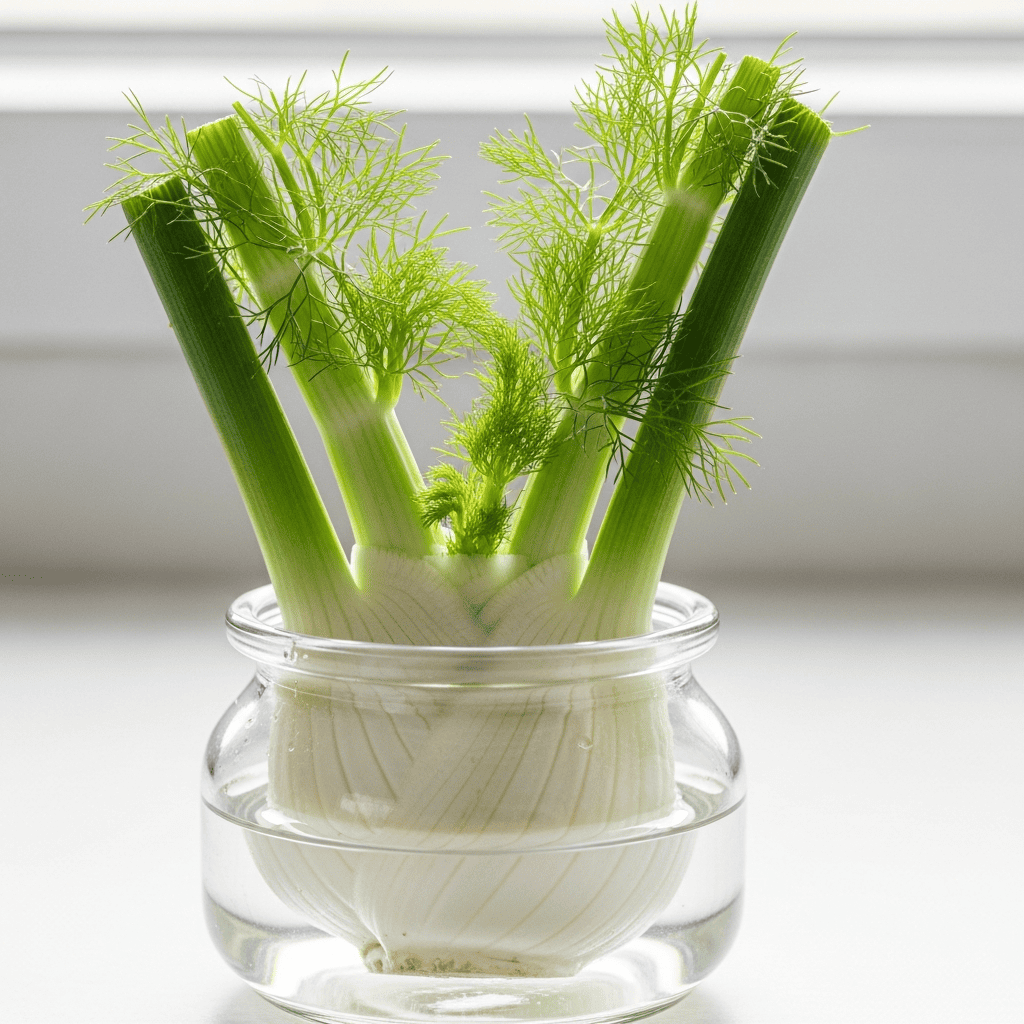
6. Fennel — feathery fronds and a quiet anise scent
Keep the very base of the bulb, sit it in shallow water, and it sends up delicate, dill-like fronds that smell faintly of licorice every time you brush past. The bulb itself won’t fully reform in a glass, but those fronds are a genuine herb — beautiful over roasted fish, white beans, or a citrus salad.
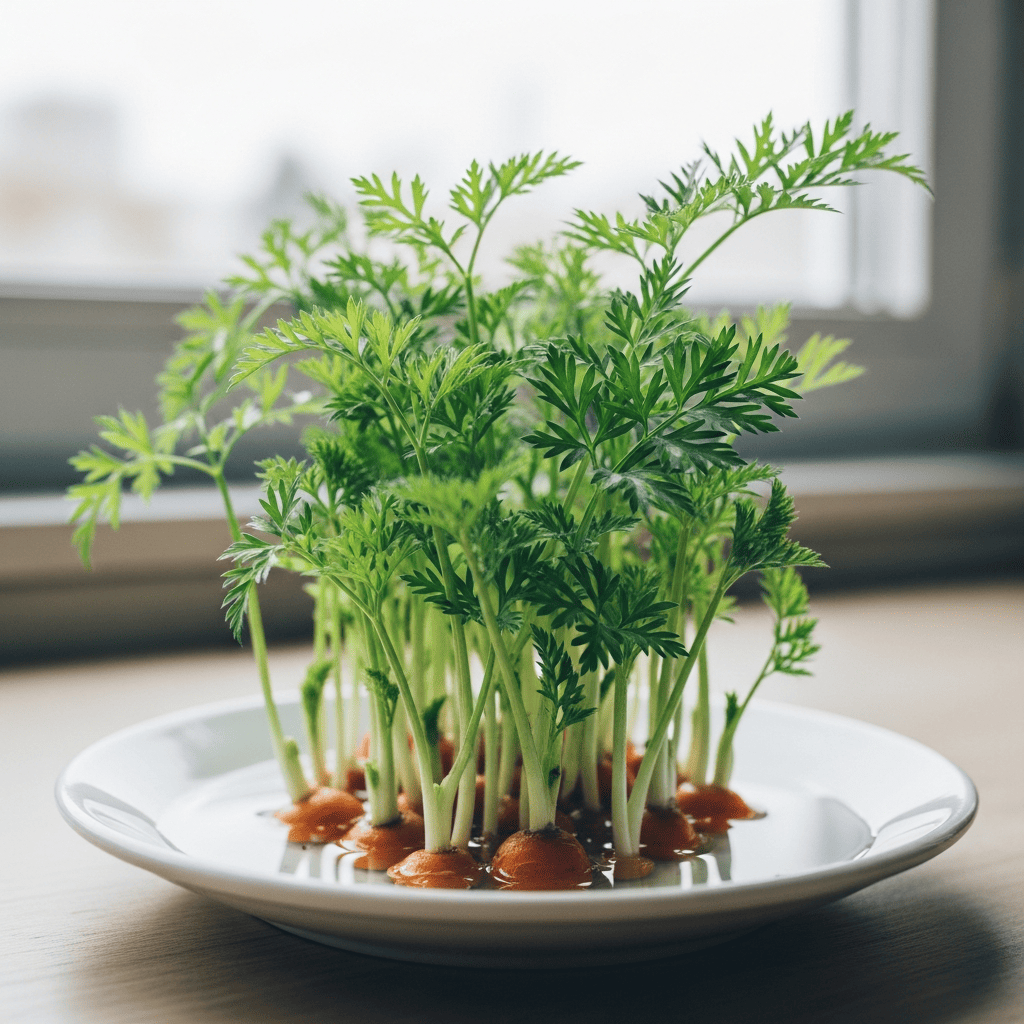
7. Carrot Tops — the one everyone gets wrong
Here’s the honest surprise: you do not regrow a carrot. The orange root is the part the plant stored energy in, and it’s gone. But place the cut-off top — that flat disc with a little stub — in shallow water and it pushes out a froth of feathery green. Those tops are edible and underrated: blitz them into a peppery, parsley-like pesto or chimichurri. You’re not regrowing a vegetable. You’re harvesting a free herb most people throw away.
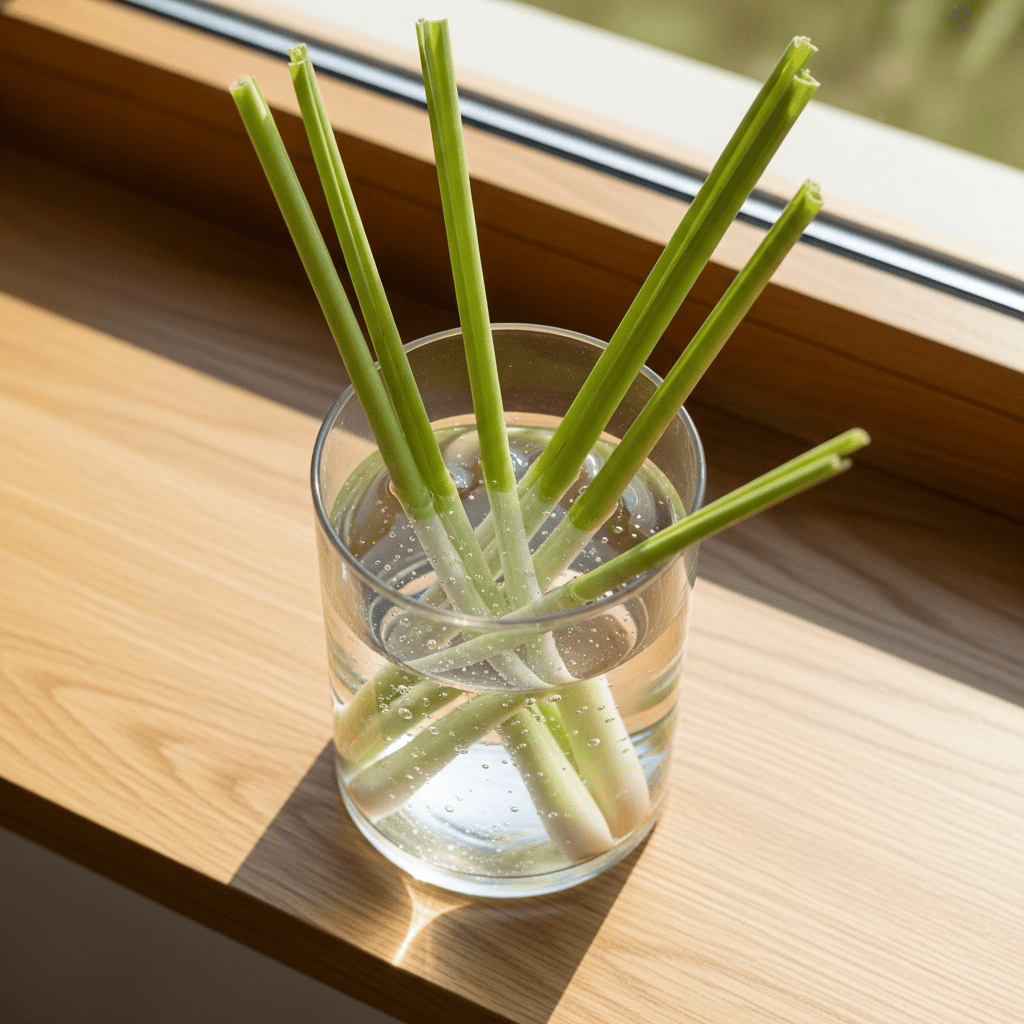
8. Lemongrass — a tropical clump from a woody stalk
Buy a stalk with the base intact, stand it in a glass of water on a warm, bright sill, and in two to three weeks it grows real roots and fresh blades. This one leans toward the “cutting” side of the family — once rooted it becomes a fragrant grass clump you can keep harvesting for curries, teas, and broths. A drink garden in a glass, basically; the kind of thing that fits right in with café-style drinks made at home.
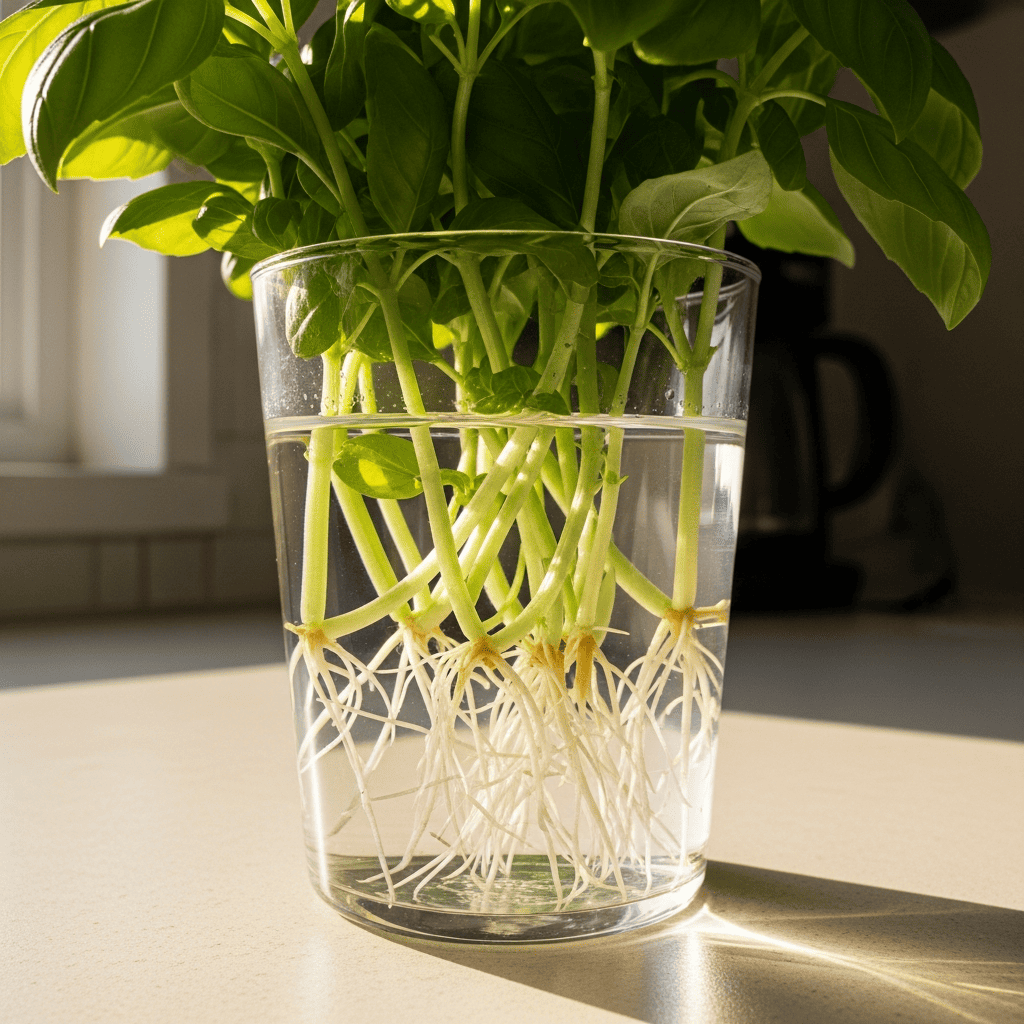
9. Basil — your first genuinely forever plant
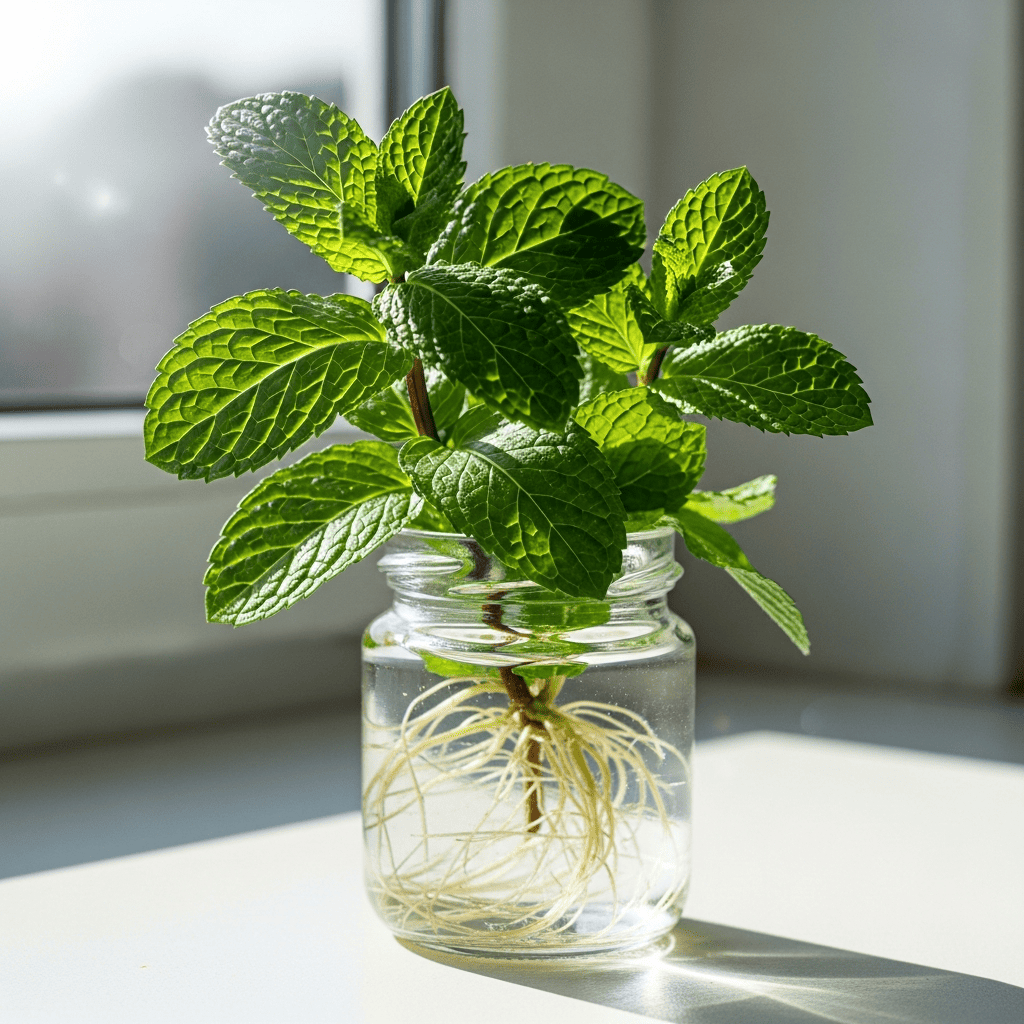
Snip a 4-inch sprig just below a leaf node, strip the lower leaves, and drop it in water with the bare node submerged. In about a week, white roots appear at that node — and you now own a whole new basil plant for free. Keep pinching the tips so it never flowers and it stays lush for months; pot it up and take fresh cuttings whenever it tires. This is propagation, not scrap-revival, which is exactly why it never has to end.
10. Mint — the immortal (handle with mild caution)
If basil is forever, mint is forever and then some. A cutting roots in water in roughly seven to ten days, with a success rate so high it borders on comedic. The catch isn’t keeping it alive — it’s keeping it contained. Mint doesn’t want to be regrown; it wants to conquer. In a garden bed it takes over; on a windowsill in a jar, it’s perfect: endless, fragrant, and going absolutely nowhere. The honest closer to this whole list — the one food here that is, truly, never going to need buying again.
The Two-Minute Windowsill Method — And the Mistake That Rots It All
Nearly all ten foods follow one simple rhythm. Master this and you’ve mastered the whole list.
1. Keep the right part. For bases (scallion, celery, lettuce, bok choy, fennel, leek, carrot top), keep 1–2 inches with the root end intact. For herbs (basil, mint, lemongrass), take a healthy stem and cut just below a node.
2. Use a snug glass. A narrow jar keeps things upright and stops them flopping. Add only enough room-temperature water to cover the roots or the bare node — not the leaves.
3. Bright, indirect light. A windowsill is ideal. Harsh direct sun overheats the water and breeds algae; a bright spot just back from the glass is better.
4. Change the water every 2–3 days. This is the whole secret. Fresh water = no rot. Cloudy or smelly water means bacteria are winning — tip it out, rinse the base, refill.
The one mistake that ruins everything: letting the water go stagnant. Slime, smell, and mush are almost never the plant’s fault — they’re a sign the water sat too long. The color is your receipt. Clear water and pale, firm roots mean you’re winning; cloudy water and brown mush mean you waited too long between changes.
When to graduate to soil: the moment a base or cutting has a small tangle of roots an inch or two long, you can pot it up. For scraps, soil is what turns “a couple more harvests” into something lasting. For herb cuttings, it’s optional — but it’s how a windowsill jar becomes a real, permanent plant.
Why It Feels So Good — The Psychology of a Jar on a Ledge
Strip away the savings and the sustainability, and people would still do this — because something about it lands far deeper than the few dollars it returns.
Part of it is agency. In a week where most of what you eat arrives shrink-wrapped from systems you’ll never see, a jar of scallions regrowing on the sill is something you alone caused to happen. It’s small, but it’s yours. That tiny sense of “I made this” is one of the cheapest reliable mood-lifts in the kitchen.
Part of it is watching growth. There’s a specific, low-grade delight in checking the jar each morning and finding it a little taller than yesterday. Progress you can see, on a timescale you can actually follow — rare, in a life mostly made of things that take months to change.
And part of it is the ritual. The two-day water change becomes a tiny anchor — a reason to pause at the window, notice the light, tend to something living. It’s the same slow-living instinct behind food that feels like a Studio Ghibli scene or the three unhurried minutes of whisking a bowl of matcha: not efficiency, but attention. A small, deliberate pause we keep quietly arranging for ourselves.
(USDA / EPA estimate)
(EPA, 2025)
How Fast Each Food Wakes Up
Typical days until you see the first new growth (shoots or roots) in a jar of water on a bright sill. Faster is not better — it’s just more instant gratification.
Note: figures are typical ranges for illustration. Warmth and light speed everything up; a cold, dim kitchen slows it down.
What Actually Works (and What’s Just Pretty)
Cut through the viral hype and four honest truths survive — the ones worth remembering after you close this tab.
5 Regrowing Claims the Kitchen Quietly Corrects
The trend is real and lovely. Some of the captions around it are not.
Regrowing-in-Water FAQ
There’s a particular morning that this habit gives you. You fill the kettle, glance at the row of jars on the sill, and notice the scallions are an inch taller than yesterday — green you didn’t buy, growing in light you didn’t pay for, from something you almost threw away.
That’s the real harvest. Not the few dollars, not even the herbs — but the small daily proof that the things we discard are often just paused, waiting for a little water and attention to start again. Keep one jar going. The next one practically starts itself.