Are “Expired” Dates on Food Actually Dangerous?
The Science Behind the Label
Most people throw away perfectly safe food every week based on a date stamp that has nothing to do with safety. Here’s what the science, the USDA, and 40 years of food research actually say.

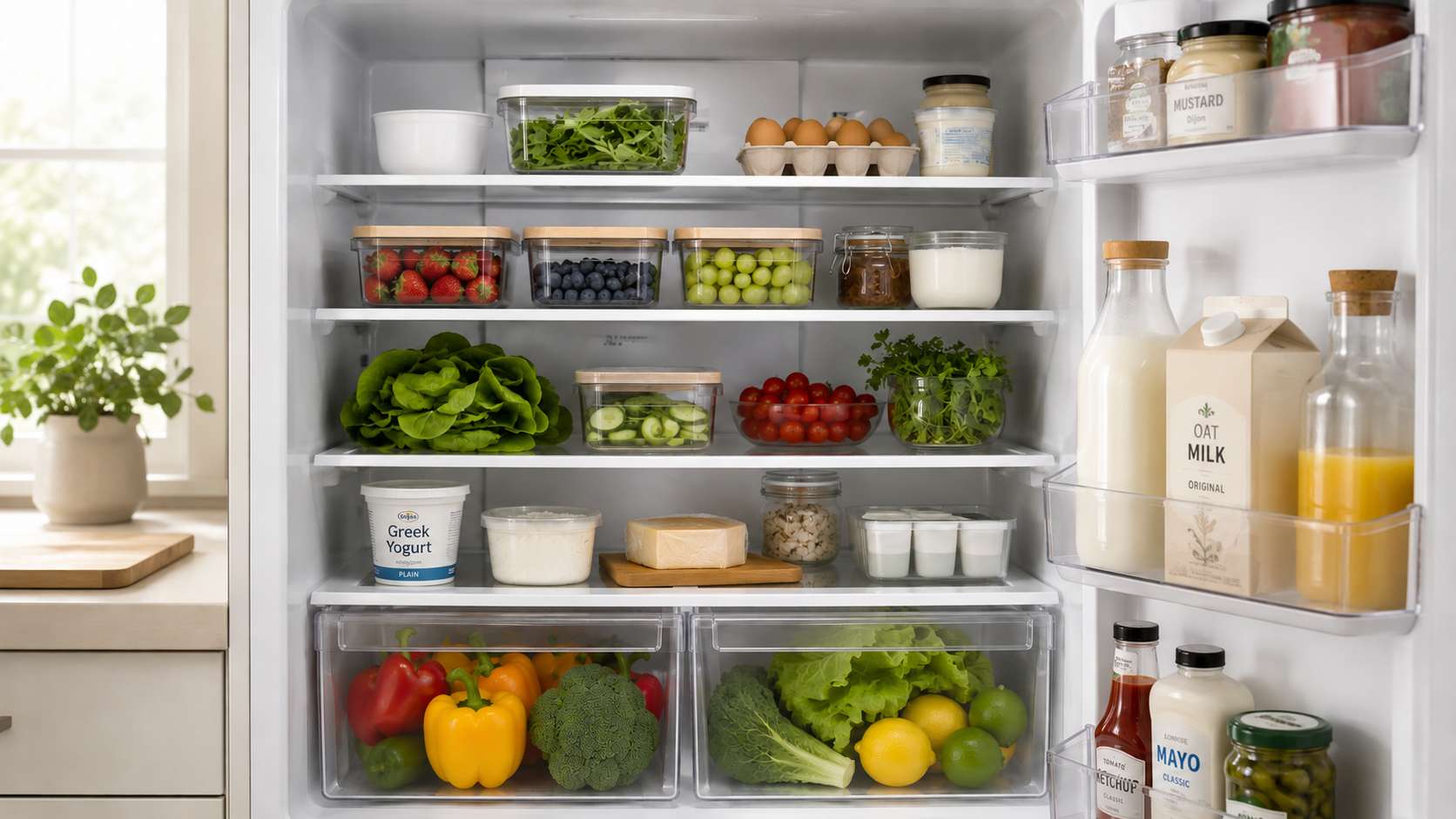
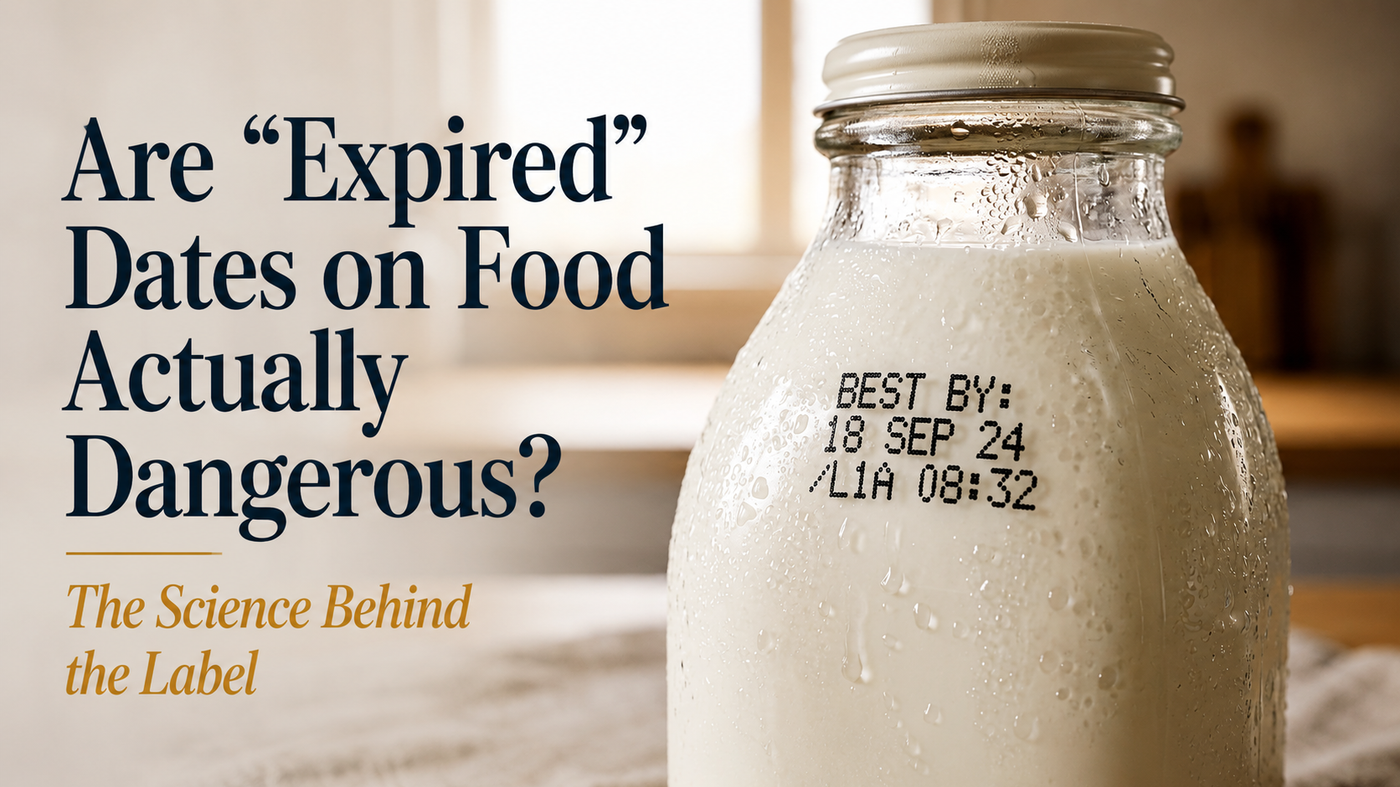
📷 That date stamped on the carton? It was never about safety. It was about inventory.
There is a ritual that plays out in kitchens every single day. You open the fridge, reach for the milk, turn the carton around — and there it is. A date. Maybe it was yesterday. Maybe it was three days ago. And even though the milk smells perfectly fine, you pour it down the drain anyway.
This quiet act of food disposal happens millions of times a day across America. And according to the USDA and FDA, a significant portion of it is completely unnecessary. The dates on food packaging were never, with very few exceptions, designed to tell you whether food is safe to eat. They were designed to tell grocery stores when to rotate their stock.
Understanding the difference between food safety and food quality might be the most practical thing you learn this year — both for your wallet and for the 66 million tons of food waste Americans generate annually.
What “Best By,” “Use By,” and “Sell By” Actually Mean — And Why They’re Different Things Entirely
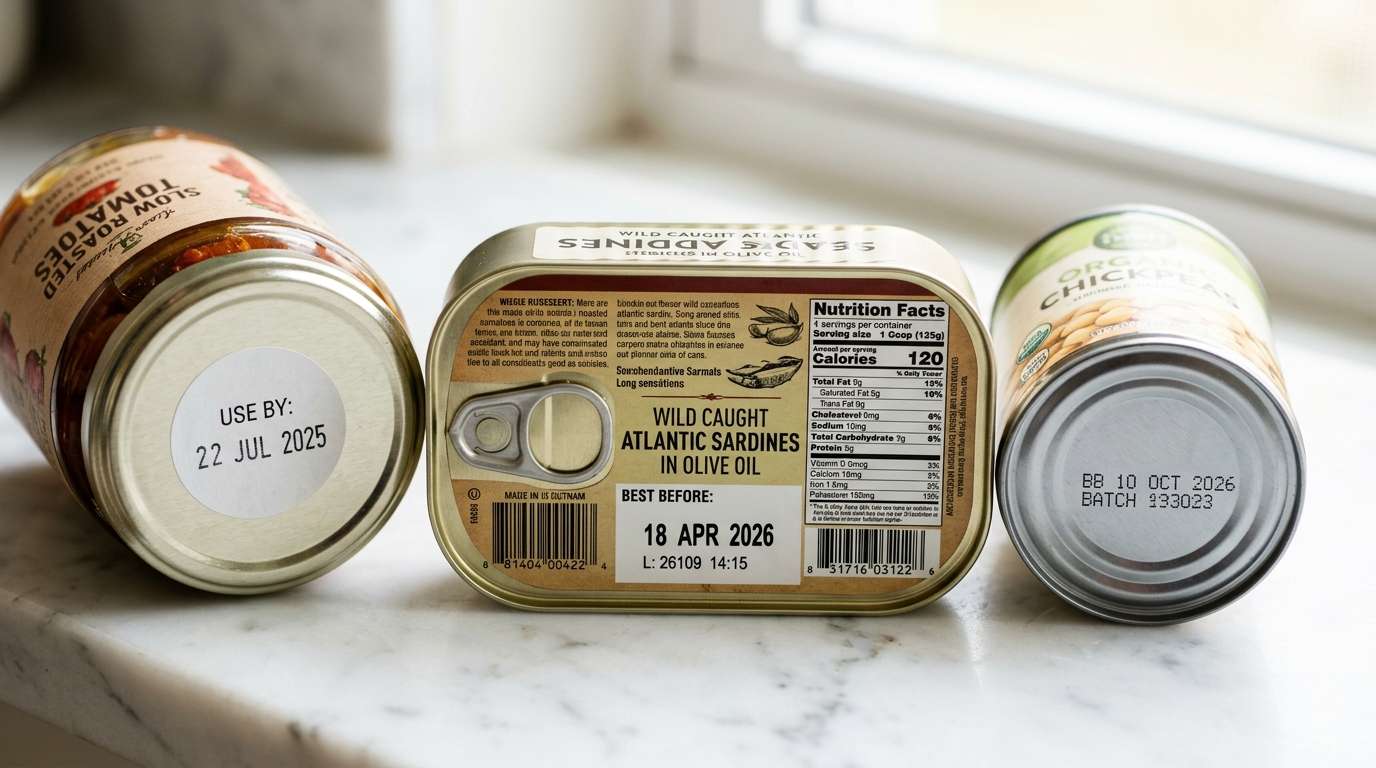
The small print that costs American families $1,500 a year in unnecessary waste.
Here is the thing nobody puts on the label: the United States has no federal law requiring expiration dates on most foods. The dates you see — that stamp on the bread, the ink on the yogurt lid, the embossed code on the can — are almost entirely voluntary. And where they do exist, they almost never mean what most people think they mean.
The USDA, which oversees meat and poultry labeling, is direct about this: only infant formula is legally required to carry a “Use By” date in the United States. Everything else is a manufacturer’s estimate, a retailer’s suggestion, or a quality marker dressed up in the language of urgency.
According to the USDA and FDA, confusion over food date labeling accounts for approximately 20% of food waste at the household level. The average American family of four throws away at least $1,500 in food per year — much of it discarded based on misread or misunderstood date stamps. (USDA, December 2024)
Food Safety vs. Peak Quality — The One Distinction That Changes Everything
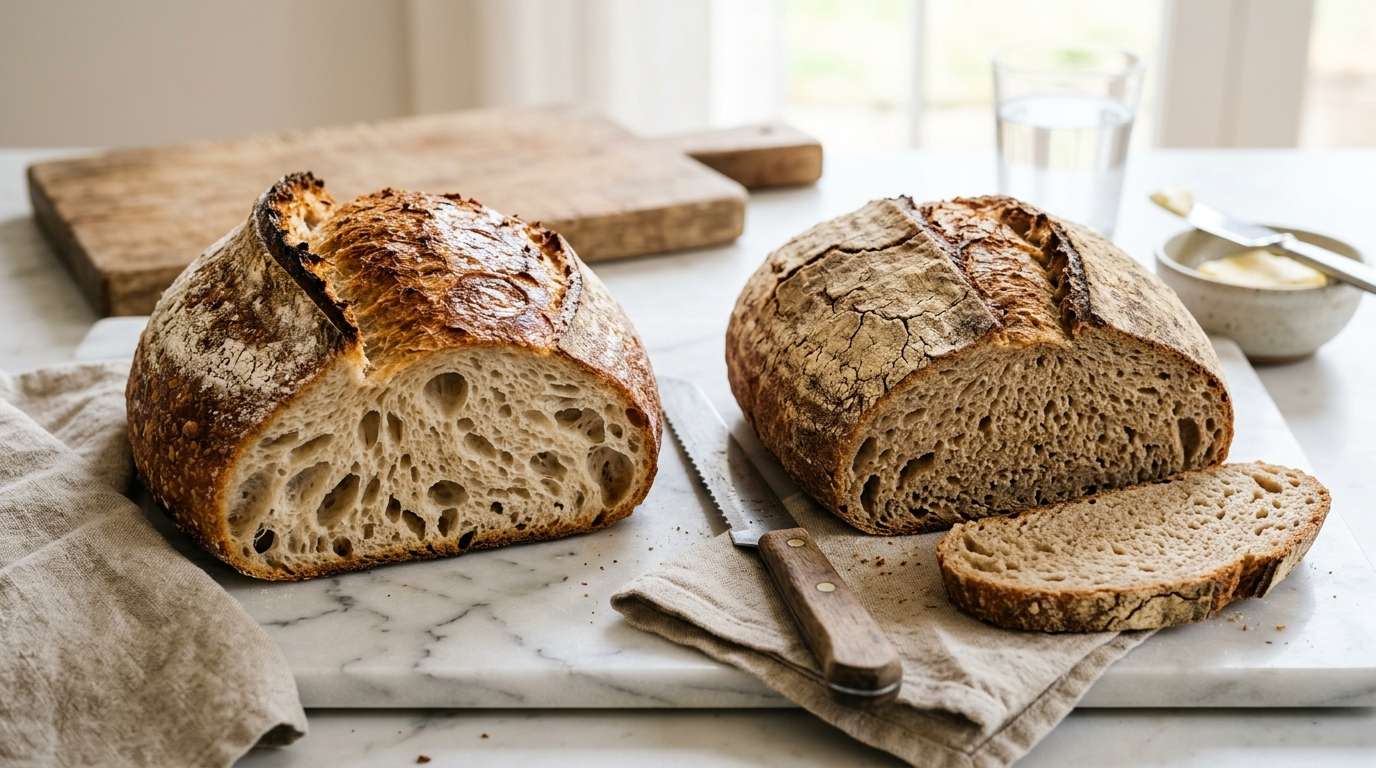
Quality declines. Safety is a different question entirely.
Food science draws a hard line between two things that the word “expired” collapses into one: quality decline and safety risk. They are not the same event, they don’t happen on the same timeline, and conflating them — which nearly everyone does — is the root of most food waste.
Quality decline is sensory. A cracker has lost its satisfying snap. Olive oil tastes slightly dull. Bread has stiffened. These are real changes, but none of them are dangerous. Food that has crossed into quality decline may be less pleasurable to eat — it is not likely to make you sick.
Safety risk is microbial. It requires the right conditions — moisture, warmth, nutrient-dense substrate — for pathogenic bacteria like Listeria monocytogenes, Salmonella, or Escherichia coli to reach concentrations that can cause illness. Most dry, shelf-stable, frozen, or highly acidic foods never create these conditions, regardless of what the package says.
Ready-to-eat deli meats, hot dogs, and soft cheeses warrant genuine caution past their Use By dates. Listeria monocytogenes can multiply even at refrigerator temperatures — an unusual property that makes these products the rare case where a date label has real safety relevance. The CDC recommends consuming ready-to-eat deli meats within 3–5 days of opening. This is the exception that makes the general rule possible: for almost everything else, the date is about quality.
What Your Senses Tell You — And When to Trust Them

The most sophisticated food safety tool you own costs nothing and never breaks.
Human sensory evaluation — sight, smell, taste, and texture — is a remarkably reliable tool for assessing food quality. It is also an imperfect one. The good news: for quality questions, your senses are excellent. For safety questions, they have one significant blind spot.
When your senses are reliable: Spoilage bacteria — the kind that cause food to smell sour, look slimy, or develop visible mold — produce obvious sensory signals. If milk smells genuinely sour, it has acidified. If bread has visible mold, you don’t need a date to tell you something has happened.
When your senses aren’t enough: Pathogenic bacteria — Salmonella, E. coli O157:H7, Listeria — produce no smell, no discoloration, no texture change at dangerous concentrations. A chicken breast contaminated with Salmonella can look, smell, and feel completely normal. This is why cooking temperatures matter more than any date label for animal proteins.
The $1,500 Problem Sitting in Your Fridge Right Now
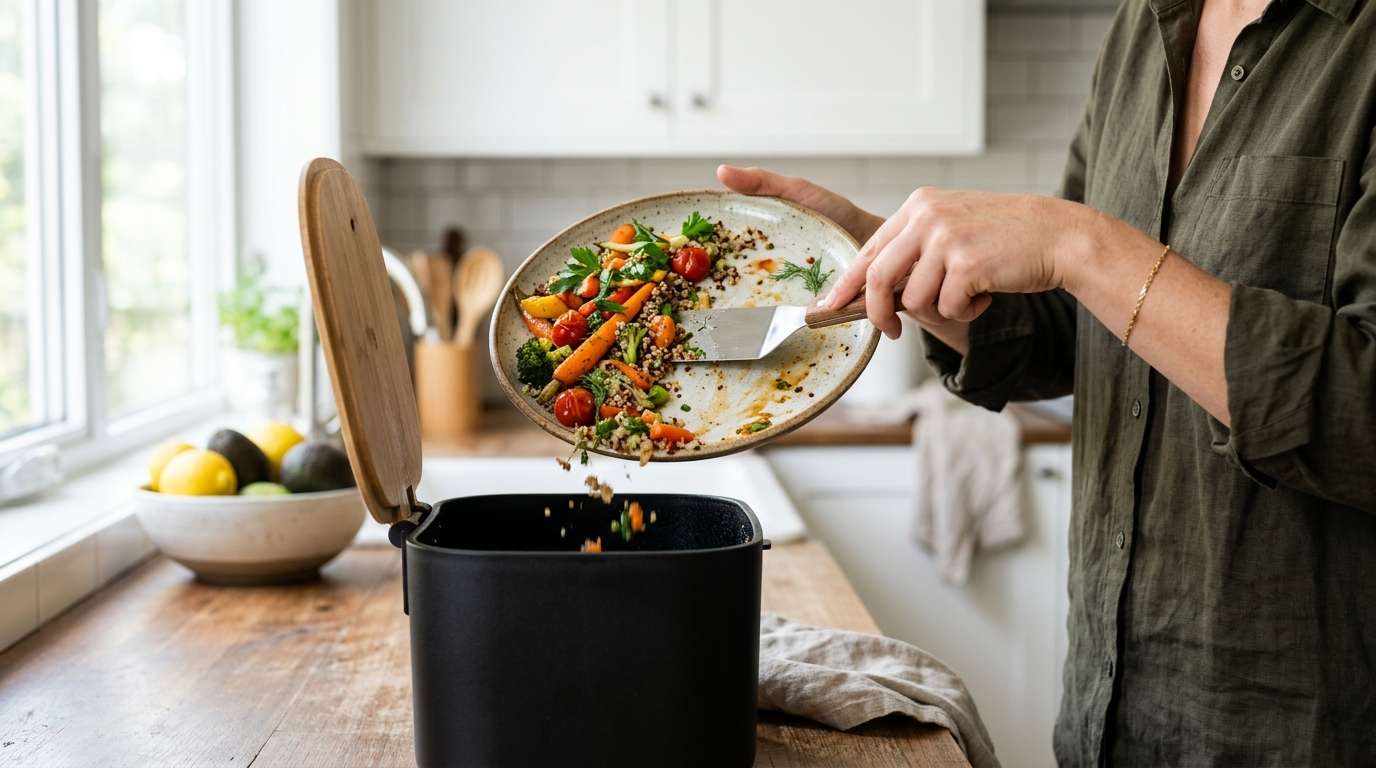
66 million tons. Most of it never needed to go.
In 2019, the EPA estimated that 66 million tons of food waste were generated across the U.S. food system. About 60% went straight to landfills. The USDA’s most recent estimates suggest that the average family of four spends at least $1,500 each year on food that ends up uneaten — and label confusion is a significant driver.
The math runs deeper than groceries. Food waste in landfills generates methane as it decomposes — a greenhouse gas considerably more potent than carbon dioxide over short timescales. Every container of yogurt poured down a drain one day past its “Best By” date represents not just money, but a small contribution to a large problem that food scientists and federal agencies have been trying to address for years.
In December 2024, the USDA and FDA jointly released a Request for Information on food date labeling, explicitly seeking to understand whether the current system drives unnecessary household waste. Their own framing was direct: the agencies want to know if these labels are leading consumers to discard safe, wholesome food.
5 Expiration Date Myths the Evidence Quietly Corrects
The date stamp is one of the most misread things in the modern kitchen. Here’s what the science actually says.
What Food Safety Science Actually Recommends
Strip away the label confusion, and practical food safety comes down to a handful of principles the USDA and food scientists have refined over decades. These are the ones worth keeping in the kitchen.
Food Expiration Date FAQ
There’s something quietly empowering about understanding what a date label actually means. It turns out most of what sits in your kitchen is more resilient than a small printed number suggests — and most of what you’ve been throwing away was fine.
The genuinely dangerous stuff — contaminated raw poultry, Listeria-susceptible deli meat, food that’s been left at room temperature for hours — often looks and smells completely normal. The food safety knowledge that actually matters has nothing to do with a calendar. It has everything to do with temperature, packaging integrity, and knowing which foods warrant real caution. The date on the yogurt lid can stand down.