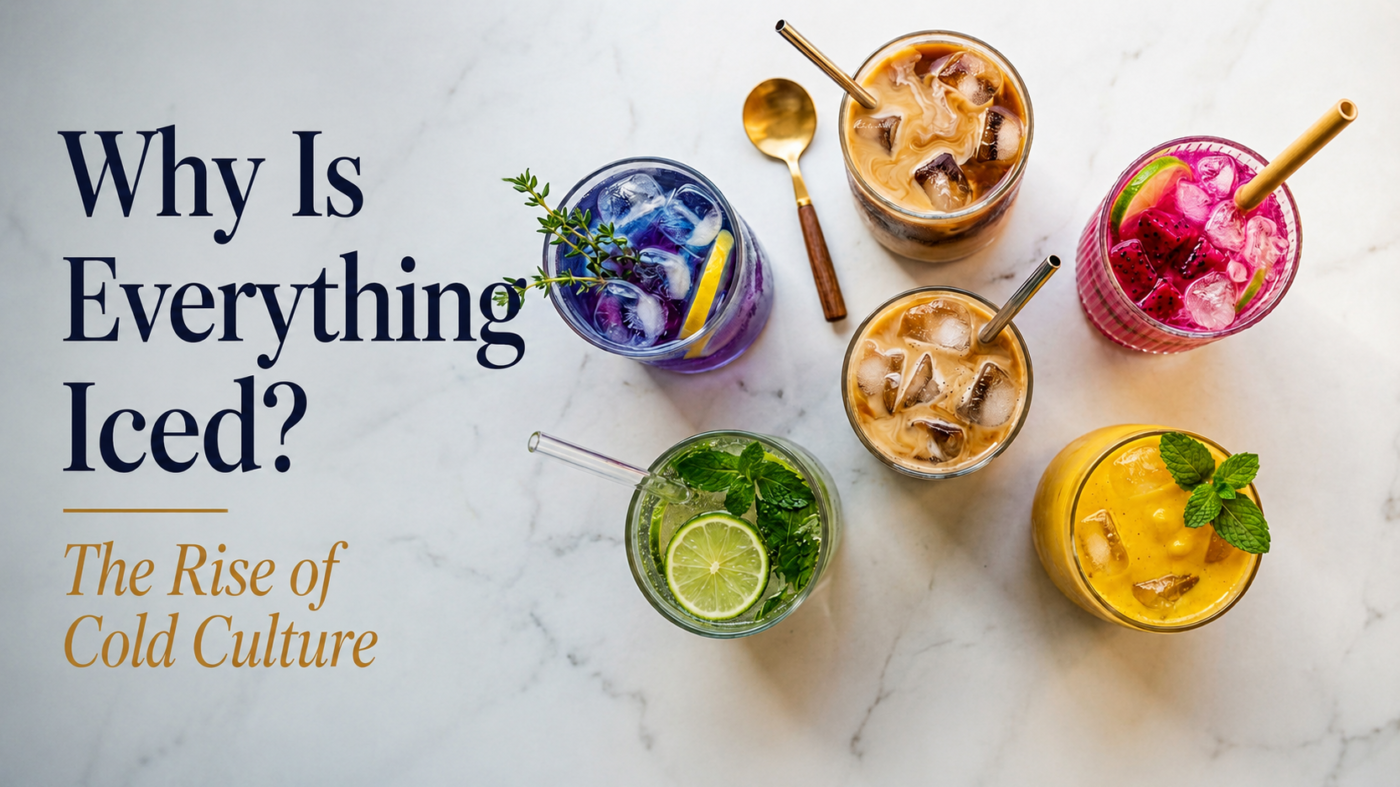
Why Is Everything Iced?
The Rise of Cold Culture
Starbucks now sells three hot drinks for every seven iced. Gen Z orders cold coffee in January. Cold brew grew 22% year on year. Something has fundamentally shifted — and it’s not just the weather.

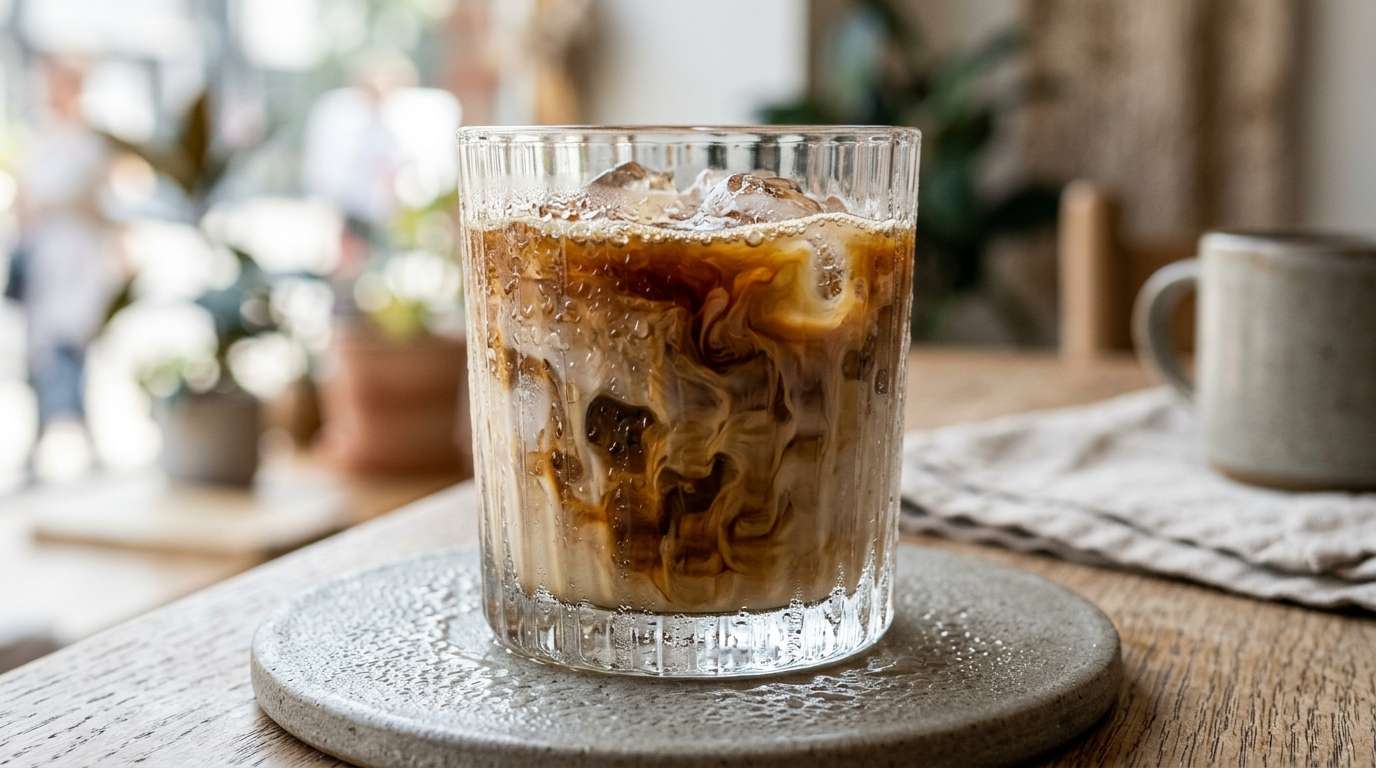
📷 Iced latte with condensation on ceramic surface, moody blue-toned café light, overhead editorial shot
Somewhere in a city that has been having perfectly normal autumn temperatures, a person just ordered an iced coffee. No hesitation. No apology to the barista. Just — iced, please. Always iced.
This isn’t a summer trend that stayed too long. It’s something more fundamental: a wholesale shift in how a generation drinks, photographs, identifies, and relates to beverages. Cold drinks now account for 75% of Starbucks’ beverage sales — up from 37% in 2013. Cold brew went from appearing on fewer than 1% of restaurant menus in 2014 to 7.7% by 2024. Iced matcha has sold in the millions, in countries that didn’t know what matcha was a decade ago.
The question isn’t why people want cold drinks in summer. That story is as old as ice. The interesting question is why cold became the default — the identity, the aesthetic, the always-on preference — regardless of season, weather, or time of day.
How Ice Quietly Took Over the Menu — And Stayed There

📷 Iced cold brew editorial shot — moody dark café aesthetic
There’s a number that stops café operators mid-conversation: in Starbucks’ fiscal 2024, cold drinks claimed 75% of total beverage sales. In 2013, that figure was 37%. Whatever happened in between isn’t just a product shift. It’s a cultural one.
Cold brew tells the same story from a different angle. Datassential tracked cold brew’s presence on US restaurant menus from under 1% in 2014 to 7.7% in 2024 — a trajectory so steep it makes most food trends look sluggish. The broader iced coffee market sits at $9.81 billion as of 2025 and keeps climbing.
And the UK — where the average annual temperature hovers around 10°C and umbrellas outnumber sunglasses — recorded the highest iced coffee sales in Europe in 2024, with 22% compound annual growth over five years. Caffè Nero sold 1.3 million iced matcha drinks in a single quarter.
Cold isn’t winning because of warm weather. It’s winning regardless of it. That should make anyone curious.
Cold Doesn’t Just Feel Different — It Tastes Different
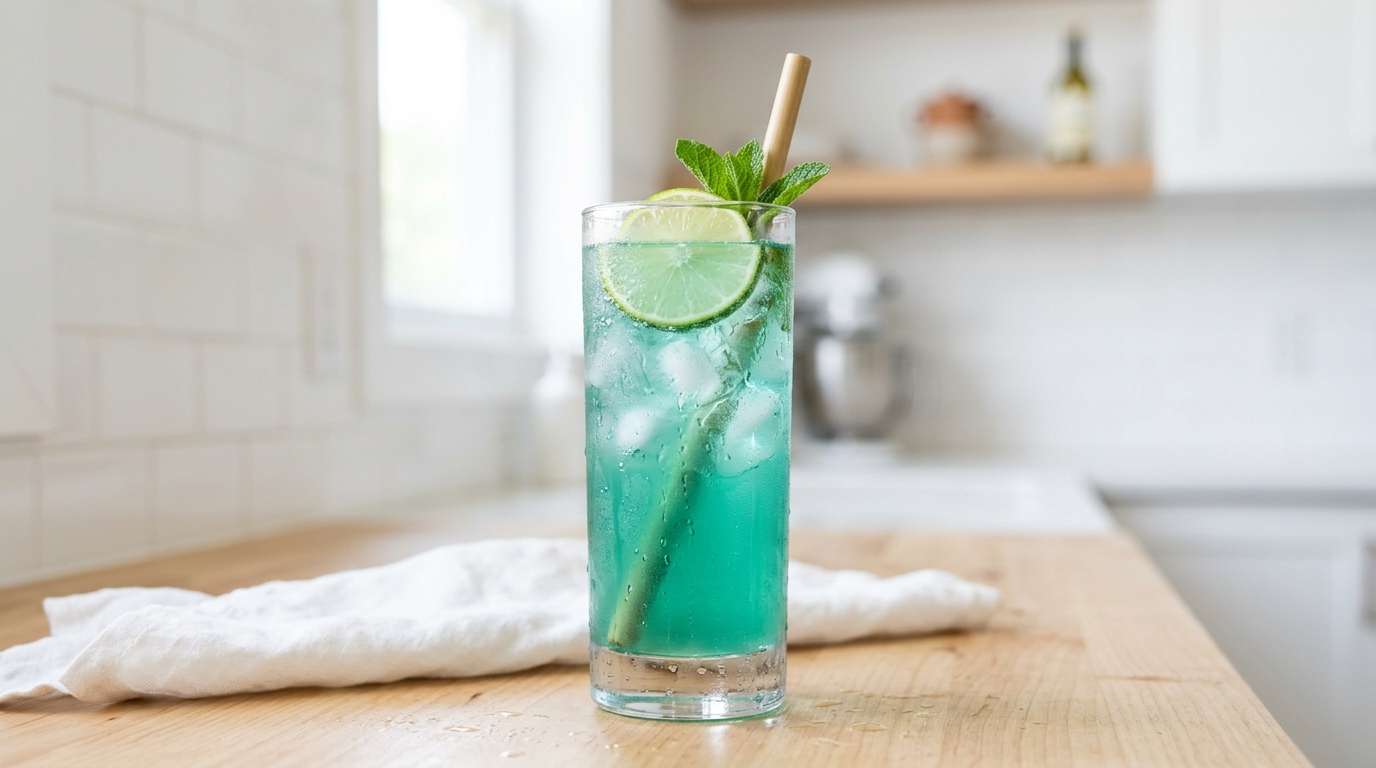
📷 Ice macro — light refraction, teal editorial aesthetic
Here’s something that surprises most people: cold and hot versions of the same drink are genuinely different products to your brain. Not just to your comfort level — to your actual taste perception.
Temperature directly modulates how taste receptors fire. A peer-reviewed study in Frontiers in Psychology tested coffee and green tea at cold (5°C), ambient, and hot (65°C) temperatures and found that the emotional responses and perceived sensory attributes shifted significantly with temperature — not just comfort, but what people actually tasted.
Cold temperatures suppress sweetness and bitterness while amplifying what researchers describe as “freshness” — a clean, crisp perception that reads as quality. This is why the same espresso that tastes balanced hot can seem harsh when left to cool on a desk. The coffee didn’t get worse. The temperature changed which flavor compounds your receptors are most sensitive to. Cold brew’s specific chemistry — slow-steeped in cold water for 12–24 hours — produces a molecularly distinct cup that’s genuinely less acidic than its hot-brewed counterpart, not just colder.
Pramudya RC, Seo HS. Frontiers in Psychology. 2018;8:2264. DOI: 10.3389/fpsyg.2017.02264
There’s a physical layer too. When cold liquid contacts the nerve endings in your throat, thermoreceptors fire and send signals the brain interprets as relief — a kind of cooling reward that precedes the actual act of swallowing. It’s a sensory shortcut. Cold promises refreshment before the liquid has even reached your stomach.
What this means for beverages designed to be photographed, savored slowly, and sipped through meetings is significant. An iced drink stays in its aesthetic peak — sweating glass, layered colors, floating foam — for minutes. A hot drink starts losing its visual identity almost immediately. Cold doesn’t just taste different. It lasts differently, which matters enormously in the age of slow sipping and content creation.
Cold as Identity — What Your Drink Order Actually Says
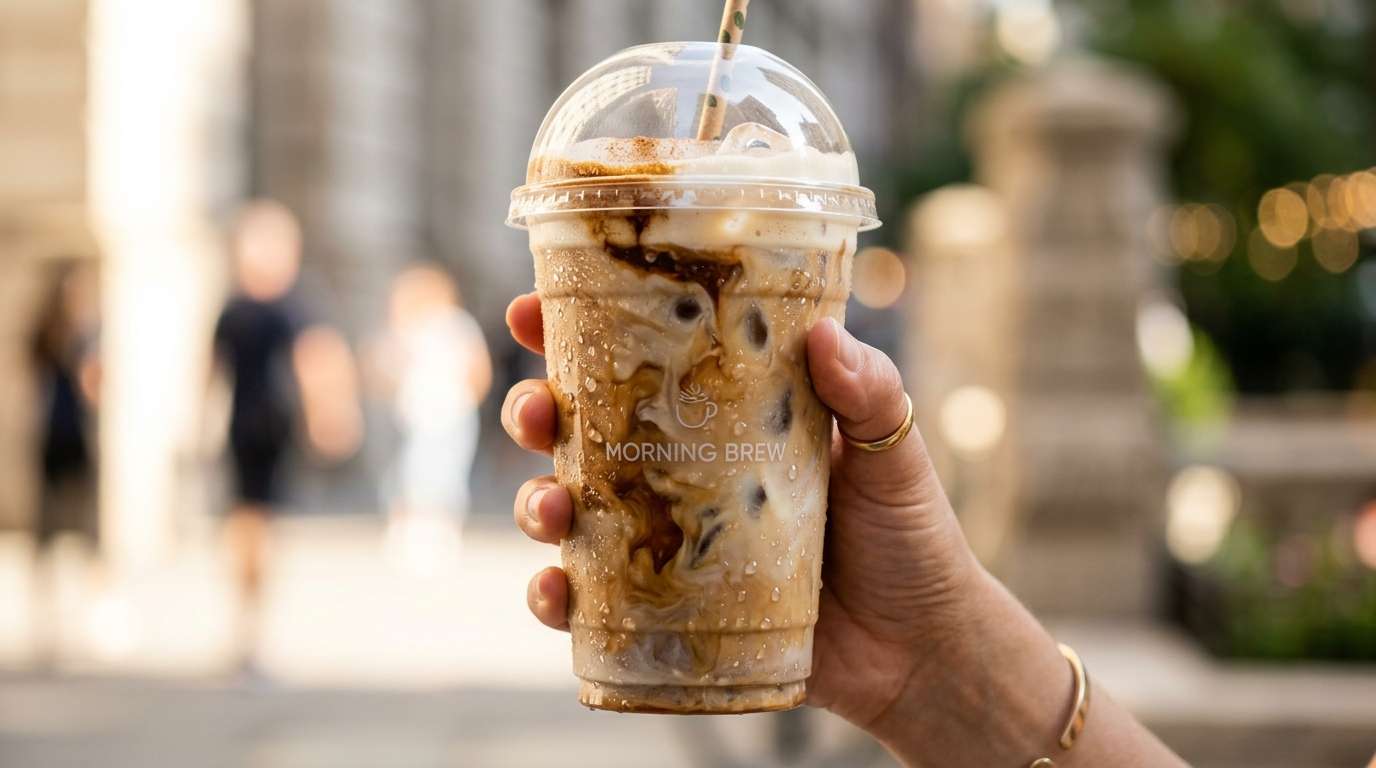
📷 Café identity shot — iced drink, hands, table, documentary aesthetic
There’s a generational divide that industry data keeps surfacing. The National Coffee Association found that 45% of 18–24 year-olds had a cold coffee in the past day. Mintel’s analyst Kelsey Olsen put it plainly: older generations grew up with coffee as a hot ritual, and that identity is hard to shift. For younger consumers, iced was never the alternative. It was the original.
This matters because of what drinks signal. Humans use food and beverage choices to communicate identity, values, and social belonging — a phenomenon documented across consumer psychology research. When iced coffee became the dominant aesthetic on social platforms, it became more than a preference. It became a marker. Ordering hot coffee doesn’t just mean you want hot coffee. It means you’re in a different category.
Cold coffee became popular with young consumers not because they prefer cold — but because iced was the entry point. Iced lattes and cold brew are sweeter, smoother, and more customizable. They’re designed to be approachable. Gen Z didn’t choose iced despite the bitterness of coffee; they chose iced because it disguises it. Cold culture is partly the story of a generation learning to love coffee on its own terms.
There’s also the mobility factor. Industry observers consistently cite lifestyle as the primary engine: people are more mobile, schedules are less predictable, and iced beverages travel better. A hot coffee in a lidded cup is a commitment to finishing it soon. An iced coffee in a clear cup with a straw is a companion for the next two hours.
The cup itself sends a message. Wide-format clear cups show off layers, colors, and textures in ways that a white ceramic mug simply can’t. The visual identity of an iced drink is more legible, more shareable, and — crucially — more customizable-looking. When you can see the cold foam sitting above the milk sitting above the espresso, the drink performs its own quality.
Condensation, Layers, and the Visual Grammar of Cold — Why Iced Drinks Own Social Media
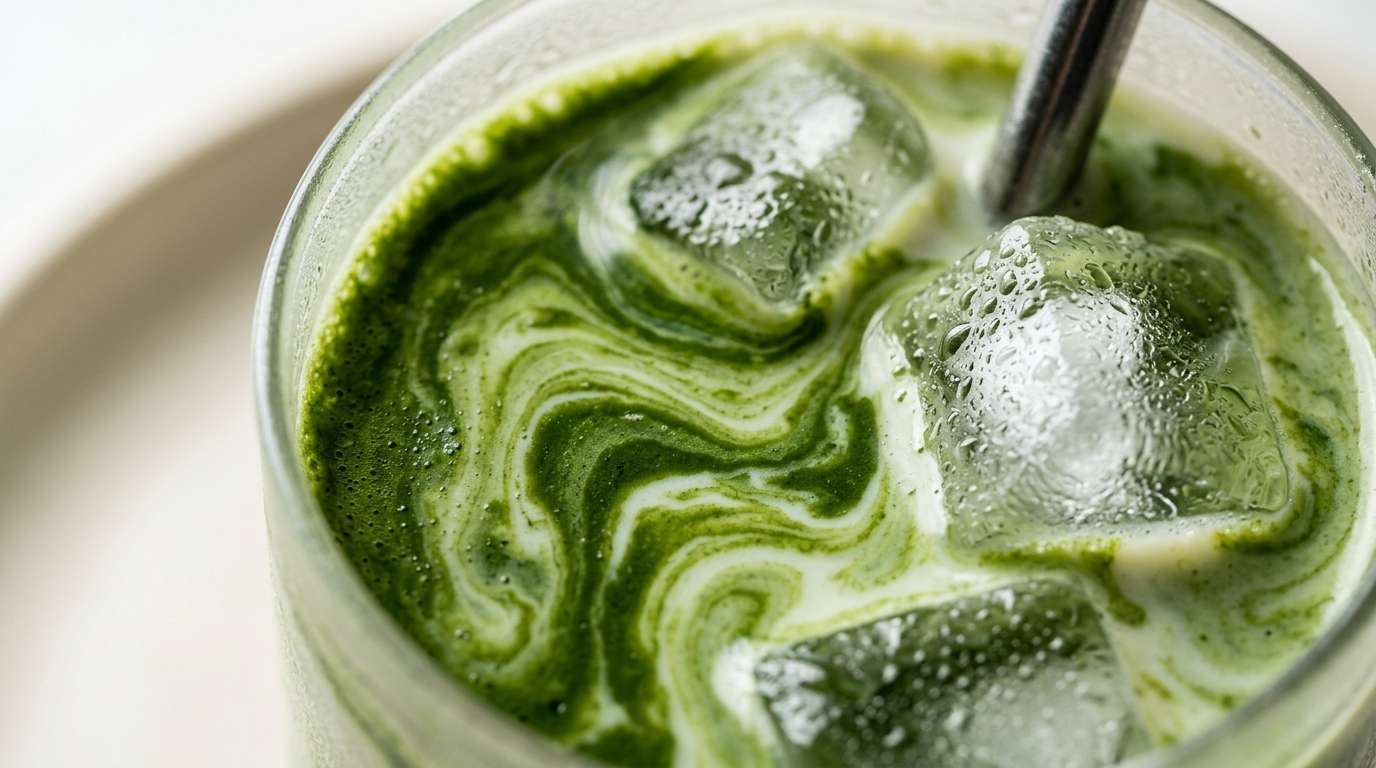
📷 The pour — emerald matcha into milk, slow motion, the shot that made TikTok obsessed
Consider what an iced drink actually looks like in a photo. Condensation on the outside of the glass. Layers — ice, milk, espresso, foam — visible through a clear container. A straw that points toward something worth drinking. Steam, which makes hot drinks photogenic in one specific way, competes with everything else in a frame. Cold drinks don’t compete. They compose themselves.
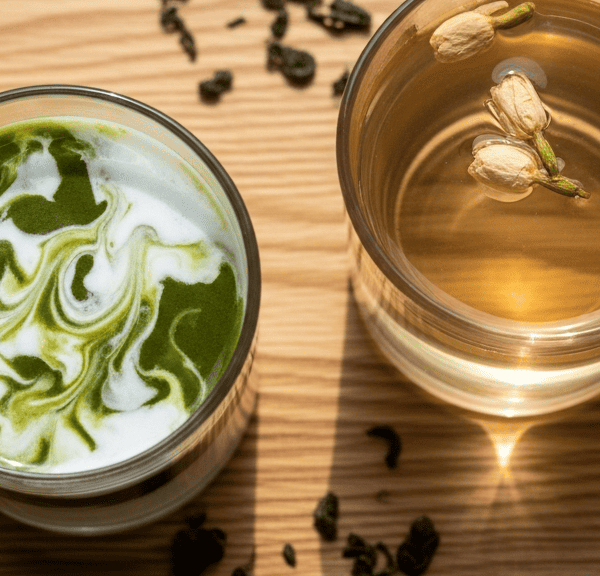
The pour is the moment. Watch the viral matcha videos — that swirl of green entering white milk, diffusing in slow marine clouds before settling — and you’re watching a two-second film that required no director. The physics did it. Cold-drink aesthetics are partly just beautiful fluid dynamics, and cameras have gotten very good at capturing them.
There’s a deeper force here. An iced drink sits with you. It doesn’t demand to be finished before it goes cold. It’s already cold — and it will stay that way for the next hour, through a meeting, a commute, or a slow morning on a fire escape. The experience isn’t the gulp. It’s the presence. Cold drinks have become the ambient objects of modern productivity culture.
From Seoul to London in the Rain — Cold Culture Crossed Every Climate
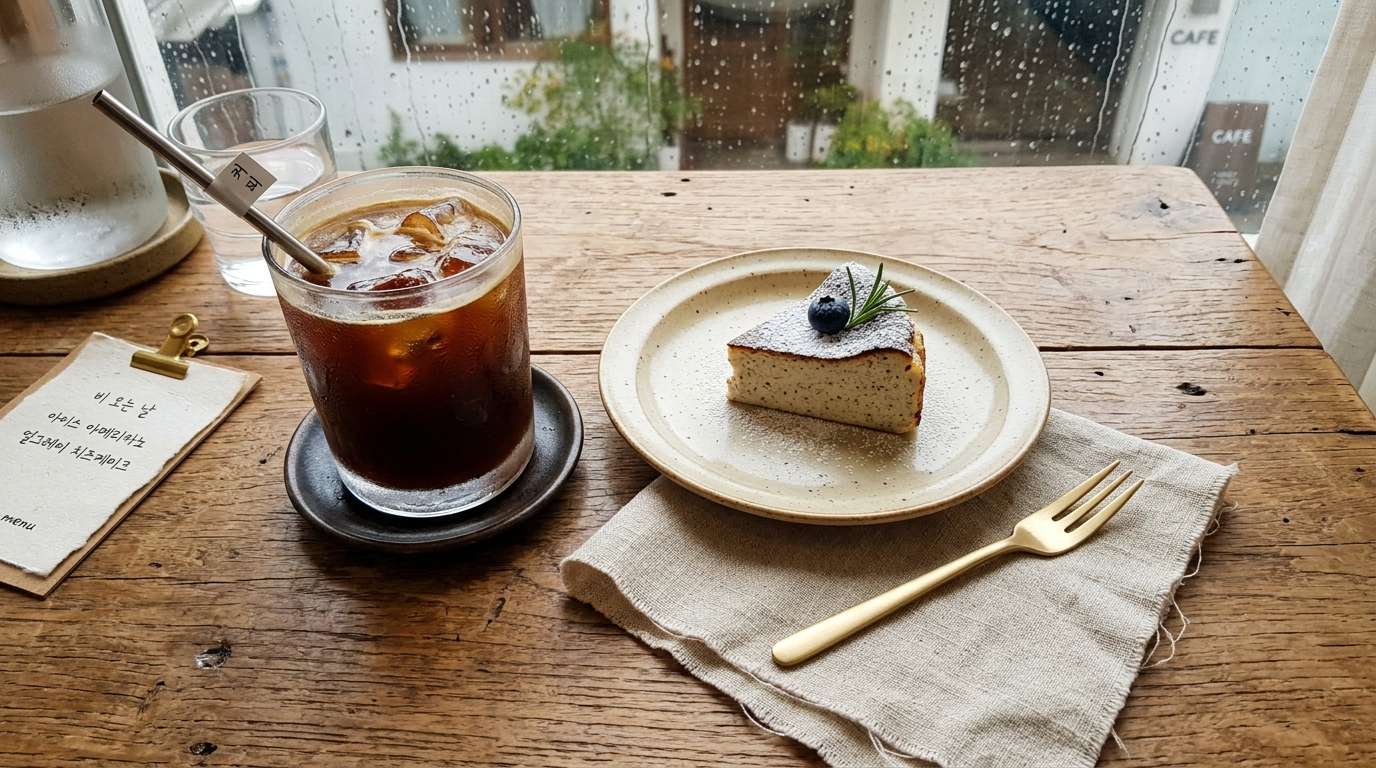
📷 Korean café — iced Americano in cold weather, window rain, cinematic cool tones
South Korea has a phrase for it: eol-Americano — iced Americano, consumed year-round regardless of temperature, often in the middle of winter with the heating on inside the café. Korean cold-coffee culture predates TikTok’s influence and has its own deep history tied to café design, study culture, and urban aesthetics. It isn’t a trend there. It’s infrastructure.
Japan built cold brew into vending machine culture decades ago. Southeast Asia has been drinking iced-condensed-milk coffee through monsoons for generations. What changed globally wasn’t the preference for cold — it’s that cold became socially legible across cultures simultaneously, amplified by platforms that move aesthetic trends at the speed of an algorithm.
The global iced coffee market was valued at $11.1 billion in 2024 and is projected to reach $21.4 billion by 2034 — a 6.8% compound annual growth rate, per Market.us research. Cold brew is the faster-growing subcategory, forecasted at 22%+ annual growth — more than triple the rate of iced coffee overall. The United States holds 49% of the global cold coffee market, but Japan, India, and China are accelerating fastest.
Market.us Iced Coffee Market Report 2024 · Brainy Insights Cold Brew Market Report 2024
The UK case is perhaps the most instructive. It’s not a country that should, climatically, be drinking iced beverages year-round. And yet it has 22% annual growth in cold coffee, and Caffè Nero attributing its record revenues partly to iced matcha. Climate doesn’t explain this. Culture does.
Cold culture travels because what it represents — leisure, modernity, self-expression, aesthetic sensibility — translates across borders in a way that taste and tradition often don’t. An iced latte in Seoul and an iced latte in London are participating in the same visual conversation. The drink is almost secondary.
What Hot Coffee Lost — And What It Quietly Kept
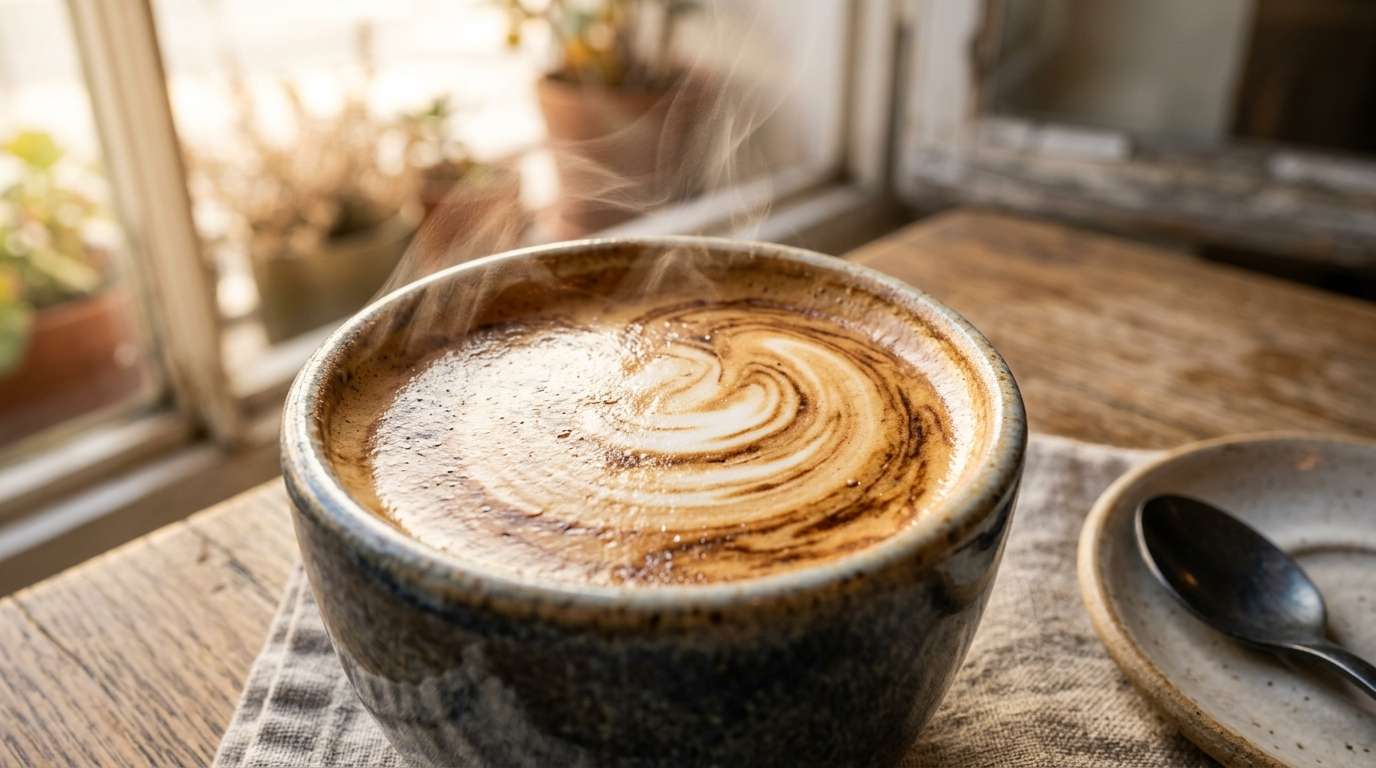
📷 Cortado in ceramic, steam, morning — quiet intimacy of the still-relevant hot drink
Hot coffee didn’t disappear. It shifted. It became smaller, more intentional, more tied to ritual than convenience. The cortado, the flat white, the careful pour-over — these aren’t drinks you order on your way to somewhere else. They’re drinks you sit down for. They became the minority not because they lost flavor appeal, but because they serve a different moment.
There’s something psychologically interesting here. As iced became the default of motion — the commute drink, the desk companion, the Instagram prop — hot drinks claimed the opposite: stillness, deliberation, a quiet morning before the algorithm starts. Specialty coffee culture leaned into this. The ritual of a slow pour-over became a counterstatement to the speed of cold culture. The steam became a signal.
The most honest analysis: hot and cold coffee have diverged into different categories serving different occasions, different identities, and different platform aesthetics. They’re not in competition. They’re coexisting as two very different versions of the same category, the way dining in and takeaway coexist — not one winning, but each becoming more itself.
What’s Really Driving Cold Culture — 4 Forces
Strip away the individual drinks — the cold brews, the iced matchas, the strawberry lattes — and four forces remain that together explain why this shift wasn’t temporary.
Cold Culture FAQ
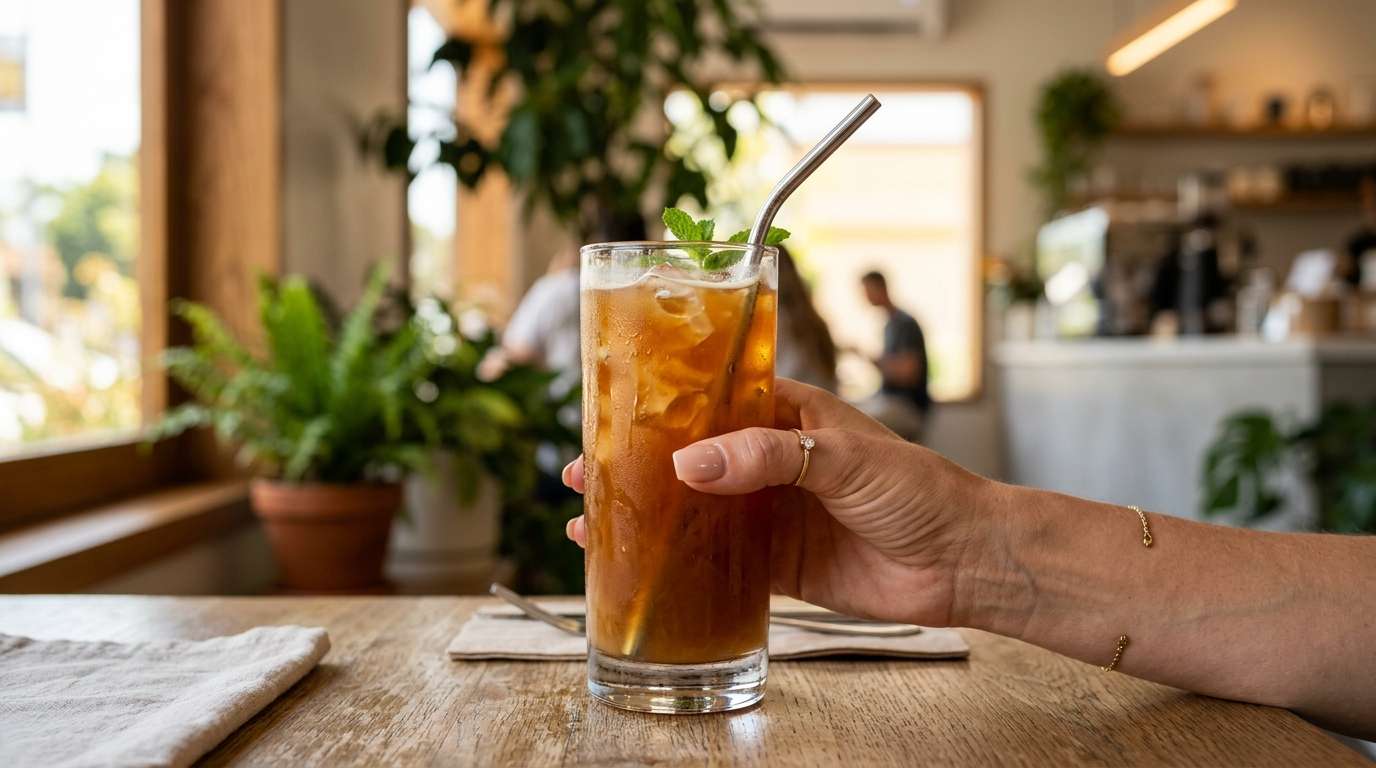
📷 Closing editorial — iced drink, city window, late afternoon, cinematic
So why is everything iced? Because cold stopped being a season and became a sensibility. Because a generation found coffee through sweetness and layers and clear cups, and that first sip defined what coffee means. Because the physics of a pour look better on camera. Because a drink that lasts two hours suits a world that runs continuously.
Maybe the real answer is simpler. Cold is how we hold something without having to commit to finishing it. In a life that moves too fast for ceremony, the iced drink became the one ritual we could carry with us — sweating quietly in our hands, still cold, still patient, still there.