How to Make Greek Yogurt Taste Like Mayo
The Exact Ratio That Actually Works
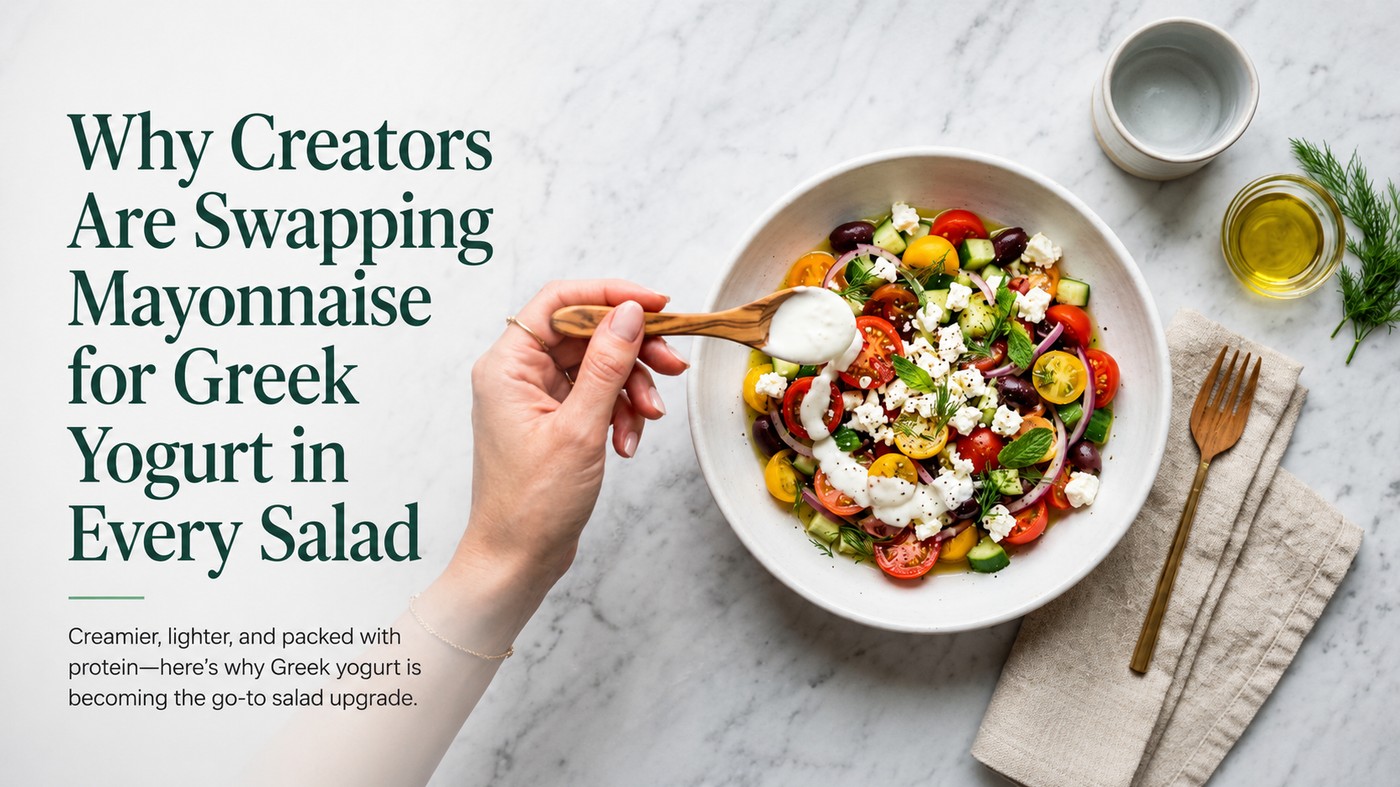
Four ingredients, one ratio, and a technique most recipes skip. Here’s exactly how to turn plain Greek yogurt into a stand-in for mayonnaise — plus the protein, gut-health, and calorie science behind why the swap outlasted the trend cycle.

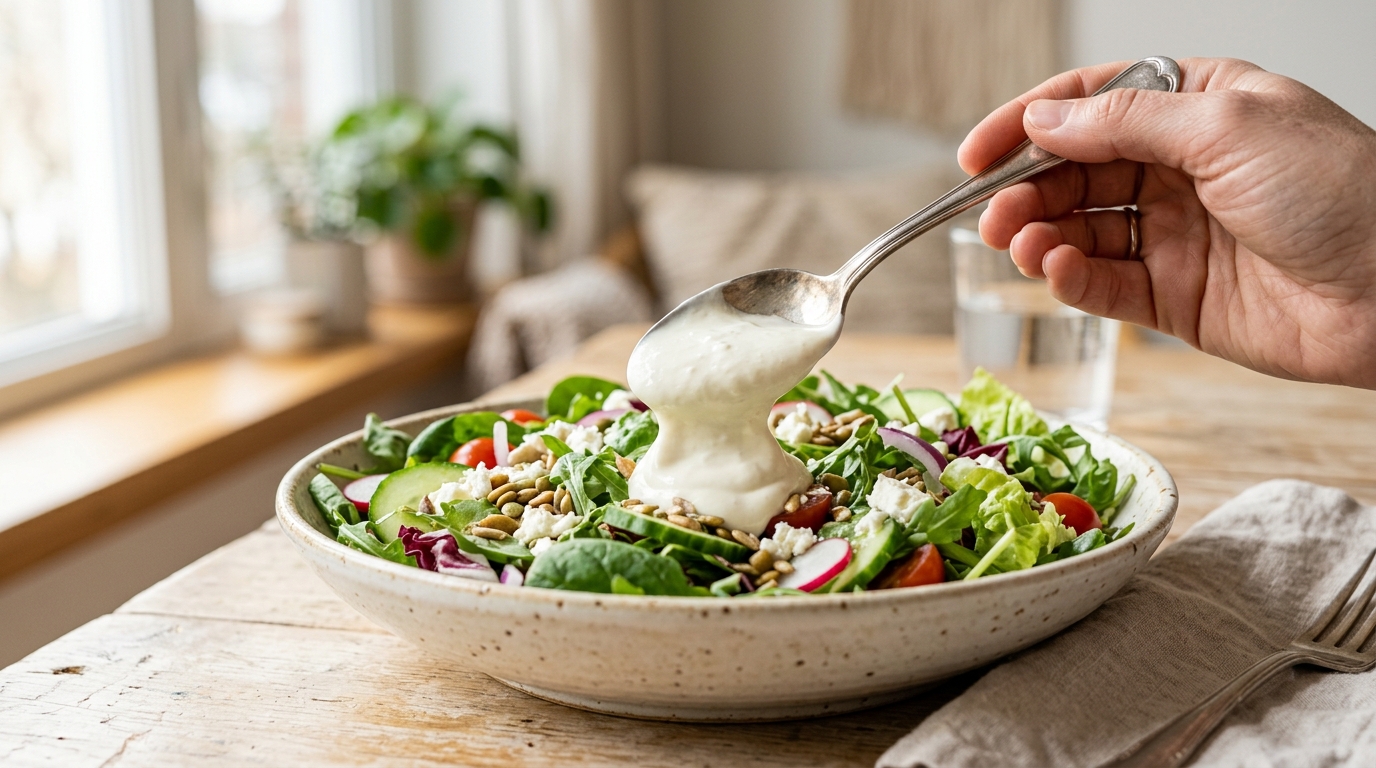
📷 Same cling, same drape, a fraction of the calories — once the ratio is right.
Type “how to make Greek yogurt taste like mayo” into Google and you’ll find no shortage of opinions. Some say it’s impossible — that mayonnaise is emulsified oil and egg yolk, and yogurt is cultured dairy, and never the two shall meet. Others swear a spoonful of Dijon fixes everything.
Both are half right. Plain yogurt alone doesn’t taste like mayo — it’s too tangy, too thin, too obviously yogurt. But yogurt plus the right acid, the right emulsifier, and enough salt gets remarkably close, especially once it’s folded into chicken salad, tuna, or coleslaw where other flavors are doing half the work anyway.
Below is the ratio that gets you there, why each ingredient earns its place, and the research explaining why so many people made this swap permanent instead of going back.
How to Make Greek Yogurt Taste Like Mayo — Step by Step
Mayonnaise’s flavor identity rests on three things: fat (the mouthfeel), acid (the tang), and salt (the savoriness), tied together by an emulsifier — usually egg yolk, sometimes mustard. Plain Greek yogurt already brings tang and can carry salt beautifully. The only real gap is fat, and closing it is optional depending on how far you want to go.
Add the Dijon. Of every ingredient in this ratio, mustard does the most to sell the illusion — it’s the flavor bridge between “yogurt” and “condiment.” A yogurt-lemon-salt mix without mustard tastes like a light dressing. Add the mustard and it starts reading as mayo.
Variations worth trying: stir in a pinch of smoked paprika and a dash of hot sauce for a chipotle-style mayo; add grated parmesan and a splash of Worcestershire for a Caesar-leaning version; fold in fresh dill and chives for a green-goddess feel. All start from the same base ratio above.
The most common mistake: reaching for flavored or low-fat yogurt to save calories, then wondering why the result tastes off. Vanilla and fruit-bottom yogurts carry added sugar that has no business in a savory dressing, and very low-fat yogurt is thinner and more sour without the oil step. Plain is non-negotiable; fat content is a dial, not a rule.
Why Creators Made the Swap Permanent

Tub, spoon, lemon, reveal. The format is always the same, and the repetition is the point.
This swap didn’t creep in slowly. Between the rise of high-protein eating and a broader fatigue with anything that feels overly processed, Greek yogurt became the default answer to one question creators kept asking out loud: how do you make a dish lighter without making it sad?
The appeal is that it asks for almost nothing. No new cuisine to learn, no specialty ingredient to buy — just a recipe you already love with one line changed. Chicken salad, tuna salad, coleslaw, potato salad, ranch, the dip that holds a party together: one by one, the recipes that defined the mayonnaise era got rebuilt around a tub of cultured dairy.
There’s a quieter psychological pull underneath it, too. Choosing the yogurt version becomes a small, repeatable signal about the kind of eater you’re becoming — a vote for intentional over automatic. That’s the same emotional engine behind the protein-pancake wave: not a diet, exactly, more like a habit with macros attached.
The Protein Math — The Part That Keeps People Coming Back
Here’s where the swap stops being a vibe and starts being chemistry. Mayonnaise is essentially emulsified oil and egg yolk — almost pure fat, with a trace of protein you could measure in a rounding error. Plain Greek yogurt is the inverse: strained until it’s dense and tangy, and unusually high in protein for something this creamy.
That difference changes how a meal feels in the hours after you eat it. Of the three macronutrients, protein is consistently the most satiating — the one that does the most to quiet hunger and stretch the gap before you’re back in the fridge.
A 2020 systematic review and meta-analysis of randomized controlled trials covering 49 studies found that eating protein measurably reduced hunger and the desire to eat while increasing fullness and satiety. The mechanism is hormonal: protein lowered ghrelin (the hunger signal) and raised appetite-suppressing gut hormones like CCK and GLP-1 — the same pathway much of today’s weight-management science is built around.
Effect of short- and long-term protein consumption on appetite and gut hormones — systematic review & meta-analysis of RCTs, 2020.
Translate that to a real plate: swap the mayo in a chicken salad for the ratio above, and you haven’t just cut fat — you’ve stacked several grams of protein into a bowl that previously had almost none. The dressing stops being a passenger and starts pulling weight, which is the unglamorous reason this swap survives past the trend cycle: people notice they’re less hungry by mid-afternoon.
The Fat & Calorie Gap — Where the Swap Earns Its Reputation
The gap between these two ingredients is wider than almost any other swap in a home kitchen — the reason one substitution can quietly reshape a whole recipe’s calorie load without touching the flavor. Here’s the side-by-side, drawn from the USDA FoodData Central database, scaled to a realistic two-tablespoon dollop of dressing.
*Made using the ratio above, plain nonfat-to-2% Greek yogurt base. †Only if the label says “live & active cultures.” Values rounded from USDA FoodData Central; brands vary.
Read that again slowly. Two tablespoons of real mayo and two tablespoons of the yogurt version do nearly the same job on a plate — the same cling, the same creamy drape over shredded chicken or chopped egg — but one carries roughly ten times the calories and brings no protein to the table. In a recipe that calls for a full cup of binder, that gap stops being trivia and becomes a few hundred calories you never tasted leave the dish.
A fair word for mayonnaise: it isn’t the enemy. Its fat is largely unsaturated, and it carries small amounts of vitamin E and vitamin K. The case for the yogurt version isn’t that mayo is “bad” — it’s that yogurt can do the same creamy job while quietly adding protein and live cultures instead of a fat-heavy calorie load. That’s leverage, not restriction.
The Gut Connection — What Mayo Could Never Offer
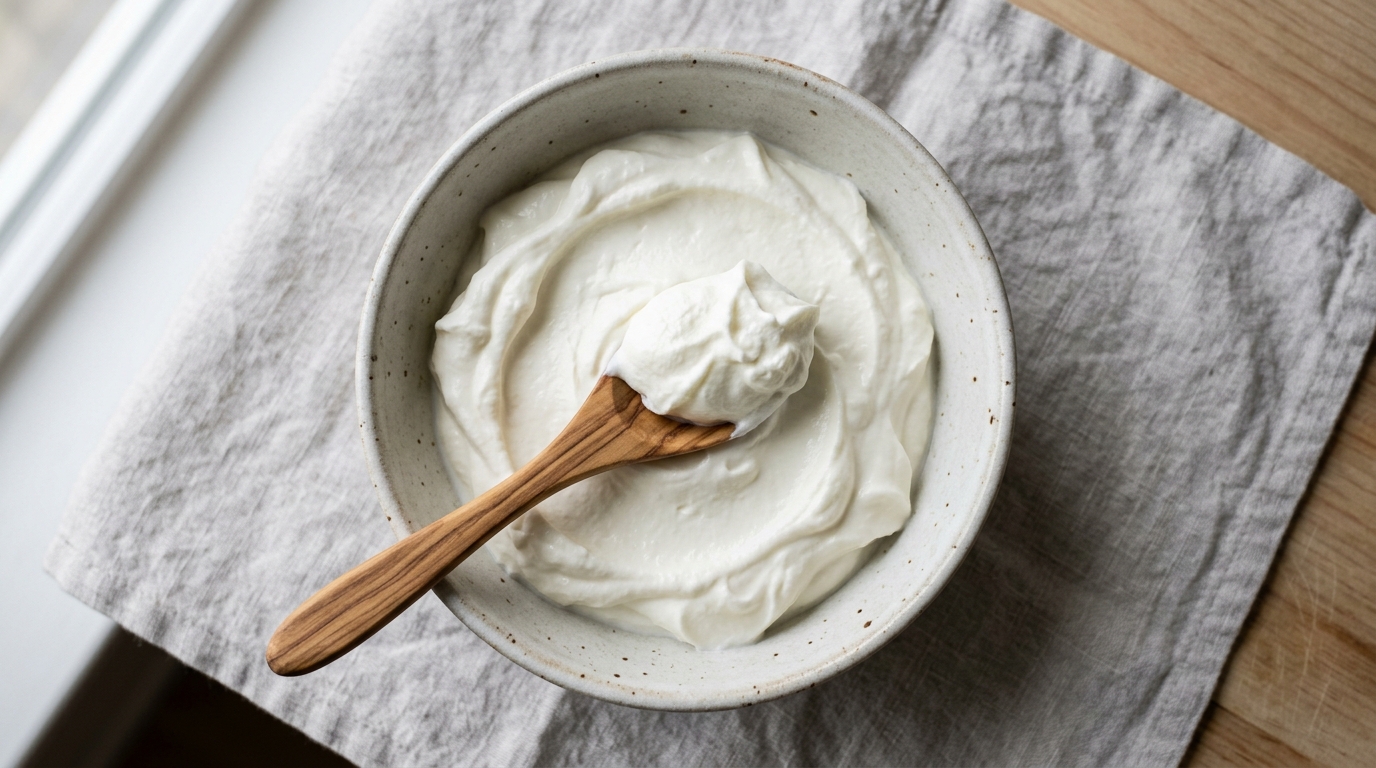
A fermented food, not a manufactured one — the difference your microbiome notices.
There’s a category difference here that’s easy to miss. Mayonnaise is manufactured. Yogurt is fermented — alive in a way an emulsified condiment simply isn’t. When the label reads “live and active cultures,” you’re spooning billions of bacteria into a dish, and a growing body of research suggests that matters more than it used to seem.
In a randomized trial, Stanford researchers put healthy adults on a 10-week diet rich in fermented foods — yogurt, kefir, kimchi, kombucha. The fermented-food group showed increased gut microbiome diversity and a broad drop in inflammation markers, with larger servings producing stronger effects.
Wastyk HC, et al. Gut-microbiota-targeted diets modulate human immune status. Cell. 2021;184(16):4137–4153.
The regulators have started to notice, too. In March 2024 the U.S. Food and Drug Administration issued its first-ever qualified health claim for yogurt, allowing the statement that eating yogurt regularly — at least two cups (three servings) a week — may reduce the risk of type 2 diabetes, according to limited scientific evidence. It’s a cautious claim, but a meaningful one. No condiment in the fridge has earned anything close to it.
Worth noting for the ratio above: cooking kills live cultures, and so does high heat. For the gut-health upside, keep your yogurt mayo raw and cold — which is exactly how chicken salad, tuna, and slaw already want it.
Why It Photographs So Well — And Why It’s Not Actually New
Don’t underestimate how much of this is visual. Greek yogurt dressing has a matte, sculptural thickness that catches light beautifully — it holds the ridges of a spoon and reads as fresh in a way glossy, store-bought mayo never quite manages on camera. That’s part of why the swap keeps spreading: it looks like care.
And strip away the ring light, and this “trend” turns out to be a homecoming. Across Greece, Turkey, the Levant, and the Balkans, strained yogurt has been the creamy backbone of the table for centuries — long before mayonnaise was invented in a French kitchen. Tzatziki, labneh, yogurt thinned with garlic and mint: this is yogurt’s native role, and the modern mayo swap is simply rediscovering it.
That matters because the Mediterranean pattern is among the most studied diets in the world — the landmark PREDIMED trial in the New England Journal of Medicine found it produced a roughly 30% reduction in major cardiovascular events among high-risk adults. Yogurt sits comfortably inside that tradition, alongside the foods most consistently linked to longer lifespans. What looks like a 2020s wellness hack is really one cuisine’s everyday staple meeting another’s — poured into the recipes of the mayonnaise era and discovering they were always waiting for it.
Mayo vs. Greek Yogurt Mayo — Visualized
Per 2-tablespoon serving. Yogurt mayo made with the ratio above. Source: USDA FoodData Central.
The pattern is hard to unsee: mayo wins on calories and fat; the yogurt version wins on protein. For a dressing, that’s a trade most people happily make.
6 Things the Internet Gets Wrong About This Swap
The trend is mostly right. These are the places it tends to overshoot — or undersell.
Frequently Asked Questions
The Bigger Picture
Getting Greek yogurt to taste like mayo isn’t a trick — it’s a formula. Acid for the tang, mustard for the sharpness, salt to make it read as a condiment instead of a topping, and an optional spoonful of oil if you want zero taste giveaway. Once that ratio clicks, everything else about the swap — the protein, the live cultures, the calories you never miss — comes along for free.
Maybe that’s the real reason creators keep reaching for the same tub. Not because an algorithm told them to, but because the swap quietly delivers on a promise most food trends break — that eating a little better doesn’t have to feel like eating a little less. The spoon still drags through something thick and creamy. The salad still feels like a treat. You’ve simply changed one line of the recipe, and gotten the ratio right.