Why Are We Still Obsessed With Freeze-Dried Candy?
And What It’s Quietly Doing to Your Teeth
It puffs, it shatters, it melts into flavor dust — and billions of views later, it’s still everywhere. Here’s the psychology behind the crunch, and what dental research says happens after the video ends.

A taffy goes into a steel chamber looking like a taffy. Hours later it comes out three times its size, swollen like a cloud, and when someone bites it on camera it doesn’t chew. It cracks — a dry, glassy snap that the microphone was clearly placed to catch.
That sound has been playing on a loop for years now. Most viral sweets burn out in a season. Freeze-dried candy didn’t. It moved from home kitchens to TikTok Shop to the checkout aisle, and the biggest candy companies on Earth followed it there.
So two questions are worth asking — especially one week before Halloween. Why can’t we stop watching it? And what happens to your enamel once that cloud of sugar dissolves in your mouth?
The Crunch Heard Round the Internet — Why We Can’t Look Away
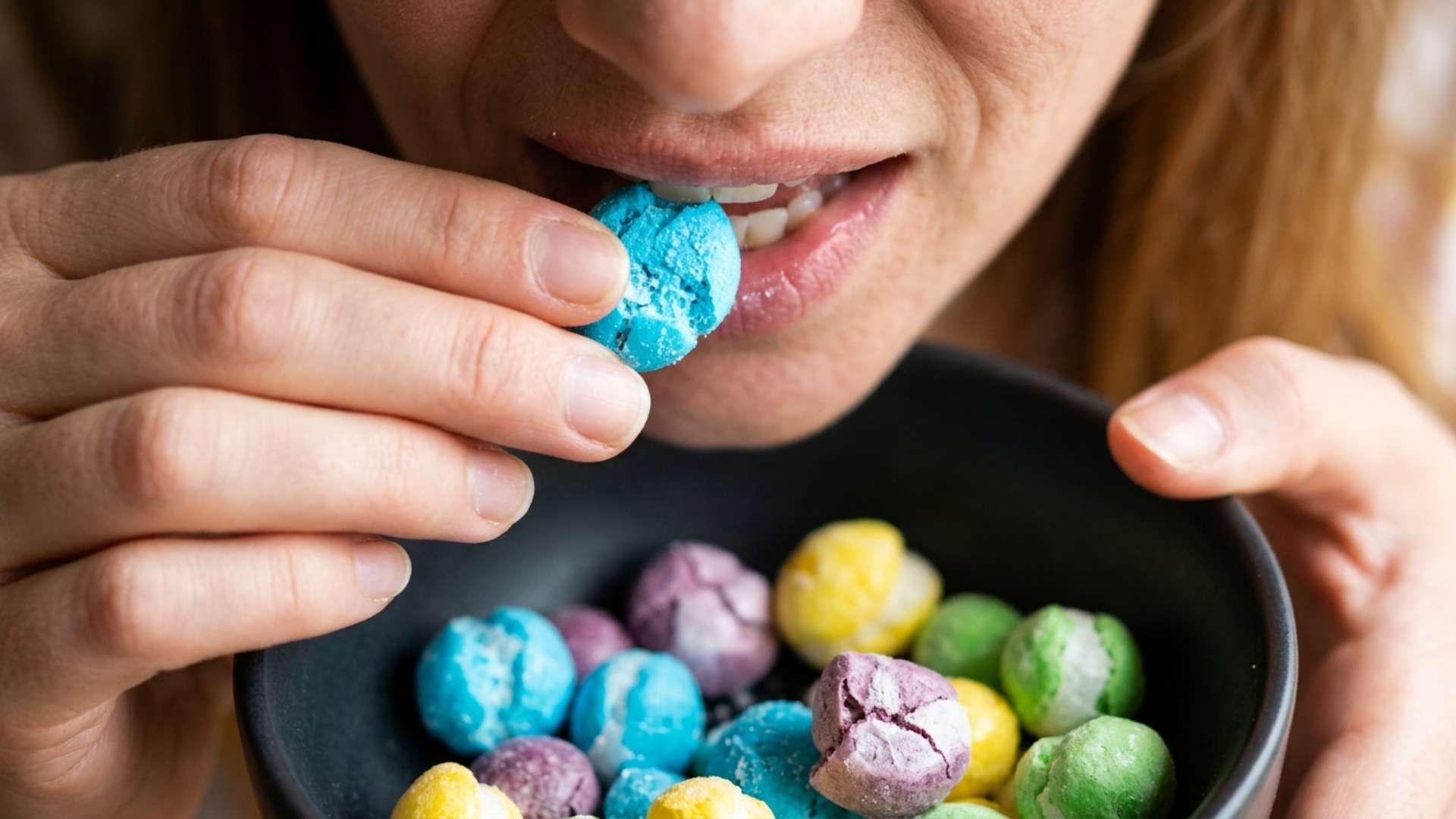
🎬 Before, after, snap. The whole genre in three beats.
The trend was born on home freeze-dryer trays and raised by short-form video. By early 2025, trade reporting counted 4.7 billion views on the #freezedriedcandy hashtag alone. Skittles launched its own puffed line in late 2024. Mars rolled freeze-dried caramel M&M’s into stores nationwide in January 2026.
But the numbers don’t explain the pull. The videos do. Watch twenty of them and the same four ingredients show up every single time.
A familiar thing becomes unfamiliar. You know exactly how a Skittle behaves. Watching it balloon and split open breaks that expectation — and broken expectations are what the brain flags as worth watching.
The crunch is the content. Crispness reads as freshness in our heads, and a loud, clean snap delivers that signal through a phone speaker. These clips are ASMR that happens to be edible.
It looks like a science experiment. A vacuum chamber, a long wait, a reveal. The process borrows the drama of space food — astronaut ice cream for a generation that grew up on unboxing videos.
It’s your childhood, remixed. Nobody needs to explain the original candy. The trend sells novelty with zero learning curve — the most shareable kind there is.
Here’s an observation worth sitting with: freeze-dried candy may be the first sweet designed to be heard before it’s tasted. Much like matcha’s color did the marketing for green tea, the crunch does the marketing here. The flavor barely needs to show up.
What Freeze-Drying Actually Does — Water Out, Air In, Sugar Untouched
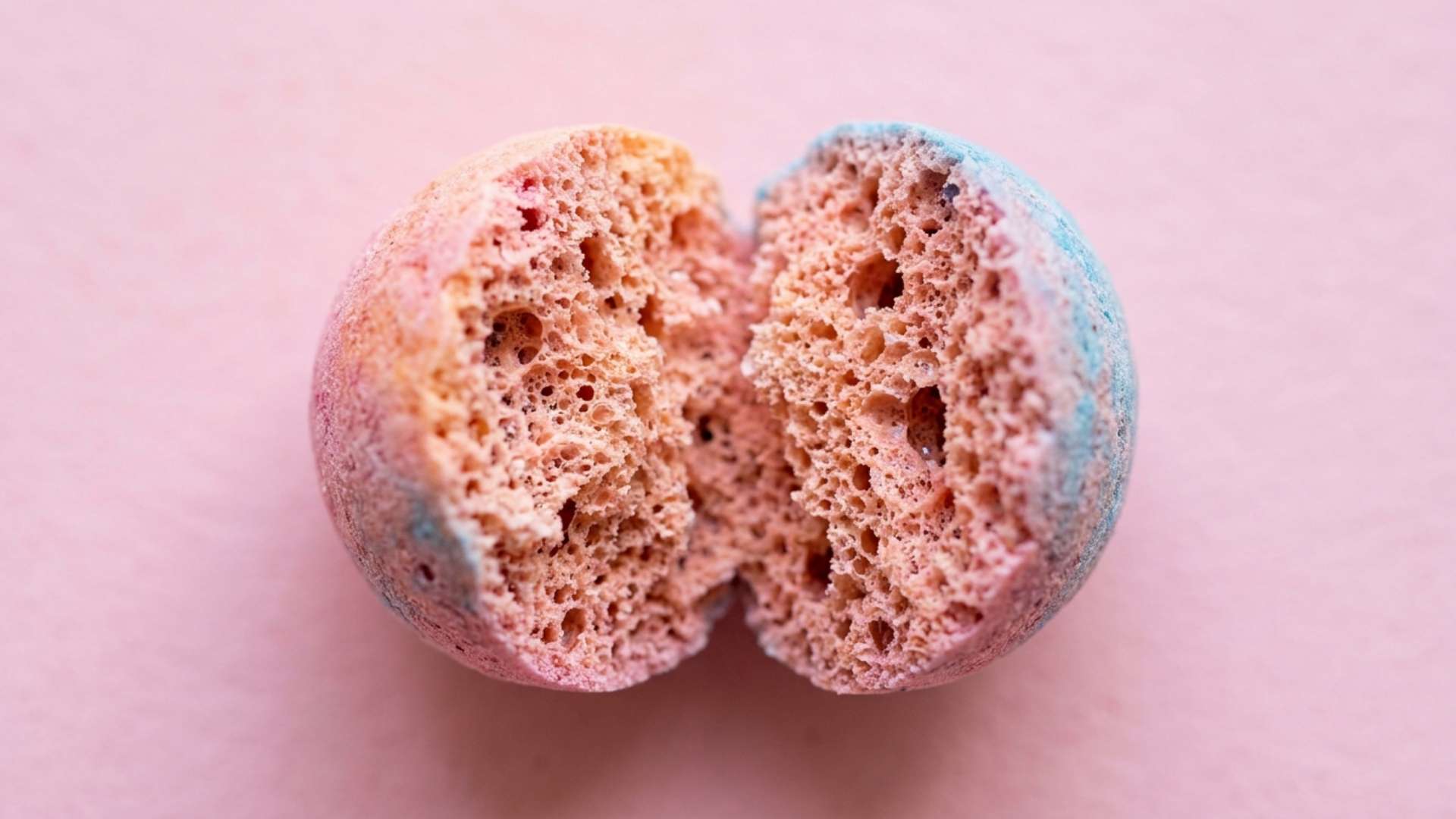
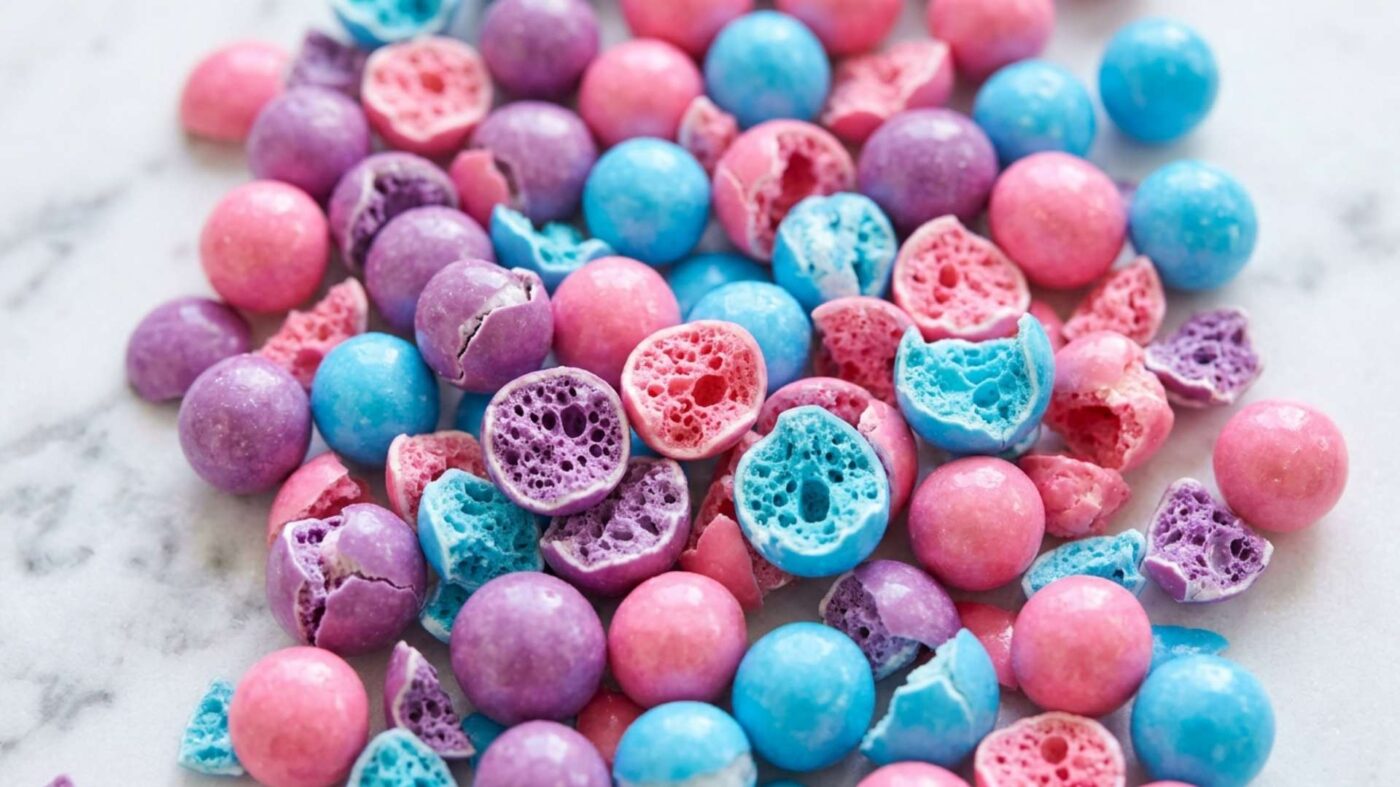
📷 Candy, rebuilt as foam.
The machine freezes the candy, then drops the pressure until the ice skips the liquid stage and turns straight into vapor. That’s sublimation. As moisture escapes, trapped gases inside the candy expand, which is why it puffs, goes airy and turns brittle.
Notice what’s missing from that description. Nothing happens to the sugar. Nothing happens to the citric acid on a sour coating. The only thing removed is water — which means flavor, sweetness and acidity all get more concentrated per bite, not less.
Ten candies before freeze-drying contain the same sugar as ten candies after. But the “after” version is bigger, lighter and dissolves faster — so ten feels like a few, and a handful turns into half a bag. The process doesn’t add sugar. It removes the brakes.
(ConfectioneryNews, 2025)
(Grand View Research)
How Candy Really Damages Teeth — It’s Not the Sugar You Think

📷 Enamel is the hardest substance your body makes. Acid still wins, slowly.
Teeth don’t really get damaged by sugar. They get damaged by what happens to it. Bacteria in plaque eat sugar and release acid, and acid pulls minerals out of enamel. There are two separate threats hiding in a bag of candy, and freeze-dried versions carry both.
Sour vs. original flavors: A University of Iowa team tested popular candies on extracted teeth and found sour versions generally produced deeper enamel lesions than the originals. Lesions got deeper as pH dropped and acidity rose — and saliva seemed to protect less against the sour ones.
How acidic is “sour”? A 2017 British Dental Journal study measured sour novelty sweets at pH 1.8 to 3.2 — far below enamel’s 5.5 threshold — and found measurable surface enamel loss in the lab. The researchers judged them capable of significant erosion in real mouths.
Wagoner SN, et al. JADA. 2009;140(7):906–913 · Aljawad A, et al. Br Dent J. 2017;222(8):613–620
And the sugar ceiling isn’t high. The World Health Organization recommends keeping free sugars under 10% of daily energy, with extra benefit — including fewer cavities — below 5%, or roughly 25 grams a day. A generous handful of puffed candy can cover that quietly.
Where Sour Candy Sits on the Acid Scale
Lower pH = more acidic. Enamel begins losing minerals below about 5.5.
Freeze-drying removes water, not acid — a freeze-dried sour candy carries the same acidic coating, concentrated into less volume.
Better or Worse for Your Teeth? — The Answer Is “It Depends How You Eat It”
Here’s something the candy shops won’t tell you: no published study has tested freeze-dried candy on teeth specifically. Every “dentist-friendly” claim online is reasoning, not research.
So let’s reason carefully — factor by factor — using what we do know about sugar, acid and saliva.
Freeze-drying doesn’t change the chemistry your teeth care about. It changes your behavior. That’s the “secret” part: the damage isn’t in the candy. It’s in the bag left open on the desk all afternoon, one weightless piece at a time.
One more trend worth watching. Market analysts at Mordor Intelligence expect sour flavors to be among the fastest-growing freeze-dried segments through 2031. Put that next to the enamel studies and you get an uncomfortable picture: the part of the category your dentist would worry about most is the part growing fastest.
Freeze-Dried Candy, Ranked by Tooth Risk — From Gentlest to Roughest
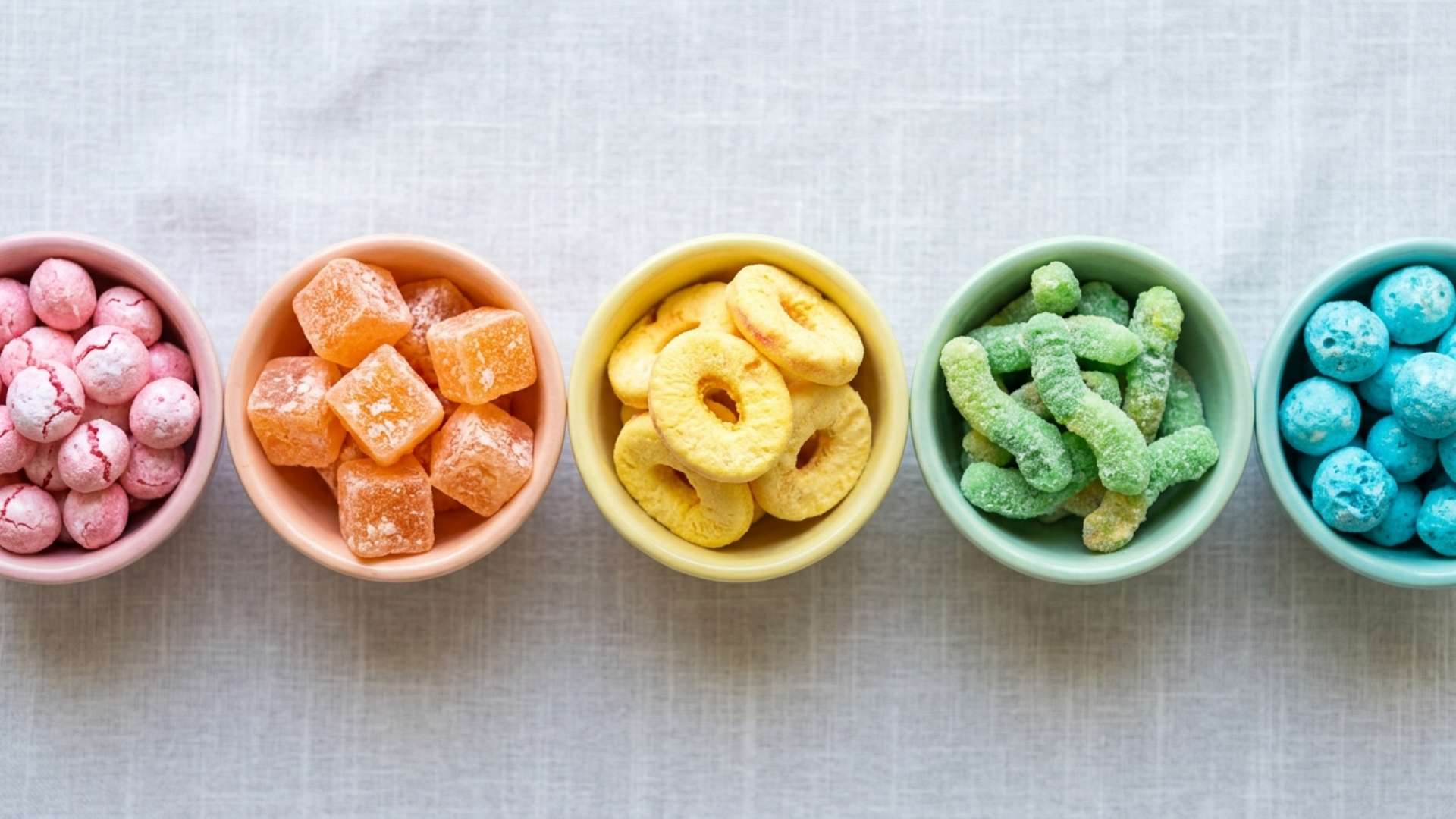
📷 Same machine, very different consequences.
This ranking applies the dental principles above — sugar load, acidity and how long each style lingers. It’s informed logic, not a lab test, but it’s the logic your dentist uses.
If you’re building a treat bowl for kids this Halloween, that list is worth screenshotting — and pairing with something from our quick, easy healthy snacks so candy isn’t the only thing within reach.
4 Freeze-Dried Candy Claims, Corrected
The trend has produced great crunch and some very creative copywriting.
Keep the Crunch, Keep the Enamel
Nobody’s asking you to quit. Five small changes move the risk more than giving up any single candy would.
Things People Actually Want to Know
So why are we still obsessed? Because freeze-dried candy turned something ordinary into a small spectacle — a sound, a reveal, a childhood favorite made strange. That’s a genuinely delightful trick, and there’s nothing wrong with enjoying it.
But the machine only changes the candy. It can’t change the chemistry of your mouth. Sugar still feeds bacteria. Acid still softens enamel. And a weightless candy is easy to keep reaching for long after the novelty wore off.
Maybe that’s the quiet lesson in every viral sweet. The crunch lasts a second. Your teeth have to last a lifetime.

Has watched more freeze-dried taffy videos than she’d like to admit. Now rinses with water after every sour candy.