How to Stretch a Single Whole Chicken Into 5 Completely Different Meals

How to Stretch a Single Whole Chicken Into 5 Completely Different Meals

🍗 Kitchen Strategy June 17, 2026 · 16 min read 🪙 Budget-smart One Whole Chicken. Five Completely Different…

🍗 Kitchen Strategy June 17, 2026 · 16 min read 🪙 Budget-smart

One Whole Chicken.
Five Completely Different Meals.

A roast chicken on Sunday shouldn’t just be Sunday dinner. Here’s the full system — five genuinely distinct meals, a prep workflow, cost breakdowns, food science, and the cultural history of cooking that wastes nothing.

Emily Bennett
Emily Bennett
Food culture & kitchen strategy writer · foodhitsdifferent.com · Cost data verified against USDA pricing
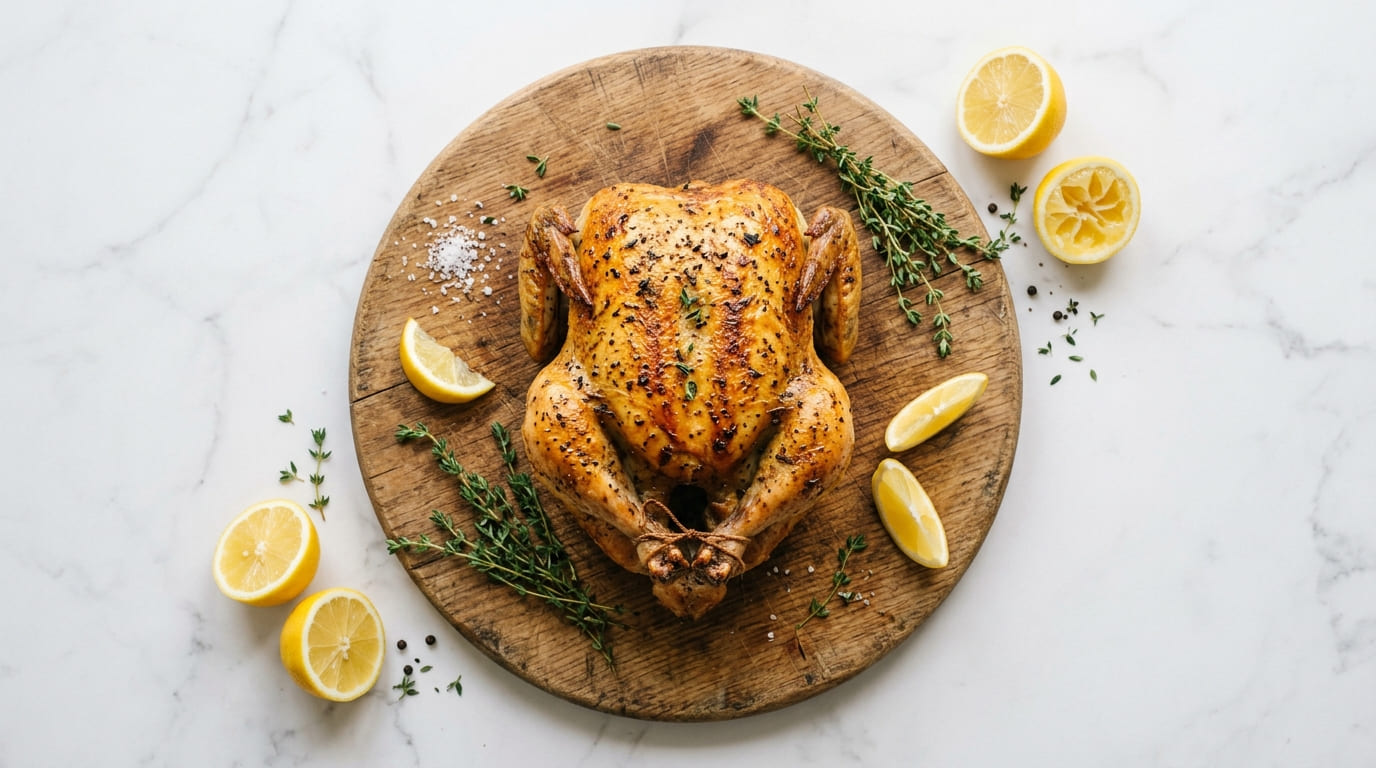
Golden roasted whole chicken resting on a wooden board, herbs tucked underneath, warm late afternoon kitchen light

Golden roasted whole chicken resting on a wooden board, herbs tucked underneath, warm late afternoon kitchen light

There is a particular kind of satisfaction that comes from knowing that the chicken roasting in your oven on Sunday will still be feeding you on Thursday — and that by Thursday it will taste like an entirely different meal.

This is how generations of home cooks in France, Japan, Morocco, and a thousand farmhouse kitchens operated — not out of poverty, but out of a kind of culinary intelligence that modern meal-kit culture forgot to teach us. The whole animal, used entirely, with nothing surrendered to the bin.

The math is compelling. A quality whole chicken, at roughly $10–$14, becomes five distinct meals for a family of four — working out to somewhere between $2.50 and $3.50 per meal. The flavor math is even better. Each transformation layers a new seasoning logic over what came before, so the last bowl of noodles on Thursday tastes nothing like the Sunday roast it started as.

📋 What’s In This Article
01The Sunday Base: Herb-Roasted Whole Chicken — the dinner that starts everything.
02Meal 2: Shredded Chicken Wraps with Yogurt Sauce — Monday lunch that takes 10 minutes.
03Meal 3: Chicken and Vegetable Soup — Tuesday’s long, slow comfort.
04Meal 4: Crispy Chicken Fried Rice — Wednesday’s wok-night transformation.
05Meal 5: Bone Broth Noodle Bowl — Thursday’s slow-simmered finale.
🪙The Cost Breakdown — exact meal cost per serving, compared against buying protein separately.
🧠The Science Behind It — why this method reduces decision fatigue and food waste simultaneously.
🌍The Cultural Context — the global tradition of whole-animal cooking, and why it’s coming back.
01
Sunday Dinner

The Sunday Base: Herb-Roasted Whole Chicken — The Dinner That Starts Everything
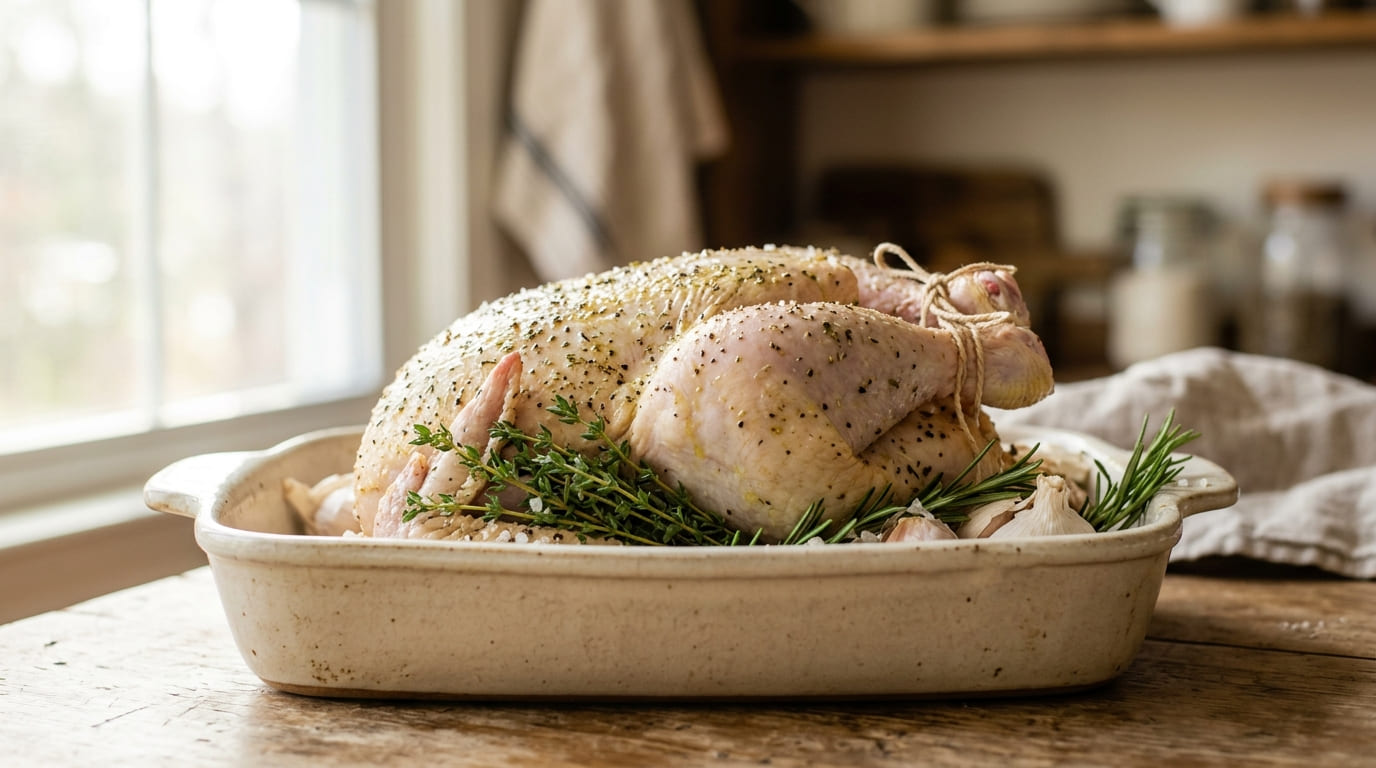
Herb-rubbed raw chicken in roasting pan with thyme, garlic and lemon, natural light

Herb-rubbed chicken before roasting — thyme, lemon, garlic visible

The roast chicken is not the beginning of a meal plan. It’s the beginning of a flavor archive. Every decision you make here — the herbs you choose, how you truss it, what you stuff inside the cavity — will echo through the meals that follow. Think of Sunday’s roast as planting a flavor seed.

The seasoning is deliberately generous. Garlic, lemon, rosemary, and thyme — classic Provençal aromatics that are neutral enough to belong in anything that comes after: a wrap, a soup, a fried rice, a broth. This is not the time for bold spice rubs. Those can come later, in the transformation meals.

Meal 1 · Sunday
Herb-Roasted Whole Chicken
Prep: 15 min · Cook: 1 hr 30 min · Serves: 4 (with planned leftovers)
Ingredients
  • 1 whole chicken, 1.5–2kg (free-range where possible)
  • 3 tbsp olive oil
  • 4 garlic cloves, minced
  • 1 lemon, halved (one half zested, one half stuffed inside)
  • 3 sprigs fresh rosemary + 4 sprigs thyme
  • Salt and black pepper, generously
  • 1 onion, quartered (placed under the bird in the pan)
  • 2 carrots + 2 celery stalks (roasting base — save for broth)
Method
  1. Preheat oven to 200°C (fan 180°C / 400°F). Pat chicken completely dry — this is the key to crisp skin.
  2. Mix olive oil, garlic, lemon zest, salt, and pepper into a paste. Rub under the skin over the breast meat and all over the exterior.
  3. Stuff the cavity with the lemon half and herb sprigs. Tie the legs loosely.
  4. Lay onion, carrot, and celery in the roasting pan. Place the chicken on top — the vegetables become your broth base later.
  5. Roast 1 hour 20 minutes, basting once at 40 minutes. Rest for 15 minutes before carving.
  6. Critical step: carve the breast meat cleanly, remove the legs and thighs as whole pieces. Reserve all bones and the carcass in a ziplock. Don’t discard the roasting vegetables.
🗓️ What to save: Carcass + bones in a bag in the fridge. Leftover breast meat (approx. 300g) in an airtight container. The roasting pan drippings in a jar.
🌿 Flavor Profile & Transformation Logic

The Provençal base is deliberately neutral — citrus-herb-forward, not spiced. This allows the leftover meat to absorb new seasoning identities in every subsequent meal without the base flavor fighting the new direction. By Meal 4, you’ll be adding soy and sesame to the same bird that started with rosemary, and it will feel entirely natural.

🍗
02
Monday Lunch

Shredded Chicken Wraps with Yogurt Sauce — 10 Minutes, Zero Cooking
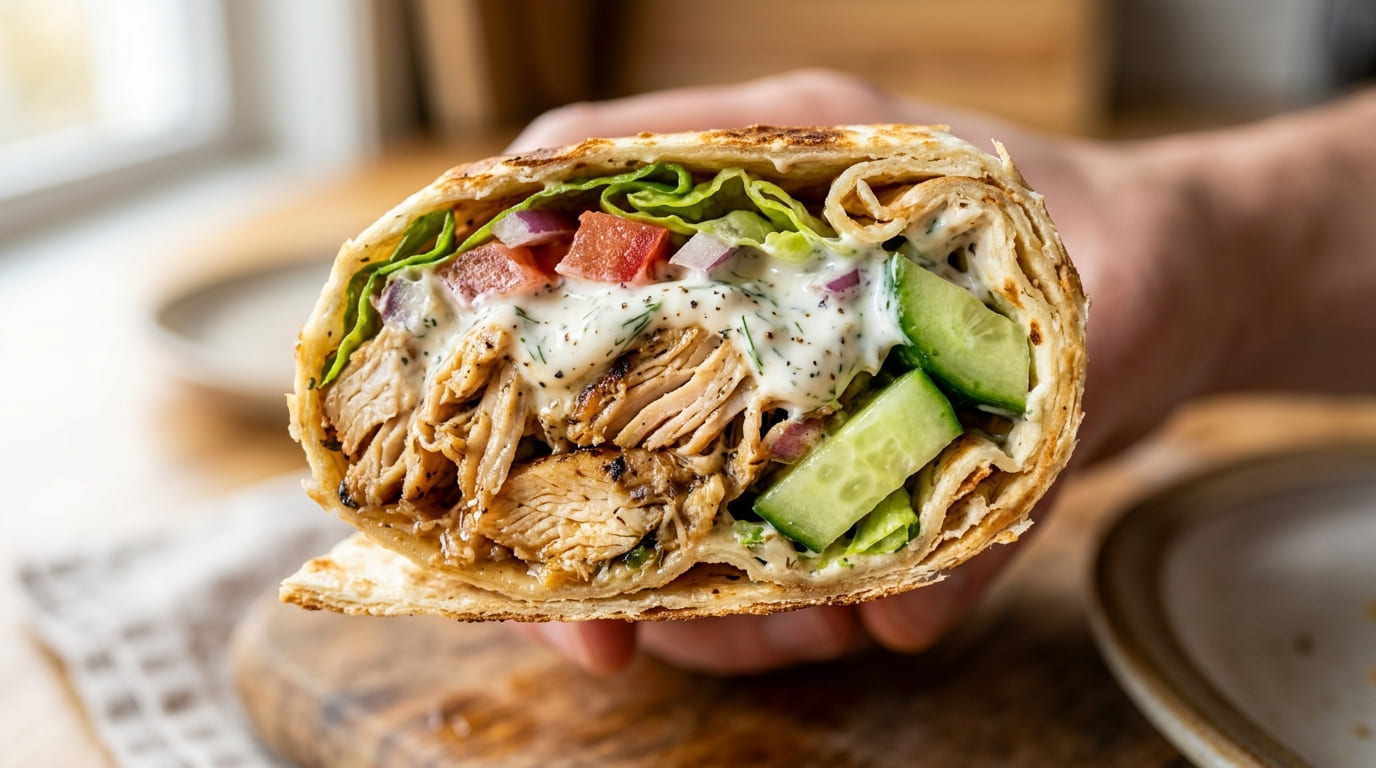
Shredded chicken wrap cut in half with yogurt sauce, cucumber and herbs, bright midday light

Halved chicken wrap, yogurt-herb sauce visible, fresh greens, clean minimal overhead

Monday’s lunch should feel nothing like Sunday’s dinner. The trick is contrast: cold shredded chicken against warm flatbread, the herby yogurt cutting through the richness, cucumber adding crunch. The same meat — completely different experience.

Meal 2 · Monday
Shredded Chicken Wraps
Prep: 10 min · No cooking required · Serves: 4
Uses From Meal 1

~250g leftover breast meat, shredded cold.

New Ingredients
  • 4 large flatbreads or flour tortillas
  • 150g Greek yogurt
  • 1 garlic clove, minced · squeeze of lemon · handful of mint
  • 1 cucumber, sliced thin · 2 tomatoes, chopped
  • 1 tsp cumin + ½ tsp smoked paprika (tossed through the cold chicken)
  • Handful of rocket or fresh spinach
Method
  1. Toss shredded chicken with cumin and paprika — this brief re-seasoning shifts the flavor identity entirely.
  2. Mix yogurt, garlic, lemon, and mint into a sauce.
  3. Warm flatbreads briefly in a dry pan.
  4. Layer: yogurt sauce → chicken → cucumber → tomato → rocket. Wrap and serve.
🗓️ What to save: Remaining leg/thigh meat (~250g) in fridge for Meal 3. Carcass stays bagged in the fridge — do not cook the broth yet.
🌿 Transformation Logic

Cold shredded meat reseasons better than warm — the cumin and paprika coat each strand instead of cooking off. This is the Mediterranean flavor pivot: same protein, now it belongs in a different culinary vocabulary entirely. The wrap technique is also one of the most shareable lunch formats on social media — not incidentally.

🍗
03
Tuesday Comfort

Chicken and Vegetable Soup — The Meal That Tastes Like Someone Cares
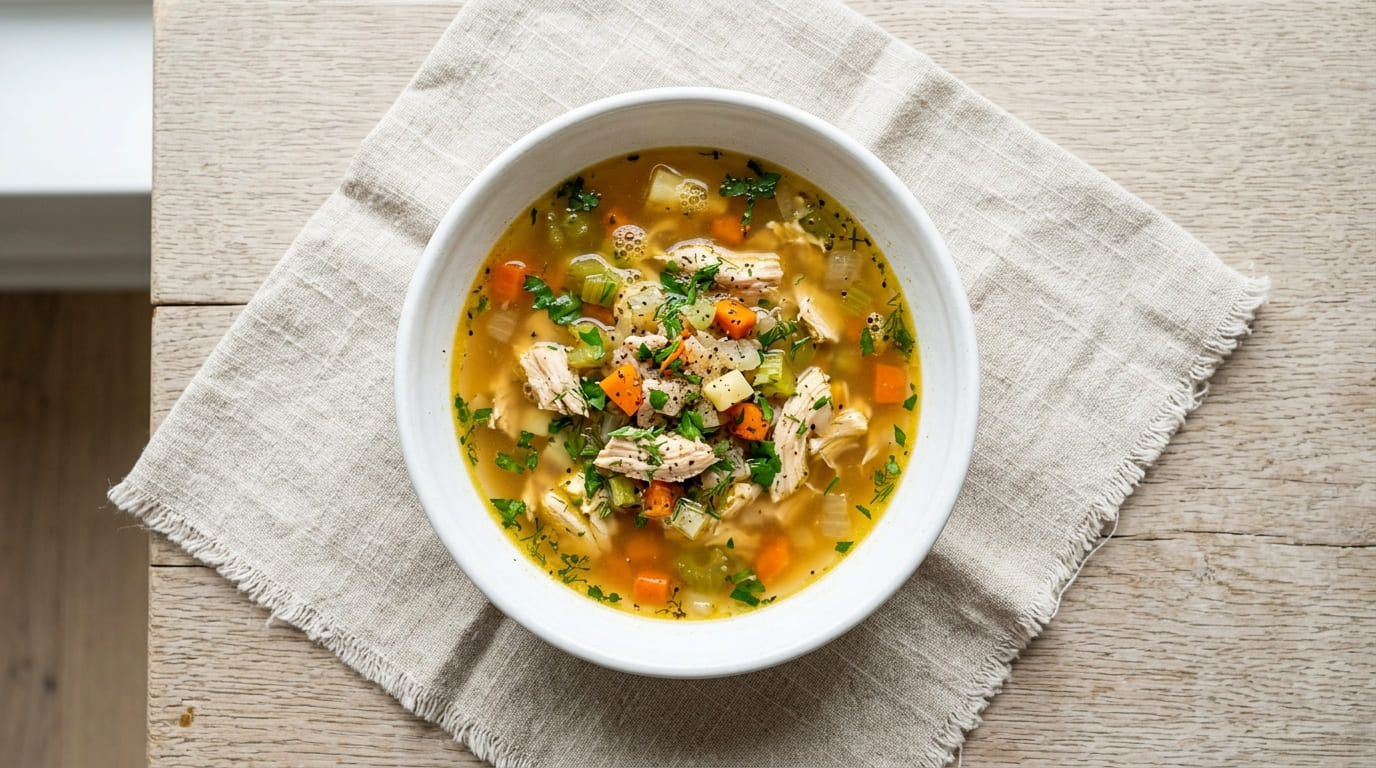
Steaming soup bowl with chunks of chicken and vegetables in golden broth, moody natural light

Steaming soup bowl with chunks of chicken and vegetables, golden broth, overhead close-up

There is a reason every food culture on earth has a version of chicken soup. It’s not sentimentality. It’s that simmering the carcass — along with whatever vegetables need using — produces something genuinely more complex than the sum of its parts. The gelatin from the bones gives the broth a silky body that stock cubes can never replicate.

This is Tuesday’s meal, and it requires almost nothing new from the shops.

Meal 3 · Tuesday
Chicken & Vegetable Soup
Prep: 10 min · Simmer: 50 min · Serves: 4
Uses From Meal 1

~200g leftover thigh/leg meat (shredded) · roasting vegetables from the pan (optional) · reserved drippings from the jar.

New Ingredients
  • 2 carrots, sliced · 2 celery stalks · 1 onion, diced
  • 150g small pasta (orzo or pastina) or 1 cup egg noodles
  • 1.5 litres water + 1 good stock cube (or just water — the drippings provide depth)
  • Handful of parsley · salt · black pepper · bay leaf
  • 1 tbsp lemon juice, added at the end
Method
  1. Sauté onion in a splash of olive oil until soft. Add carrot and celery.
  2. Add water, the reserved drippings, and a bay leaf. Bring to a simmer.
  3. Add the shredded thigh meat. Simmer 30 minutes on low.
  4. Add pasta and cook until tender. Finish with lemon juice and parsley.
  5. Taste carefully — the drippings carry salt from Sunday’s roast. Season gently.
🗓️ What to save: Reserve 500ml of this soup as the broth base for Meal 5. Bag the carcass — it goes into the pot for the noodle bowl on Thursday.
🧊 Food Safety Notes

Cooked chicken stays safe in the fridge for 3–4 days (USDA recommendation). The carcass should be used within this same window. If your week is busier than planned, freeze the bag of bones — they keep for 3 months and make exceptional broth from frozen. The cooked soup keeps 4 days refrigerated or freezes perfectly for up to 3 months.

🌿 Transformation Logic

The thigh meat is better here than the breast — it’s fattier, more forgiving in liquid, and develops more flavor during the simmer. Soup is also the week’s most flexible meal: a handful of wilting spinach, a can of white beans, leftover greens — all of it goes in, and all of it improves the bowl. The soup earns its keep twice by also providing the broth backbone for Thursday.

🍗
04
Wednesday Wok-Night

Crispy Chicken Fried Rice — The Flavor Pivot Nobody Sees Coming
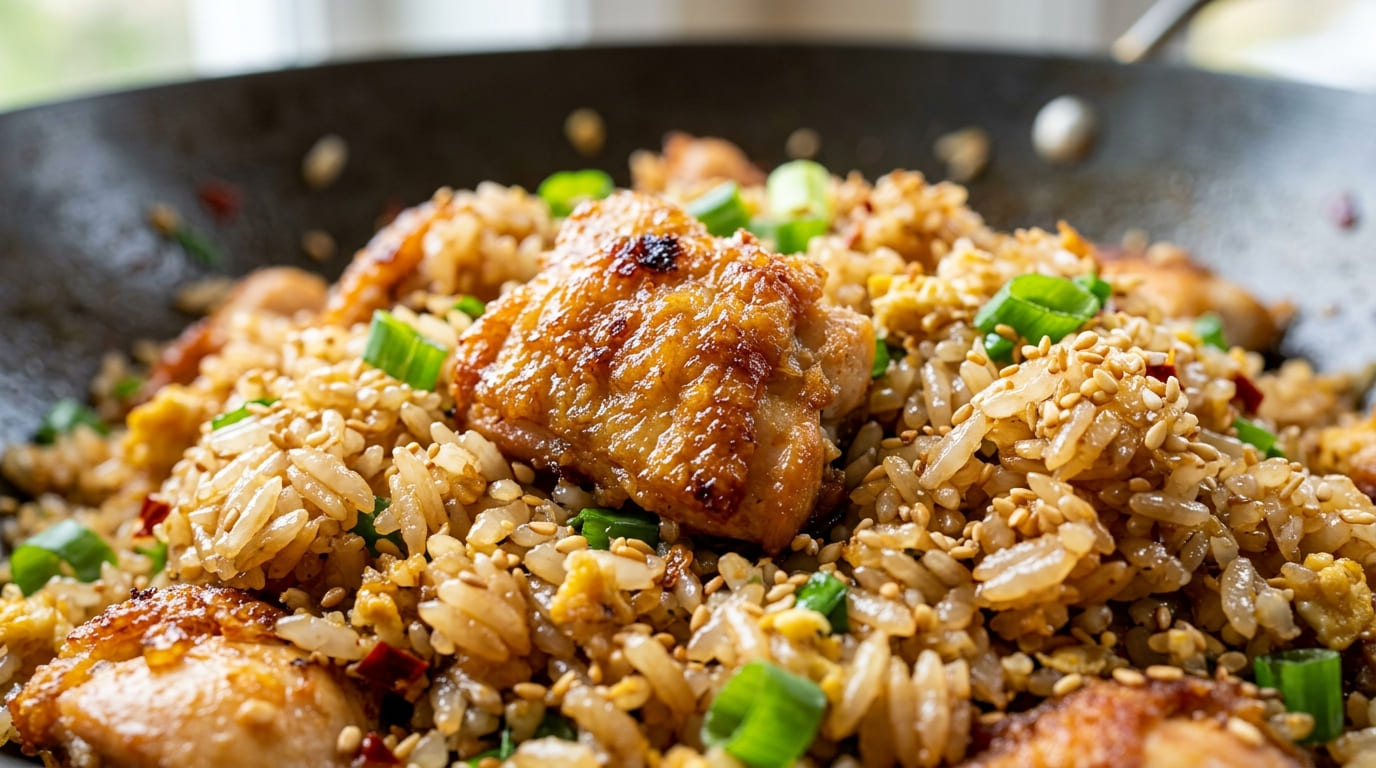
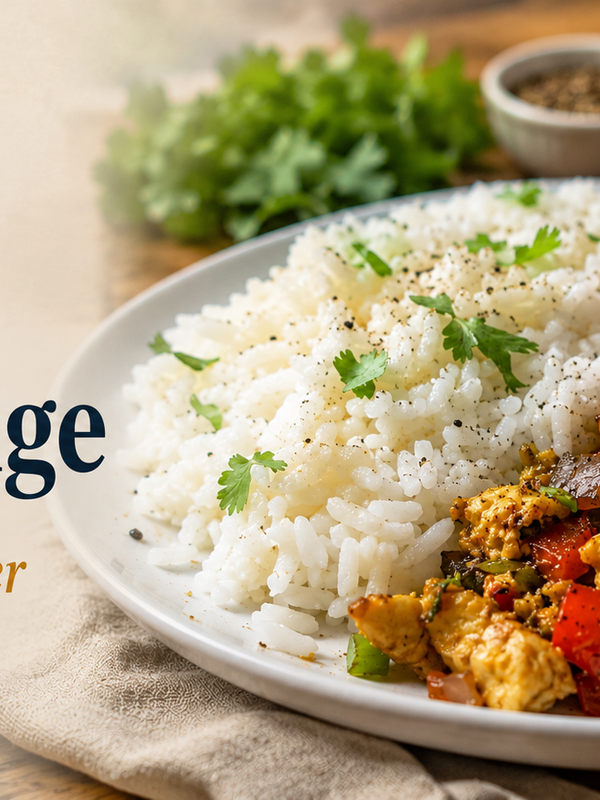
Wok-tossed chicken fried rice with egg ribbons, spring onion, sesame oil sheen, dark moody editorial

Wok-tossed fried rice, visible chicken pieces, crispy edges, sesame oil sheen, dark moody editorial

By Wednesday you want something that doesn’t feel like leftovers at all. Fried rice is the great culinary disguise — high heat, soy sauce, sesame oil, and a very hot wok transform whatever you put in it into something that feels freshly made and deliberately Asian-inspired.

One rule: the rice must be cold, day-old rice. Freshly cooked rice is too moist and becomes a stodgy mass. If you don’t have leftover rice, cook it Monday evening and refrigerate it. This is the prep detail most fried rice recipes undersell.

Meal 4 · Wednesday
Crispy Chicken Fried Rice
Prep: 10 min · Cook: 15 min · Serves: 4
Uses From Meal 1

~150g remaining shredded or roughly-chopped chicken (any cut — even skin-on pieces work well here).

New Ingredients
  • 3 cups cold cooked rice (day-old)
  • 3 eggs, beaten
  • 3 tbsp soy sauce · 1 tbsp oyster sauce · 1 tsp sesame oil
  • 3 spring onions · 2 garlic cloves · 1 tsp grated ginger
  • 1 cup frozen peas or corn (or whatever vegetables need using)
  • 2 tbsp neutral oil (for the wok)
Method
  1. Get your wok or large pan screaming hot. No lukewarm wok — the crispiness comes from the temperature.
  2. Add oil, then chicken pieces. Toss until lightly crisped at the edges, 2 minutes. Remove.
  3. Add garlic and ginger, stir 30 seconds. Add cold rice — press and stir constantly to break up clumps.
  4. Push rice to one side. Scramble eggs in the empty space until just set, then fold through.
  5. Add vegetables, chicken back in, soy sauce and oyster sauce. Toss for 2 minutes on high heat.
  6. Finish with sesame oil and spring onions off the heat.
🗓️ What to save: The carcass bag goes into a pot tonight to start the long bone broth simmer for Thursday — or early Thursday morning.
🌿 Transformation Logic

The high-heat wok essentially re-cooks the chicken — crisping the edges and making it feel freshly cooked. The East Asian seasoning pivot (soy, sesame, ginger) is the most dramatic flavor shift of the five meals. This is the meal where guests genuinely wouldn’t believe they’re eating Sunday’s leftovers.

🍗
05
Thursday Finale

Chicken Bone Broth Noodle Bowl — The Slow-Simmered Finale
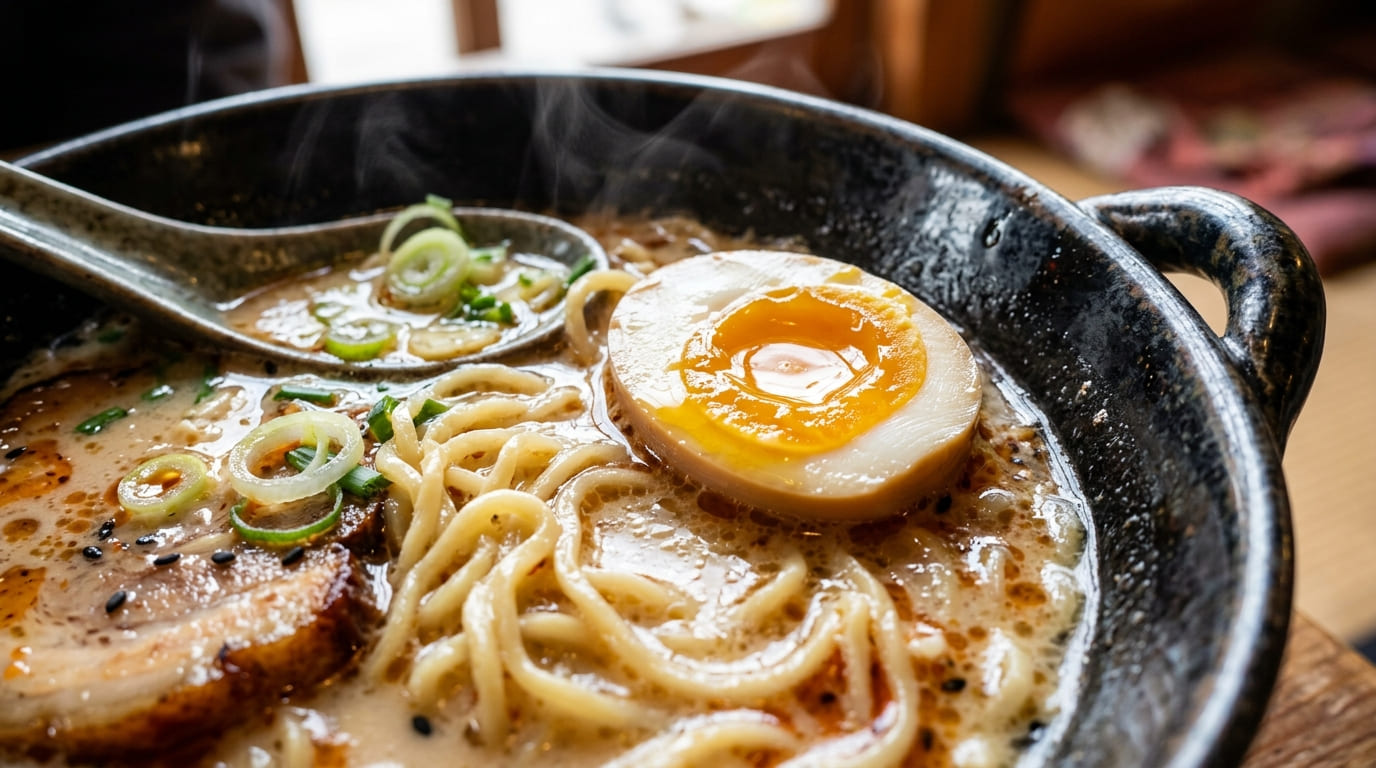
Ramen-style noodle bowl with golden bone broth, soft-boiled egg, scallions, moody studio lighting, steam visible

Ramen-style noodle bowl with golden bone broth, soft egg, spring onion, dark moody editorial, steam visible

Thursday’s bowl is the whole chicken’s final form — and it may be the best one. The bones that roasted on Sunday have been waiting four days to give everything they have left. Simmered for two to three hours, they yield a broth so gelatinous it sets solid when cold: collagen-rich, deeply savory, the color of pale gold.

Poured over noodles with a soft-boiled egg and whatever toppings you like, it becomes the week’s most restorative meal — the kind of bowl that makes you feel taken care of, even when you made it yourself.

Meal 5 · Thursday
Bone Broth Noodle Bowl
Broth: 2–3 hrs simmer · Assembly: 10 min · Serves: 4
Uses From Previous Meals

The roasted carcass + all bones · 500ml reserved soup from Meal 3 · any remaining small meat scraps.

New Ingredients
  • 200g ramen noodles, rice noodles, or soba
  • 4 eggs (soft-boiled: 7 minutes, ice bath)
  • 2 tbsp soy sauce + 1 tbsp miso paste (stirred into the finished broth)
  • 1 tbsp rice vinegar · 1 tsp sesame oil
  • Toppings: spring onions, nori, chili oil, bean sprouts, corn — whatever you have
  • 1 tbsp apple cider vinegar (added to broth while simmering — draws minerals from bones)
Method
  1. Place carcass in a large pot. Cover with cold water (about 2 litres). Add apple cider vinegar. Bring to a boil, skim foam for the first 10 minutes.
  2. Reduce to a very gentle simmer. Add the 500ml reserved soup from Tuesday. Simmer uncovered for 2–3 hours. The longer, the richer.
  3. Strain through a fine mesh sieve. Discard bones. Season broth with soy sauce and miso paste off the heat (miso should never boil).
  4. Cook noodles separately, drain, divide into bowls.
  5. Ladle hot broth over noodles. Top with halved soft-boiled egg, spring onions, and whatever toppings you like. Finish with sesame oil and chili.
🪄 End of cycle: One whole chicken, five meals, nothing wasted. Any excess broth freezes for up to 6 months — use as a soup base, a cooking liquid for grains, or just drink it warm from a mug.
🌿 Why This Bowl Earns Its Place

Bone broth has been a culinary staple across Chinese, Japanese, French, and South American cooking traditions for centuries — not as a wellness supplement but as a pragmatic way to extract nutrition and flavor from parts other preparations leave behind. The collagen yield from a roasted carcass simmered with acid is measurably higher than from raw bones. Sunday’s roasting was, in a sense, the first step in Thursday’s broth.

“The most economical cooks in history were also, often, the most creative. Scarcity is a remarkable instructor in flavor.”

— From the tradition of whole-animal cooking, Mediterranean and Japanese alike
🪙 The Numbers

What This Actually Costs Per Meal

Based on a $12 whole chicken (mid-range, not budget, not premium), with pantry staples excluded from calculation.

Estimated Cost Per Serving — One Whole Chicken Method $0 $1 $2 $3 $2.80 Roast Sunday $1.20 Wraps Monday $1.50 Soup Tuesday $1.80 Fried Rice Wednesday $1.60 Noodles Thursday avg. chicken breast from store: ~$3.40/serving Estimates based on average US retail pricing. Pantry staples (salt, oil, soy sauce) excluded. Serving = 4 people.
Whole chicken vs. buying protein separately
Method
Total spend
Per serving avg.
1 whole chicken
~$12–14
~$1.65
Separate chicken portions × 5 meals
~$35–42
~$4.50
Ready-made meals × 5
~$60–85
~$8.00+

Estimates based on US average retail pricing mid-2026. Results will vary by region and store.

🧠
🧠 The Science

Why This System Works — Psychologically and Nutritionally
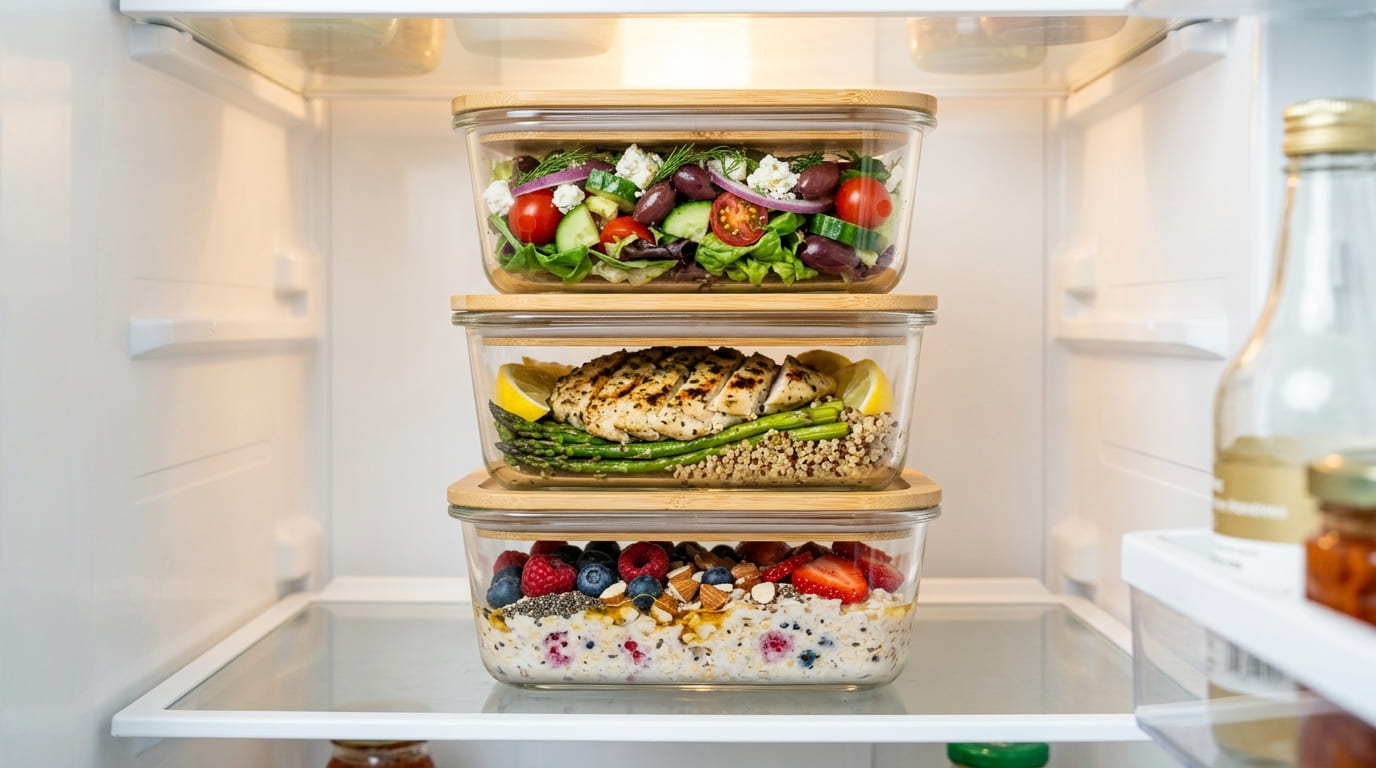
Organized fridge with labeled meal prep containers, warm editorial photography

Organized fridge shot — labeled containers, meal prep aesthetic, natural light

There is a concept in behavioral psychology called decision fatigue — the measurable deterioration in decision quality that comes from making too many choices. By the end of a long workday, the question “what’s for dinner?” carries a cognitive cost far higher than its apparent simplicity suggests. Meal prep systems that pre-decide the answer are not just convenient. They restore cognitive resources.

A 2019 study in Appetite found that households who planned meals in advance consumed more nutritionally varied diets and spent significantly less on food, confirming what most experienced home cooks already know intuitively: planning at the weekend means eating better on Tuesday.

4 reasons this system works beyond the obvious
1
Flavor fatigue prevention through seasoning pivots Each meal introduces a new spice logic — Provençal → Mediterranean → classical European → East Asian → Japanese. The brain registers novelty even when the protein source is identical.
2
Protein efficiency that mirrors longevity eating patterns The Harvard T.H. Chan School of Public Health notes that protein quality matters as much as quantity — and whole chicken provides a complete amino acid profile including the connective tissue proteins (collagen, glycine) that boneless cuts miss entirely.
3
A measurable impact on household food waste The FAO estimates that roughly one-third of all food produced globally is lost or wasted. In households, protein is among the most wastefully purchased categories. Using one whole animal across five planned meals reduces that waste to near zero.
4
The ritual effect Having a Sunday roast as an anchor meal provides the week with a sense of structure. There is research suggesting that recurring meal rituals improve household cohesion, reduce stress around mealtimes, and increase children’s dietary variety — the shared table as a form of family infrastructure.
🌍 Sustainability Impact

Raising poultry has a significantly lower environmental footprint than beef or pork per gram of protein. When the entire bird is used — muscle, fat, bones — the carbon and water cost per meal drops further still. The USDA estimates that 30–40% of the US food supply is wasted; a whole-chicken system, executed over five meals, produces effectively zero protein waste. The bones become broth. The skin crisps in the fried rice pan. There is no “leftover” in the traditional sense — only an ingredient in a different form.

🌍
🌍 The Cultural History

This Isn’t a Trend. It’s How Humans Always Cooked.

The whole-animal cooking tradition is one of the few culinary practices shared by nearly every culture on Earth. French peasant cooking built coq au vin and pot-au-feu from the same principle — the long-simmered pot that extracted maximum flavor from minimum meat. Japanese dashi, the fundamental stock of an entire cuisine, is made from kelp and dried fish, but the principle is identical: nothing is wasted; everything is transformed.

In rural Morocco, one tagine chicken becomes multiple meals across several days — the bones braise further, the leftover meat gets folded into pastilla, the cooking liquid spices a couscous. In Chinese household cooking, the concept of wok hei — the breath of the wok — exists specifically to revive cold cooked rice and yesterday’s protein into something that feels freshly made.

It was only the industrial food system — pre-portioned boneless skinless chicken breasts, vacuum-sealed and perfectly uniform — that convinced modern households that cooking from a whole bird was too complicated, too time-consuming, or somehow beneath the pace of contemporary life.

The whole-animal tradition across cuisines
🇫🇷
French: Roast → carcass soup (pot-au-feu style) → rillettes from the remaining meat → broth for sauce-making. The whole Escoffier tradition was built on this hierarchy.
🇯🇵
Japanese: Tori chintan (clear chicken broth) uses the whole bird low-and-slow. Yakitori tradition skewers every part — liver, gizzard, neck — wasting nothing.
🇲🇦
Moroccan: One tagine chicken stretches across three or four preparations — bones simmer into harira, remaining meat folds into bastilla or couscous stuffing.
🇨🇳
Chinese: Red-braised pork (hong shao rou) and Cantonese roast duck both plan for multiple uses across multiple days — a deliberate efficiency built into the recipe tradition itself.

The sustainable kitchen movement, the whole-animal butchery renaissance, the nose-to-tail cooking trend — none of this is new. It’s a rediscovery of what every grandmother in every culture already knew: that a single bird, cooked with intention, is one of the most generous things in a kitchen.

🍗
📅 The Workflow

The Five-Day Prep Timeline

Everything you need to do, and when to do it. Total active cooking time across the week: approximately 2 hours 45 minutes.

Day-by-day workflow
SUN
Roast the chicken · Carve · Store portions · Bag the carcass
Active time: ~20 min. Rest of the time the oven does the work. Keep the drippings jar — you’ll want it Tuesday. Cook a pot of rice after dinner; refrigerate it overnight for Wednesday’s fried rice.
MON
Shred cold chicken · Mix yogurt sauce · Assemble wraps
Active time: ~10 min. Zero cooking. The seasoning pivot (cumin + paprika) takes 2 minutes and transforms everything.
TUE
Make the soup · Reserve 500ml broth for Thursday
Active time: ~15 min + 45 min unattended simmer. Soup reheats perfectly — make a large batch and eat for lunch too.
WED
Fried rice · 15 minutes · Start bone broth overnight if convenient
Active time: ~15 min. If you have a slow cooker, put the carcass in on low before bed — you’ll wake up to finished broth.
THU
Strain broth · Season with miso · Cook noodles · Assemble bowls
Active time: ~15 min assembly. The hard work is already done — Thursday is just building the bowl. This is the most satisfying moment in the whole week.
Questions, Answered

Whole-Chicken FAQ

How long can I keep the cooked chicken safely in the fridge?
The USDA recommends consuming cooked chicken within 3–4 days of refrigeration at 40°F (4°C) or below. For this 5-meal system that means Sunday through Thursday fits within the safety window. If Thursday feels uncertain, freeze the carcass for the broth on day 3 instead.
Does it work with a rotisserie chicken from the supermarket?
Yes, and it’s an excellent shortcut. A store rotisserie chicken is already seasoned and cooked — skip Meal 1’s roasting entirely and start at Meal 2. The bones still produce excellent broth for Thursday, and the flavor profile is usually neutral enough to pivot into any cuisine. Cost efficiency is slightly lower than roasting yourself, but the time saving on Sunday evening is significant.
What’s the best size chicken to buy for this system?
A 1.5–2kg (3.5–4.5 lb) chicken is ideal for 4 people across 5 meals. Larger birds (2kg+) give you more meat for the mid-week meals and a meatier carcass for Thursday’s broth. For 2 people, a 1.2–1.5kg bird works and produces proportionally scaled meals — the broth quality actually improves because the bone-to-water ratio stays concentrated.
Can I change the meal order?
The order follows a loose flavor logic: dishes that use the freshest-tasting meat come first (wraps), then dishes that use the texture-forgiving cuts (soup, fried rice), then the bones (broth). The only fixed point is that Thursday’s noodle bowl must come last, because it requires the bones. Everything else is flexible.
How do I prevent the meals from tasting repetitive?
The seasoning pivot is everything. Each meal applies a completely different spice and sauce logic: herb-roasted (Provençal) → yogurt-cumin (Mediterranean) → lemon-parsley (classic European) → soy-sesame-ginger (East Asian) → miso-based (Japanese). The base protein is the same; the flavor identity changes completely at each stage. The brain registers cuisine-level novelty, not ingredient repetition.
Is organic or free-range worth the extra cost here?
For the broth especially, yes — and here’s the specific reason. A free-range or pasture-raised bird has a denser, more collagen-rich carcass from greater physical activity. The broth sets more firmly, with a silkier mouthfeel, and the flavor depth is noticeably higher. Spread across five meals, a $4–5 premium on the bird adds less than $0.25 per serving — and you’ll taste the difference most clearly in Thursday’s bowl.
🌿 Keep Reading
The foods linked to genuinely longer lifespans — and why chicken broth is one of them

There is a particular kind of domestic satisfaction that doesn’t come from a $200 knife or a kitchen renovation. It comes from looking at a clean, empty pot on Thursday evening and knowing that nothing was wasted — that Sunday’s chicken became five genuinely good meals, that the bones went last and gave everything they had.

This is how most of the world’s great cooking traditions have always operated. Not out of scarcity, but out of a kind of respect for the ingredient — an understanding that a whole chicken, treated with intention, is one of the most generous and versatile things you can bring into a kitchen.

The system doesn’t require skill so much as it requires a plan. Start on Sunday. The rest follows.

📚 Related Reading
/ 5

No reviews yet — be the first!

Leave a Review