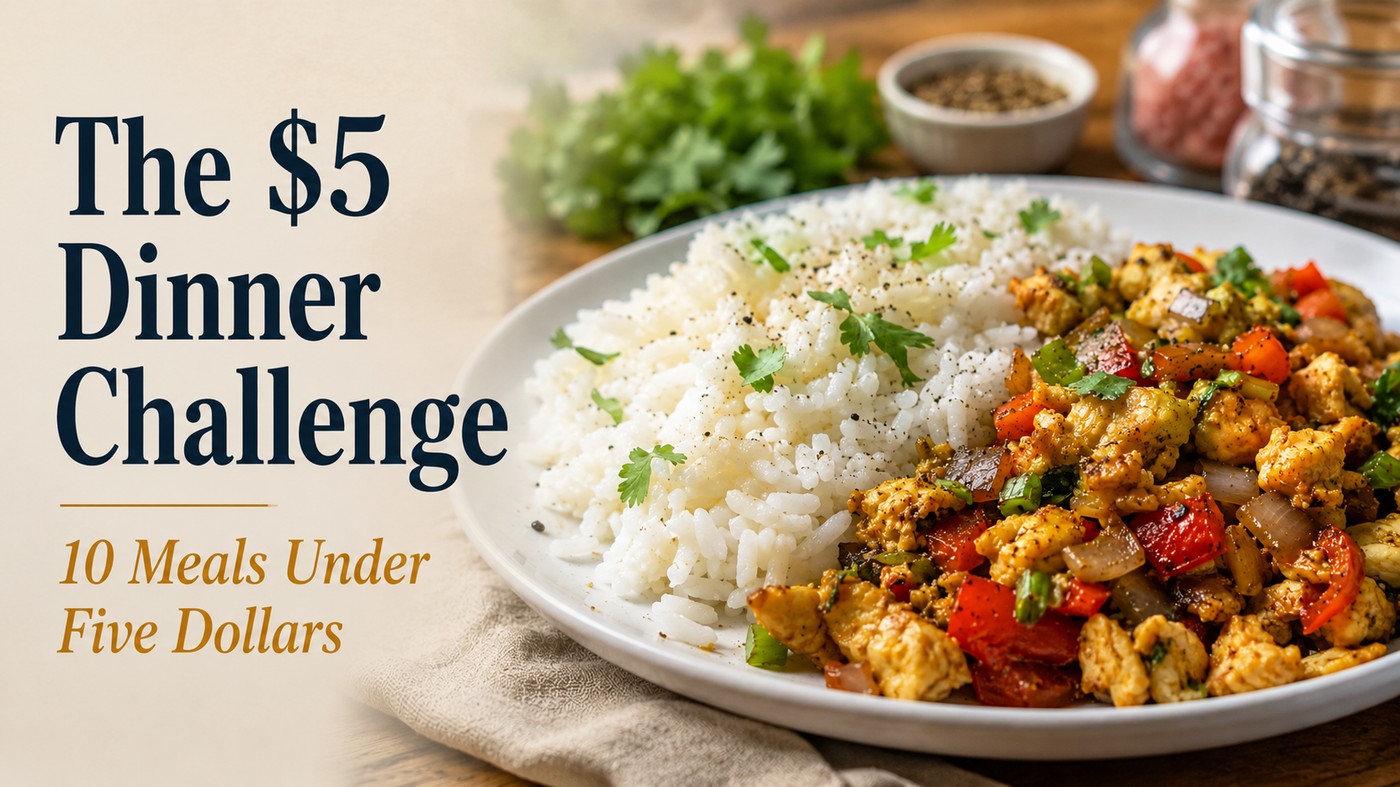
The $5 Dinner Challenge
10 Meals Under Five Dollars
Ten dinners, ten receipts, zero sad beige food. Plus the behavioral-economics research on why a tight grocery budget quietly rewires how your brain shops — and how to use that wiring instead of fighting it.

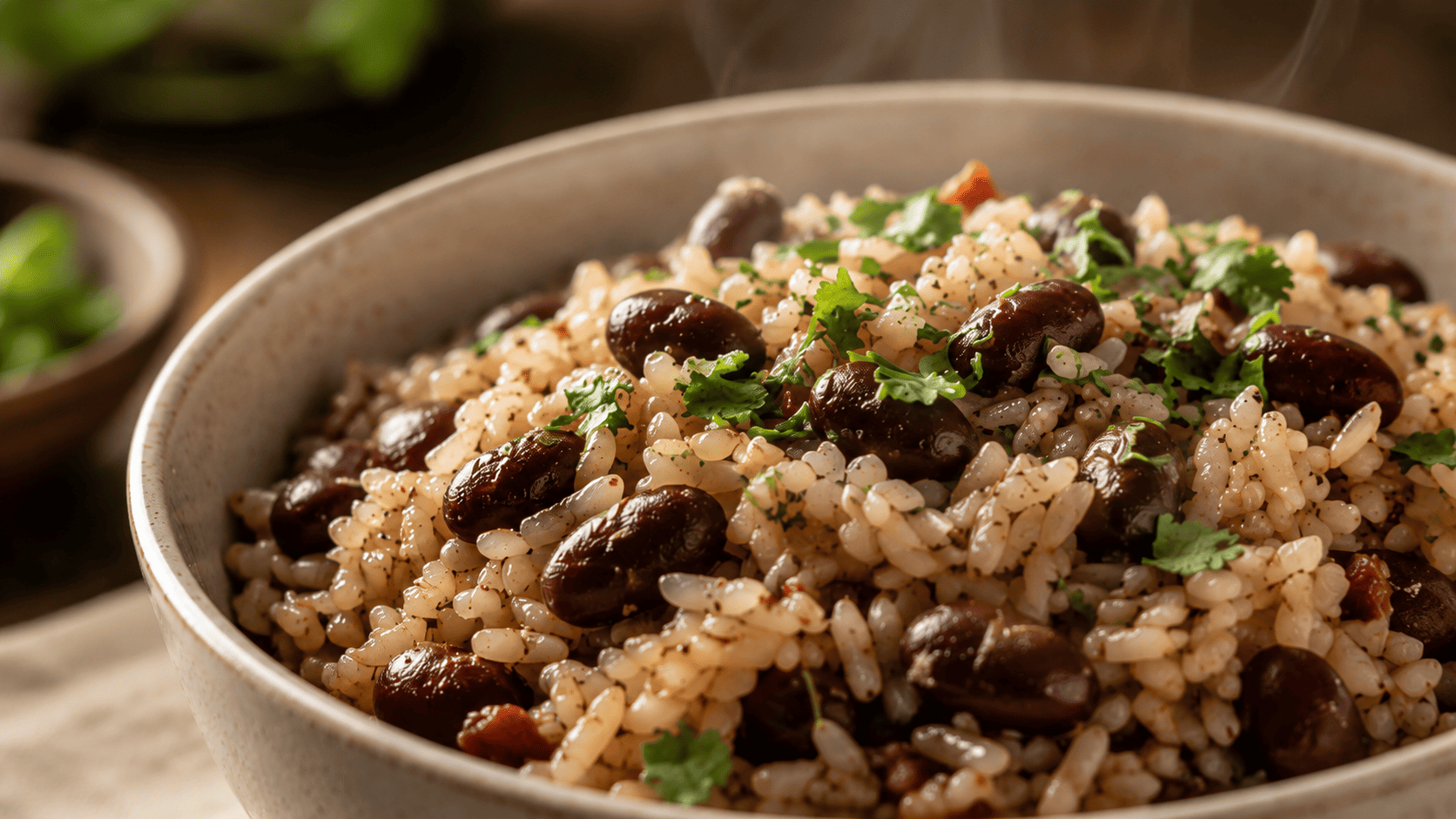
The receipt is the recipe. Every dish here has a number attached to it, and the number is real.
Five dollars used to be a punchline. A coffee. A tip. Now it’s a genuine constraint that millions of people build an entire dinner around, on purpose, most nights of the week.
That’s not a sob story. It’s math. Grocery prices are still climbing — the USDA’s latest forecast puts 2026 food-at-home inflation above its own 20-year average — and at the same time, a few staple proteins have quietly gotten cheaper than they’ve been in years. The $5 dinner isn’t a relic of austerity. Right now, it might be the smartest plate on the table.
This isn’t a list of sad rice. It’s ten real dinners, each one priced down to the cent using current USDA and BLS data, plus the actual psychology of why cooking under a hard number changes the way your brain makes decisions at the stove — for better and for worse.
Why $5 Is the Number — And Why It’s Harder Than It Used to Be
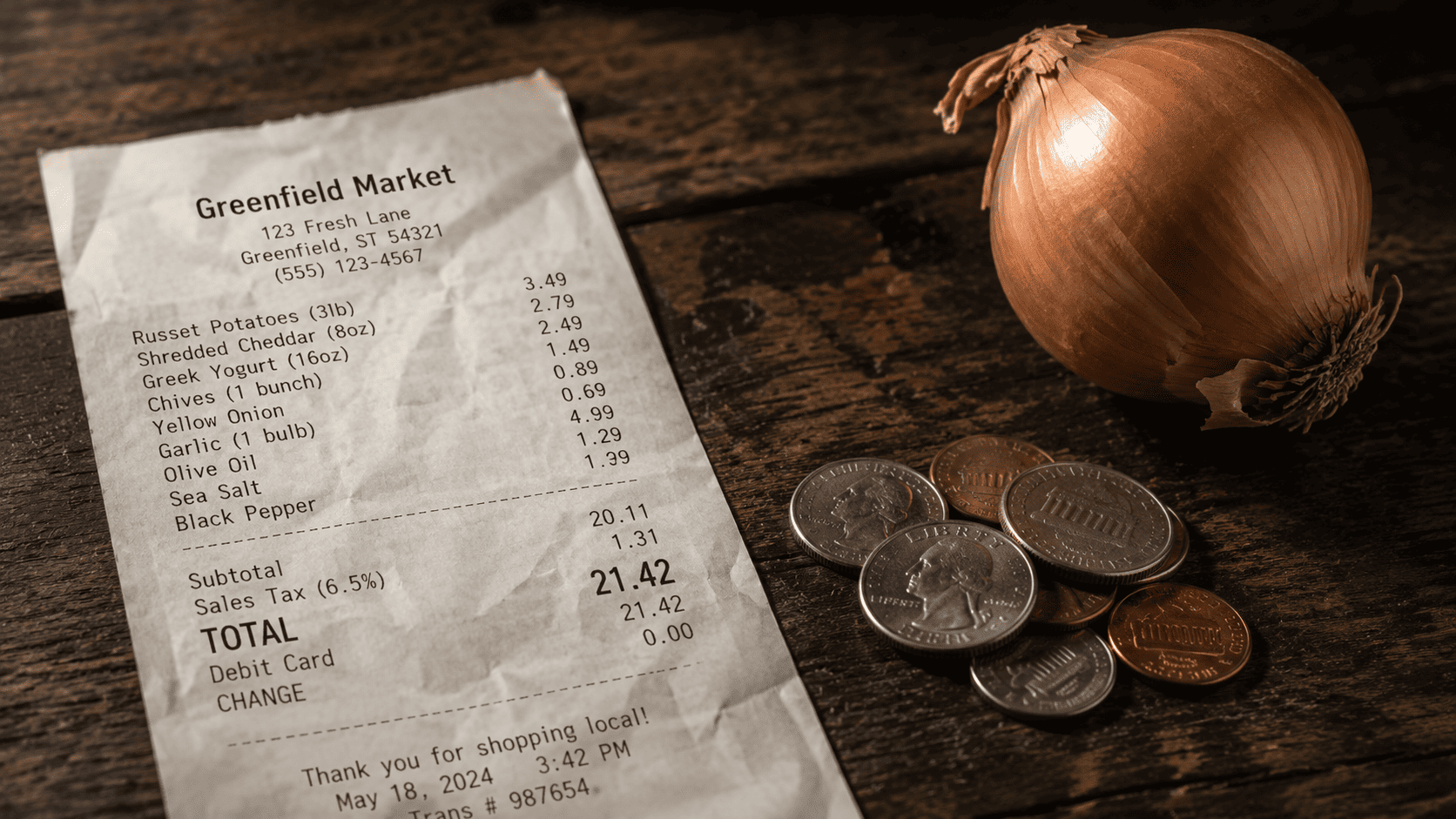
The receipt doesn’t lie, and neither does the math below it.
According to the USDA’s Economic Research Service, overall food prices are forecast to rise 3.6% in 2026, with grocery-store (food-at-home) prices climbing 3.1% — both faster than their own 20-year historical averages. Beef and veal alone are up roughly 14–15% year over year, driven by a shrinking national cattle herd.
But the same report has a twist hiding in it: retail egg prices, after the brutal avian-flu spikes of the last few years, were down more than 40% year over year as of early 2026, and the USDA is projecting them to fall further as flocks recover. Dried beans have sat quietly around $1.70 a pound on the Bureau of Labor Statistics’ tracker for over a year. Rice is hovering near the same mark. The cheap staples didn’t get more expensive. The expensive staples got more expensive. That gap is exactly where the $5 dinner lives.
Per the USDA Economic Research Service’s March 2026 Food Price Outlook, beef and veal prices were roughly 14% higher than a year earlier, while egg prices were over 40% lower — a reversal driven by recovering egg production after years of avian-flu disruption. The same report forecasts 2026 egg prices to fall further, even as overall food-at-home prices rise.
USDA ERS, Food Price Outlook, Summary Findings, updated March 25, 2026 · BLS Average Price Data (Series APU0000714233, APU0000701312)
A note on the “$5” in this article: every meal below is priced per serving, calculated from current per-pound and per-unit BLS and retail averages, assuming you already own basic seasonings, oil, and water. That’s the same accounting method real budget-meal trackers use — it measures the marginal cost of the dish, not a full pantry restock. Your actual receipt will vary by region and store, sometimes by quite a bit, but the relative ranking holds.
Your Brain on a Budget — What Researchers Call “Tunneling”
The math happens before the cart ever reaches the register.
In 2013, behavioral economists Sendhil Mullainathan and Eldar Shafir introduced a concept that reframed an entire field: a scarcity mindset. When money feels tight, attention doesn’t just shrink — it narrows toward the scarce resource itself, at the cost of everything else. They called this narrowing tunneling.
Here’s where it gets interesting for anyone standing in a grocery aisle doing mental math. A 2024 scoping review in the International Journal of Behavioral Nutrition and Physical Activity looked specifically at how this tunneling shows up around food. One of the studies it reviewed accompanied shoppers on real grocery trips and found something that cuts against the usual stereotype: people experiencing financial scarcity weren’t ignoring nutrition out of carelessness or impulse. They were prioritizing cost above almost everything else, including taste preference — a deliberate, effortful, reasoned process, not a breakdown of self-control.
A 2024 scoping review (University of Applied Sciences Utrecht, published in IJBNPA) synthesized 14 studies on financial scarcity and dietary behavior. One key finding: in accompanied-shop interviews, participants invested considerable time and effort obtaining food at the lowest possible cost — and nutritional value was deprioritized not from inattention, but because cost had to come first. The researchers describe this as evidence of tunneling, not a failure of willpower.
van der Veer A, Madern T, van Lenthe FJ. Int J Behav Nutr Phys Act. 2024;21:26. DOI: 10.1186/s12966-024-01576-9
There’s a second piece worth knowing, because it explains a pattern a lot of budget cooks notice in themselves and feel oddly guilty about. Several of the studies in that same review point to a shift in time orientation under financial pressure — a pull toward the present over the future. One experiment found that when people were primed to think about a harsh, resource-scarce situation paired with a short time horizon, they leaned toward the most immediately filling food available. Give the same people a longer time horizon, and the pull toward “filling, right now” weakened.
Why this matters at the stove: the $5 ceiling isn’t just a budget constraint — it’s a tool that works with the tunnel instead of against it. Pick the cheap-protein staples once, batch them, and you remove the daily cost-calculation entirely. The tunnel gets a fixed, pre-solved answer instead of a fresh decision every single night. That’s not a consolation prize. It’s the actual mechanism behind why meal planning works better than willpower.
10 Meals Under Five Dollars — Each One Priced to the Cent
A few ground rules before the list: every price below is per serving, based on current national average prices for the raw ingredients, and assumes a stocked spice rack, cooking oil, and tap water — not a full pantry rebuild. Prices will shift with your store and region. The order of magnitude won’t.
1. Lentil & Tomato Stew with Cumin
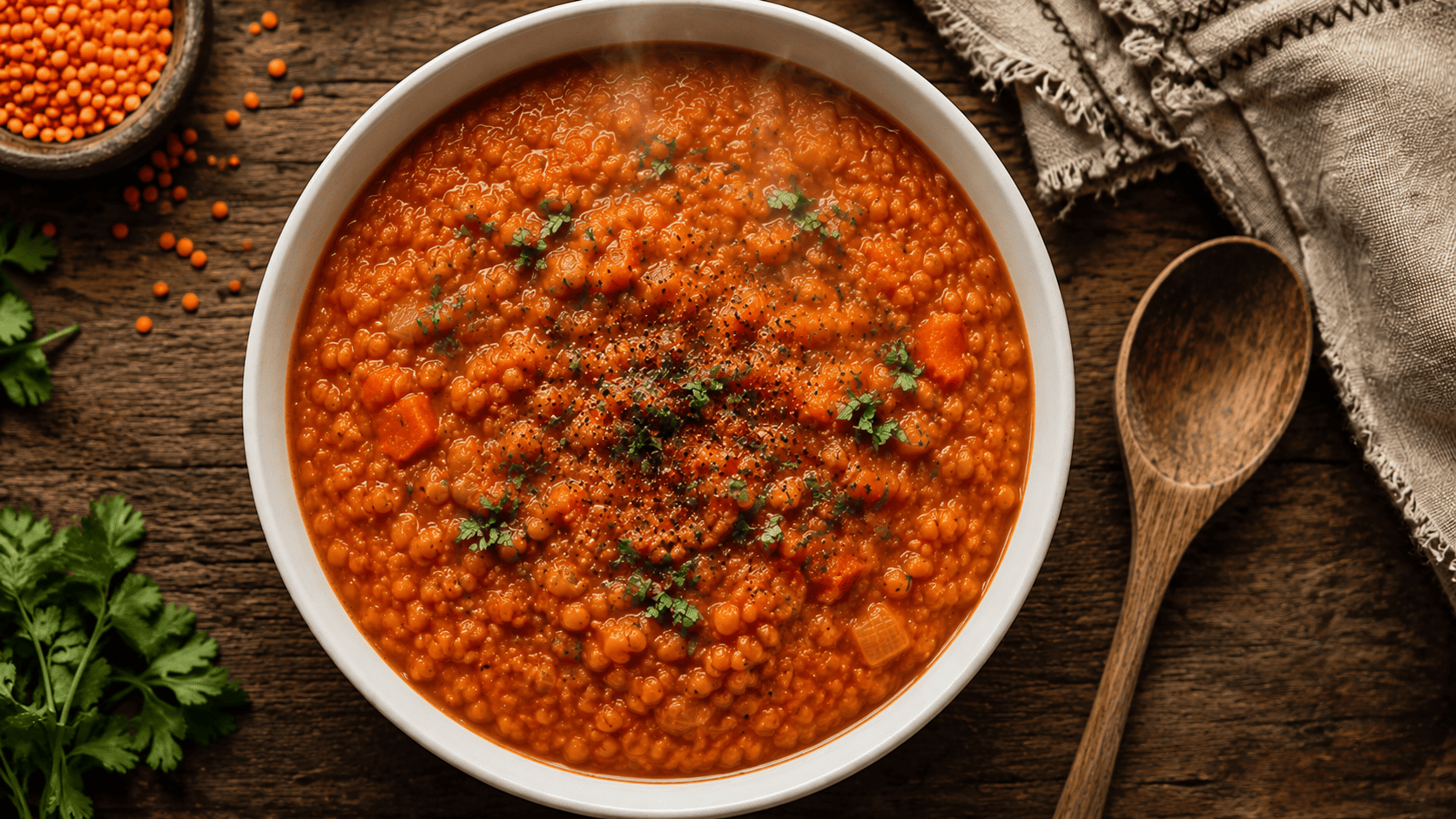
Dried red lentils need no soaking and break down into a thick, almost creamy stew in about 20 minutes. Cumin and a splash of vinegar at the end do most of the flavor work. Spoon over rice, or just eat it from the bowl with bread.
2. Egg Fried Rice with Frozen Peas
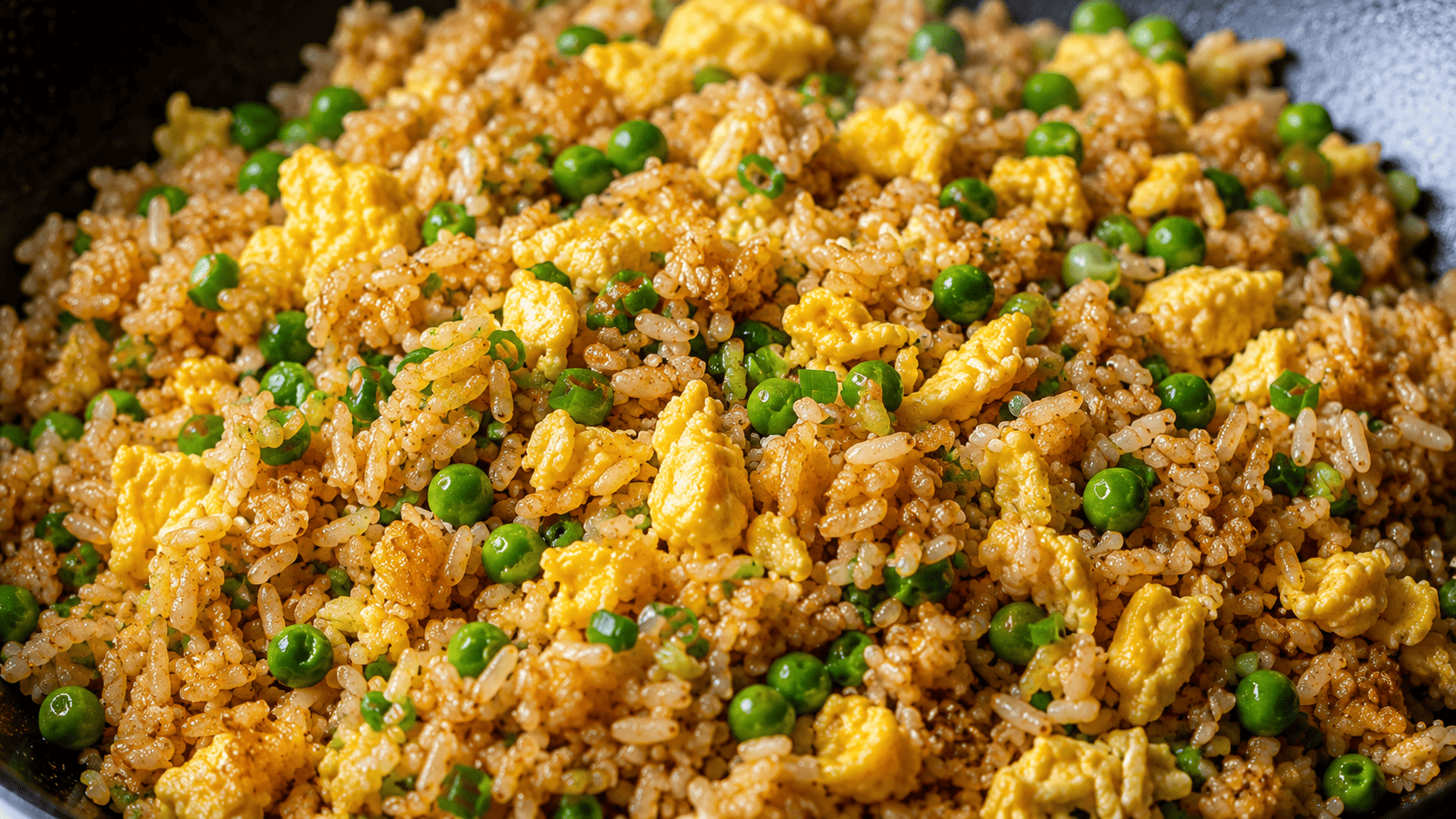
Day-old rice fries up better than fresh — the grains separate instead of clumping. Scramble two eggs in first, push them aside, then fry the rice hard and fast in a screaming-hot pan. Soy sauce and a fried egg on top turn leftovers into dinner.
3. Black Bean & Corn Tacos
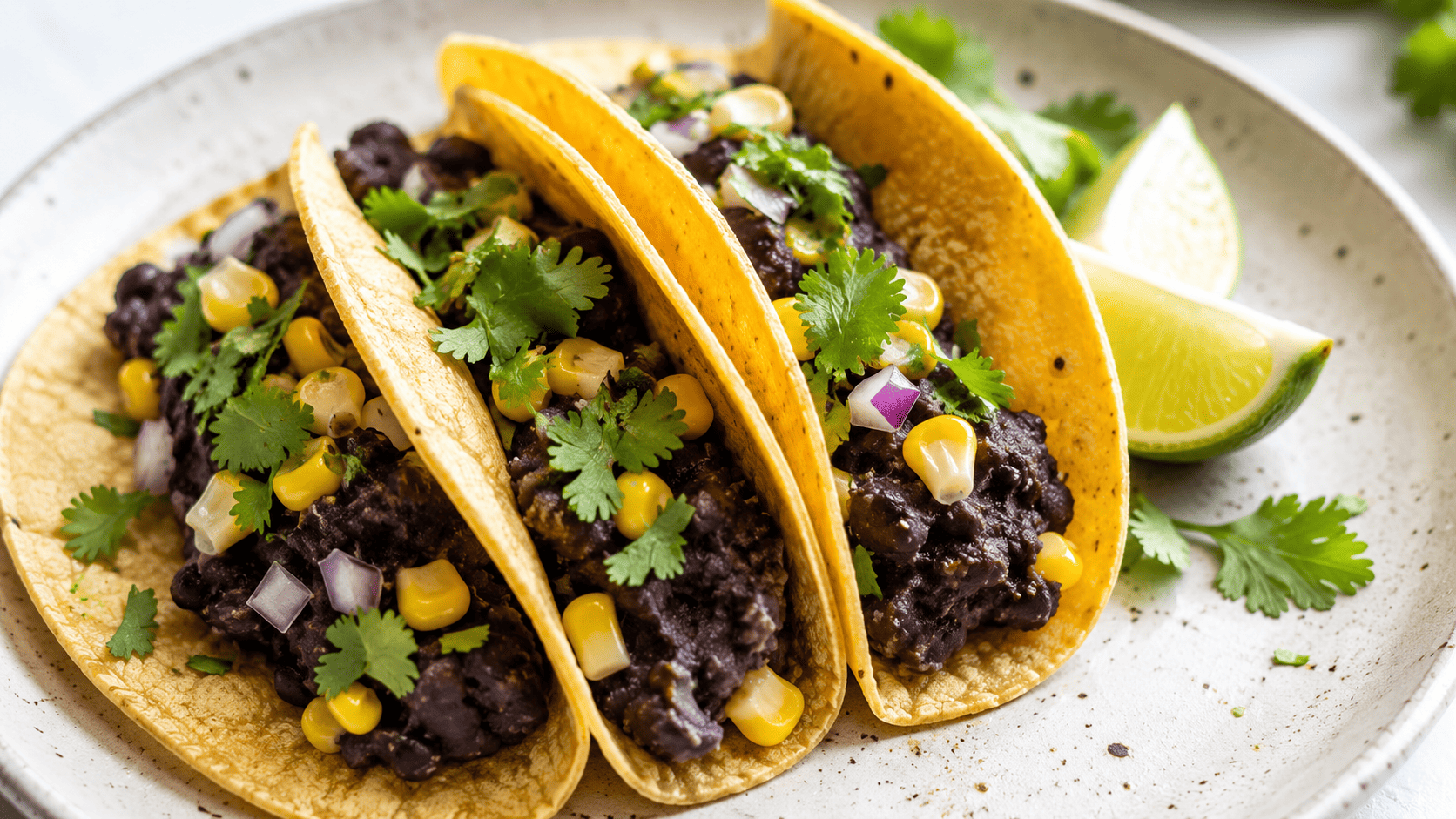
Canned black beans, mashed slightly and warmed with cumin and chili powder, do a convincing impression of refried beans for a fraction of the price. Corn adds sweetness and crunch. A few corn tortillas and a squeeze of lime finish it.
4. Spaghetti Aglio e Olio
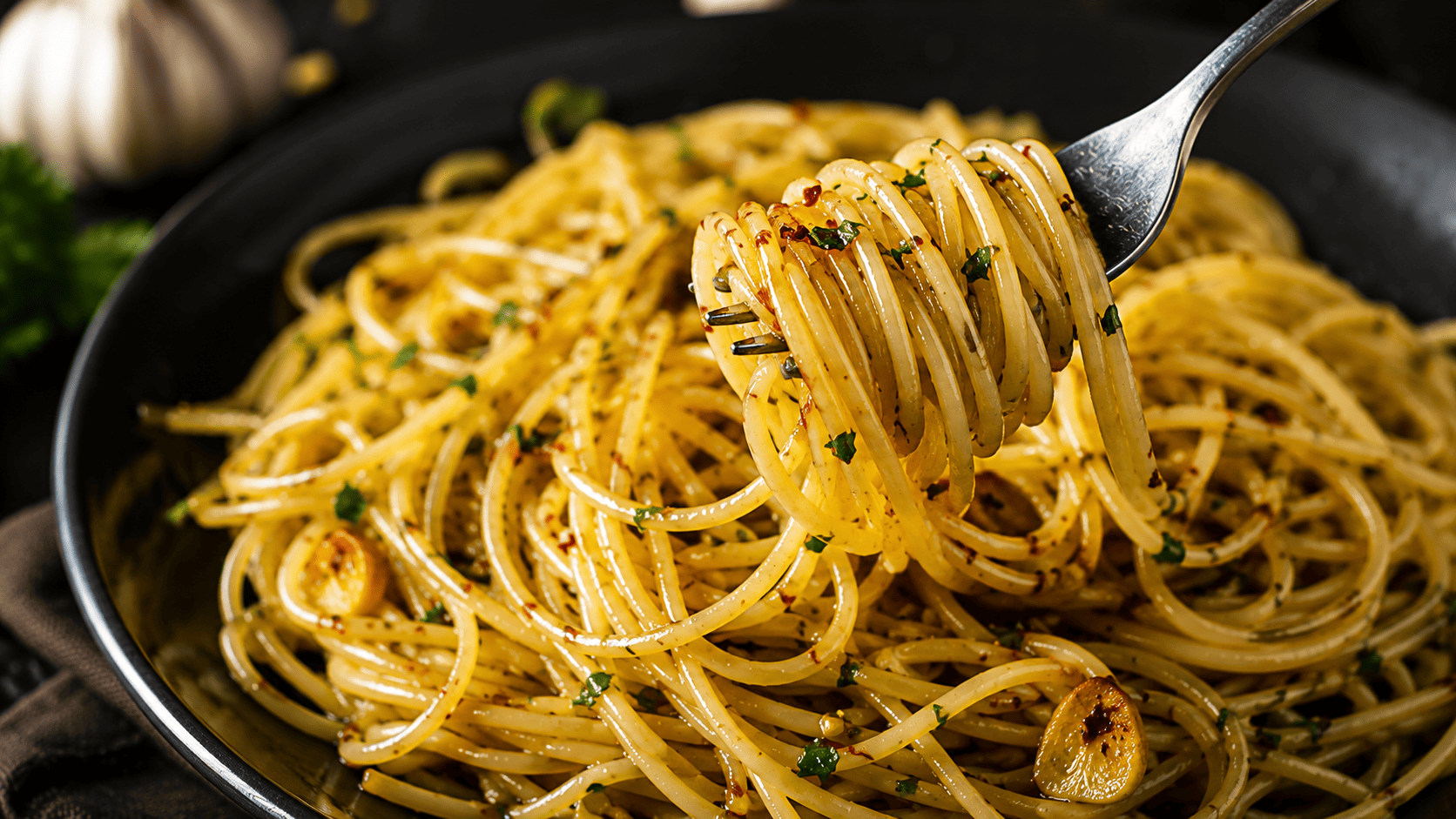
Four ingredients — pasta, garlic, olive oil, red pepper flakes — and the kind of dish that proves “cheap” and “lazy” aren’t the same thing. The trick is finishing the garlic in the oil low and slow so it turns golden, never bitter, before the pasta hits the pan.
5. Tuna Melt Skillet Hash
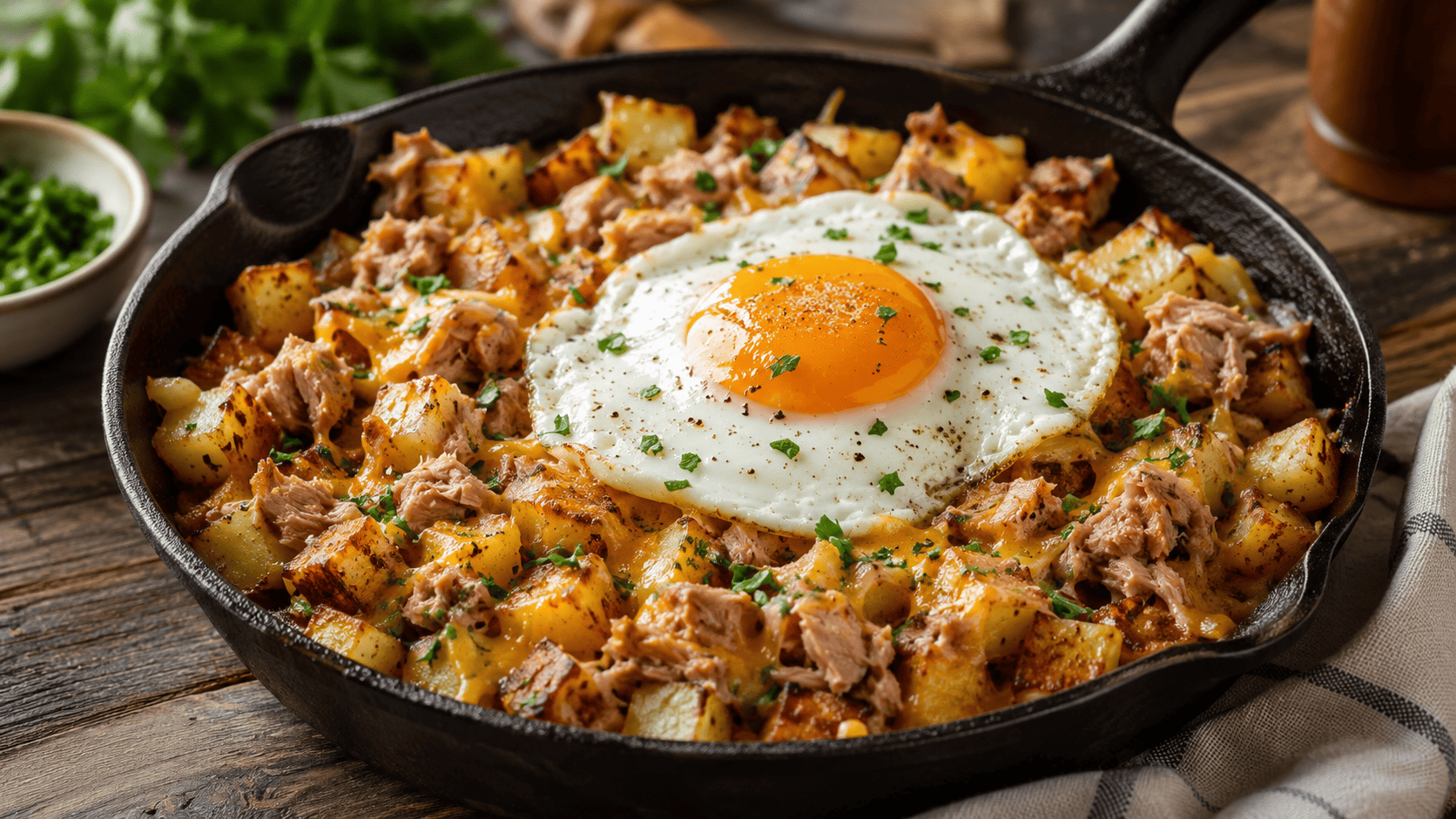
Diced potatoes get crisp in a hot pan, then a drained can of tuna and a handful of shredded cheese go in at the end just long enough to melt. It tastes like a tuna melt fell apart in the best possible way. Add a fried egg if you want it dinner-sized — and if a whole roast bird is more your speed, the same stretch-one-protein logic is exactly what powers turning a single $12 chicken into five completely different dinners.
6. Chickpea & Spinach Curry
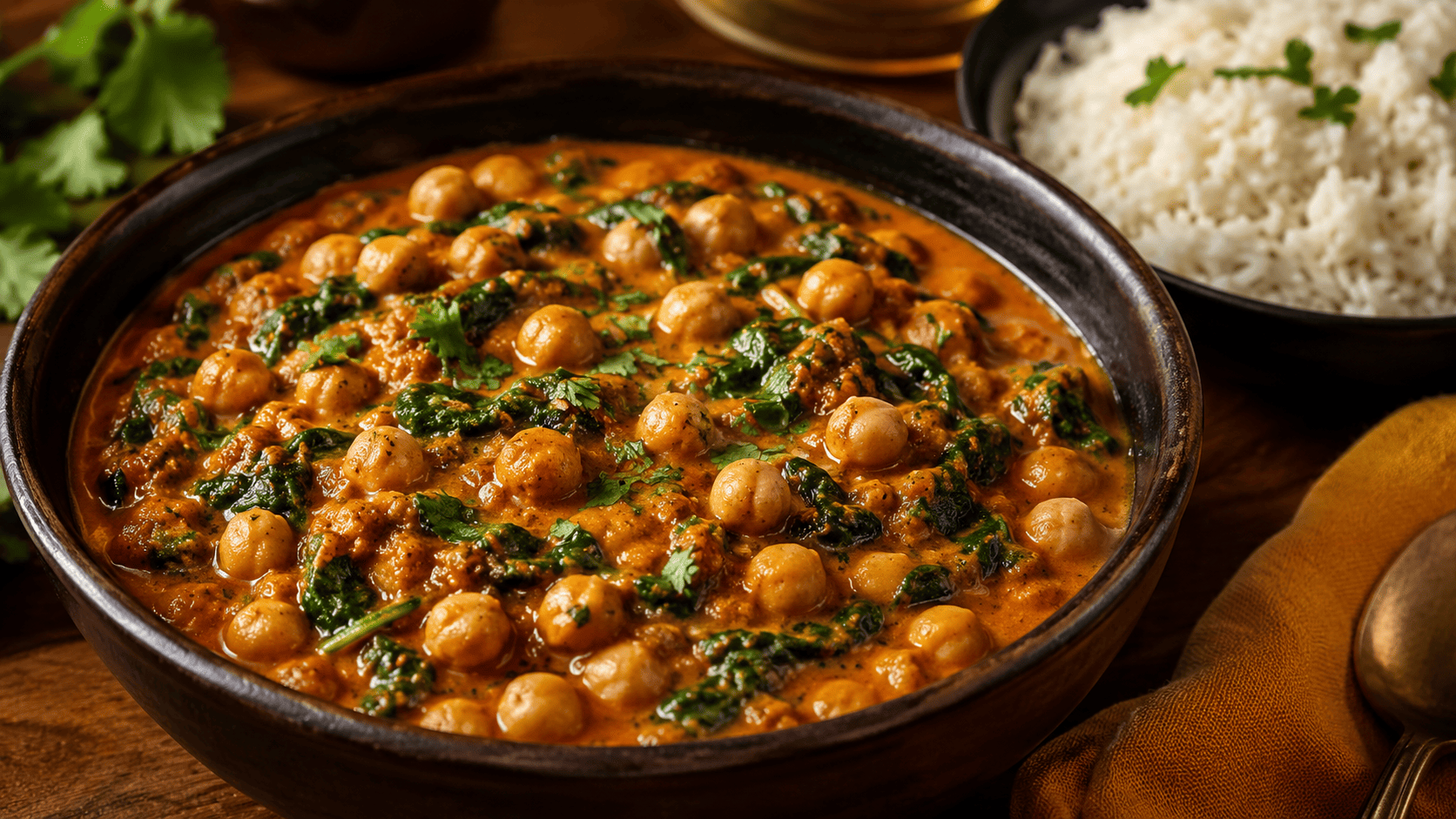
Canned chickpeas simmered in tomato and curry powder with a handful of frozen spinach stirred in at the end. A spoon of peanut butter melted into the sauce gives it a richness that tastes more expensive than it is — an old West African and South Asian trick, not a gimmick.
7. Cabbage & Egg Stir-Fry
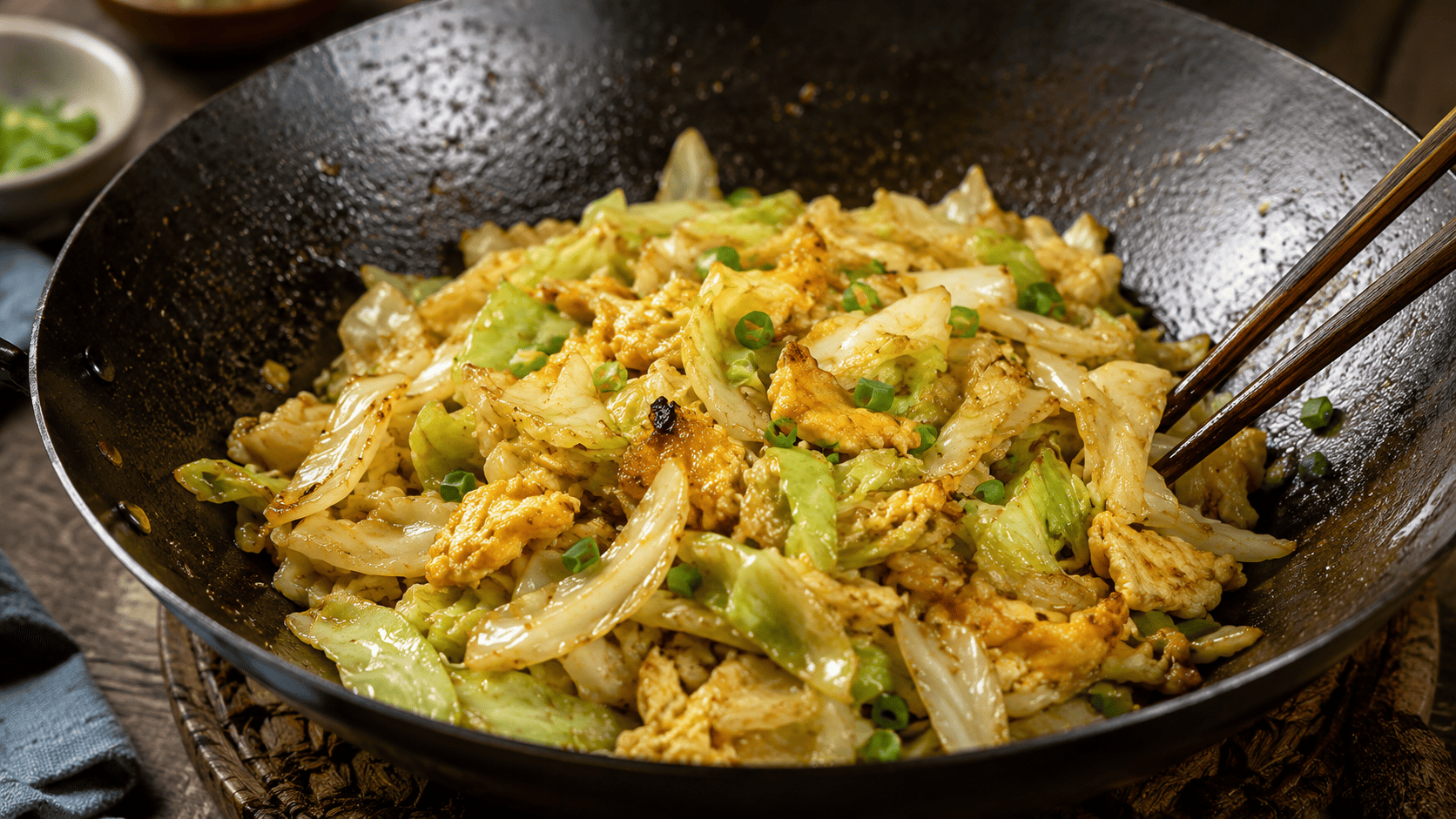
A whole green cabbage costs less than almost any other fresh vegetable by weight and cooks down into something sweet and almost noodle-like when shredded and stir-fried hot and fast. Two eggs scrambled through it at the end make it a full plate, not a side dish.
8. White Bean & Kale Soup
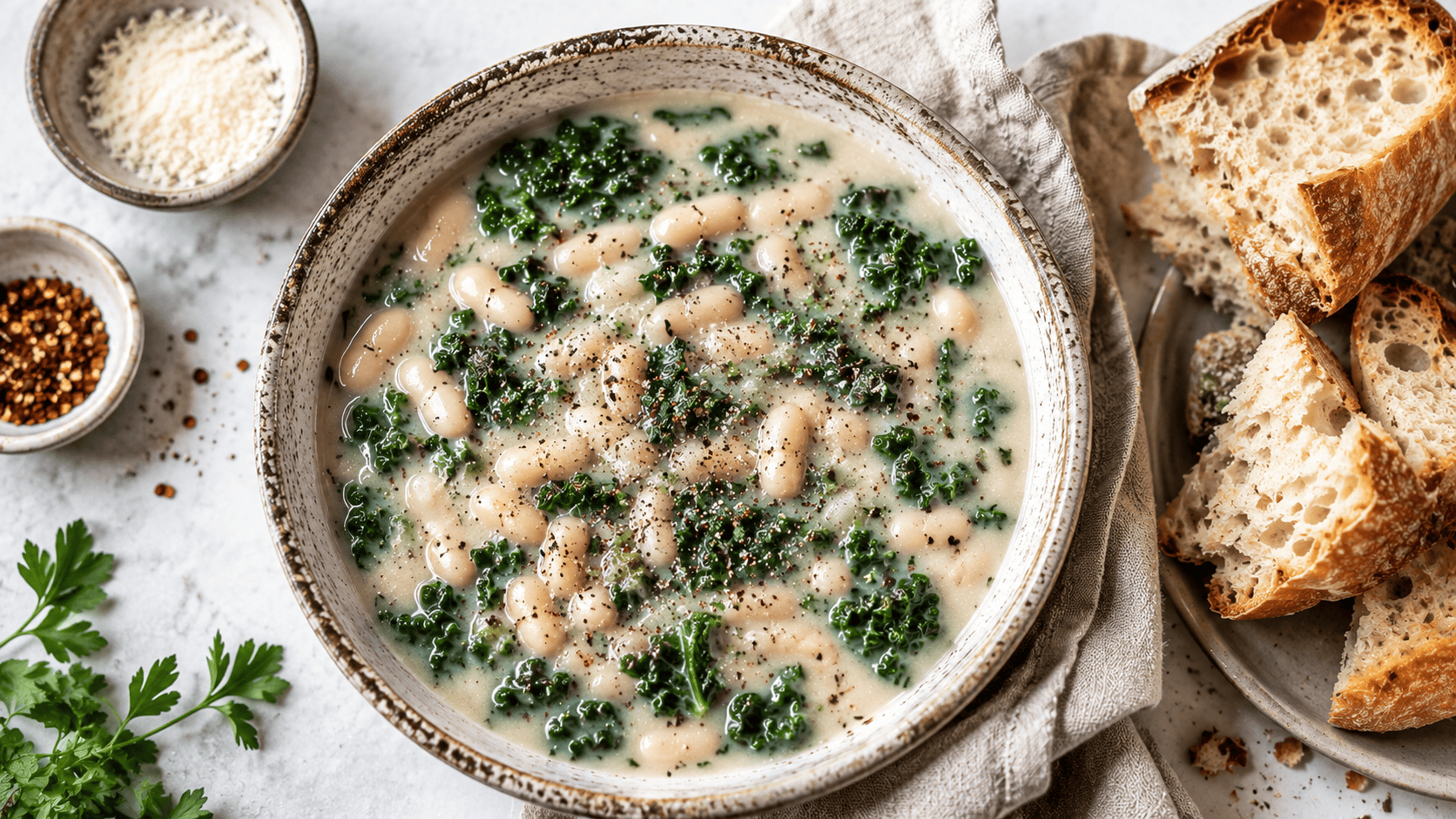
Canned white beans, half mashed into the broth, make this soup feel creamy with no cream involved. A bunch of kale (or any greens on sale) goes in at the very end so it stays bright instead of going khaki and bitter. Good with a heel of stale bread torn in.
9. Peanut Butter Noodles with Shredded Carrot
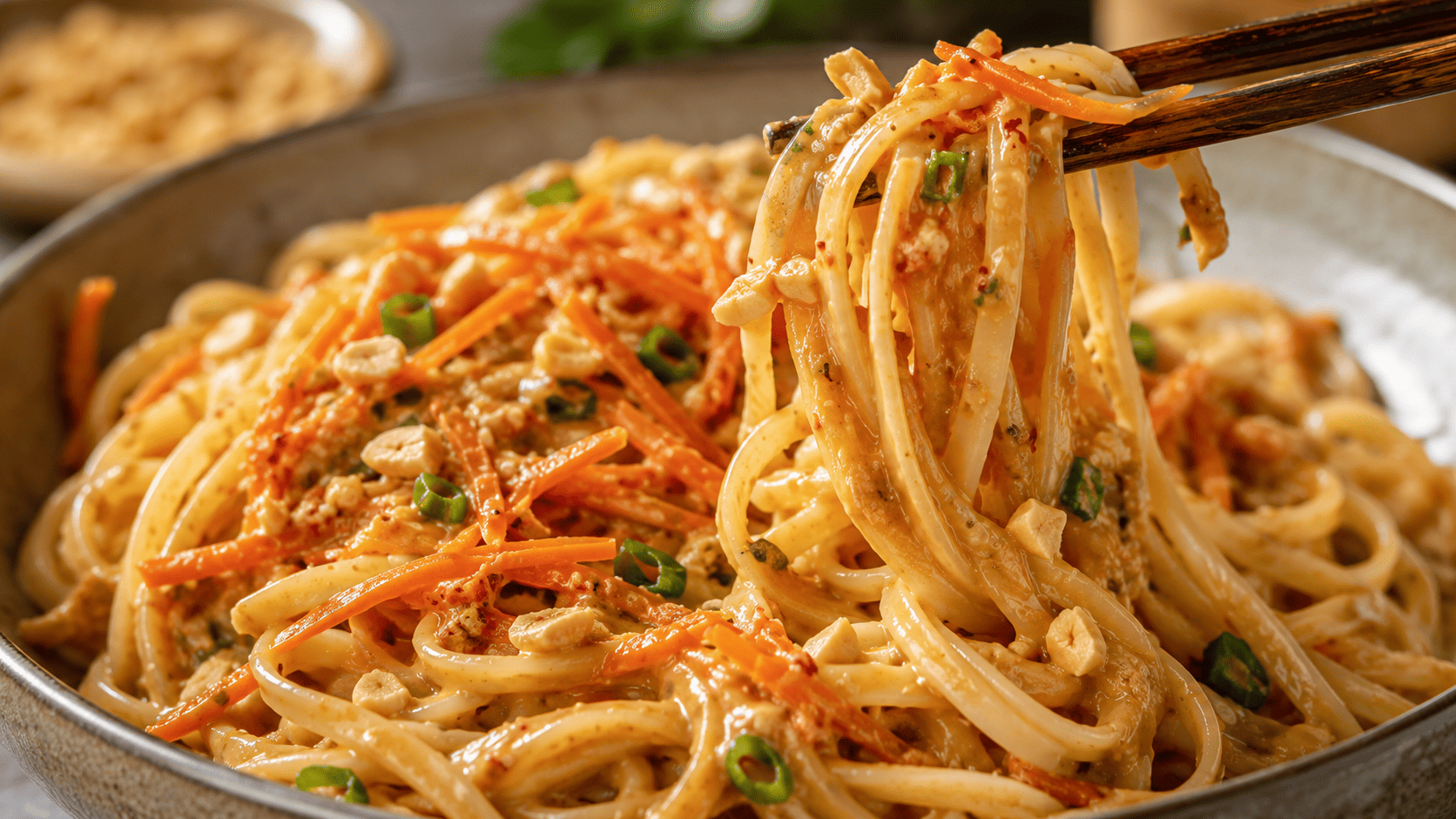
Peanut butter, soy sauce, a little vinegar, and hot water from the pasta pot whisk into a sauce that costs pennies and tastes like a takeout order. Grated carrot adds color, crunch, and a vegetable you’ll actually eat without noticing you’re eating it.
10. Baked Potato Bar, Loaded
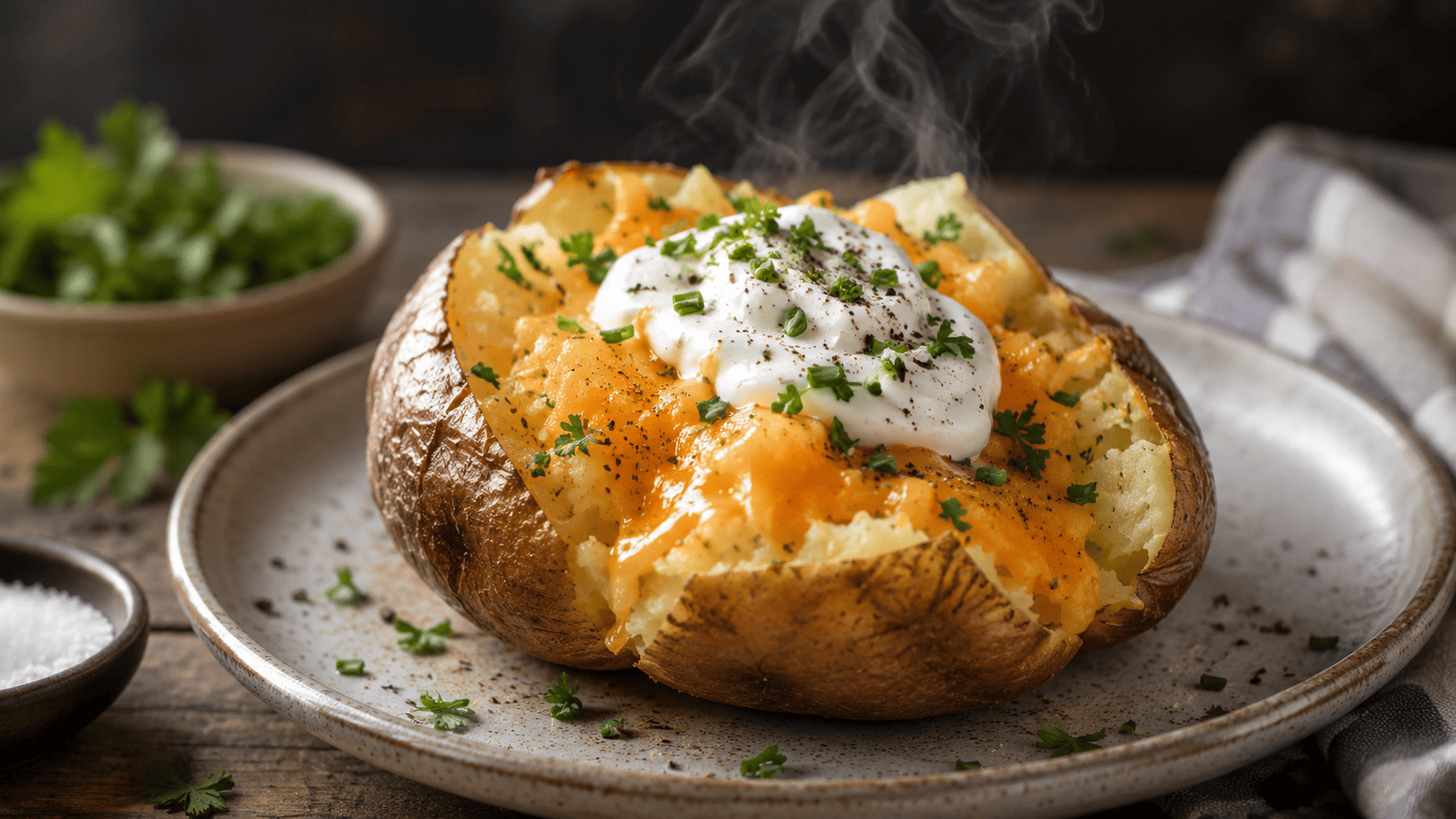
A large baked potato is one of the most filling things you can buy for under fifty cents. Split it, mash the inside slightly with a little butter, top with shredded cheese, a dollop of plain yogurt or sour cream, and whatever herbs or hot sauce you have. It feels like a treat because, structurally, it is one.
Across all ten meals, the average per-serving cost lands at roughly $1.15 — well under the $5 ceiling. That gap is intentional. It leaves room for a side salad, a piece of fruit, or simply a margin of error on a real grocery trip where prices never line up exactly with a spreadsheet.
Cost Per Gram of Protein — Visualized
Cents per gram of protein, by source. Lower bars are cheaper. Based on current US average retail prices.
Prices vary by region and retailer; figures are typical national averages for illustrative comparison.
The Pantry That Makes This Possible — Eight Staples Doing All the Work
None of the ten meals above are clever because of a secret technique. They’re cheap because they all draw from the same short list of staples — bought once, used constantly. Stock these eight and the $5 ceiling stops being a stretch and starts being the default — the same principle behind cooking a full week of dinners from an apparently empty fridge.
Frozen vegetables are typically flash-frozen within hours of harvest, which locks in nutrients that fresh produce often loses during days of transport and shelf time — and they cost less per serving with zero spoilage risk. For a $5 dinner, frozen peas aren’t the compromise. They’re frequently the better choice on both fronts.
5 Things People Get Wrong About Eating Cheap
Budget cooking carries more baggage than the food itself ever earns. Here’s what the data actually says.
$5 Dinner FAQ
There’s a reason the cheapest dinners on this list — lentils, rice, beans, eggs — are also some of the oldest dinners in human history. They weren’t designed by a budgeting app. They were arrived at, independently, by nearly every food culture on earth, because they solve the same problem every kitchen eventually faces: how to make something filling, nourishing, and repeatable out of very little.
The $5 ceiling isn’t a cage. It’s a filter that, almost by accident, points straight at the food that’s been quietly working for thousands of years — long before anyone needed a receipt to prove it.