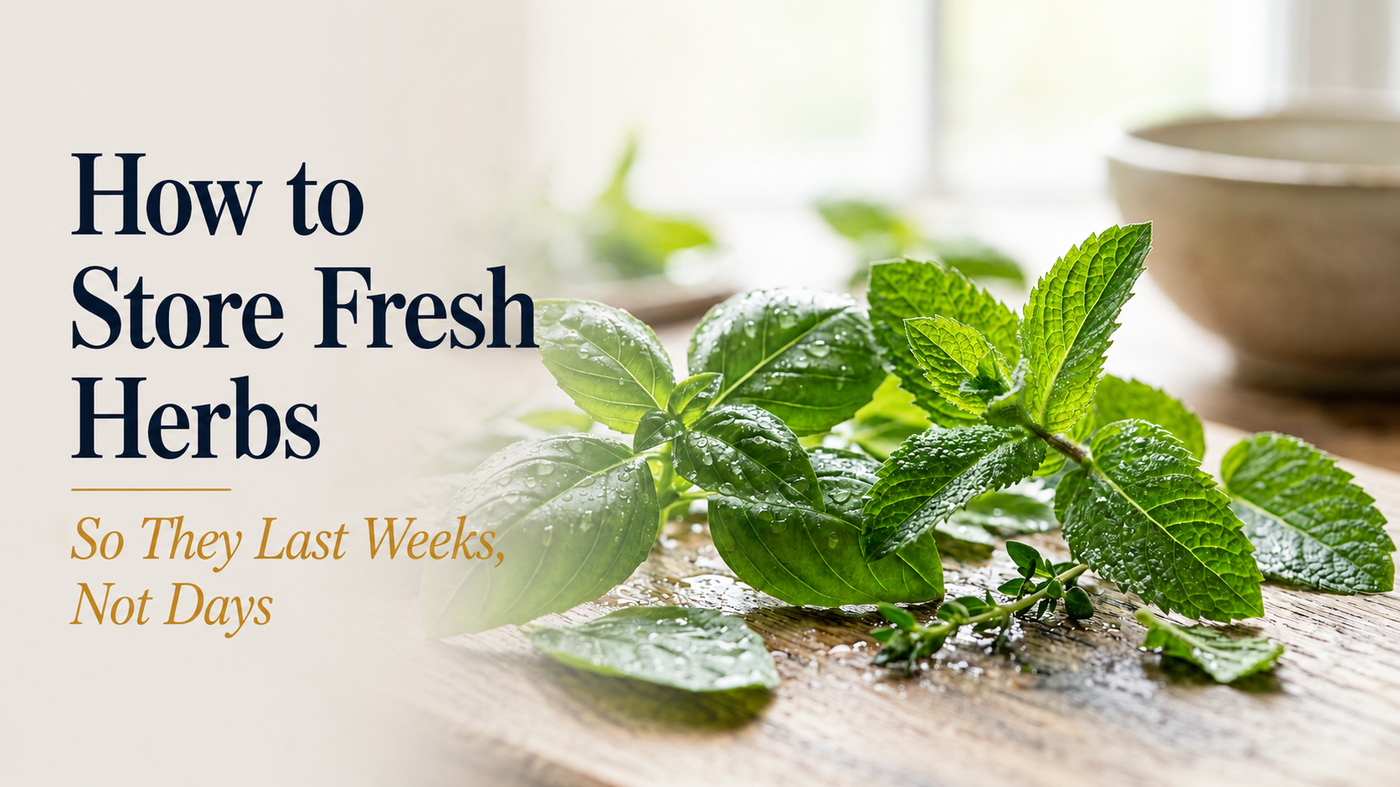
How to Store Fresh Herbs So They Last Weeks, Not Days

How to Store Fresh Herbs So They Last Weeks, Not Days

🌿 Kitchen & Storage June 18, 2026 · 14 min read ✓ Science-backed How to Store Fresh Herbs…

🌿 Kitchen & Storage June 18, 2026 · 14 min read ✓ Science-backed

How to Store Fresh Herbs
So They Last Weeks, Not Days

A bunch of parsley wilts in three days. The same bunch, stored correctly, lasts three weeks. The difference is not luck — it’s understanding what a cut herb is actually doing in your refrigerator.

Emily Bennett
Emily Bennett
Food culture & kitchen science writer · foodhitsdifferent.com · Sources verified against postharvest research and food science literature
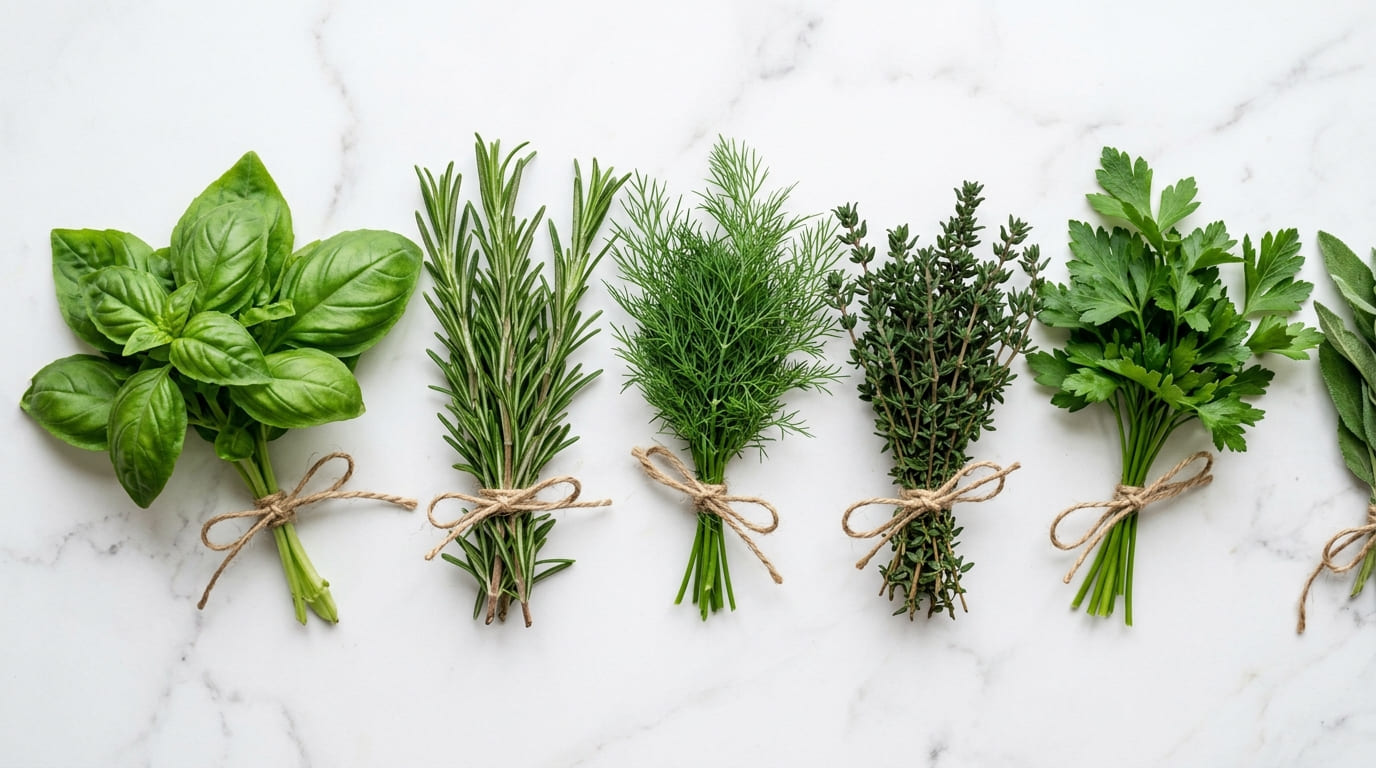
Fresh herbs — parsley, cilantro, mint, rosemary on a marble kitchen counter, soft morning light

Fresh herbs in water jars on a bright, light-wood kitchen counter — soft morning window light

There is a specific kind of defeat in opening the vegetable drawer three days after a grocery run. The parsley you bought for one recipe — that bright, almost-luminous bundle — has gone limp and yellow, smelling faintly of something you’d rather not name. You use a third of it, spend ninety cents on the rest, and the ritual repeats next week.

It’s one of the quieter frustrations of home cooking. Fresh herbs are inexpensive individually and ruinously wasteful collectively. Americans throw away somewhere between 30–40 percent of the food they purchase, according to the USDA — and fresh produce, herbs included, sits at the top of that pile.

The good news: most herb spoilage isn’t inevitable. It’s the result of a few consistent mistakes — and they’re fixable ones. The science of what happens to a cut herb after harvest is genuinely fascinating, and once you understand it, the storage methods stop feeling like fussy kitchen rules and start feeling obvious.

📋 What’s in This Article
01Why Herbs Die So Quickly — The postharvest biology no one tells home cooks.
02Soft Herbs — Parsley, cilantro, mint, dill, chives: the water-jar method and why it works.
03The Basil Exception — Why your refrigerator is actively destroying your basil.
04Woody Herbs — Rosemary, thyme, sage, oregano: why these behave completely differently.
05Freezing for Long-Term Storage — Herb cubes, frozen bundles, and timelines that actually work.
06The 7 Mistakes — Most herb waste comes down to the same errors, repeated.
📊Shelf Life Chart — Every major herb, every storage method, compared.
01
The Science of Wilting

Why Herbs Die So Quickly — And What’s Actually Happening in Your Fridge
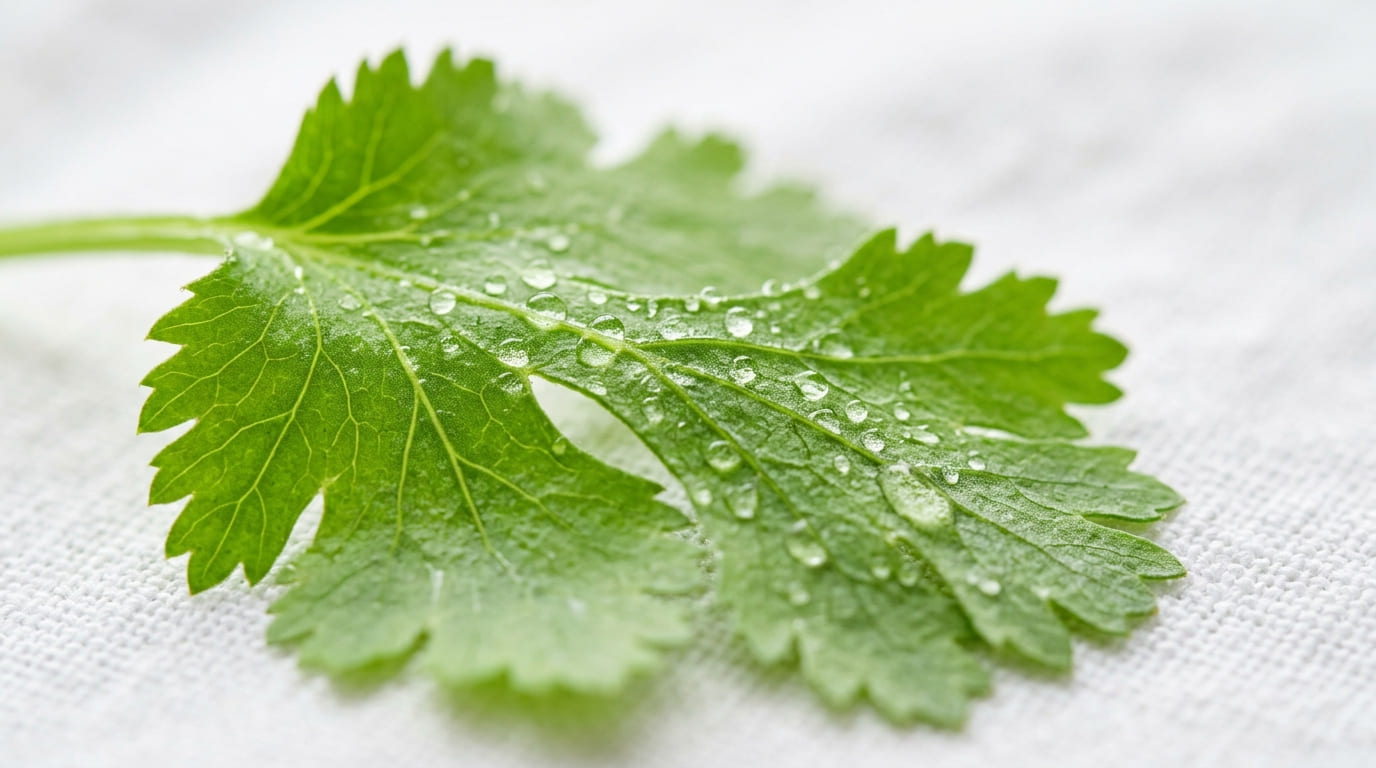
Close-up editorial macro of fresh herb leaves — individual cilantro or parsley leaf with visible texture, dark moody background, soft directional light

Botanical close-up of fresh herb leaves — natural light, editorial food magazine aesthetic

A cut herb is not a dead plant. It’s a living one that has been severed from its water supply and is now spending its remaining energy reserves breathing, wilting, and — if conditions are wrong — decomposing.

Postharvest researchers at UC Davis have documented the specific mechanics: after harvest, herbs continue to respire — consuming their own sugars and starches in a process that generates heat and moisture. The faster this respiration, the faster the herb decays. Temperature is the primary throttle. Cold slows respiration down dramatically. But “cold” isn’t enough on its own.

Two other forces are working against freshness simultaneously:

🔬 The Three Forces Killing Your Herbs
Moisture loss. Herbs are made of water — between 80–90% of their fresh weight. Once cut, that water evaporates continuously. When a leaf loses enough moisture, cell pressure drops, and you get the familiar limpness. This is reversible in early stages (wilted parsley can often be revived in ice water) but becomes permanent as cells collapse.
Ethylene exposure. Ethylene is a plant hormone that triggers ripening and senescence. UC Davis research confirms that parsley, mint, cilantro, and oregano are highly sensitive to ethylene — meaning storing them near ethylene-producing fruits (apples, bananas, avocados) accelerates yellowing and decay significantly.
Microbial growth. The moment herbs are cut, their wounded surfaces become entry points for bacteria and mold. Excess surface moisture — the kind left behind by washing herbs before storage — dramatically accelerates this process. The culprit behind that slippery, dark-spotted cilantro isn’t the cold; it’s standing water on wet leaves sealed in a bag.

There’s also a detail worth knowing about culinary shelf life versus visual shelf life. UC Davis postharvest researchers note that cilantro can remain marketable-looking for up to 21 days — but its aroma notably declines after just 10 days. The herb may look fine long after it’s stopped tasting like anything. Visual freshness and flavor freshness are not the same measurement.

🌿
02
Parsley · Cilantro · Mint · Dill · Chives

Soft Herbs — Treat Them Like Flowers, Not Groceries
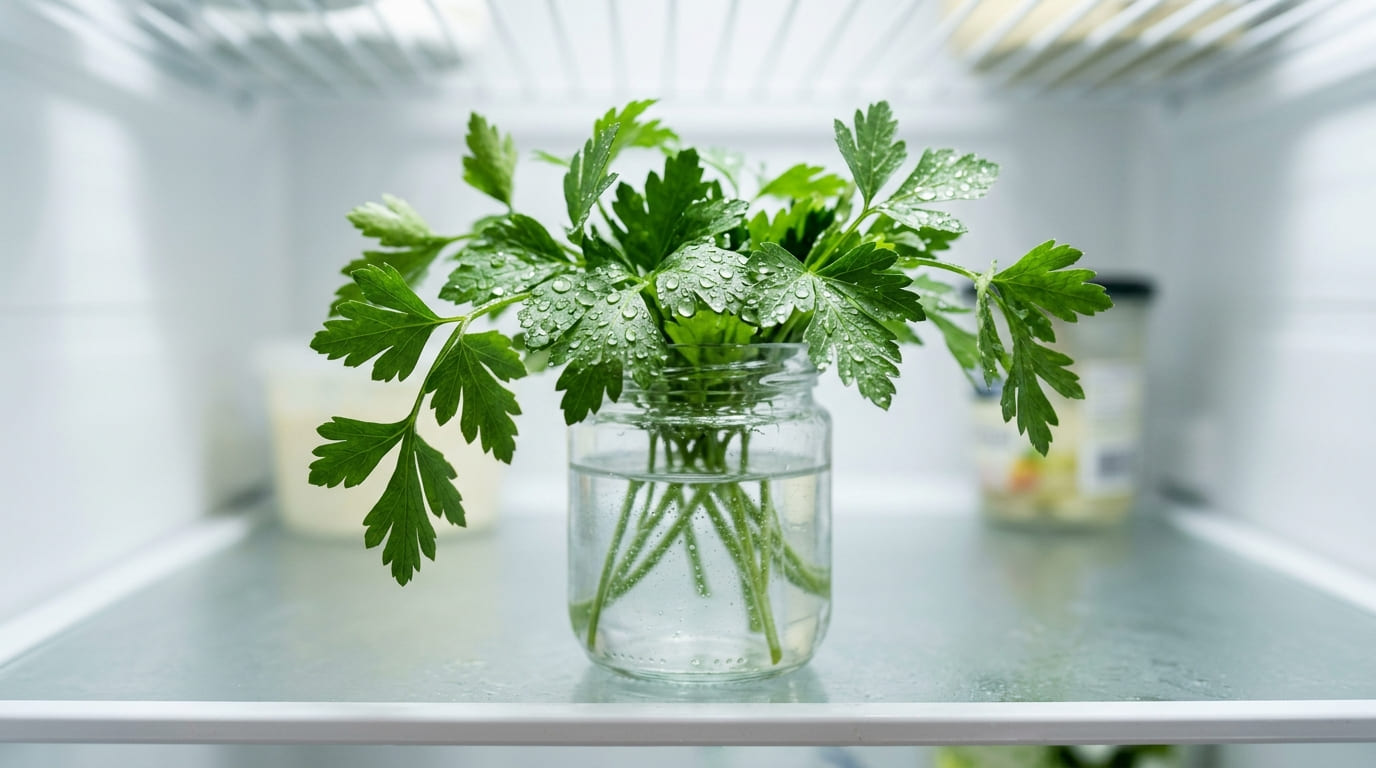
Glass jar of parsley standing in water on a fridge shelf — editorial refrigerator interior shot, soft cool-toned light, organized and minimal

The bouquet method in practice — herbs in water jars, clear glass, fridge interior

Parsley, cilantro, mint, dill, and chives share a structural similarity: tender stems, delicate cell walls, and a high water content that makes them fast to wilt and fast to recover. The best storage method for all of them draws on a principle gardeners have used for centuries.

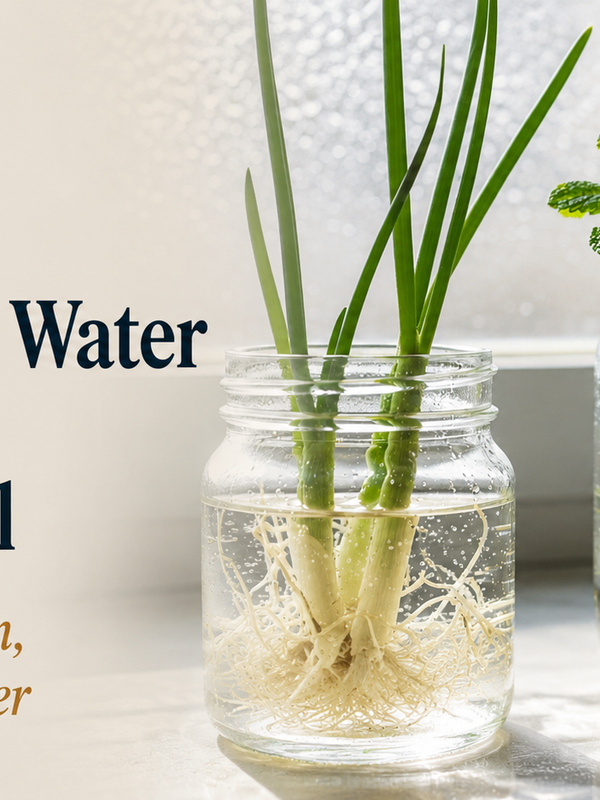
Treat them like cut flowers. Trim the stems at an angle, place them upright in a jar with an inch or two of water, and cover loosely with a plastic bag or a clean damp cloth before refrigerating. The water does what it did in the ground: maintains cell pressure and keeps the stems drawing moisture upward. Change the water every two days. Herbs stored this way regularly last two to three weeks rather than two to three days.

Herb-by-Herb: Soft Herbs
🌿Parsley
Best method: Jar of water, stems trimmed, covered loosely, refrigerated.
Expected lifespan: 2–3 weeks properly stored vs. 3–5 days in a plastic bag on a shelf.
Key detail: Parsley is highly ethylene-sensitive — keep it away from apples, avocados, and bananas.
Common mistake: Washing before storage. Wet parsley in a sealed bag turns to slime within two days. Wash just before use.
🌿Cilantro
Best method: Jar of water, refrigerated, loosely covered — identical to parsley.
Expected lifespan: Up to 3 weeks for visual quality; 1–1.5 weeks for full aromatic freshness.
Key detail: Cilantro’s aroma degrades before its appearance does. Smell it before cooking — a flat-smelling bunch has lost half its culinary value even if it looks fine.
Common mistake: Packing tightly in a drawer. Cilantro needs airflow and upright positioning; crowding compresses the delicate leaves.
🌿Mint
Best method: Water jar, refrigerated, loosely covered. Mint can also be kept at room temperature for 1–2 days if you plan to use it quickly.
Expected lifespan: 1–2 weeks refrigerated.
Key detail: University of Tasmania research identifies mint as a high-risk herb for microbial contamination — which makes the dry-before-storage rule especially important here.
Common mistake: Refrigerating wet mint. Even a brief shake-dry after rinsing can meaningfully extend lifespan.
🌿Dill
Best method: Water jar or loosely wrapped in a barely damp paper towel inside a bag, refrigerated.
Expected lifespan: 1–2 weeks. Dill is more fragile than parsley or cilantro and loses its feathery texture faster.
Key detail: Dill’s essential oils are among the most volatile of common herbs — its flavor drops off noticeably faster than its visual freshness does.
Common mistake: Sealing tightly. Dill needs slight airflow or the fronds compress and turn mushy.
🌿Chives
Best method: Wrap in a barely damp paper towel, place in a resealable bag, refrigerate. Unlike other soft herbs, chives don’t suit the water-jar method as well due to their hollow structure.
Expected lifespan: 1–2 weeks.
Key detail: Chives freeze exceptionally well — chop and freeze flat on a baking sheet, then transfer to a container. Texture won’t survive freezing intact, but flavor does.
Common mistake: Bunching them rubber-band-tight. The compression bruises the hollow stems and accelerates browning.
🌿
03
The Cold-Sensitive Exception

The Basil Exception — Why Your Refrigerator Is Actively Destroying It

Basil is tropical. It originates from climates where temperatures rarely dip below 15°C (59°F), and it responds to cold the way a sun-grown plant should: it goes black, loses its aroma, and collapses. The phenomenon has a name in food science — chilling injury — and it happens to basil faster and more severely than almost any other common culinary herb.

A PMC review in Frontiers in Plant Science on basil postharvest science confirms that refrigeration at standard fridge temperatures (0–4°C) causes rapid quality deterioration — accelerating the blackening and aroma loss that makes cold-stored basil almost useless within 24–48 hours of purchase.

🌱 How to Store Basil — The Right Way
Step 1: Trim the stems at an angle, just like you would for cut flowers.
Step 2: Stand the bunch upright in a glass or small jar with about an inch of room-temperature water.
Step 3: Leave it on the counter, away from direct sunlight. A window that receives indirect light is ideal — the plant will continue growing slightly.
Step 4: Cover loosely with a plastic bag to trap a little humidity, or skip the bag if your kitchen is warm and humid.
Lifespan: 1–2 weeks at room temperature vs. 1–2 days in a standard refrigerator. Change the water every two days.

The room-temperature bouquet is not a quirky Pinterest trick. It is simply giving a warm-climate plant the conditions it was designed for.

If you need to store basil for longer than two weeks, freeze it. Blanch briefly (15 seconds in boiling water, straight into ice water), pat dry, and freeze flat. The cold-damage risk from freezing is irrelevant once the basil is blanched and will be used in cooked applications — pasta, soups, sauces.

“The refrigerator is not neutral territory for herbs. For some, it’s a life-support system. For basil, it’s closer to a slow execution.”

— On the importance of knowing which herbs are cold-sensitive before storage
🌿
04
Rosemary · Thyme · Sage · Oregano

Woody Herbs — Built to Survive, Not to Be Rushed
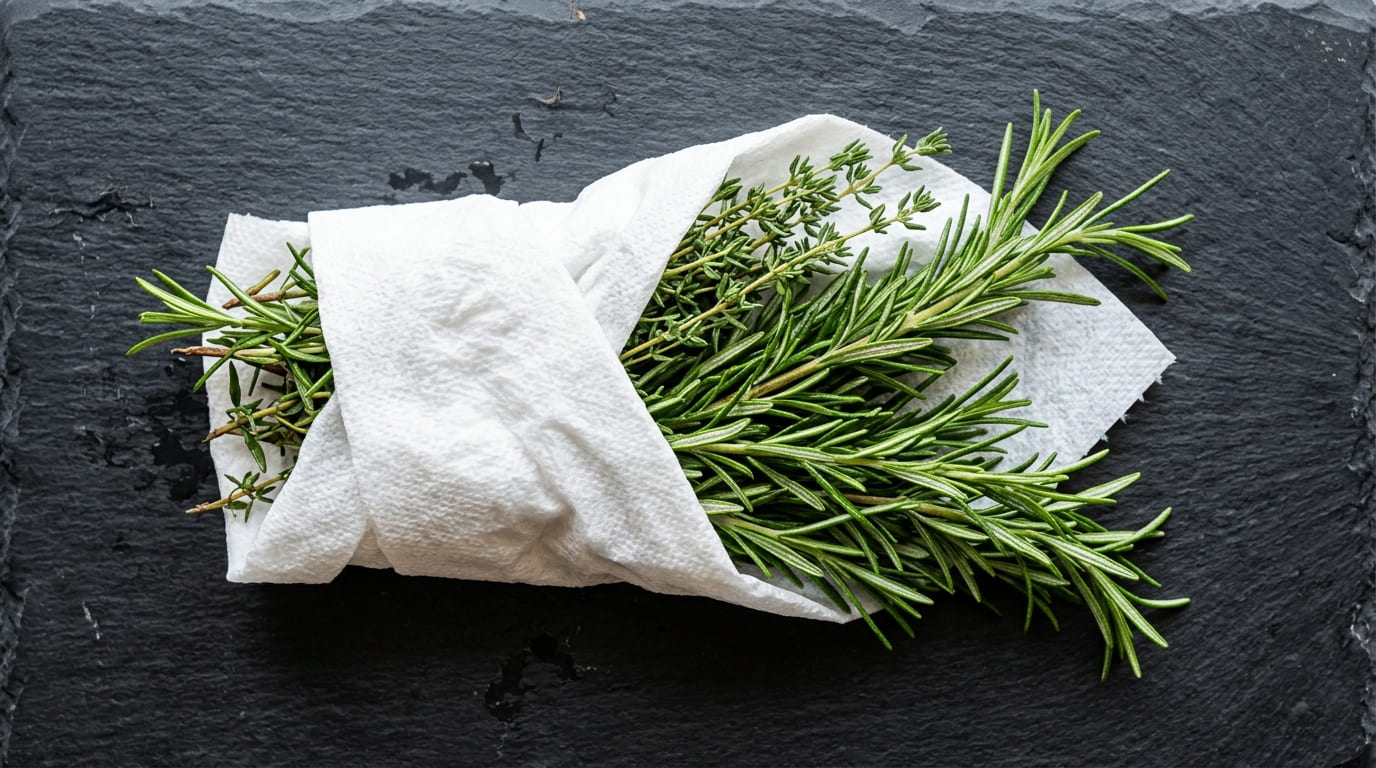
Rosemary and thyme sprigs wrapped in a damp paper towel on a dark slate surface — moody editorial still life with natural props, overhead shot

Woody herb editorial — dark surface, natural textures, soft directional light

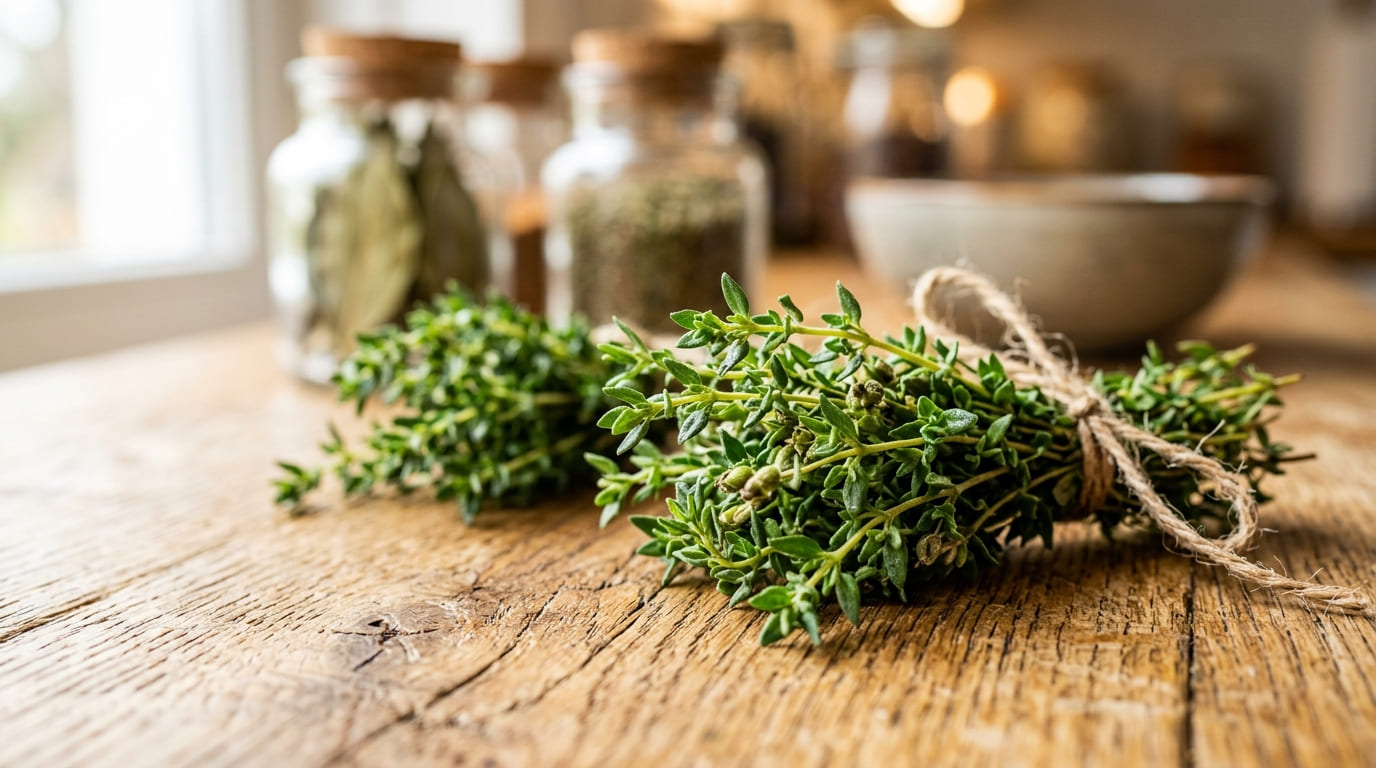
Rosemary, thyme, sage, and oregano are fundamentally different plants from their soft-stemmed cousins. Their essential oils are contained in small glands just beneath a waxy, more resilient leaf surface. They are less vulnerable to moisture loss, less ethylene-sensitive, and significantly longer-lived even with minimal care.

The main threat to woody herbs isn’t drying out — it’s excess moisture causing mold. Where soft herbs need water, woody herbs need the opposite: dry conditions, light airflow, and consistent cool temperatures.

Herb-by-Herb: Woody Herbs
🌲Rosemary
Best method: Wrap loosely in a barely damp paper towel, place in a resealable bag with the top slightly open, refrigerate.
Expected lifespan: 2–3 weeks refrigerated; can last up to a month with good paper-towel wrapping.
Key detail: Rosemary is one of the least ethylene-sensitive herbs — it can tolerate proximity to fruit without the damage parsley would suffer.
Common mistake: Submerging in water. Unlike soft herbs, rosemary’s woody stems rot in standing water rather than drinking it.
🌲Thyme
Best method: Damp paper towel wrap in the fridge — same approach as rosemary.
Expected lifespan: 1–2 weeks; thyme dries more gracefully than most herbs, so even partially dried thyme retains useful flavor.
Key detail: Thyme is one of the few fresh herbs that actually improves slightly when allowed to partially air-dry on the counter — the essential oil concentrates as moisture leaves. A week-old “drying” bunch may be more aromatic than a fresh one.
Common mistake: Throwing it away the moment it looks dry. Dried thyme from a fresh bunch is still culinary-grade thyme.
🌲Sage
Best method: Dry paper towel wrap (not damp — sage is more moisture-sensitive than rosemary or thyme), sealed in a bag, refrigerated.
Expected lifespan: 1–2 weeks refrigerated; dries exceptionally well on the counter for longer-term use.
Key detail: Sage’s large, soft-for-a-woody-herb leaves absorb moisture readily — a damp towel accelerates decay rather than preventing it.
Common mistake: Any excess moisture. Sage bruises and blackens faster than it wilts.
🌲Oregano
Best method: Damp paper towel wrap in the fridge, or air-dried at room temperature for long-term storage — oregano is one of the best candidates for home drying.
Expected lifespan: 1–2 weeks fresh; 1–3 years if properly dried and stored airtight.
Key detail: Unlike fresh oregano (which can taste slightly bitter), air-dried oregano develops a mellower, more rounded flavor that many Mediterranean cooks actually prefer.
Common mistake: Refrigerating without wrapping. Uncovered oregano in a cold drawer loses moisture too rapidly and dries unevenly.
🌿
05
Long-Term Preservation

Freezing Herbs — The Method That Saves the Whole Bunch
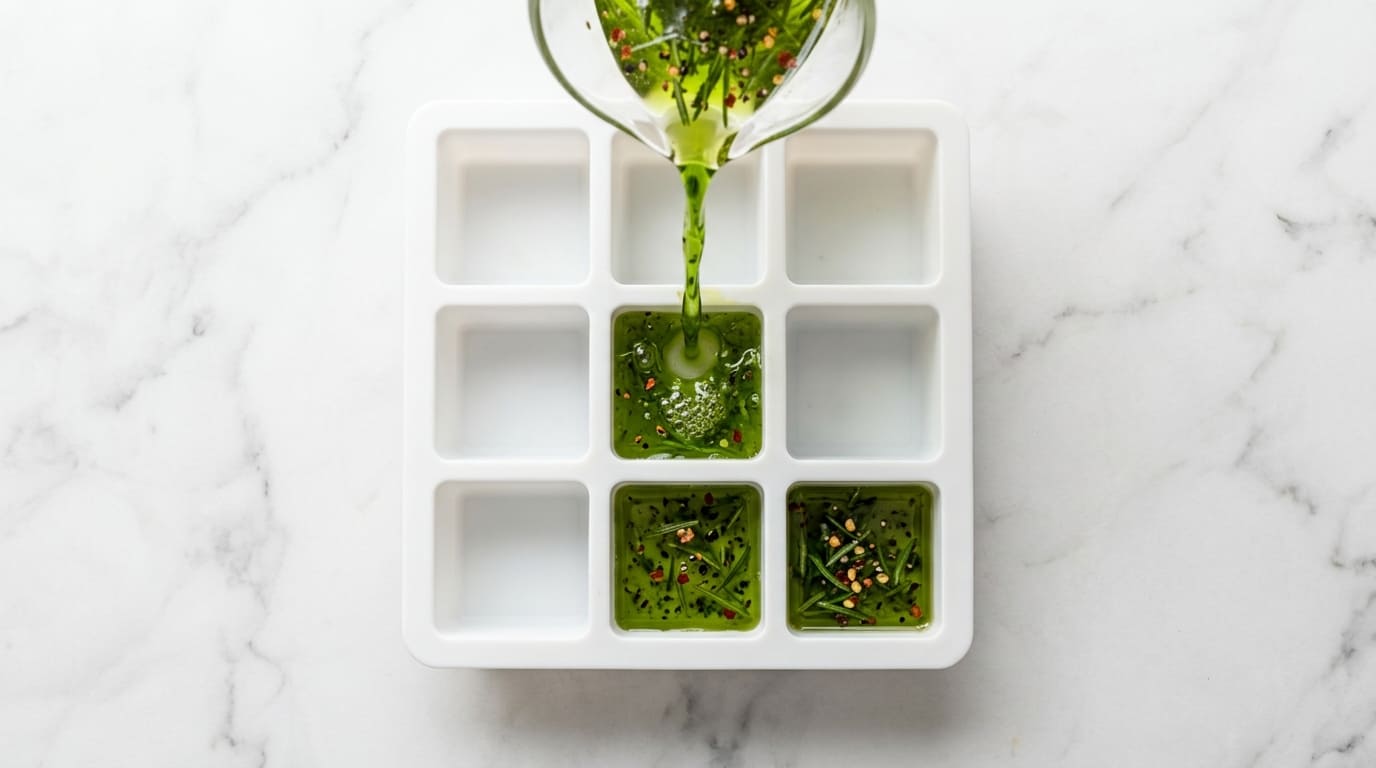
Overhead satisfying shot of herb-oil mixture being poured into ice cube tray — bright, colorful, Pinterest-worthy

Herb cube preparation — green herbs in oil being poured into ice tray, satisfying overhead angle

Freezing won’t preserve fresh herb texture — the cell walls collapse and the thawed result is soft rather than crisp. But flavor is largely retained, which makes frozen herbs genuinely useful for everything cooked: soups, stews, sauces, roasted vegetables, marinades. You lose the garnish; you keep the taste.

Method 1 — Herb-Oil Ice Cubes
Finely chop herbs (any soft herb works; woody herbs like thyme and rosemary work beautifully too). Pack into ice cube trays, top with olive oil or a neutral oil. Freeze until solid, then transfer cubes to a labeled zip bag. Drop directly into hot pans — the oil melts and releases the herb flavor instantly. Storage timeline: 3–6 months for best flavor.
Method 2 — Flat-Frozen Chopped Herbs
Wash, thoroughly dry, and roughly chop. Spread in a single layer on a parchment-lined baking sheet. Freeze until solid (1–2 hours), then transfer to a container. Because the pieces freeze separately, you can take exactly what you need without a frozen clump. Storage timeline: 2–4 months. Best for cilantro, parsley, dill.
Method 3 — Whole Sprigs (Woody Herbs)
Rosemary, thyme, and sage freeze remarkably well as whole sprigs. Spread on a sheet, freeze, then bag. When needed, pull a sprig and crumble the still-frozen leaves directly into your dish — they come off the stem cleanly. Storage timeline: 4–6 months.
🌿 The Herb Rescue Technique

Wilted soft herbs are often not dead — just dehydrated. Trim the stem ends and stand them in a glass of ice water for 15–30 minutes. Parsley, cilantro, and mint frequently revive to near-original crispness. The technique works because the cells still have structural integrity; they’ve simply lost turgor pressure. Rehydration restores it. It won’t work on herbs that have already begun yellowing or decomposing — only on fresh herbs that wilted from moisture loss alone.

📊 The Data

Herb Shelf Life — Visualized

Approximate durations for each storage method. Actual results vary with starting freshness, humidity, and refrigerator temperature.

Herb Fridge (wrong method) Fridge (correct method) Counter Frozen
Parsley 3–5 days 2–3 weeks 2–3 days 3–6 months
Cilantro 3–5 days 2–3 weeks 2–3 days 3–4 months
Basil 1–2 days ⚠️ Not recommended 1–2 weeks (jar) 3–4 months (blanched)
Mint 3–5 days 1–2 weeks 1–2 days 3–4 months
Dill 3–4 days 1–2 weeks 1–2 days 2–3 months
Rosemary 1 week 2–4 weeks 1 week (drying) 4–6 months
Thyme 1 week 1–2 weeks 1+ week (drying) 4–6 months
Sage 1 week 1–2 weeks 5–7 days 4–6 months
Chives 3–5 days 1–2 weeks 1–2 days 2–3 months

Sources: UC Davis Postharvest Technology Center, University of Tasmania shelf-life research, NCHFP guidelines

🌿
06
The Storage Errors

7 Herb Storage Mistakes — And the Simple Fix for Each One

Most herb waste isn’t random. It traces back to the same handful of decisions made in the first few minutes after bringing herbs home from the market. Fix these, and the waste largely stops.

MISTAKE Washing herbs before storage
Wet herbs in sealed bags develop mold and slime within 24–48 hours. Surface moisture is the accelerant. Wash herbs only immediately before using them. If you’ve already washed them, dry them thoroughly with a salad spinner or clean towels before refrigerating.
MISTAKE Sealing herbs airtight
Herbs continue to respire after harvest — they exhale CO₂ and moisture. A completely sealed bag traps both, creating the warm, humid microclimate that mold thrives in. Bags should be sealed enough to maintain humidity but left slightly open at the top, or perforated, to allow gas exchange.
MISTAKE Refrigerating basil
This is the most common herb mistake made in otherwise well-organized kitchens. Basil is a tropical plant that suffers chilling injury at standard refrigerator temperatures. The fix is a jar of water on the counter — it will live longer at room temperature than it ever did in the fridge.
MISTAKE Storing herbs near ethylene-producing fruit
Apples, bananas, and avocados release ethylene gas continuously. Parsley, mint, cilantro, and oregano are documented as highly ethylene-sensitive by UC Davis postharvest researchers — exposure causes rapid yellowing and leaf drop. Keep these herbs on a separate shelf or drawer from high-ethylene produce.
MISTAKE Leaving damaged leaves in the bunch
A single yellowing or damaged leaf accelerates decay in the leaves around it — it releases ethylene and harbors microbial activity that spreads. Thirty seconds sorting through a new bunch and removing any damaged pieces before storage significantly extends the life of the whole lot.
MISTAKE Storing woody herbs the same way as soft herbs
Putting rosemary in water, or wrapping thyme in a soaking-wet towel, introduces the excess moisture that woody herbs are specifically vulnerable to. The same water-jar method that preserves parsley for three weeks will rot rosemary stems within days. The rule is: soft herbs want water; woody herbs want dryness.
MISTAKE Forgetting what’s in the drawer entirely
The USDA estimates that the average American family loses nearly $3,000 annually to food waste — and fresh produce, including herbs, sits at the top of that pile. The fix isn’t more sophisticated storage systems. It’s buying herbs with a specific plan for using them, and keeping them somewhere visible rather than in a vegetable drawer that’s easy to forget about.
🌿

The Quiet Math of Kitchen Waste

Herbs are cheap individually. Collectively, across a year of cooking, the bundles that go limp in the drawer add up to something more meaningful than a few dollars. The EPA estimates that the average American family of four spends almost $3,000 per year on food that goes uneaten — and improper storage is the leading cause.

There’s also a compounding effect that rarely gets discussed: when you know how to keep herbs fresh for two to three weeks, your cooking changes. You stop buying individual bunches tied to single recipes. You start cooking with herbs more freely, more generously — the way they’re meant to be used. A kitchen that never runs out of cilantro cooks differently from a kitchen that treats cilantro as a scarce and quickly-expiring resource.

The water-jar method isn’t a storage tip. It’s a small reorganization of how you relate to fresh ingredients — treating them as things worth preserving rather than things you race to use before they disappear. That shift, repeated across all your fresh produce, adds up to a genuinely different way of cooking.

🌿
Questions, Answered

Herb Storage FAQ

Can I store different herbs together?
For refrigerator jars, it’s generally fine to group soft herbs with similar needs — parsley and cilantro, for instance, can share a jar. But don’t mix herbs with high-ethylene produce, and don’t store soft and woody herbs with the same method. Basil should always be separate (and on the counter).
Do those dedicated herb keepers and containers actually work?
Somewhat. Dedicated herb storage containers typically recreate the water-jar principle in a more compact fridge-friendly format — stems in water, leaves in a humid chamber above. They work, but a mason jar and a loose plastic bag does the same job for free. The container is the wrapper; the principle (water contact, light humidity, cold) is the actual mechanism.
Are garden-grown herbs easier to store than supermarket herbs?
Yes, for one specific reason: time. Supermarket herbs may have been cut 5–10 days before you purchase them. Garden-cut herbs are at day zero. The water-jar method extends shelf life from whatever the starting point is — a freshly cut garden herb will outlast a day-old supermarket bunch even with identical storage.
Do frozen herbs work as well as fresh in cooking?
For cooked applications, nearly as well. You lose the texture that makes fresh cilantro work as a garnish or fresh basil beautiful in a salad, but in a sauce, soup, or marinade, frozen herbs release their flavor compounds at virtually the same intensity as fresh — and oil-frozen herbs deliver them with an added richness that’s occasionally better than fresh in oil-based applications.
Why does my parsley always turn yellow, even when I’m refrigerating it?
Usually ethylene. Yellowing in cold-stored parsley is a classic symptom of ethylene exposure — chlorophyll breaks down faster in its presence. Check what your parsley is stored next to. If there’s an apple, an avocado, or a banana nearby, that’s likely the culprit. Move the parsley to a different shelf, or store it in the water-jar method with the loose bag creating a slight barrier.
What’s the best way to dry herbs at home?
For woody herbs like thyme, rosemary, sage, and oregano: tie small bundles loosely (airflow matters) and hang them upside-down in a dry, dark, well-ventilated spot for 1–2 weeks. Alternatively, spread sprigs on a baking sheet at the lowest oven setting (around 90–100°C / 195°F) for 1–2 hours. Once completely dry, store in airtight containers away from heat and light — dried herbs lose potency within 6–12 months but don’t become unsafe.
🧪 Keep Reading
Are “Expired” Dates on Food Actually Dangerous? The Science Behind the Label
Flat-lay overhead of a beautifully organized kitchen counter — herb jars, fresh bundles, warm wood surface, cozy home kitchen aesthetic

Aspirational organized kitchen — warm tones, herb jars visible, soft morning light

The bunch of parsley sitting in water on the refrigerator shelf, loosely covered, stems freshly trimmed — there’s something almost meditative about getting it right. It takes ninety seconds. It lasts three weeks. And in that small act of attention, something shifts in how you approach your kitchen.

Fresh herbs were never meant to be afterthoughts — the sprigs thrown in at the last minute, bought for one dish and mourned for their waste. Treated properly, they’re one of the most consistently available, most flavour-transforming, and most affordable luxury of home cooking. They just needed you to know where they want to live.
📚 Related Reading
/ 5

No reviews yet — be the first!

Leave a Review