Why Composting Tea Bags Is Often a Bad Idea
Most Contain Plastic — And There’s a Better Way
The little square bag you’ve been adding to your compost heap may be quietly depositing plastic into your garden. Here’s what the science says — and the ancient, unhurried alternatives that never needed a bag at all.

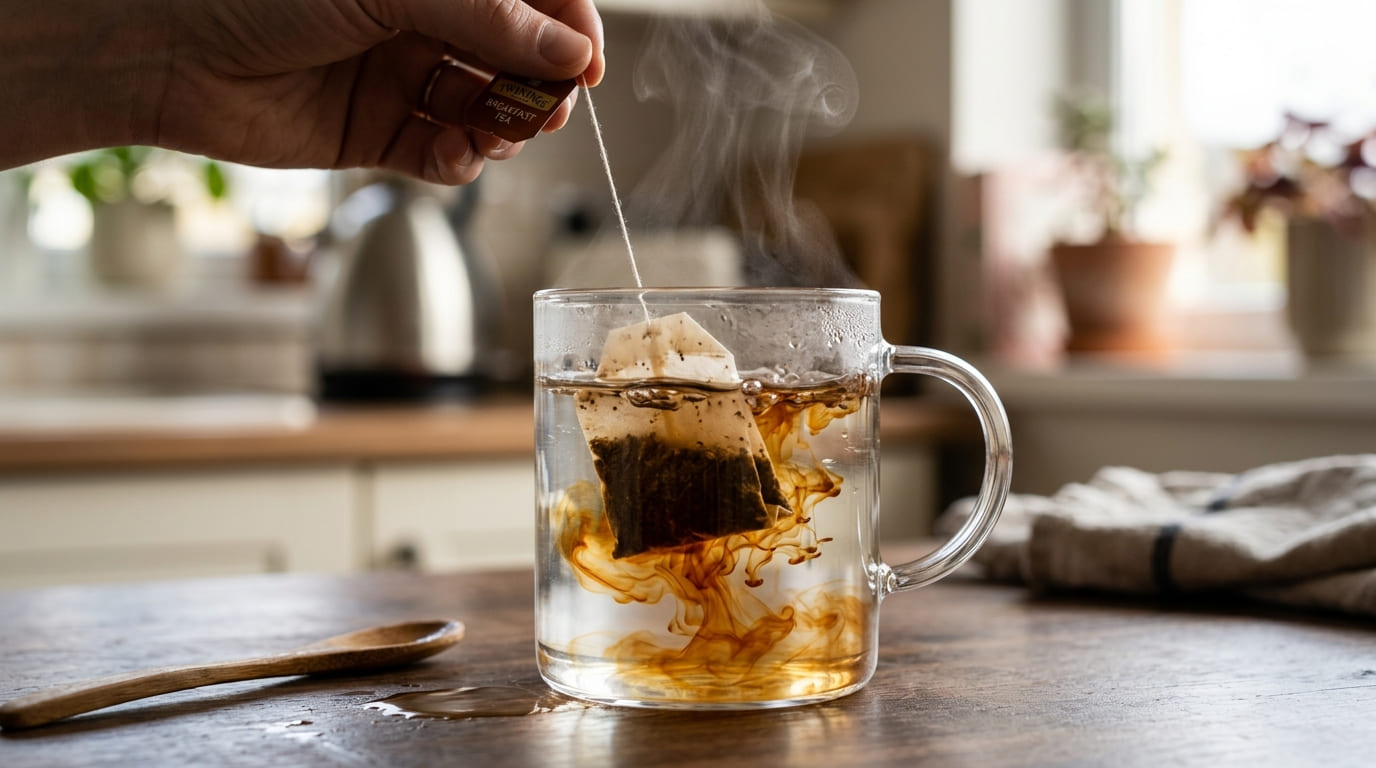
📷 The bag looks harmless. The soil disagrees.
There is something quietly reassuring about dropping a used tea bag into a compost bin. It feels like the right ending to a small daily ritual — the tea drunk, the bag disposed of responsibly, the garden fed. A loop closed.
The problem is that for most tea bags sold today, that loop doesn’t actually close. It frays. It leaves something in the soil that the soil has no idea what to do with.
This is not an alarmist story. It is a quietly important one — about packaging material, microplastics, composting chemistry, and what a Moroccan grandmother pouring tea over fresh garden mint understood without needing any of it explained to her.
The Hidden Plastic in Your Tea Bag — And Why It Complicates Everything
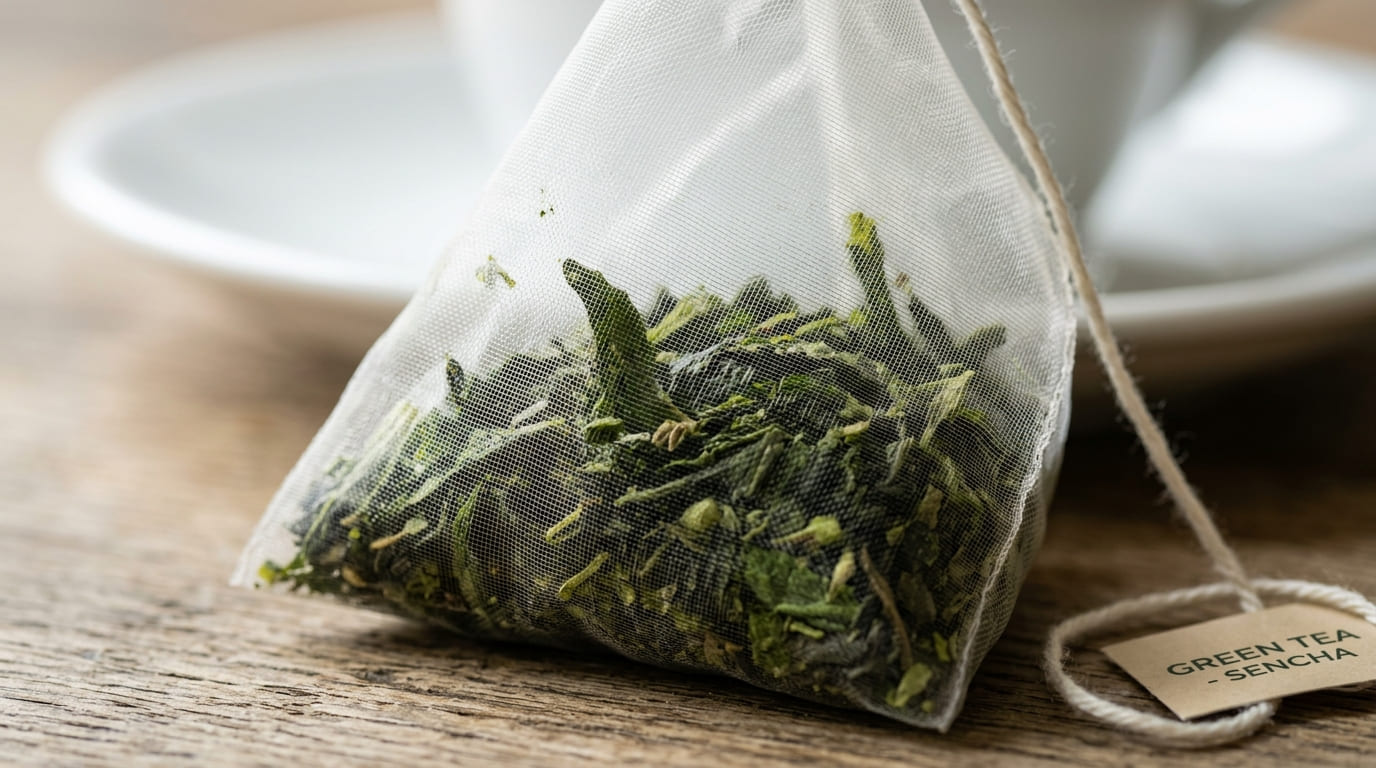
📷 That springy resistance when you squeeze a tea bag? That’s plastic.
Pick up any standard tea bag and squeeze it gently. That springy, slightly silky resistance isn’t paper doing that. It’s plastic. Most conventional tea bags — the flat, square, or round ones that dominate supermarket shelves — are heat-sealed with polypropylene, a thermoplastic polymer that keeps the bag sealed under hot water. Without it, the bag would fall apart before you’d finished steeping.
Polypropylene doesn’t biodegrade. Not in a compost bin, not in soil, not in the human body. It persists. A tea bag thrown into a compost heap will slowly shed its paper shell while leaving behind a thin plastic ghost in the shape of the original bag — invisible in finished compost, present in soil.
The newer wave of “biodegradable” and “plant-based” bags presents a different but related problem. Many are made from polylactic acid — PLA, a bioplastic derived from cornstarch or sugarcane — which does biodegrade, but only under specific industrial composting conditions: sustained heat above 55°C, controlled moisture, and active microbial management. A home compost heap rarely reaches those conditions consistently.
A July 2024 study in Science of the Total Environment examined three cellulose/PLA tea bag brands and found significant differences in decomposition rates and, critically, altered reproductive output in earthworms exposed to partially degraded material. It confirmed what earlier research had suspected: PLA does not reliably break down in domestic or commercial composting facilities, leading to transfer of PLA microplastics into finished compost — and from there, into soil and gardens.
Science of the Total Environment, July 2024 · DOI available via ScienceDirect
There’s an important distinction worth making. The issue isn’t uniform across every brand or bag type. Flat paper bags with a single aluminum staple — where no heat-sealing is required — can genuinely be home composted (remove the staple first). Pyramid-shaped bags and silky mesh bags almost always contain nylon or PET, and have no business near a compost bin.
The Microplastic Research — What’s Actually in Your Cup
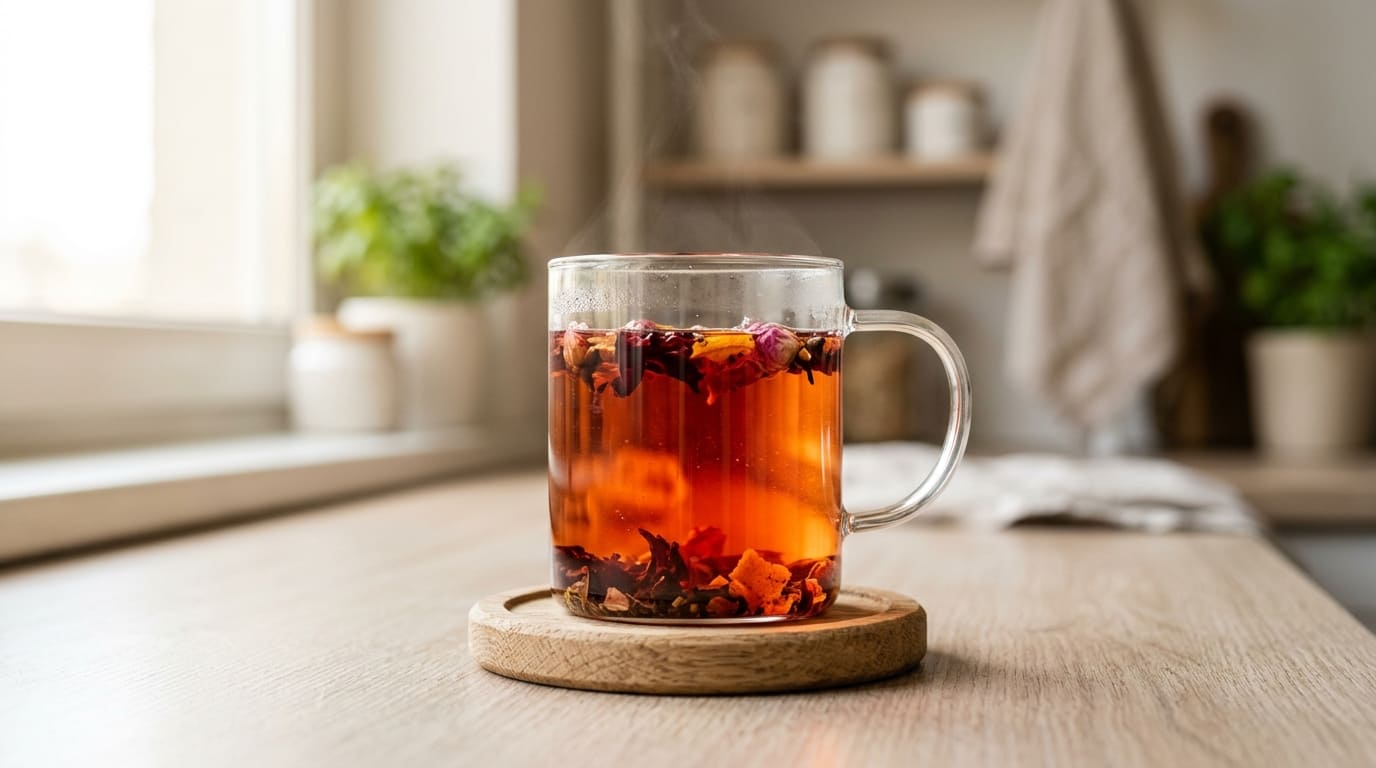
📷 Billions of particles per cup. The research is unambiguous.
The composting problem is unsettling enough. The steeping problem is something else entirely. In 2019, researchers at McGill University published a study in Environmental Science & Technology that nobody in the tea industry enjoyed reading: a single plastic tea bag steeped at 95°C releases approximately 11.6 billion microplastic and 3.1 billion nanoplastic particles into the resulting cup of tea.
That is not a typo. Billions — per bag, per cup, per day, for anyone who drinks tea regularly from conventional plastic-sealed bags.
McGill University (2019), Environmental Science & Technology: The landmark study — Plastic Teabags Release Billions of Microparticles — found 11.6 billion microplastics and 3.1 billion nanoplastics per bag at brewing temperature. It also documented behavioral abnormalities in water fleas (Daphnia magna) exposed to the released particles.
Autonomous University of Barcelona, Chemosphere (December 2024): UAB research characterized micro- and nanoplastics from several commercial bag types and demonstrated for the first time that these particles are absorbed by human intestinal cells in vitro — and are therefore capable of entering the bloodstream.
Journal of Hazardous Materials (2023): Found that PLA bioplastic tea bags — the supposedly “sustainable” ones — also release nanoplastic particles when steeped, with the potential to disrupt gut barrier function by harming intestinal epithelial cells.
Hernandez LM, et al. Environ Sci Technol. 2019;53(21):12300–12310 · UAB Mutagenesis Group, Chemosphere, December 2024 · J Hazard Mater, 2023
The honest caveat — and it matters — is that the long-term health effects of ingesting these particle quantities remain under active study. The field is moving fast. What science can say with confidence right now is that the particles are there, they enter cells, and the precautionary case for switching away from plastic-containing bags is already solid.
Cells
Nano-
plastics
None of this means you need to throw away your kettle and grow your own Camellia sinensis. It means that the bag — the packaging — is the problem. And the fix has been around for centuries.
5 Tea Bag Myths the Evidence Quietly Corrects
Marketing has been generous with the truth. Here are the five most persistent myths — and what the research actually says.
5 Sustainable Tea Alternatives — Ranked by Ease, Cost, and Beauty
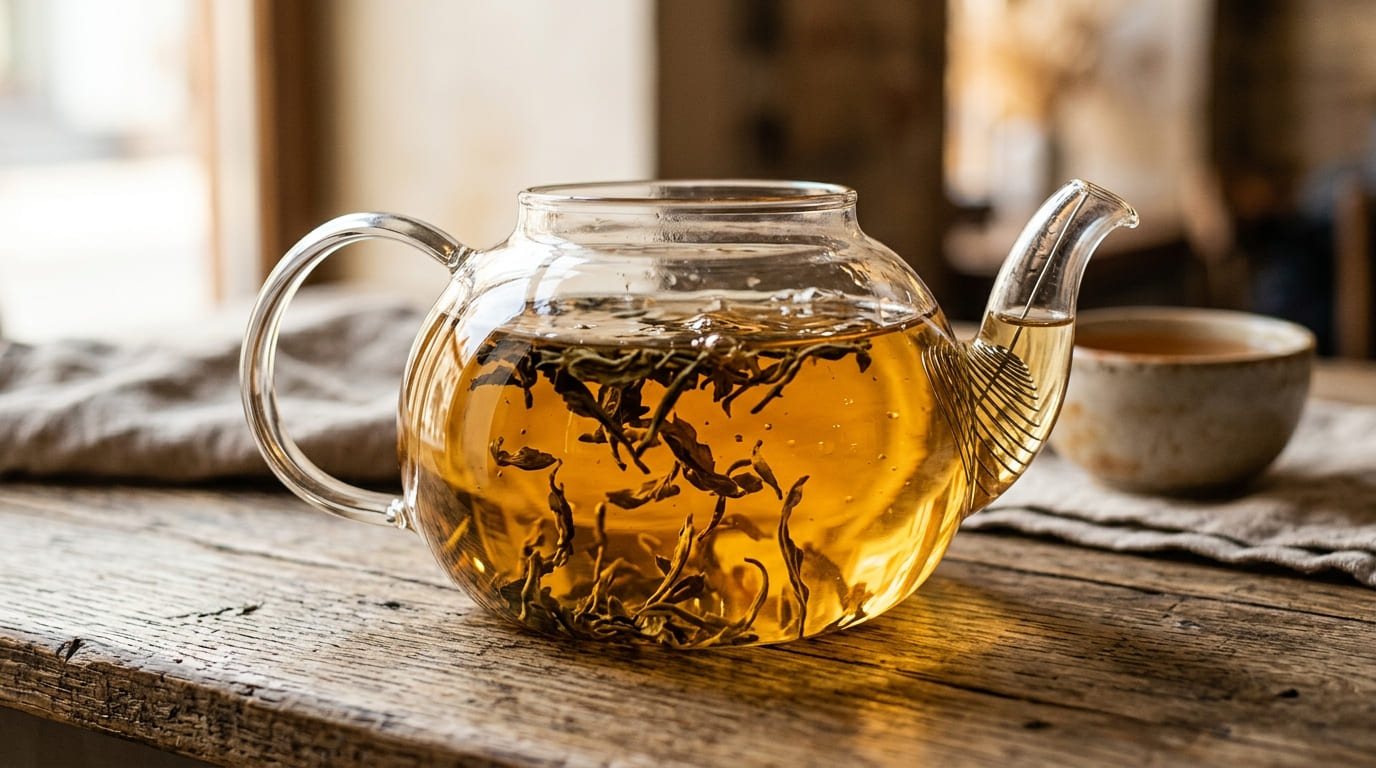
📷 A $5 mesh infuser. The simplest upgrade you’ll make this year.
The simplest and most cost-effective switch. A stainless-steel ball infuser or basket infuser clips onto any mug, holds a teaspoon of loose leaf, steeps the same way a bag does, and is rinsed and reused indefinitely. The tea itself — bought loose in tins or jars — is typically higher quality and lower cost per cup than bagged equivalents. The leaves go directly in the compost: no plastic, no confusion.
Any French press used for coffee works perfectly for loose-leaf tea. Add the leaves, pour hot water, steep, press — done. It makes tea for multiple people at once, produces richer flavour because the water circulates freely around the leaves, and the leaves compost cleanly afterwards. A surprisingly elegant solution hiding in plain sight.
Muslin or organic cotton drawstring bags replicate the bag experience exactly — fill, steep, remove — and wash after each use. They last years. A pack of 10 costs about £5 and pays for itself within a few weeks of use. The tea leaves inside go straight to compost.
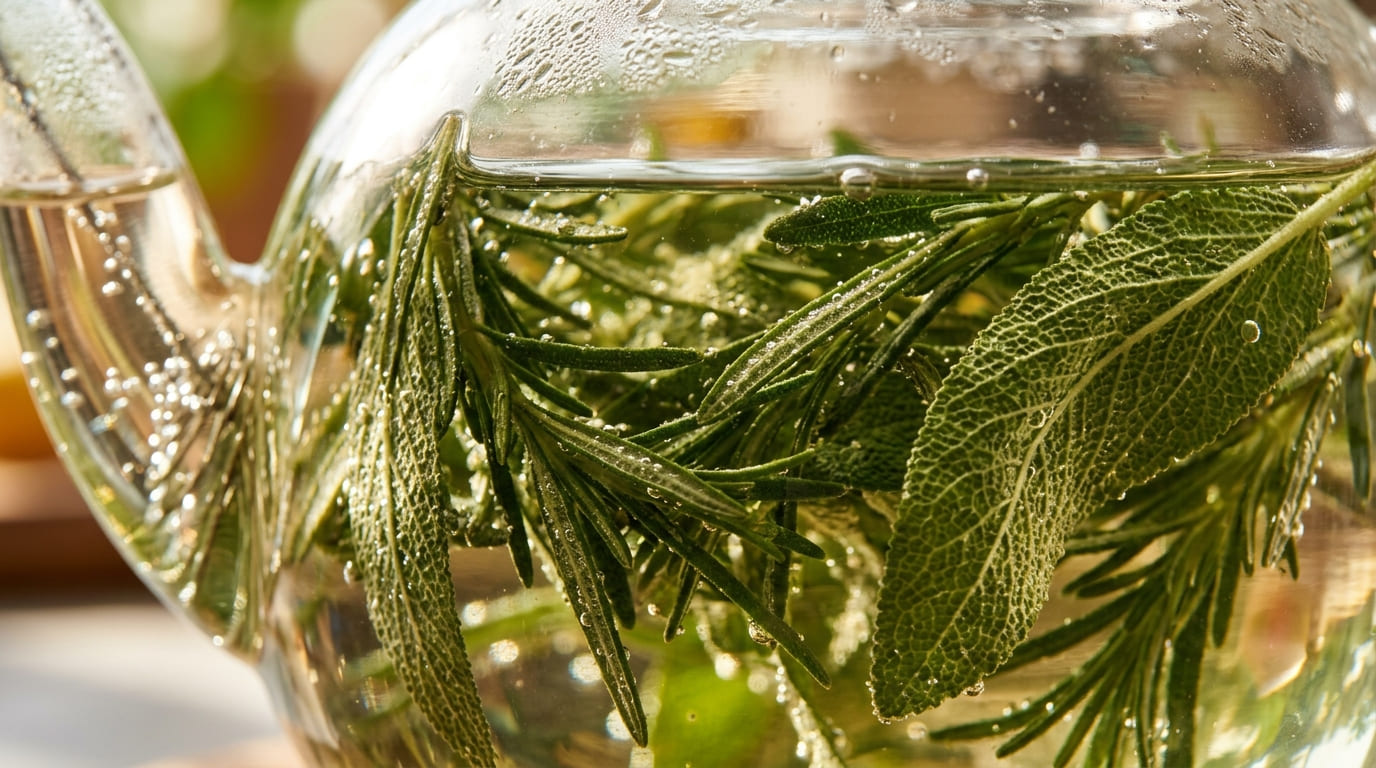
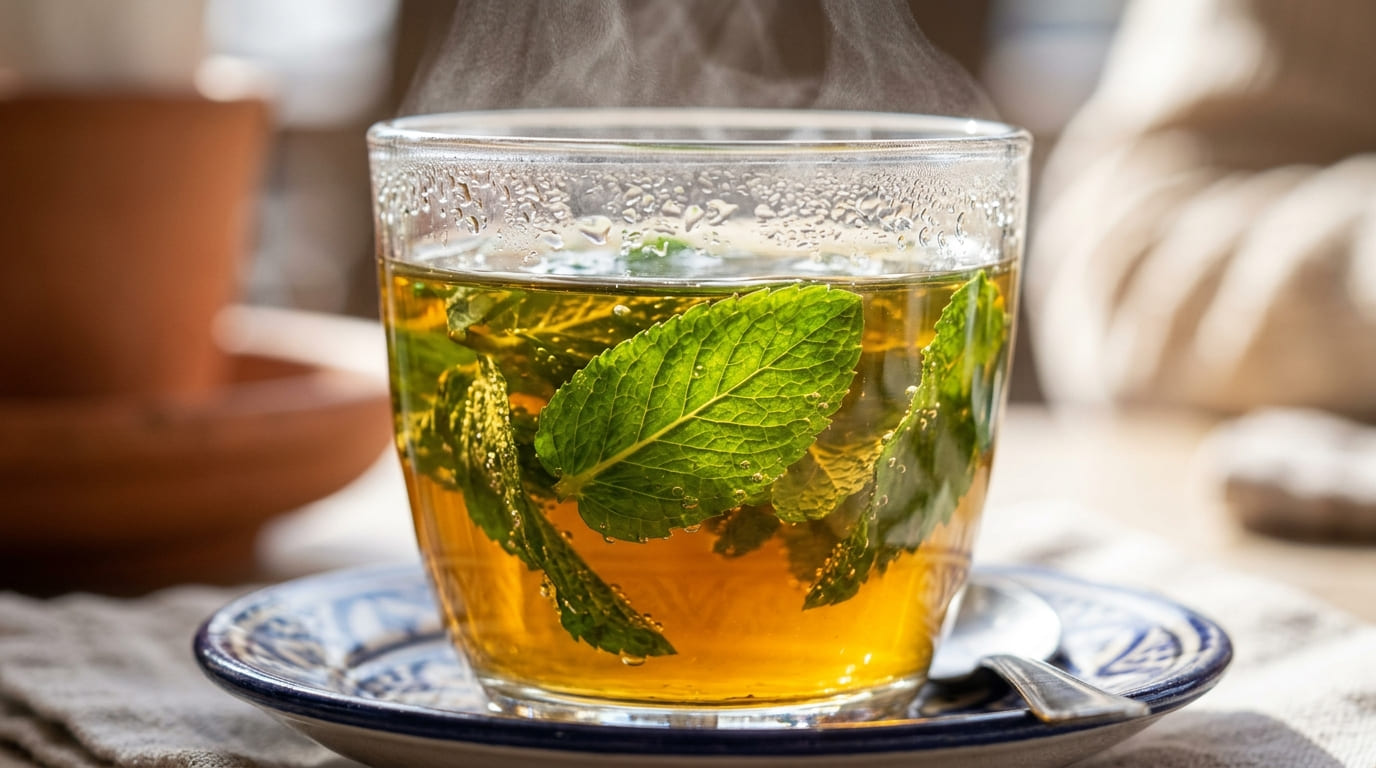
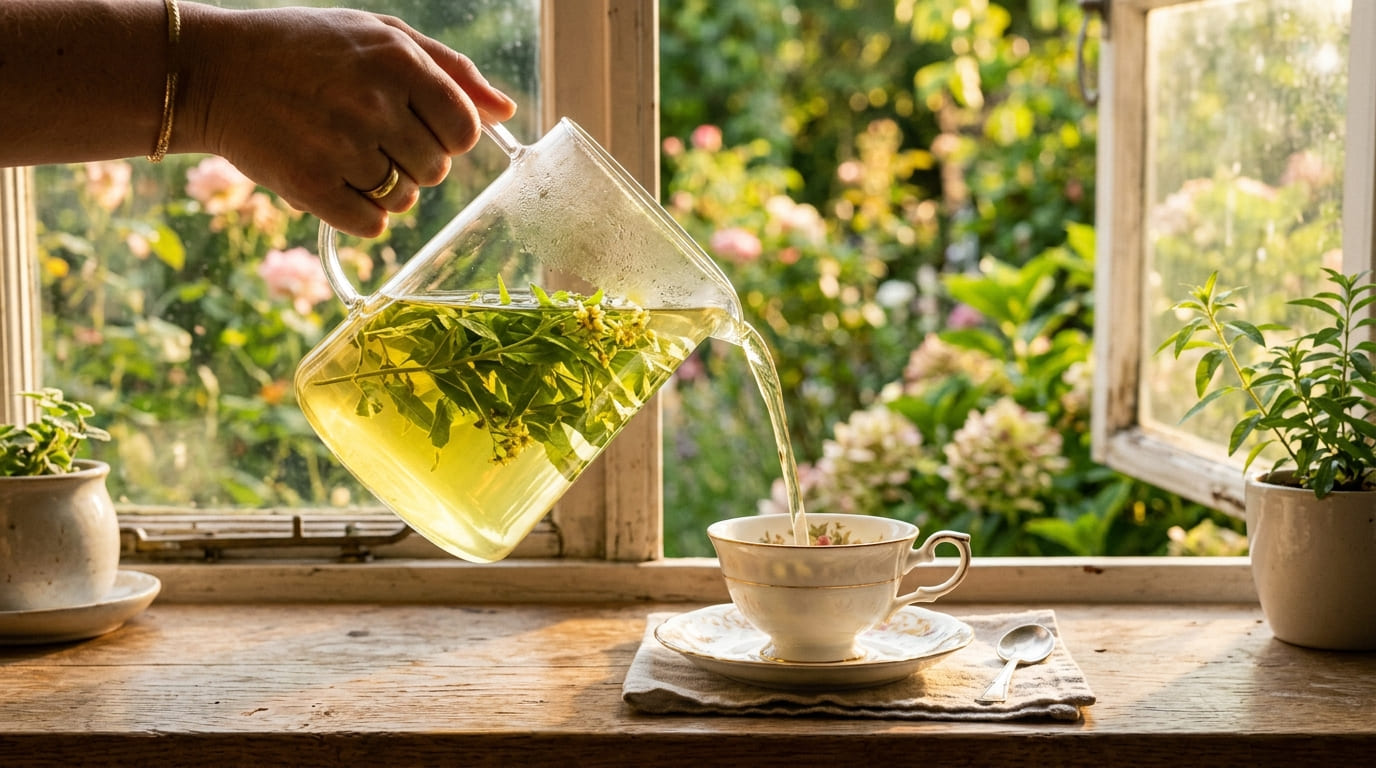
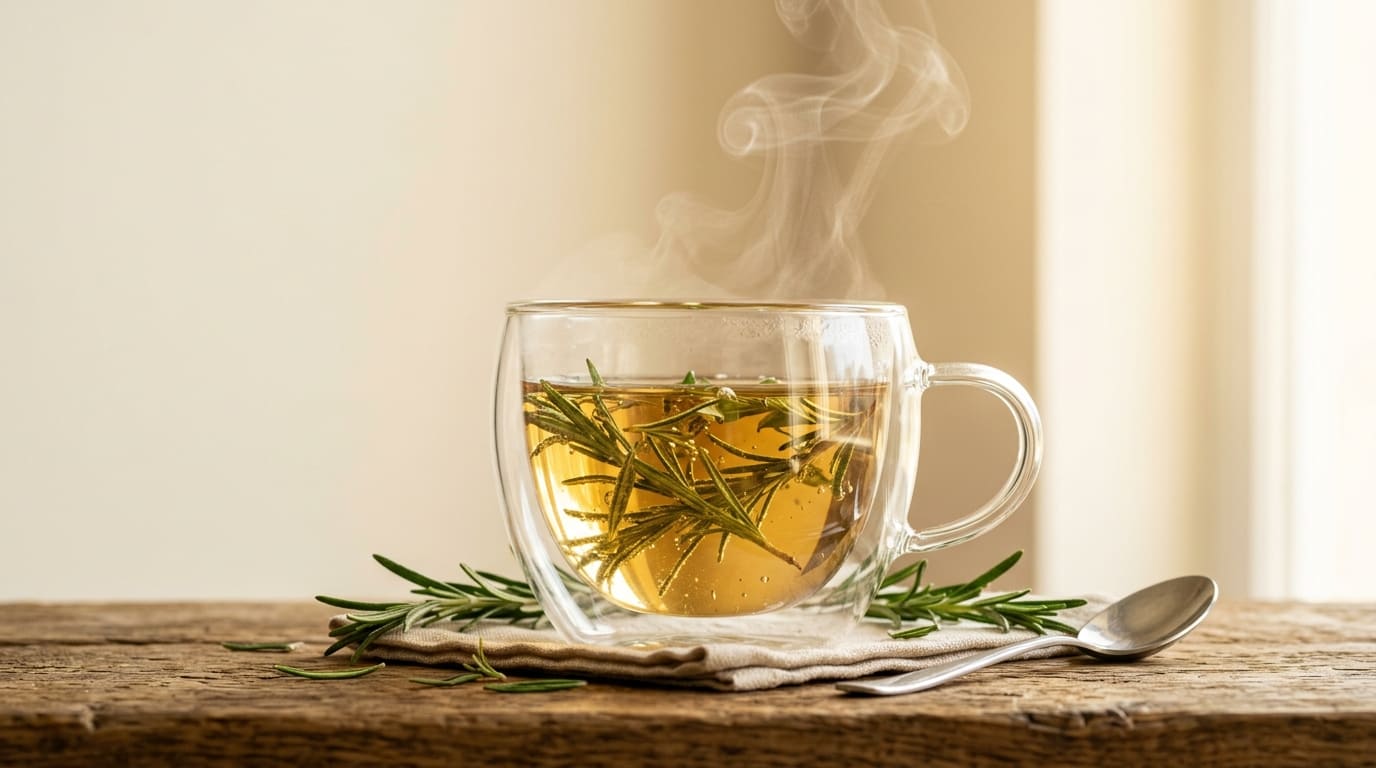
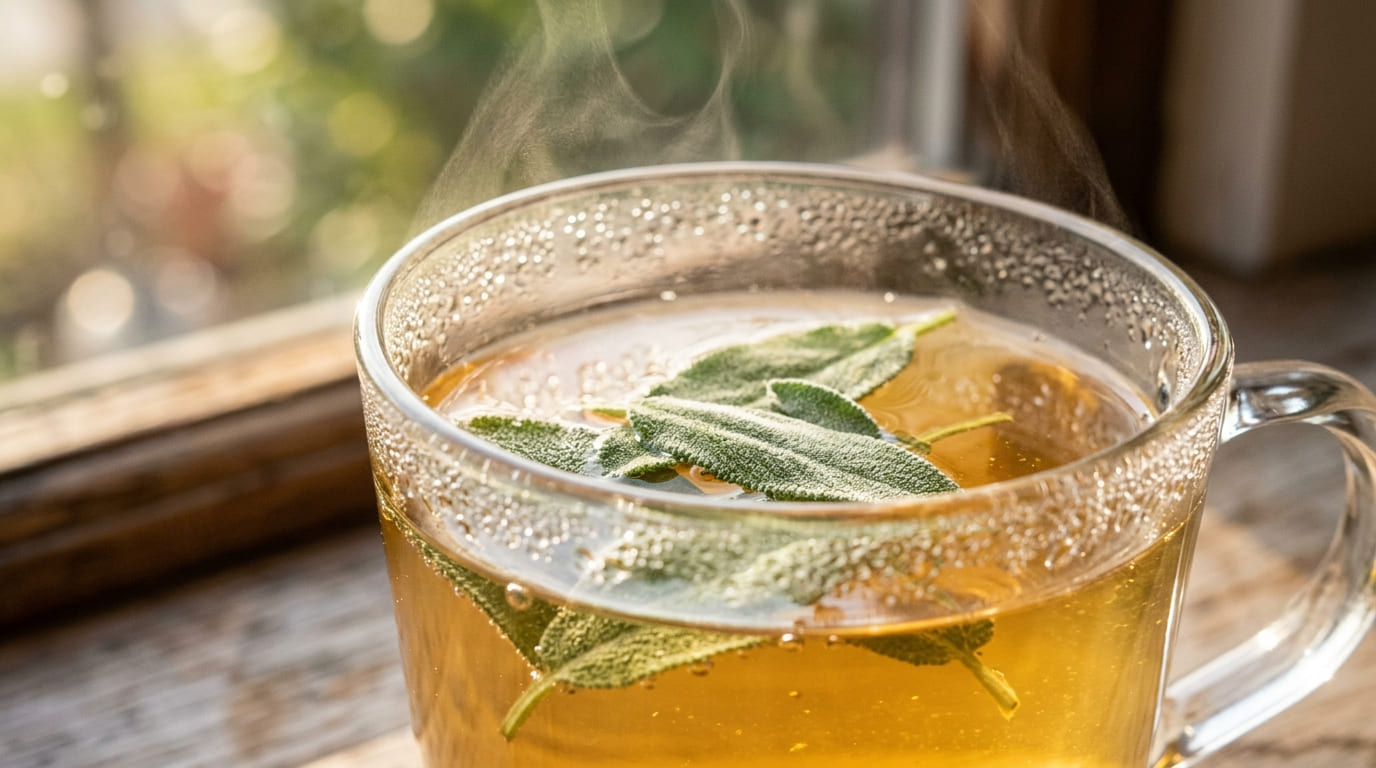
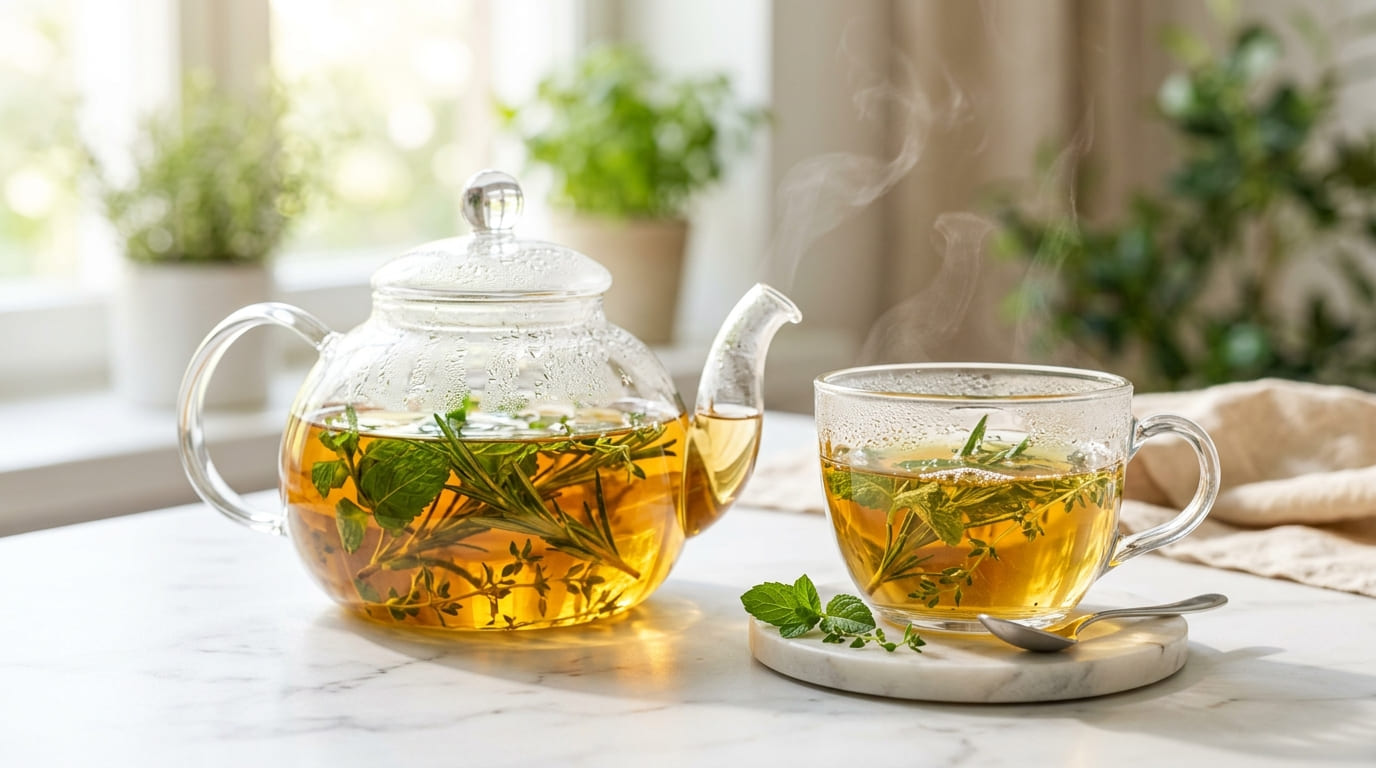
Pick fresh mint, lemon verbena, or rosemary directly from a pot on the windowsill. Add to a teapot or mug, pour over water just off the boil, steep three to five minutes. The flavour is incomparably alive compared to any dried or bagged version. The used plant material composts perfectly. This is how most of the world has made herbal tea for millennia.
Buying loose-leaf tea in bulk — from a tea specialist, an Asian grocery, or an online loose-leaf supplier — and storing it in a sealed tin or glass jar dramatically reduces both cost and packaging waste. A 250g tin of quality loose-leaf Assam can make 80–100 cups. The equivalent in bagged tea produces 80–100 small plastic-containing sachets going to landfill.
Traditional Moroccan Mint Tea — The Tea That Never Needed a Bag
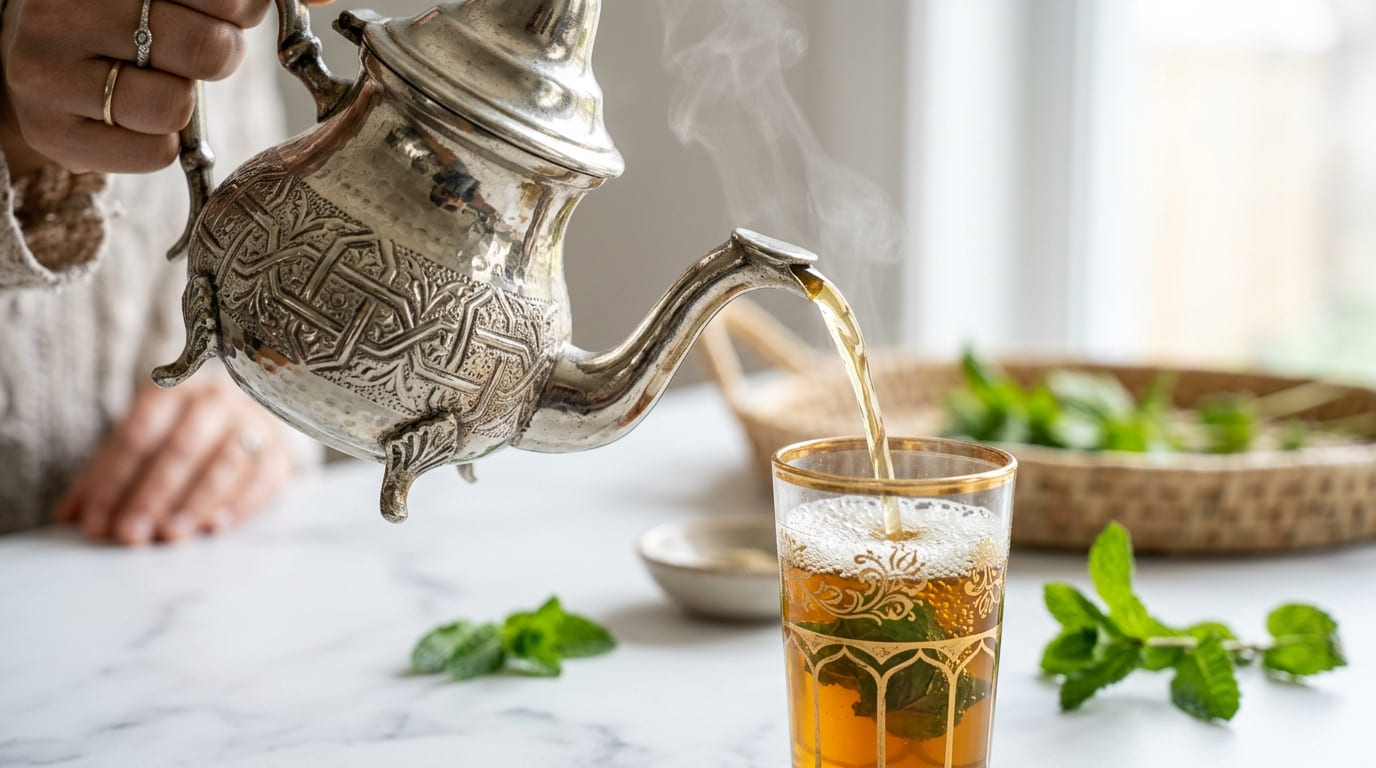
📷 The high pour: aerating the tea, building the foam, announcing the ritual.
In Morocco, tea is not a drink. It is a declaration. When a guest arrives — expected or not — the pot goes on. It is an act of care so fundamental to Moroccan culture that refusing to offer tea is its own kind of social statement, and accepting it is its own kind of gratitude.
The tea itself is atay — gunpowder green tea, packed fresh mint, and an amount of sugar that is not optional if you want to do it traditionally, though modern variations pull back considerably. The pot is filled, the tea is poured high — that long, arching stream aerates the liquid and builds the foam — and the first glass is usually tasted and poured back to blend the flavors. Three glasses are offered. Each, traditionally, carries its own meaning.
There is no bag in any of this. The tea leaves are loose. The mint is a fresh handful from the garden or the market that morning. The spent leaves and mint go directly onto the garden or into compost. It is, quite by accident — or rather by centuries of unselfconscious wisdom — a perfectly zero-waste brewing method.
The thing about Moroccan mint tea is that it tastes better than anything a bag has ever produced. That is not a minor point. If sustainable habits require genuine sacrifice, people abandon them. This one requires none.
10 Homemade Teas Worth Brewing
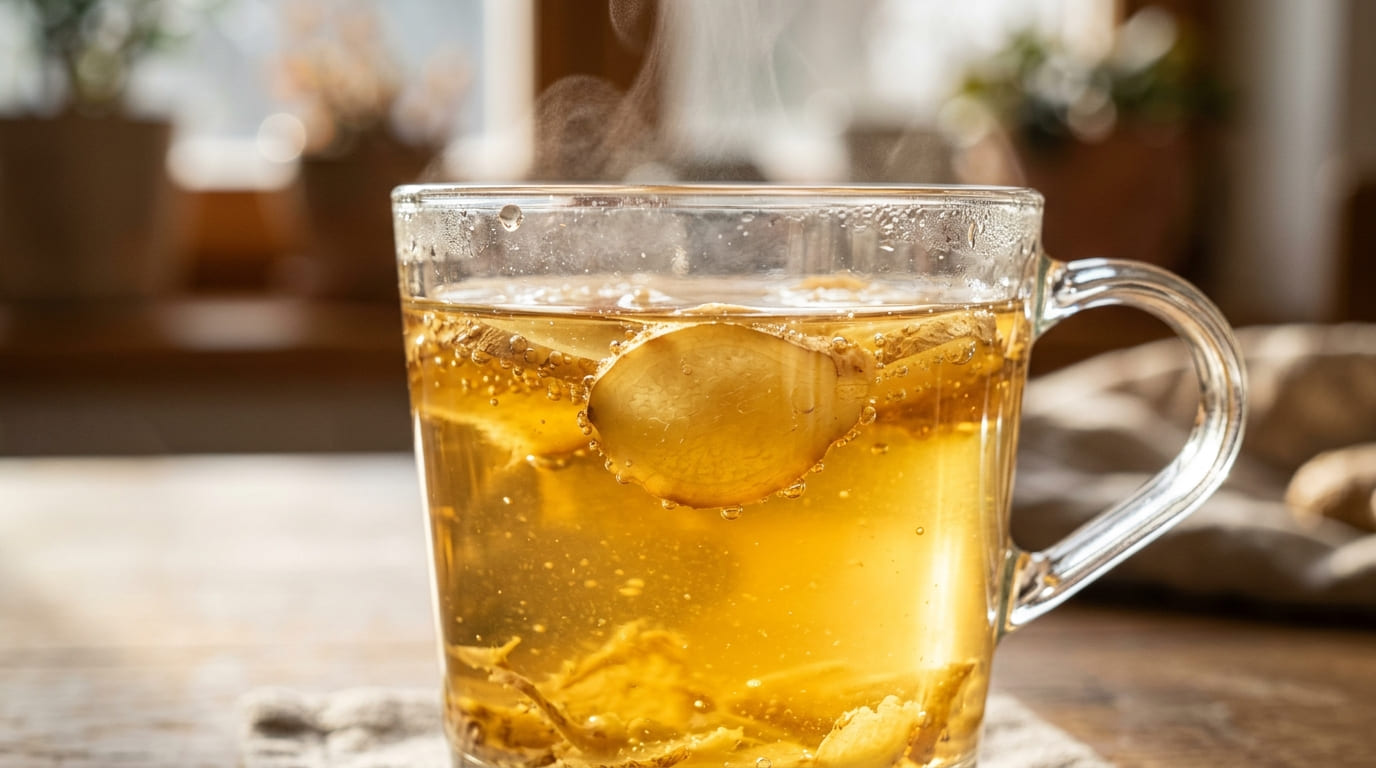
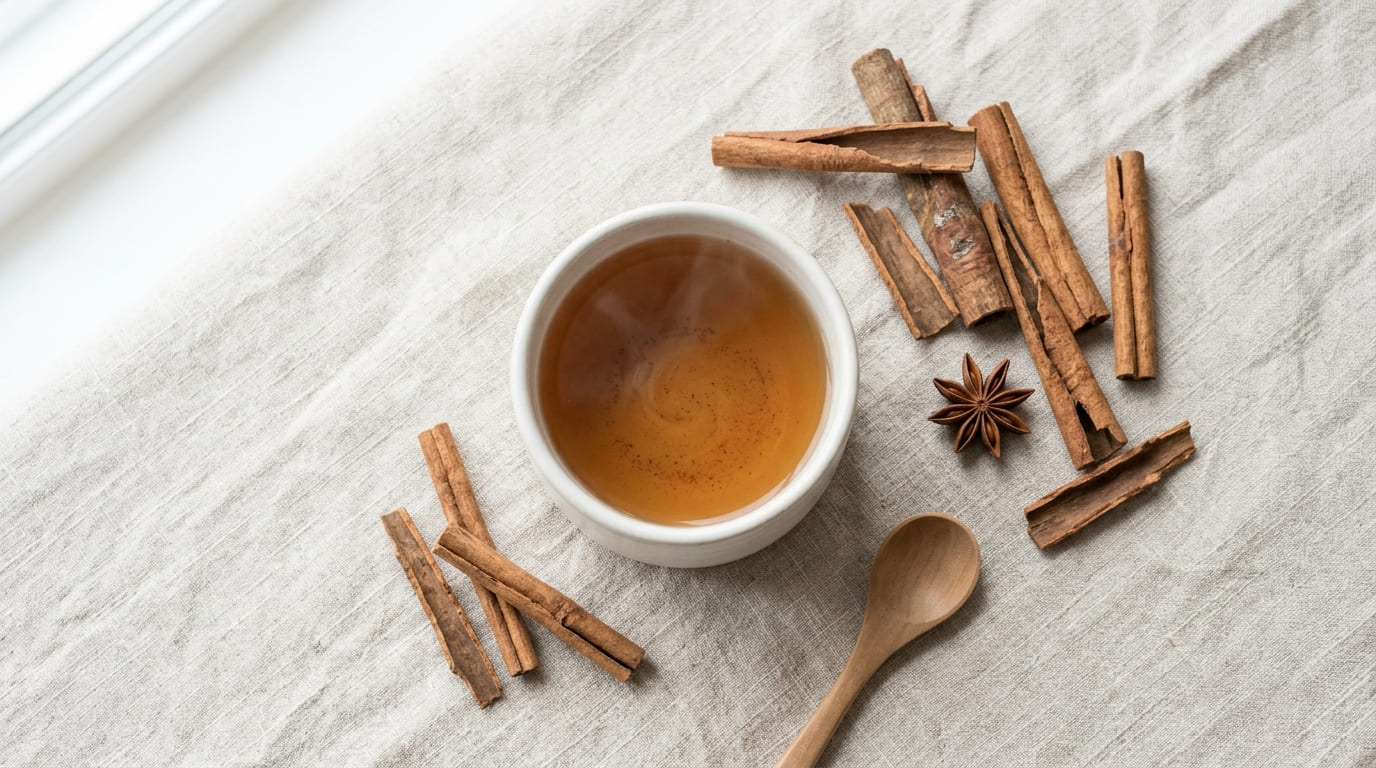
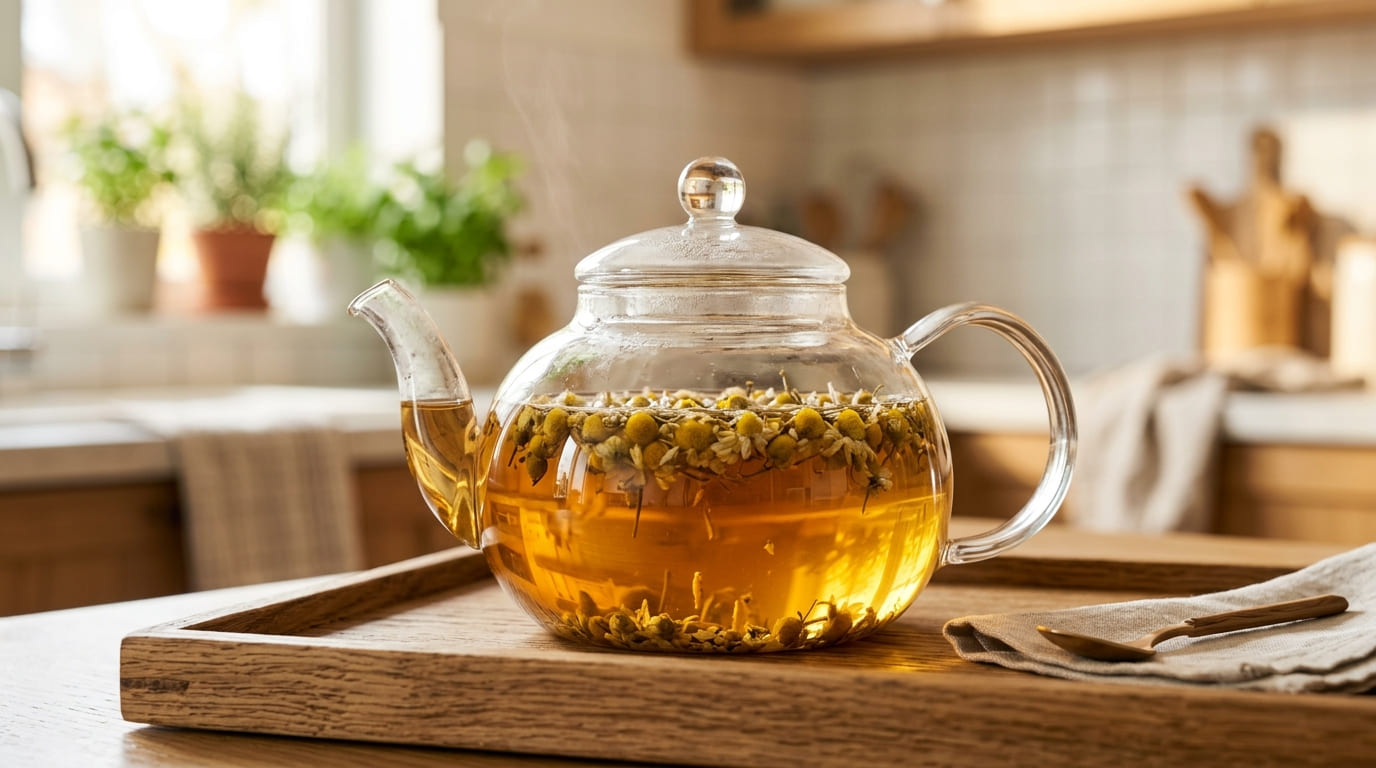
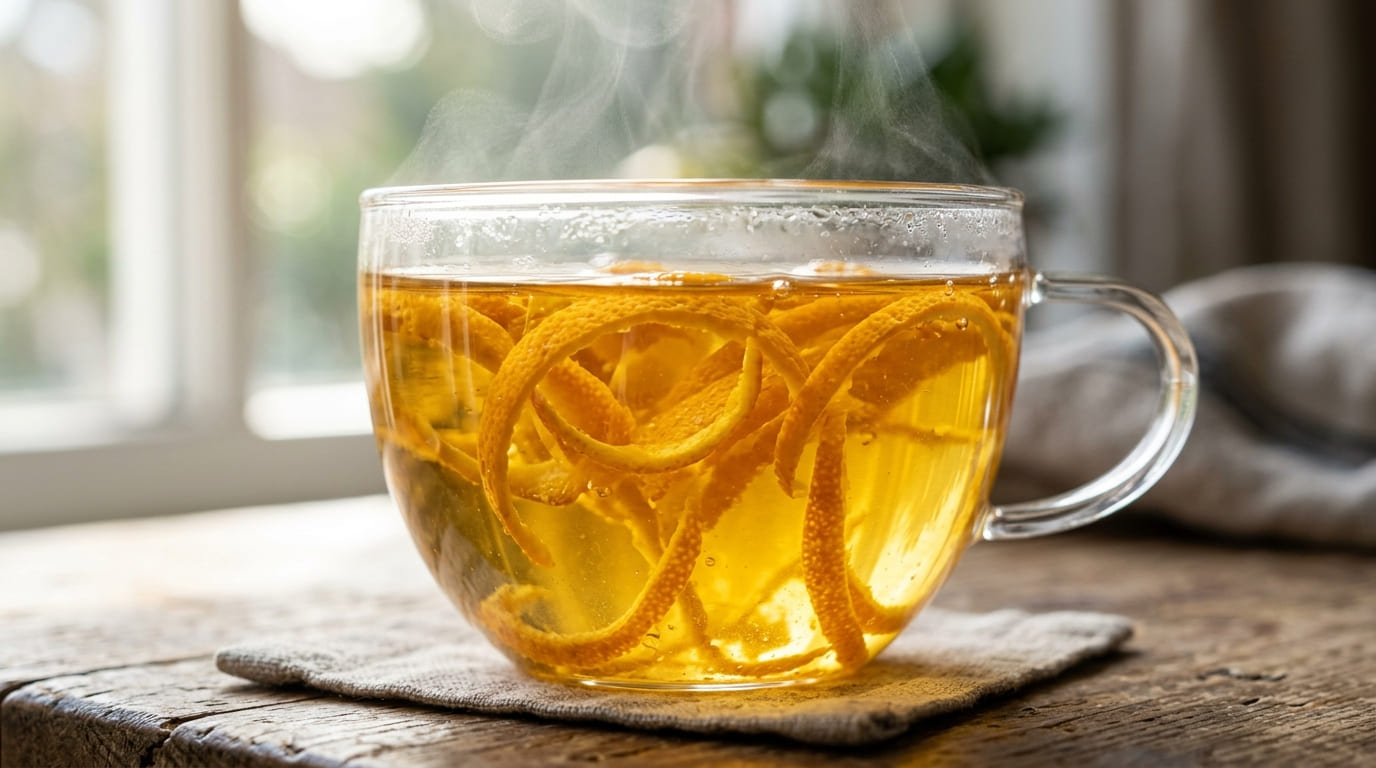
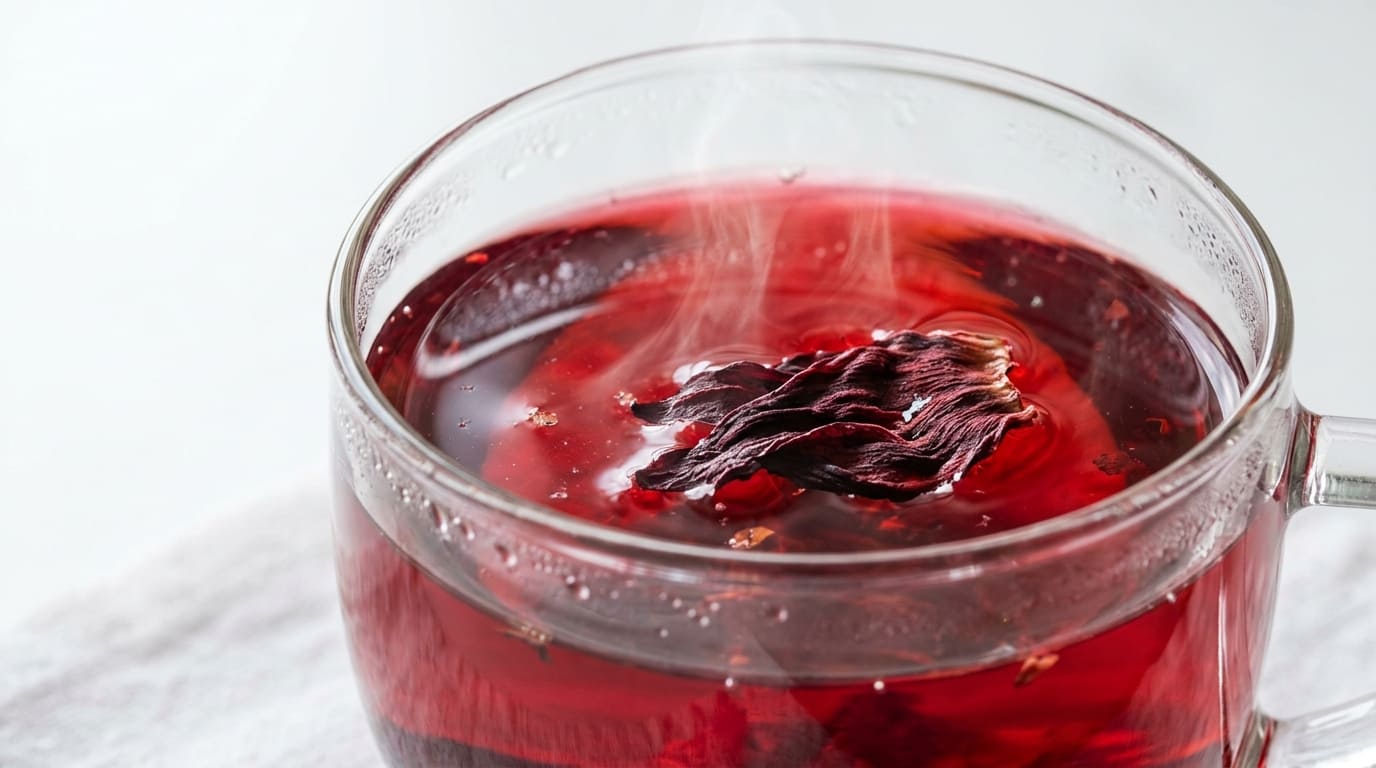
All made without bags. All better for compost. All better for you. Instructions throughout follow the same simple principle: fresh or dried herbs, hot water, three to five minutes.
How to Compost Tea Correctly
Tea Bag FAQ
The tea bag is about a hundred years old. Before it existed, people simply put leaves in water and poured through a strainer. They threw the leaves on the garden, where they nourished the soil that would eventually produce more herbs and vegetables. Nothing in that process needed improving — and nothing was improved when it was enclosed in paper and plastic and sold as convenience.
The Moroccan grandmother pouring her high arc of mint tea into small glasses doesn’t think of herself as a sustainability advocate. She is simply making tea the way tea has always been made — with fresh plants, with care, with the understanding that the garden gives and the garden takes back.
Perhaps the most honest thing to say is this: the compost heap was right to be confused. The tea bag never really belonged there. The tea did. And the tea — loose, fresh, unhurried — still does.