Ditch the Espresso:
Why Chilled Einspänner Coffee Is the 2026 Summer Obsession
A 19th-century coachman’s trick for keeping coffee hot just got flipped, iced, and filmed for TikTok. Here’s the sensory science of temperature contrast, three centuries of Vienna coffeehouse history, and the honest data behind the drink Seoul rebuilt from the glass up.

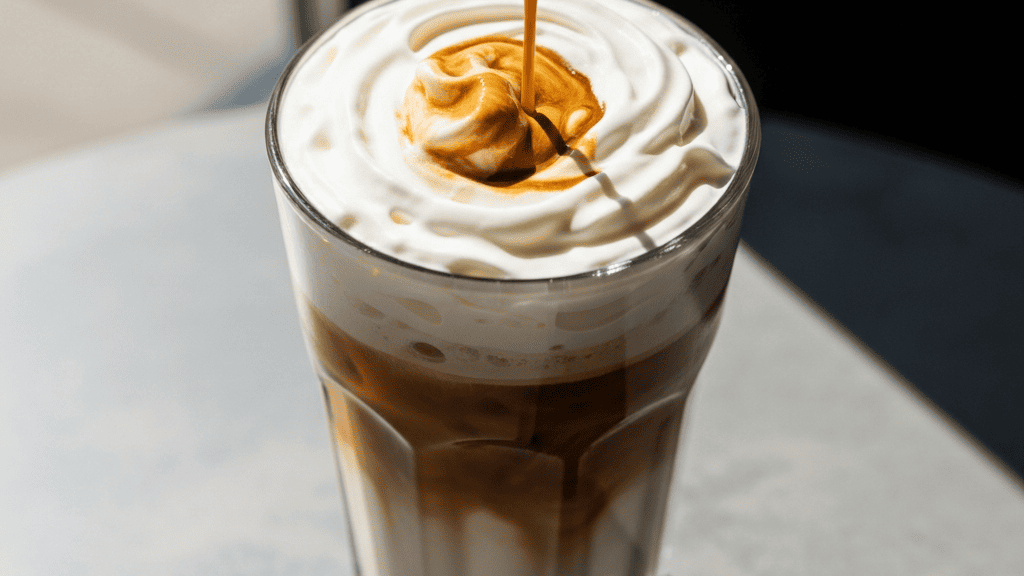
Somewhere in Seoul right now, someone is pouring two shots of espresso in a slow spiral over a thick pillow of cream, filming it so the layers hold for the first three seconds of the video. Nobody stirs it. That’s not a garnish choice. It’s the entire point of the drink.
The drink is called an Einspänner — German for “single-horse carriage” — and it was never designed to be beautiful. It was designed to survive a Viennese winter in the hands of a coachman who only had one free hand. Somehow, 150 years later, a coffee invented to stay warm has become the internet’s favorite way to drink something cold.
This article separates the three things actually driving the obsession — the sensory science of temperature contrast, the three centuries of Vienna coffeehouse culture the trend is quietly standing on, and the aesthetic engine that turned it into a TikTok genre — with honest caveats and a myth-busting section the “cold foam” marketing skips.
What an Einspänner Actually Is — And Why It Was Never Meant to Be Pretty
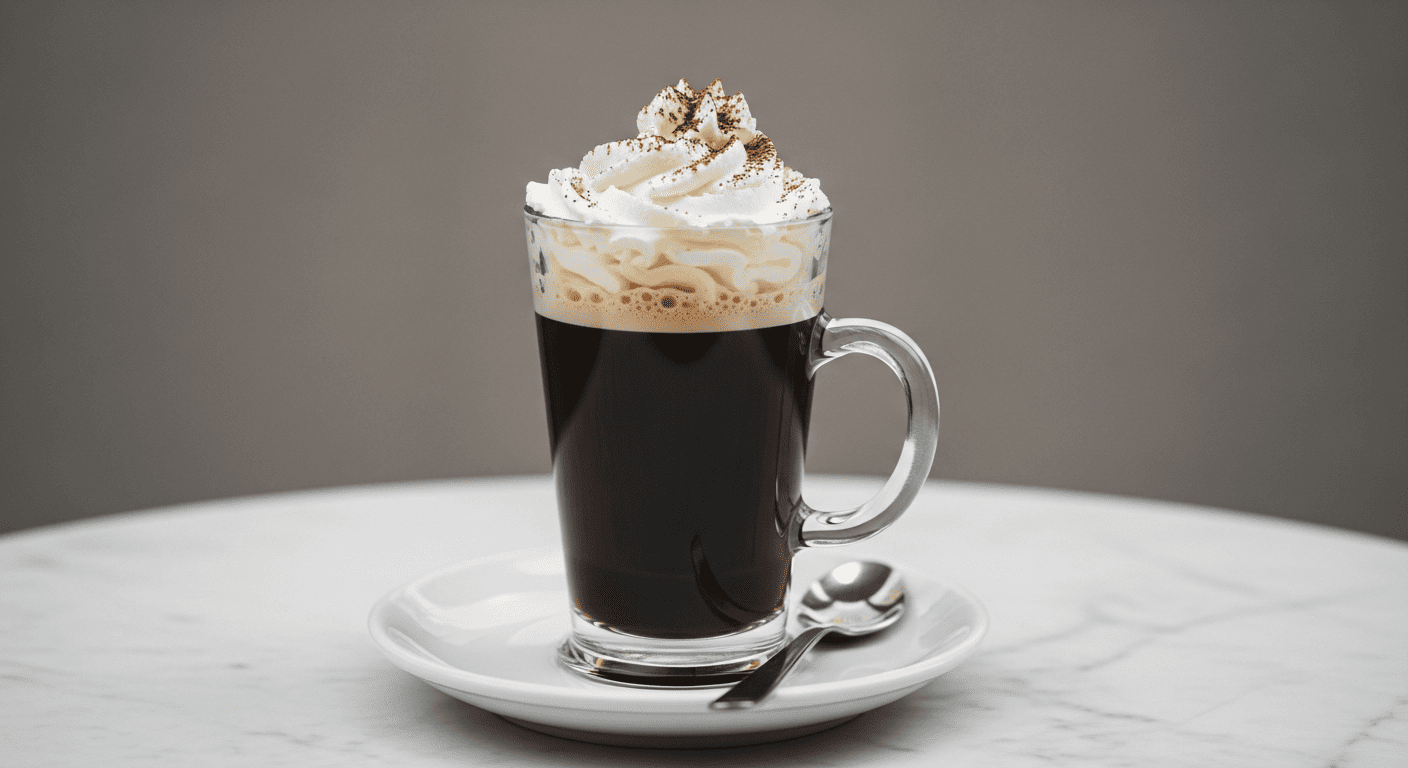
The original build: two shots, one glass, one very practical dome of cream.
By the 19th century, single-horse cabs — Einspänner in German — were everywhere on Vienna’s streets, and the men driving them had a problem. They needed coffee they could hold in one gloved hand while the other held the reins, in weather that would turn an open cup cold in minutes.
The fix was a thick cap of whipped cream, piled on top of strong black coffee and left completely unstirred. Cream is a poor conductor of heat — it sits on top and acts like a lid, trapping warmth underneath for far longer than a bare cup would hold it. A coachman could sip through the cream in stops and starts across an entire shift, and the coffee at the bottom would still be hot an hour later.
That’s the detail most viral recreations skip: an Einspänner isn’t a latte with a fancy top. There’s no milk in the coffee itself — just espresso (or strong black coffee), served in a tall glass with a handle, capped with cream and never stirred together. The moment you mix it, you’ve made a different drink.
A traditional Einspänner runs close to 1:1 coffee to cream by volume — a double shot of espresso (roughly 60ml) under an equally generous cap of whipped cream. Two espresso shots put the caffeine around 126mg, in line with a strong cup of drip coffee, before the cream adds a single milligram.
The Chemistry of Chill — What Temperature Contrast Actually Does
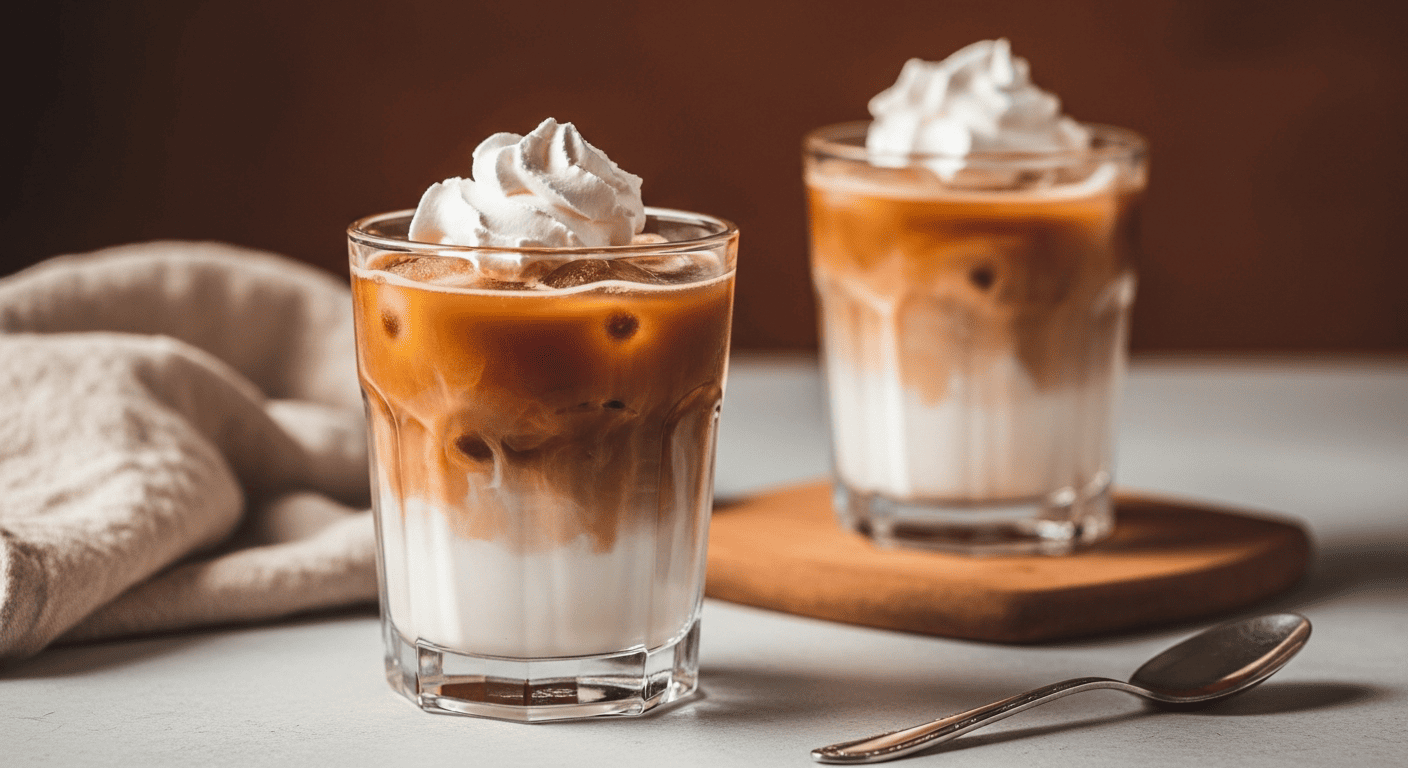
The swirl is chemistry, not garnish — fat solidifies cold and melts warm, changing texture as you drink.
Flip the Einspänner cold and something interesting happens: the cream stops insulating and starts contrasting. Cold, barely-sweet cream sits on top of coffee that’s now iced instead of hot, and the two never fully combine unless you make them. Every sip moves through a different texture — cold and thick, then looser and more coffee-forward as the cream folds in.
A 2020 study in Frontiers in Psychology (Tohoku University) found that people reliably link the concept of warmth with tastiness, healthfulness, and saltiness, while coolness gets linked instead to sourness and freshness — a well-documented mental shortcut researchers call temperature-taste correspondence. When the same team tested it physically, having people wear a warm or cold pad while drinking, physical warmth measurably increased how healthy and buyable a warm Japanese tea seemed.
Here’s the honest part: the same experiment run on black coffee found no significant effect of physical warmth on any taste rating. The temperature-contrast idea is real and well-replicated for how people talk and think about drinks in general — it just hasn’t been shown to move the needle on coffee specifically, at least not yet, in a study this size.
Motoki K, et al. Front. Psychol. 2020;11:571852. DOI: 10.3389/fpsyg.2020.571852
What’s more settled is the texture science. Milk fat behaves differently at different temperatures — it firms up cold and loosens as it warms, which is why cold whipped cream holds its shape on top of iced coffee far longer than it would on a hot cup. That structural stability is exactly what makes the unstirred layers possible, and exactly what a spoonful of aerated non-dairy “cold foam” struggles to replicate, since it’s built from air and stabilizers rather than real butterfat.
A small subset of people are documented “thermal tasters” — their tongues register warmth or cold as faint additional taste sensations, not just temperature. For that group, a drink built on hot-versus-cold or cold-versus-cold contrast genuinely does taste more complex, not just feel that way.
Vienna vs. Seoul — Same Drink, Rebuilt From the Glass Up
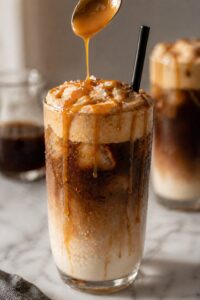
The classic Viennese build is coffee-first: espresso poured into the glass, cream added last, cream on top and staying there. The version that took over TikTok flips the whole architecture. Milk and ice go in first, a thick, aerated cream layer sits above that, and the espresso is poured over the very top in a slow spiral so it sinks in visible streaks — the moment the whole drink is filmed for.
It’s a genuinely different drink, closer in spirit to a layered iced latte than the 19th-century original, and purists will tell you it isn’t a “real” Einspänner at all. But the underlying logic — cream cap, no stirring, sip through the layers — is the same instinct wearing a different outfit.
The caffeine math matters more than people assume. A classic Einspänner’s double shot lands close to a strong cup of drip coffee. Cold brew concentrate, which the Korean-style version sometimes substitutes for espresso, is typically brewed far more concentrated and can run meaningfully higher per serving — worth knowing if you’re building one at home and reaching for whatever’s in the fridge.
300 Years in a Coffee Glass — The UNESCO-Listed Culture the Trend Never Mentions
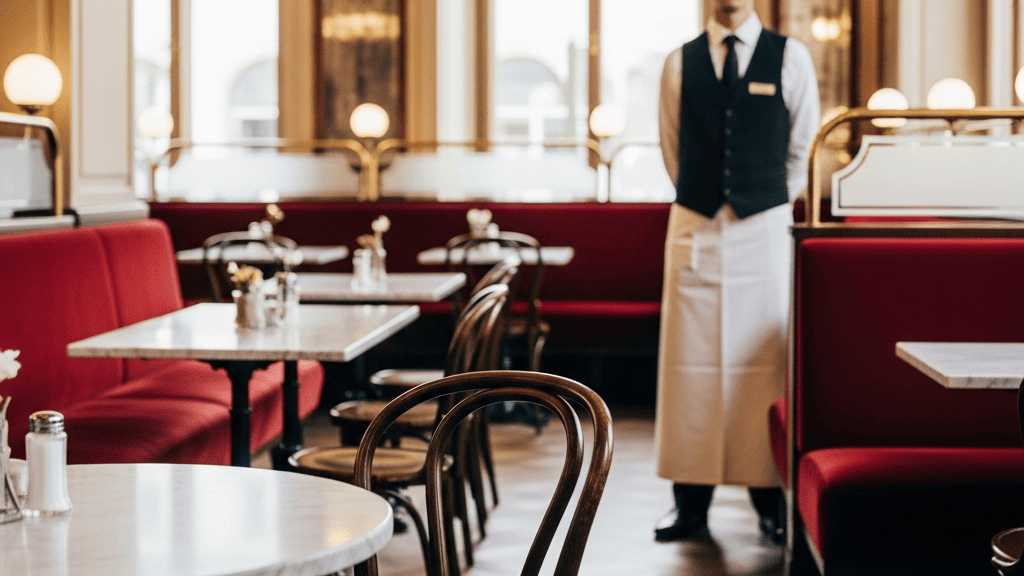
The Einspänner is a footnote in a much older institution — the Viennese coffeehouse itself.
Coffee reached Vienna after the Ottoman siege of the city was broken in 1683. Popular legend credits a Polish officer named Kolschitzky with opening the first coffeehouse using beans left behind by the retreating army — a story still commemorated with a street and a statue in the city’s 4th district. City of Vienna’s own historical record credits the actual first coffeehouse to an Armenian court servant known as Diodato instead — a reminder that even the drink’s founding myth has a more complicated real story underneath it.
What followed was slow. Newspapers arrived in coffeehouses in 1720. Napoleon’s trade blockade nearly bankrupted them in the early 1800s. It wasn’t until after the 1814–15 Congress of Vienna, and especially through the Biedermeier era that followed, that the coffeehouse became what the city is now famous for — velvet booths, marble tables, chandeliers, and a culture of sitting for hours over one cup. The Einspänner, as a named drink tied to the city’s cab drivers, belongs to this later 19th-century boom, not to the drink’s 1683 origin point.
In 2011, Viennese coffeehouse culture was added to Austria’s national inventory of UNESCO Intangible Cultural Heritage — recognized not for any single drink, but for the whole social ritual: marble tables, unhurried service, and a coffeehouse understood as a place you rent by the hour for the price of one cup.
That’s worth sitting with for a second. The drink that’s currently optimized for a fifteen-second video came out of a culture whose entire defining feature was the opposite of speed — a coffeehouse’s whole reputation rested on how long you were welcome to stay.
Why Cream-Top Coffee Owns Every Feed — The Psychology of the Pour
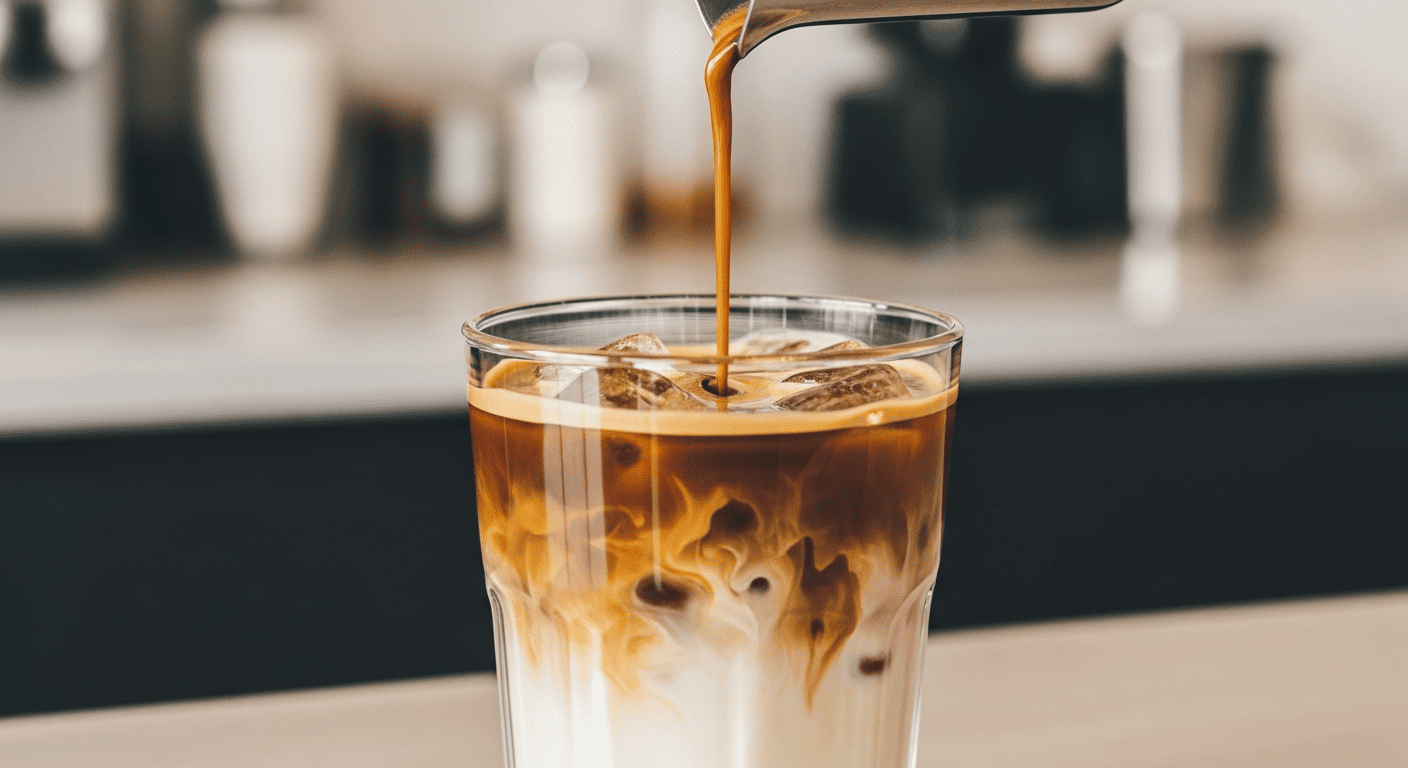
The pour is the whole video — no editing required.
Strip away the temperature science entirely and the Einspänner would still be winning, because the pour is a self-contained piece of content. Dark coffee sinking through pale cream in visible streaks is a two-second clip that needs no cuts, no music sync, no editing — the drink does the work.
There’s also a real texture story underneath the trend, and it isn’t unique to coffee. The same craving for thick, glossy, unstirred toppings has been building across the whole beverage category — the exact impulse behind the wider matcha and whisked-drink obsession that’s been dominating café menus. Cream-top coffee just happens to be the most dramatic version of it, since real dairy fat holds a sharper, glossier line than milk foam ever will.
Per consumer-trend analytics firm Spate, search and social interest in cold foam climbed roughly 73% year-over-year, with TikTok driving growth of more than 100% on its own — and the trend is forecast to keep climbing into 2026 rather than fade. Underneath that, the global cold brew coffee market is projected to roughly triple from about $3.75 billion in 2026 to $12.73 billion by 2034, and industry survey data cited in that same report found over 62% of U.S. drinkers aged 18–34 now drink cold brew regularly.
Spate, Cold Foam Trend Report, 2025 · Straits Research, Cold Brew Coffee Market Analysis, 2026–2034
Caffeine Per Serving — Visualized
Typical caffeine content per standard serving. Einspänner shown as a double espresso shot, no milk.
Note: Caffeine varies with bean, roast, and brew strength. Figures are typical midpoints for illustrative comparison only.
What the Evidence Actually Supports
Cut through the “cold foam is revolutionary” marketing, and four honest claims survive contact with the research — the same four that explain why this trend has staying power instead of fading by September.
5 Einspänner Claims the Evidence Quietly Corrects
The cream-top boom has produced beautiful drinks and a fair amount of loose history. These are the five claims most worth correcting.
Chilled Einspänner FAQ
So why is everyone suddenly obsessed with a coffee invented for coachmen in overcoats? Because the physics of a cream cap turned out to work just as well in reverse. What kept a 19th-century driver warm now keeps a 21st-century iced coffee interesting, sip after sip, layer after layer.
The coachmen who built this drink weren’t trying to make anything beautiful. They just wanted their coffee to still be warm an hour into a cold shift. Somewhere between Vienna’s marble-topped coffeehouses and a phone propped up on a café counter in Seoul, practical became photogenic — and, this time, the drink actually earned it.