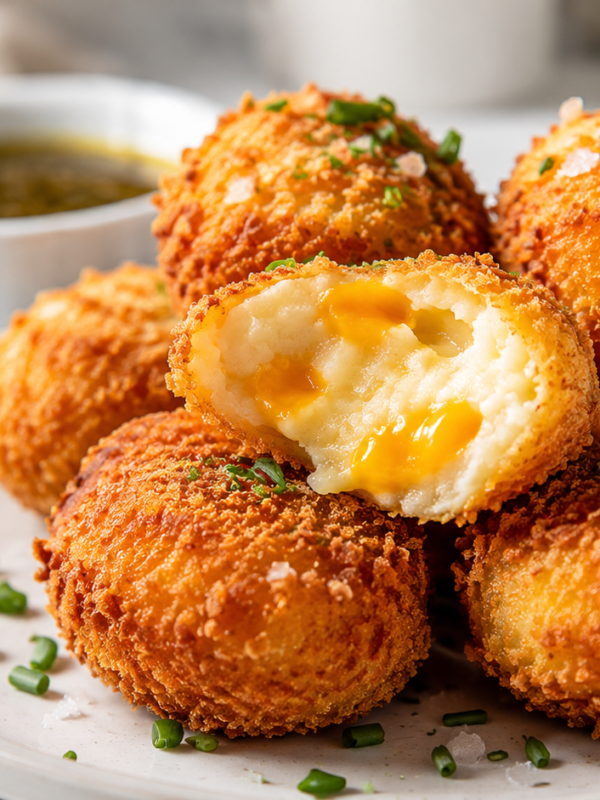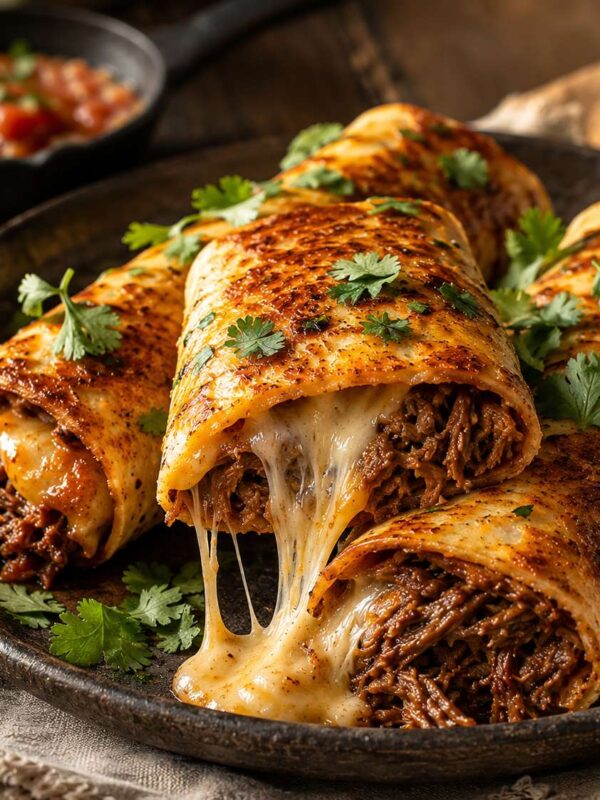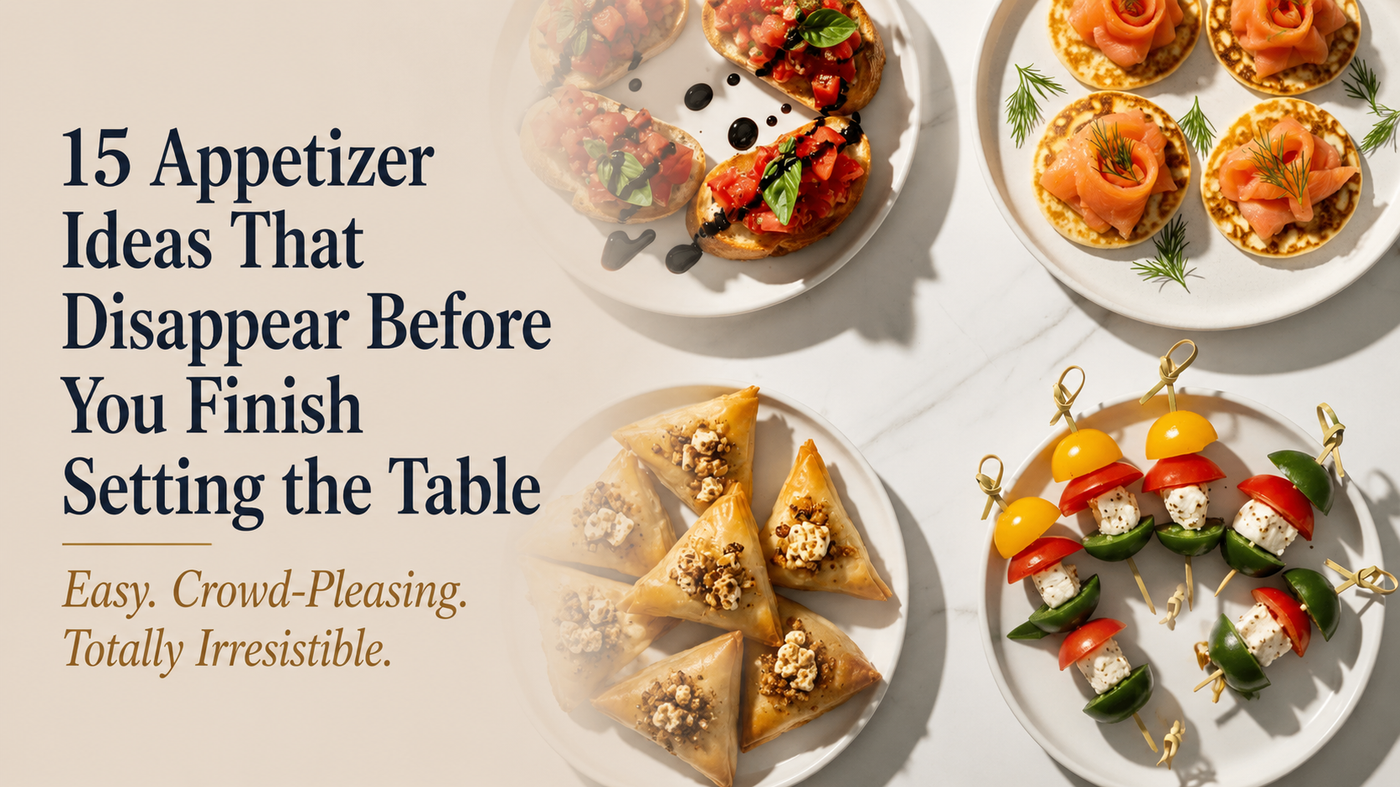
15 Appetizer Ideas That
Disappear Before You Finish Setting the Table
Why does one tray always empty first? The psychology, the 400-year history, and 15 recipes sorted by exactly how much work they make you do.

At every party, there is one plate that never makes it to hour two. Not the entrée. Not dessert. The little bowl of something salty near the drinks table, the tray that keeps getting refilled from the kitchen, the board that people circle back to twice.
Appetizers do something a full meal can’t. They let people eat while standing, talking, and holding a drink at the same time — no seat, no cutlery, no pause in the conversation. That’s not an accident of modern hosting. It’s the entire design brief, and it’s roughly 400 years old.
Below: the psychology of why a good spread disappears fast, which mood fits which gathering, fifteen appetizer ideas sorted into four honest categories, a make-ahead timing chart, and the questions every host actually asks the night before.
The 4 Things Every Great Spread Has in Common
Fifteen recipes is a lot to remember. It isn’t a cuisine — it’s a formula, and once you see it, you can build a strong table from almost any five recipes below.
4 Appetizer Moods — Which One Are You Hosting?
The four categories below aren’t just cooking methods. Each one carries a different social register. Match the mood to the gathering before you match the recipe.
The Oven Does the Work — 4 Appetizers You Mostly Leave Alone
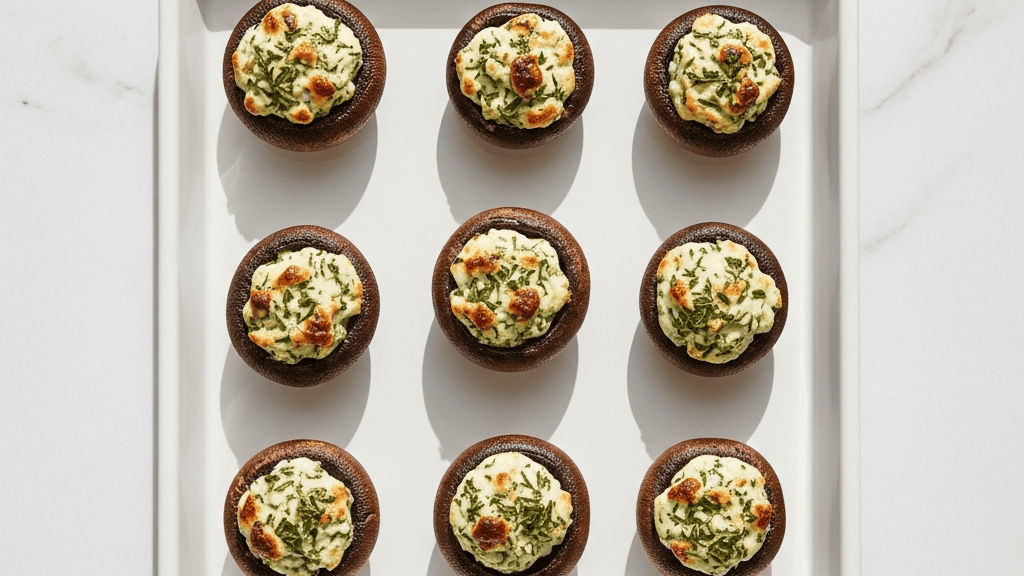
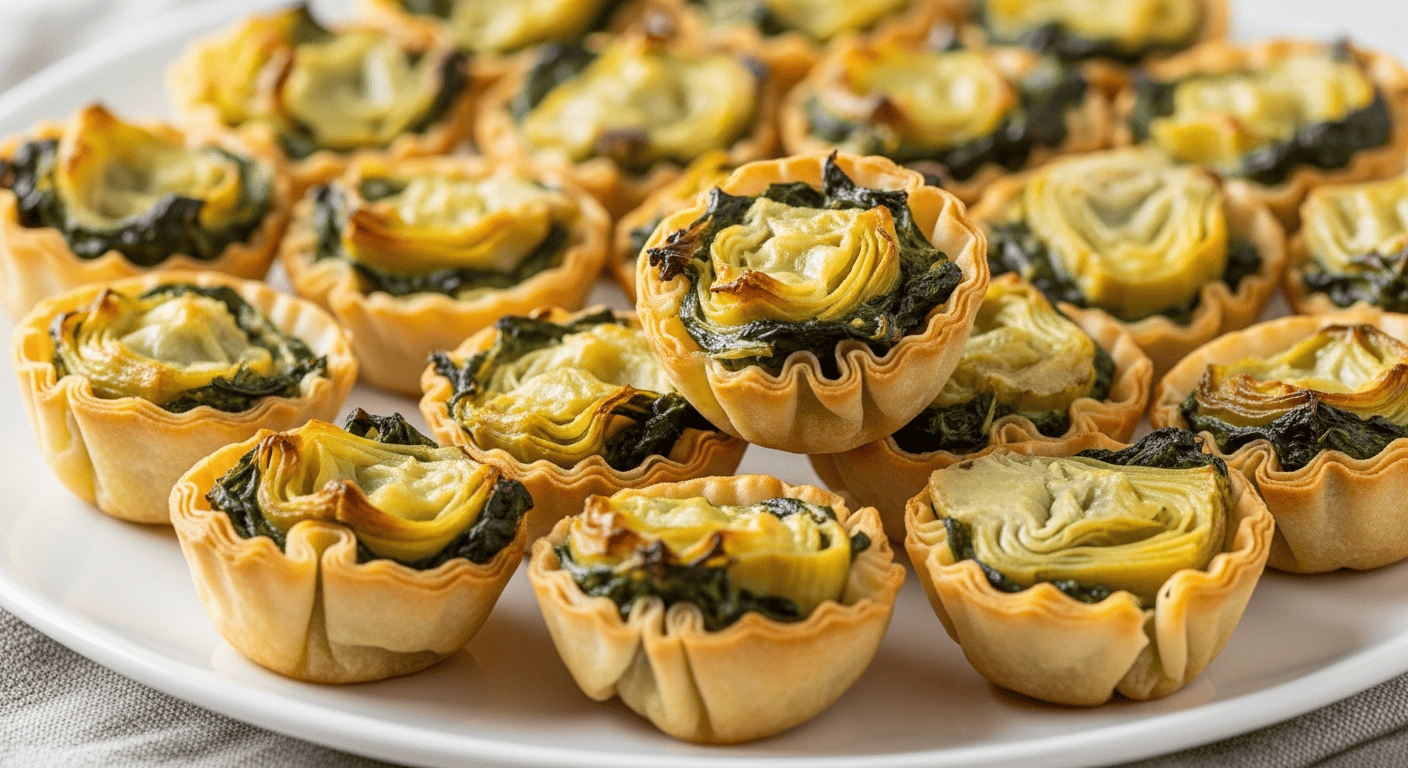
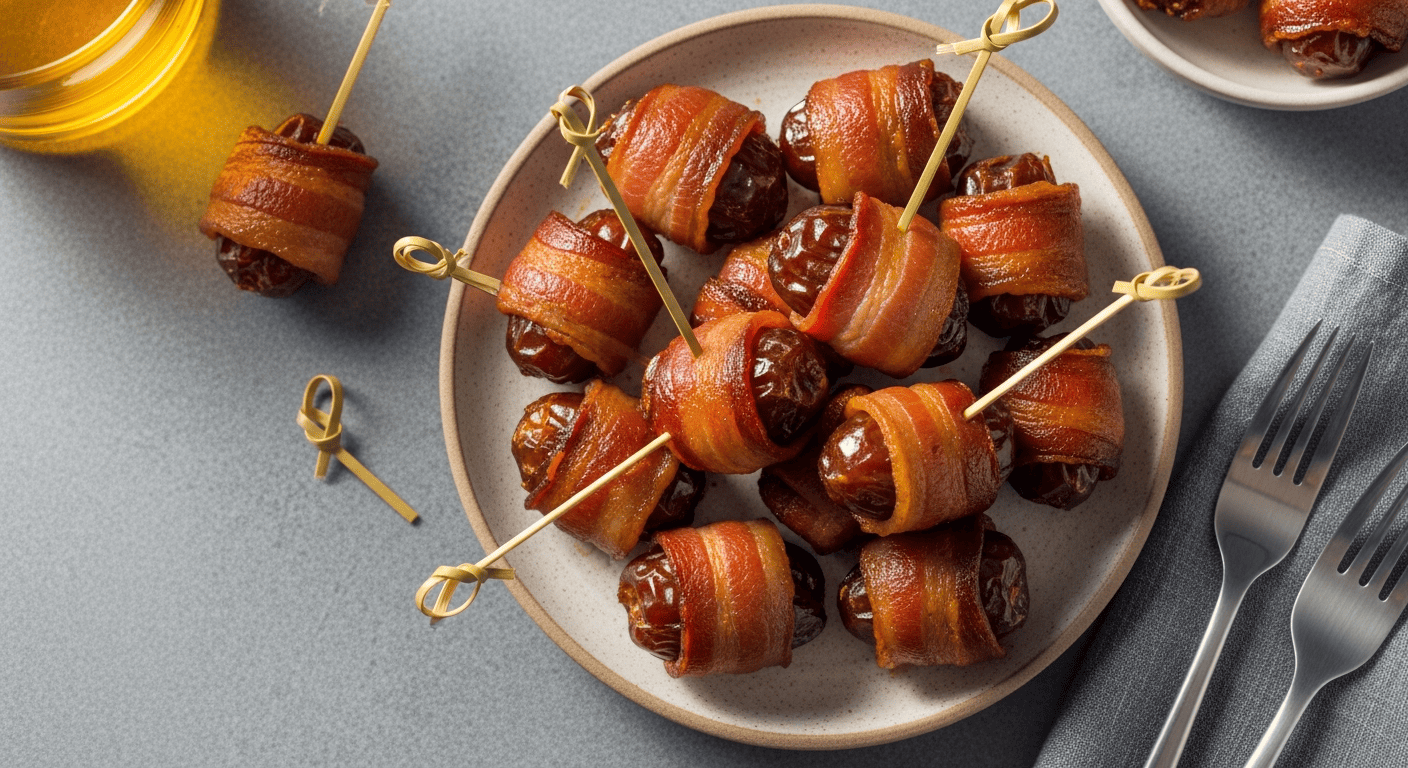
There’s a reason the appetizer that gets the most compliments is usually the one that spent twenty minutes in the oven unattended. Warm food smells louder than cold food — heat carries aroma molecules further and faster — and a kitchen that smells like melting cheese does half the hosting for you before a single guest arrives.
Small hot dishes served before a meal go back to 17th-century French service, where they were named for standing outside the formal sequence of courses — literally hors d’œuvre, “outside the work.” According to Britannica’s history of the hors d’oeuvre, these bites were designed specifically to be eaten in one or two mouthfuls while guests remained standing and talking — the exact job a warm baked appetizer still does at your table tonight.
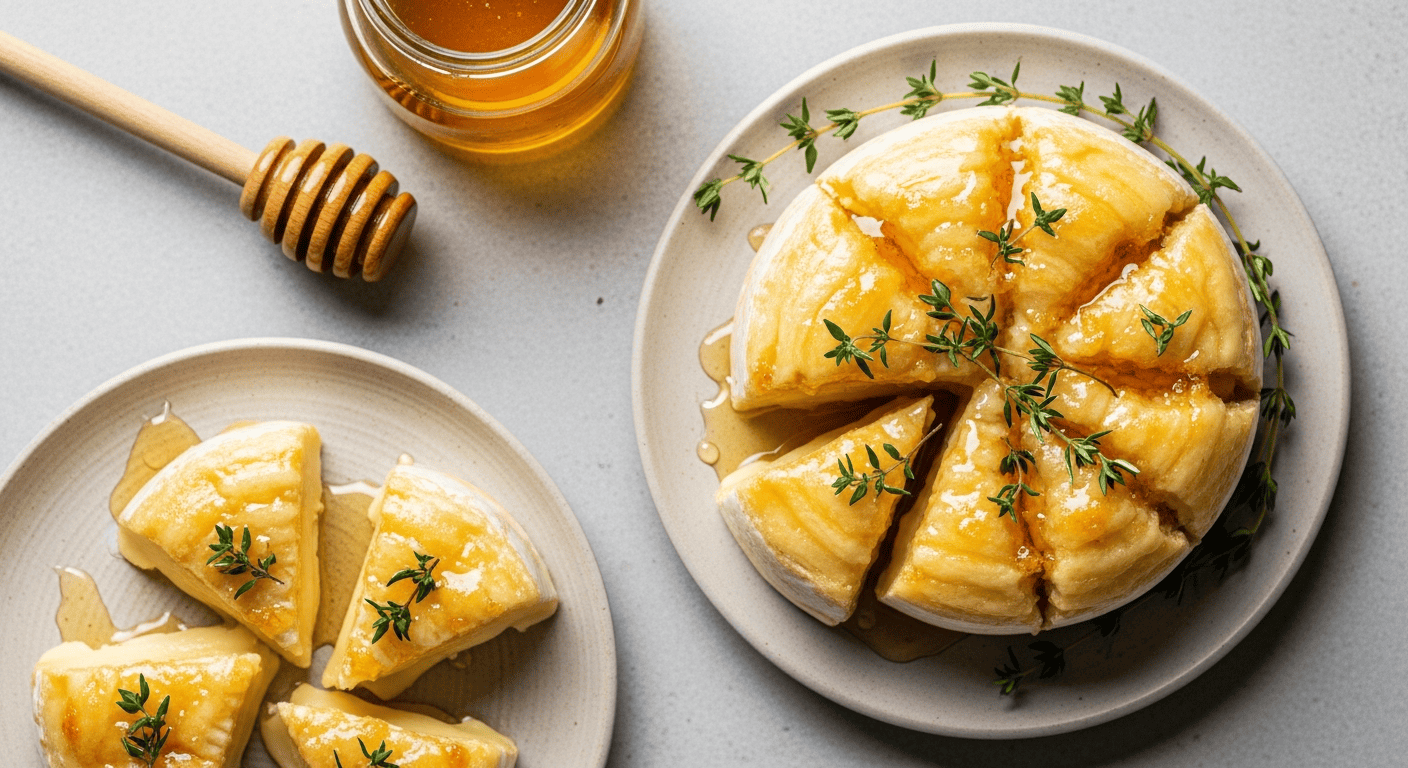
Nothing Touches the Stove — 4 Bites for Hot Days and Small Kitchens
Some of the best party food never sees a flame. It’s assembled, chilled, and served — which matters more than it sounds like on a hot afternoon, when the last thing you want is a warm kitchen and a dozen guests already in the house.
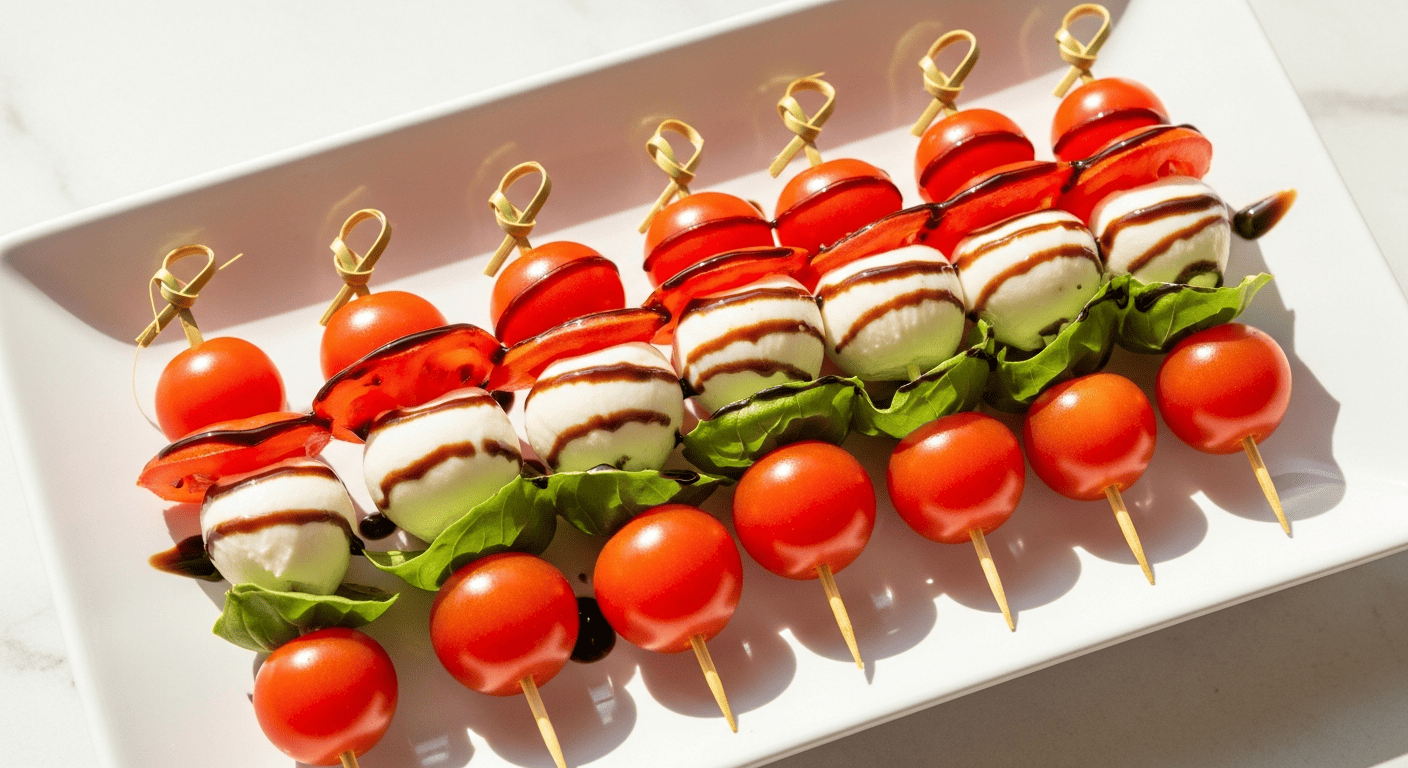
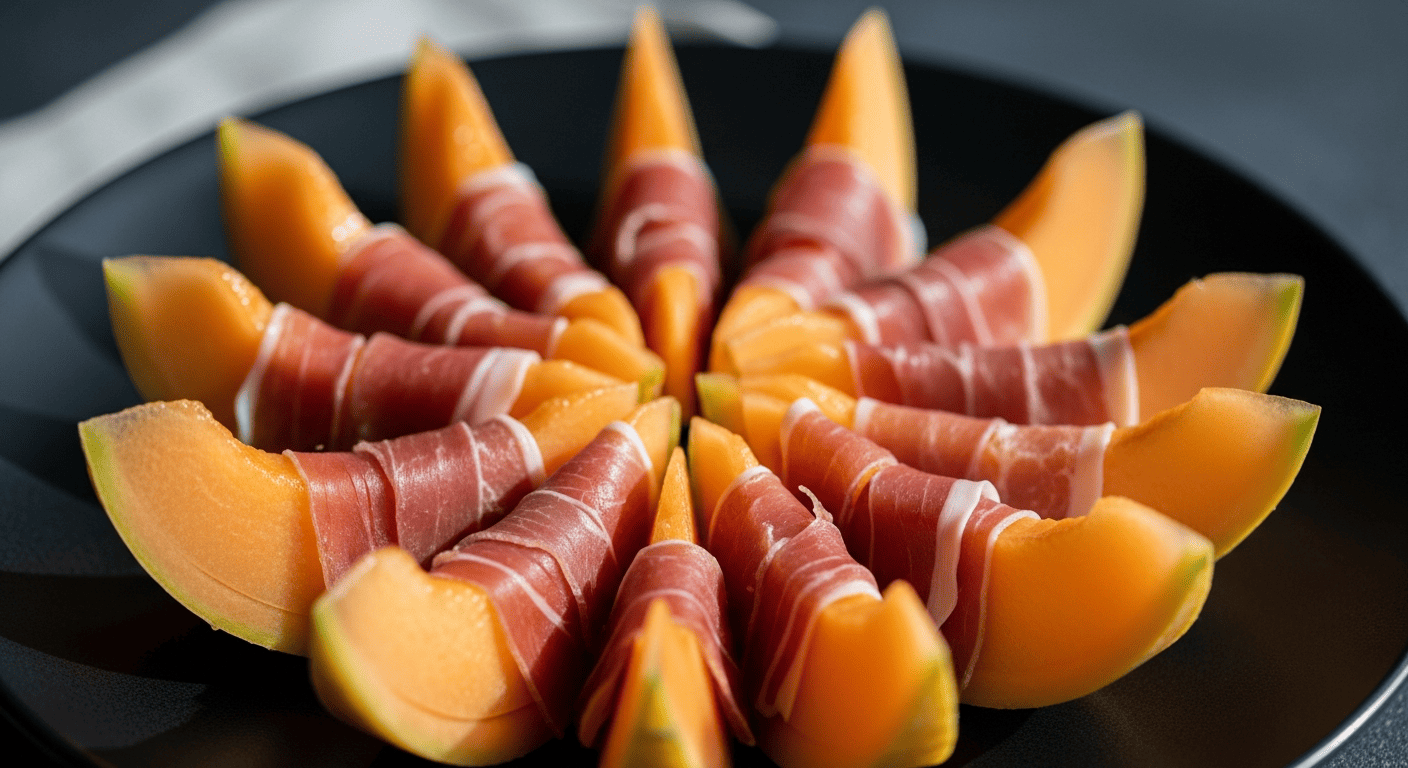
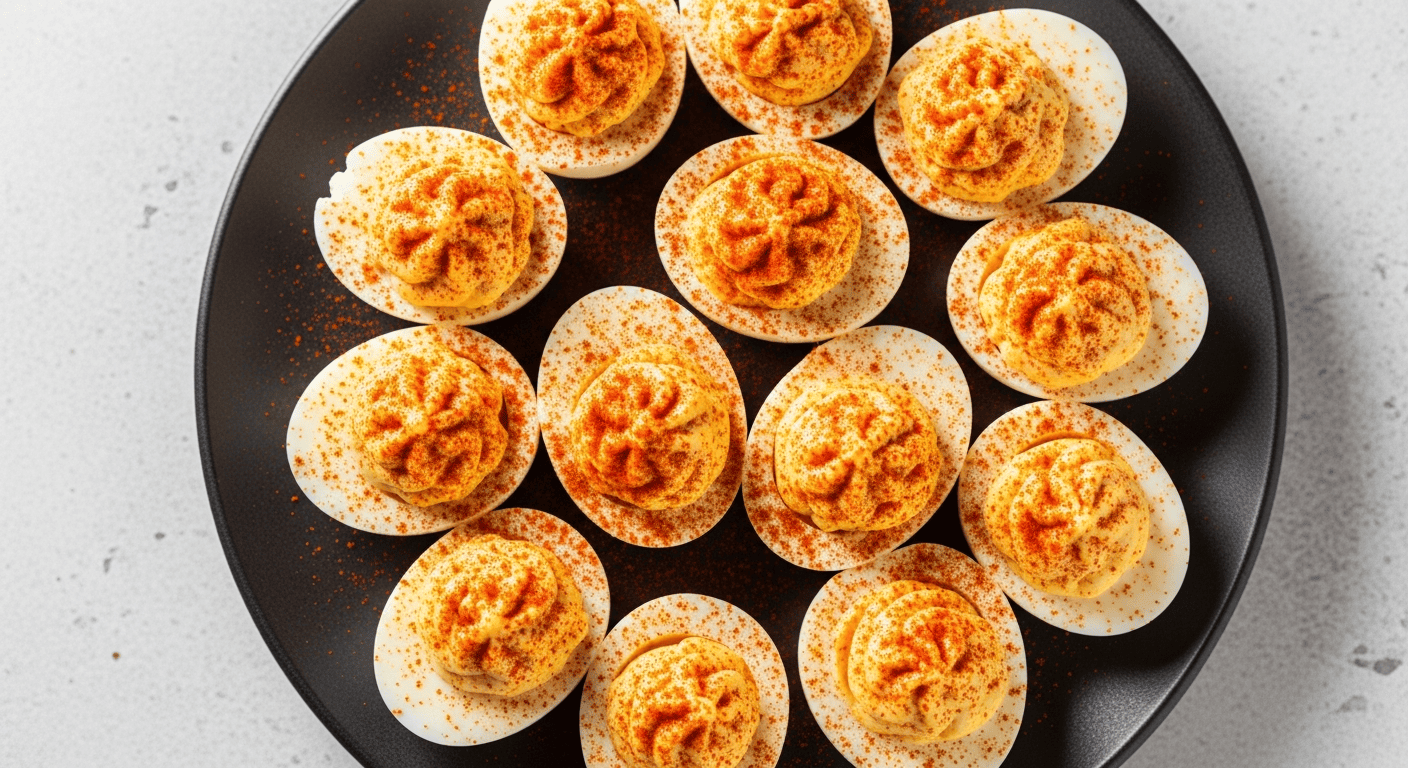
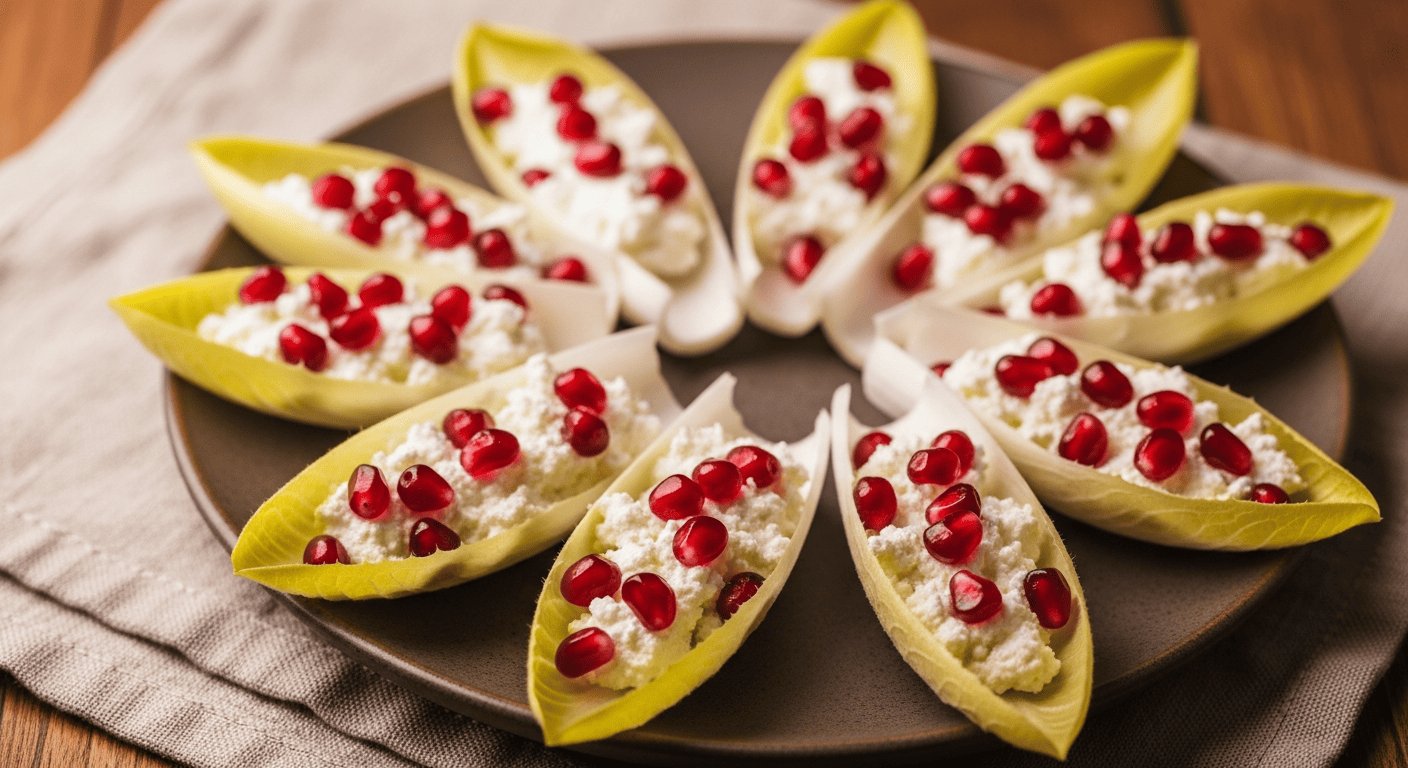
Britannica’s definition is precise about this: hors d’oeuvres are meant to be eaten in one or two bites while standing. If a guest needs a knife, a plate resting on a knee, or three separate bites to finish something, it’s drifted into “small course” territory. Cut everything on this list to that size before it hits the tray.
Built to Be Shared — Why One Bowl Does More Than Fifteen Plates
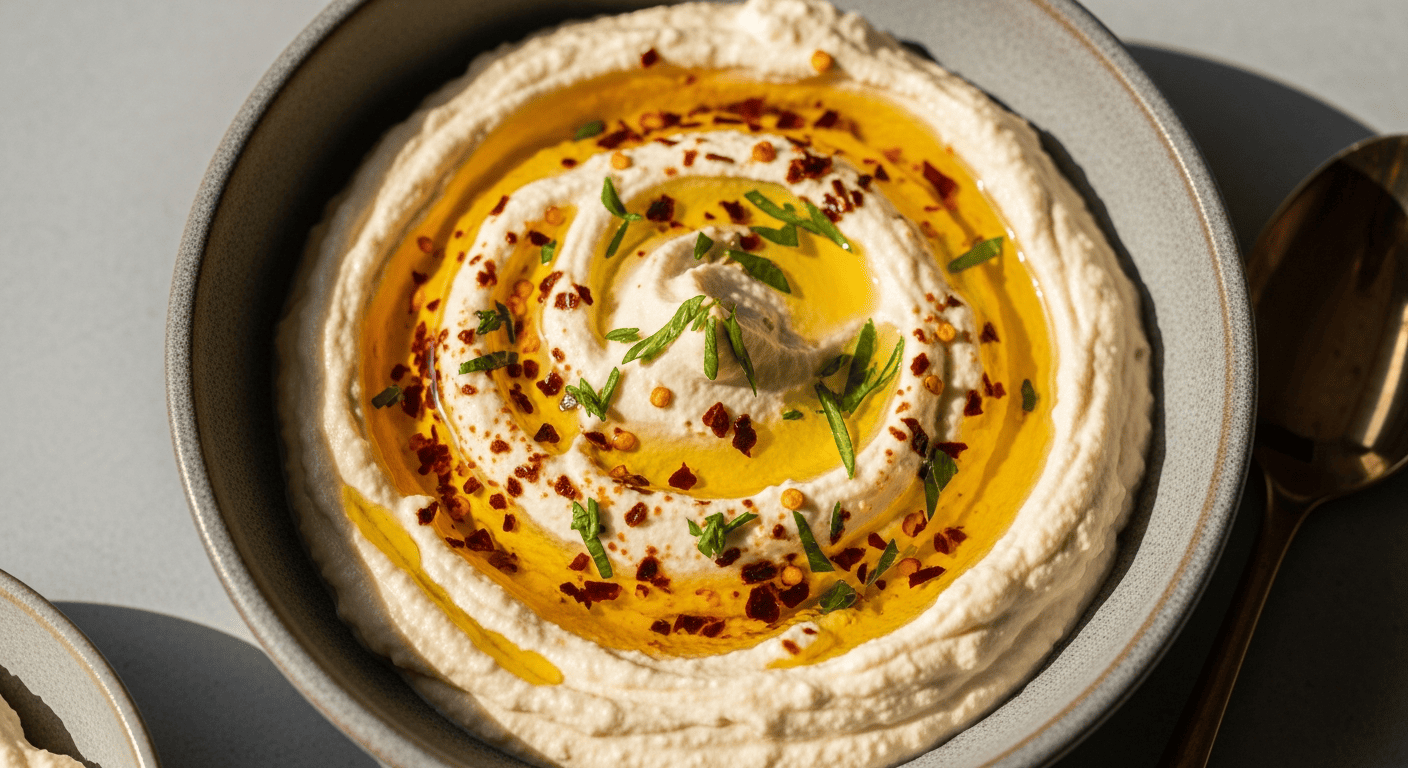
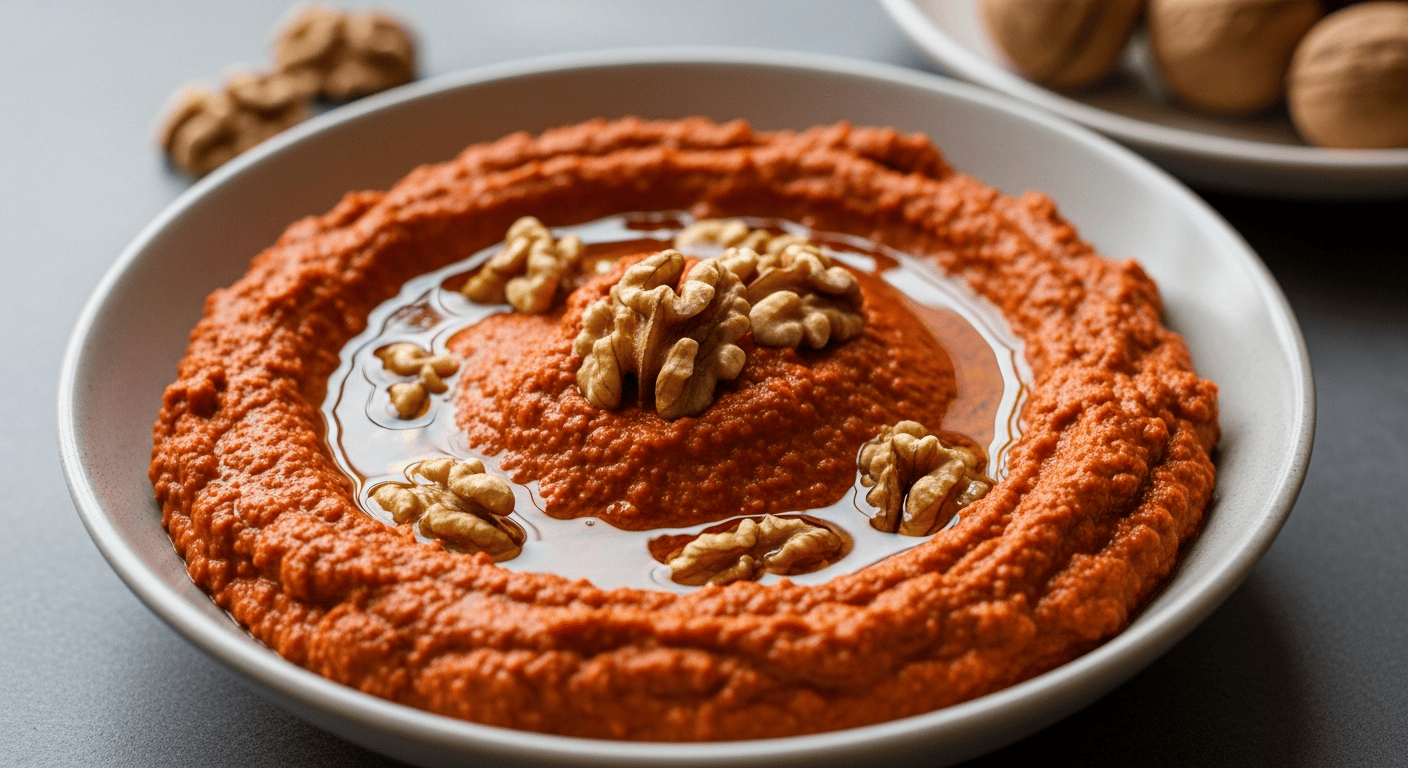
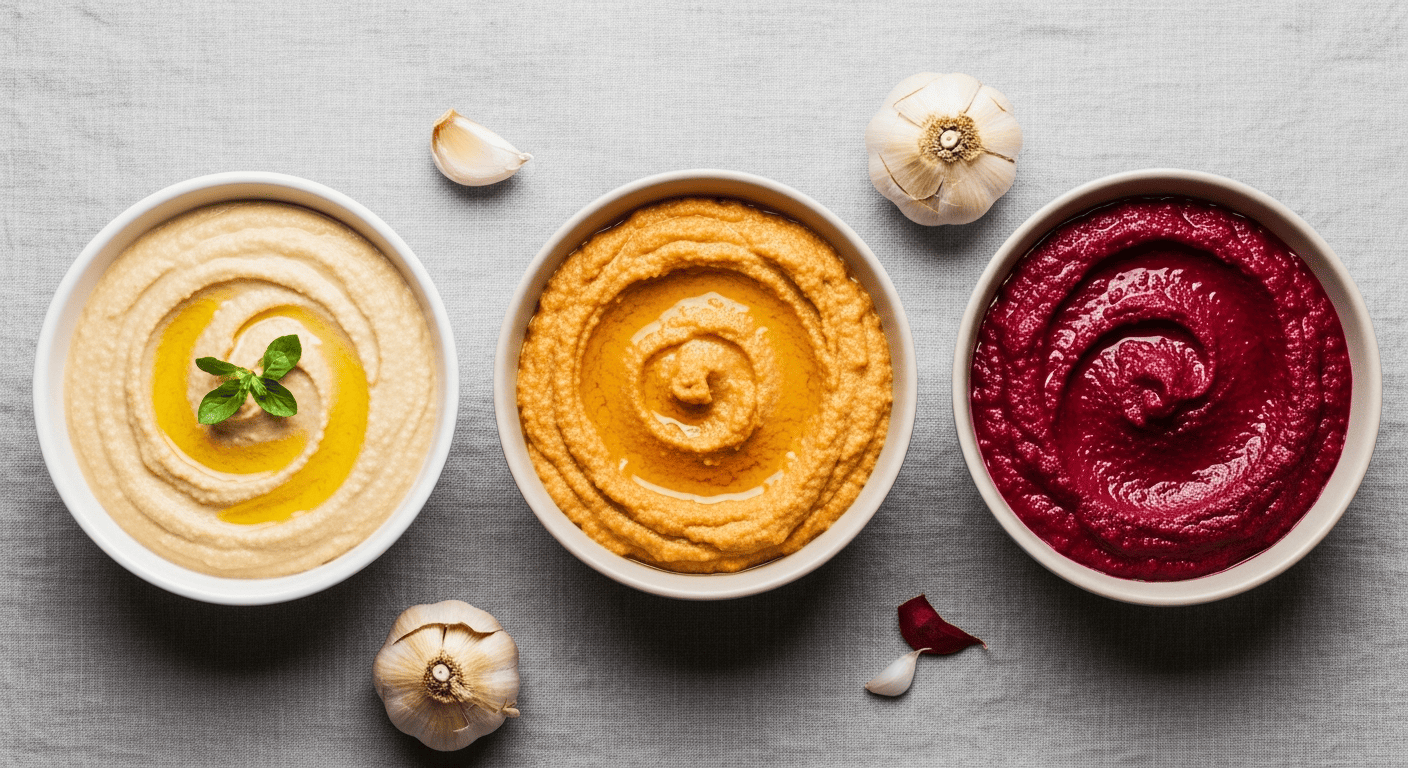
A dip is the laziest appetizer to make and, somehow, the one people gather around longest. Part of that is practical — dips require no last-minute cooking and travel well. Part of it is something older and less obvious.
A national survey conducted with Oxford psychologist Robin Dunbar found that people who eat socially report stronger wellbeing and wider support networks, and that 76% of respondents said sharing a meal was a genuinely good way to bring people closer together. Dunbar’s team argues communal eating may function as an evolved mechanism for social bonding.
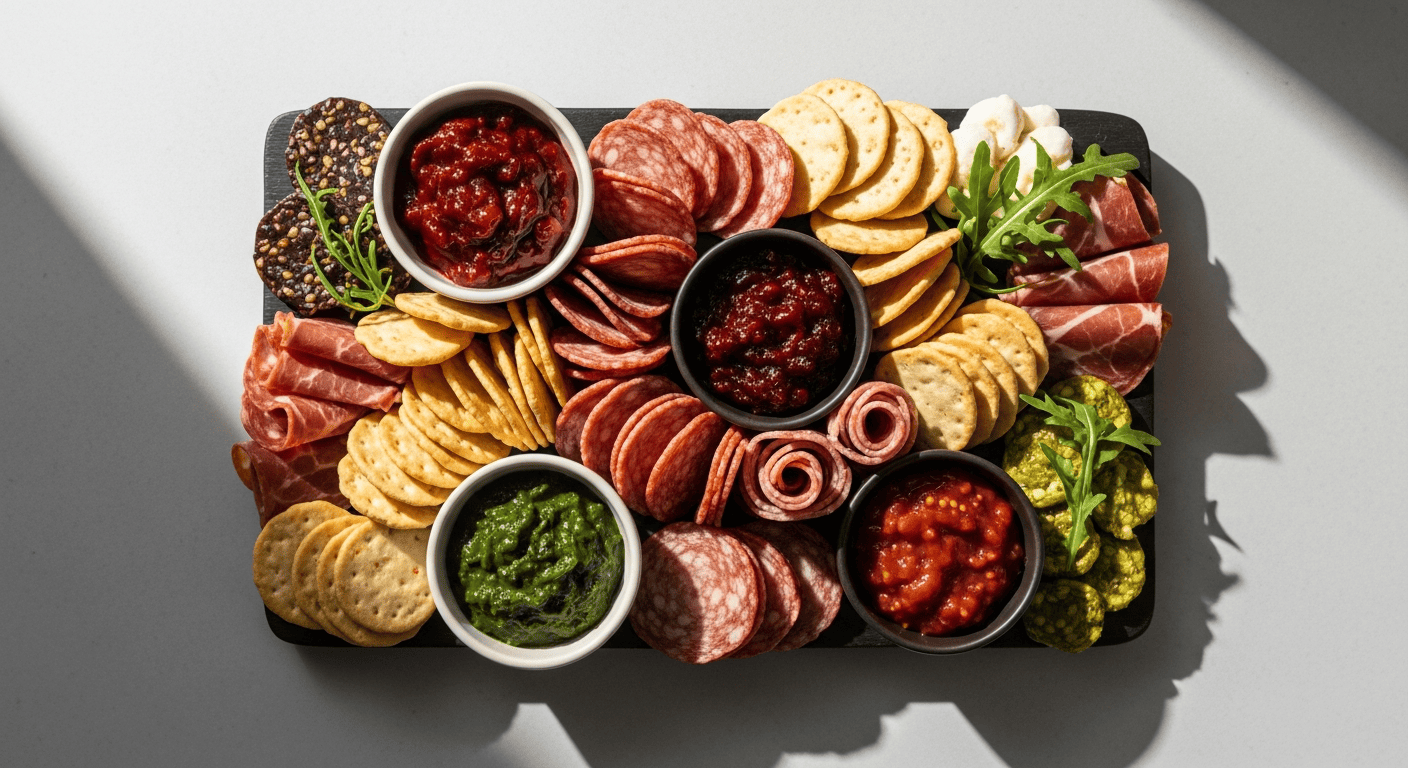
Separately, Oxford’s Crossmodal Research Laboratory found that diners rated identical food as tasting better — and were willing to pay more for it — when it was arranged with visual care rather than tossed together. The lesson transfers directly to a party board: it doesn’t need to be fancier. It needs to look like someone arranged it on purpose.
Made for Hands, Not Forks — 3 Favorites for a Moving Crowd
After Prohibition ended in the United States, the cocktail party became socially acceptable again — and hors d’oeuvres made the jump from the formal dinner table to a passed tray, meant to counter stronger drinks and keep a standing, mingling crowd fed. That’s the direct ancestor of everything in this category.
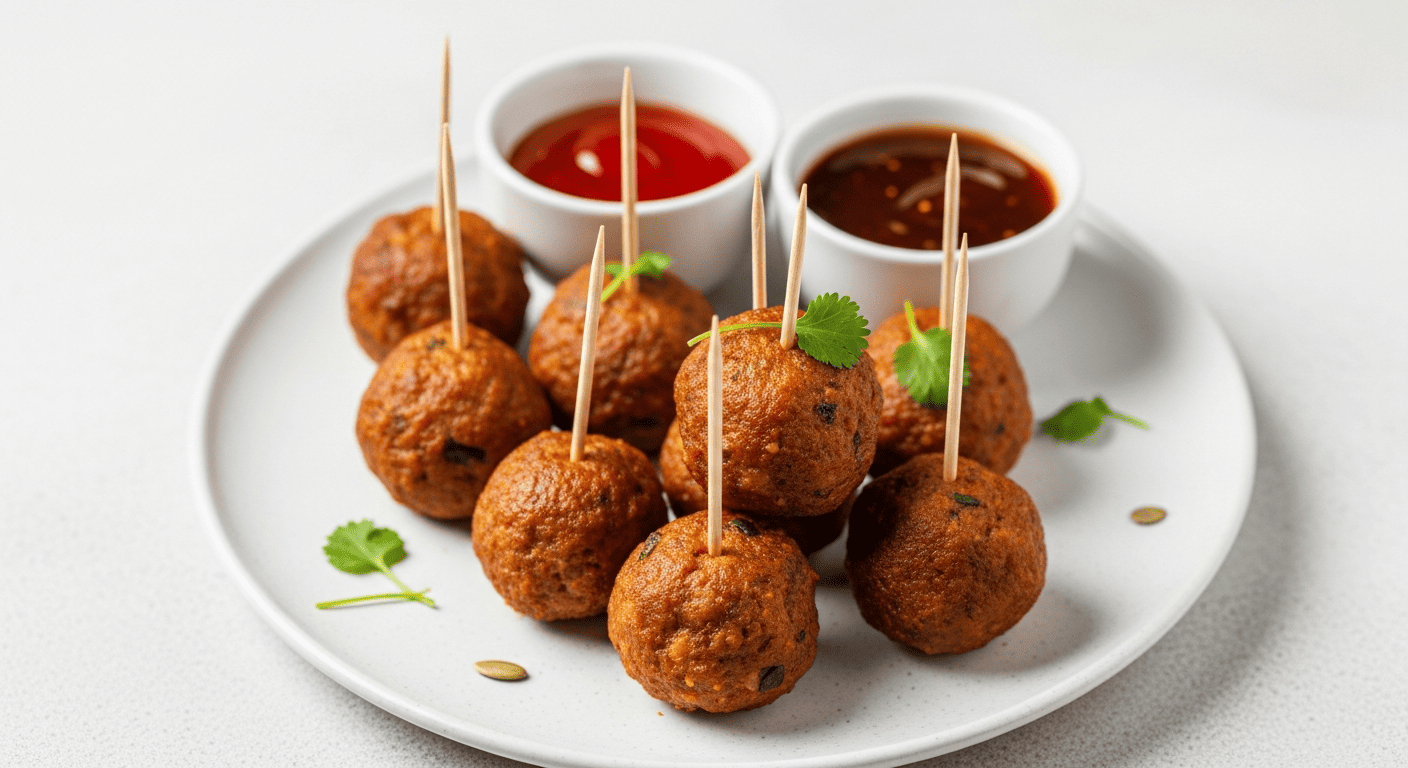
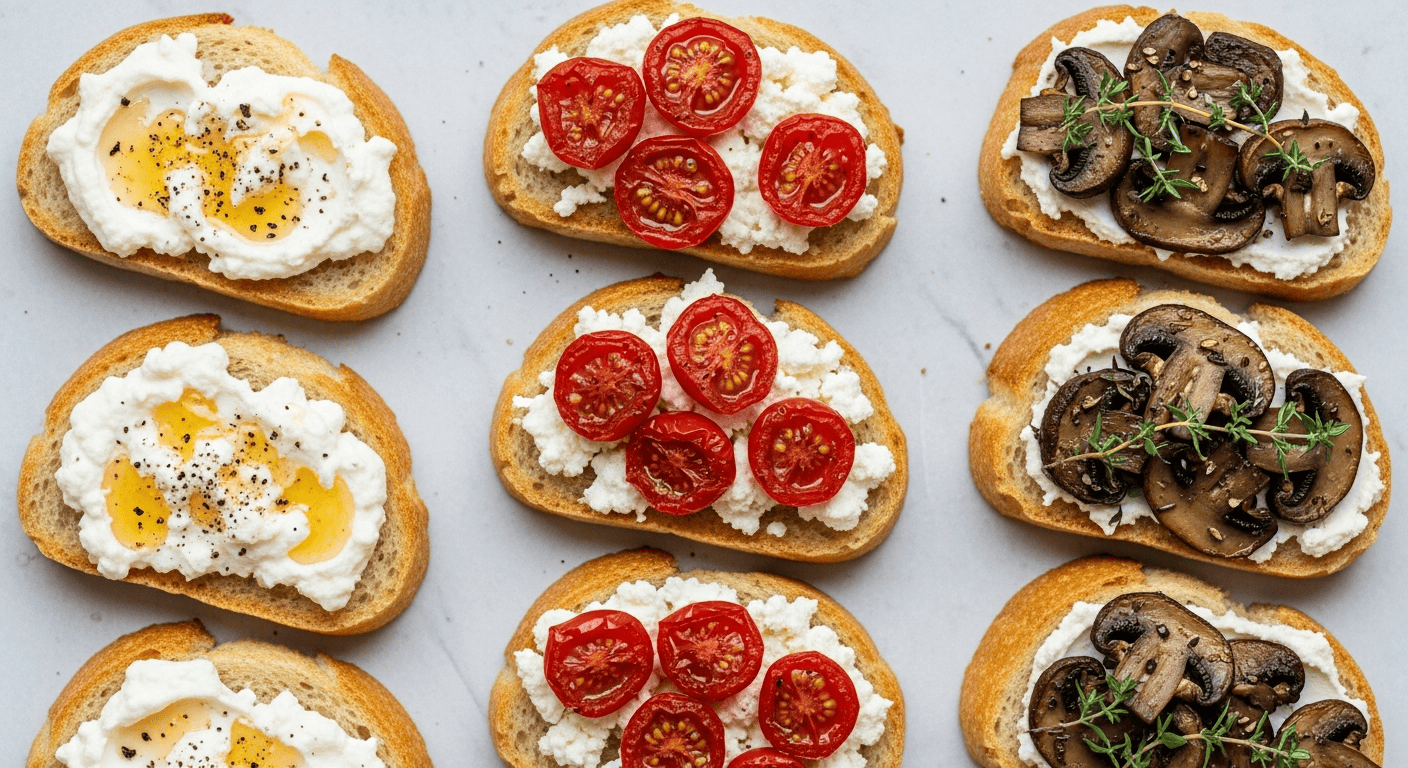
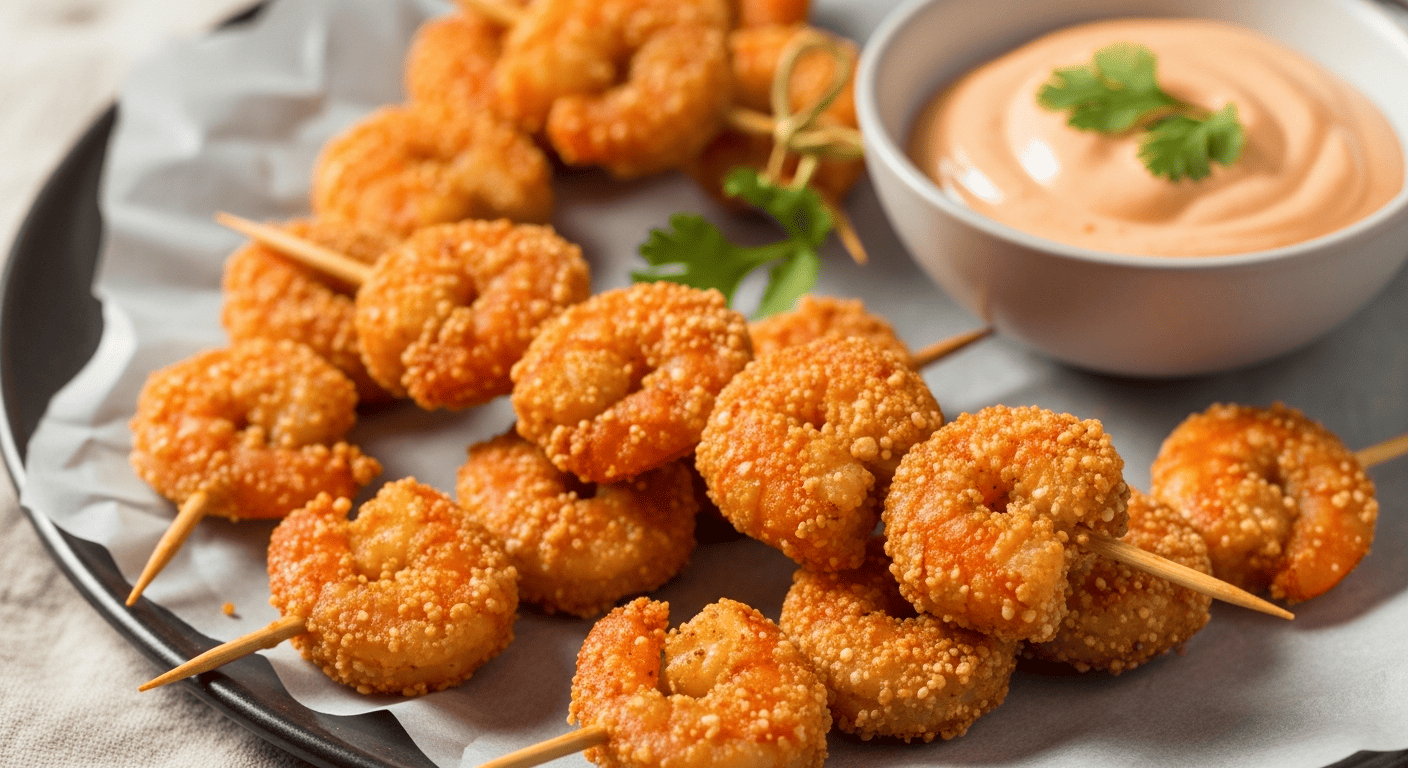
Meatballs, shrimp, and anything with dairy or eggs sit in the USDA’s “danger zone” — 40°F to 140°F — where bacteria multiply fastest. The guidance is simple: don’t leave perishable appetizers out longer than two hours (one hour if it’s above 90°F outside). Set a phone timer when the tray goes out.
How Far Ahead You Can Actually Prep
Maximum realistic make-ahead window before quality drops, by category. Hours, refrigerated.
3 Hosting Assumptions Worth Rethinking
The most stressful part of appetizers is usually the part that doesn’t need to be.
Appetizer FAQ
None of these fifteen recipes are complicated. That’s sort of the point. An appetizer was never supposed to be the hard part of hosting — it was invented to be the easy, standing-up, one-handed thing that keeps people fed and talking while the real meal, or the real conversation, catches up.
Pick one warm, one fresh, one shared, and one handheld. Set the timer for two hours. Everything else is just the party happening the way it’s supposed to.