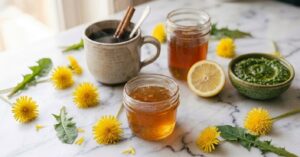
It’s been growing in your backyard this whole time — and it’s probably one of the most useful plants you’ll ever forage. From liver support to gut health, the roots go deep.
Okay, real talk — I used to pull dandelions out of my yard like it was my part-time job. Now? I’m out there harvesting them like they’re truffles. The benefits of dandelion root genuinely changed the way I think about foraging, and once you read this, I think you’ll understand the obsession.
If you’ve spent any time in the foraging world, you already know dandelions are more than just a pretty yellow flower. The whole plant is edible and useful — but the root? That’s where things get really interesting.
We’re talking liver support, gut health, prebiotic fiber, antioxidants, anti-inflammatory compounds… the list keeps going. Dandelion root (Taraxacum officinale) has been used in traditional medicine across cultures for centuries — and modern research is starting to catch up with what herbalists have known forever.
What Even Is Dandelion Root?
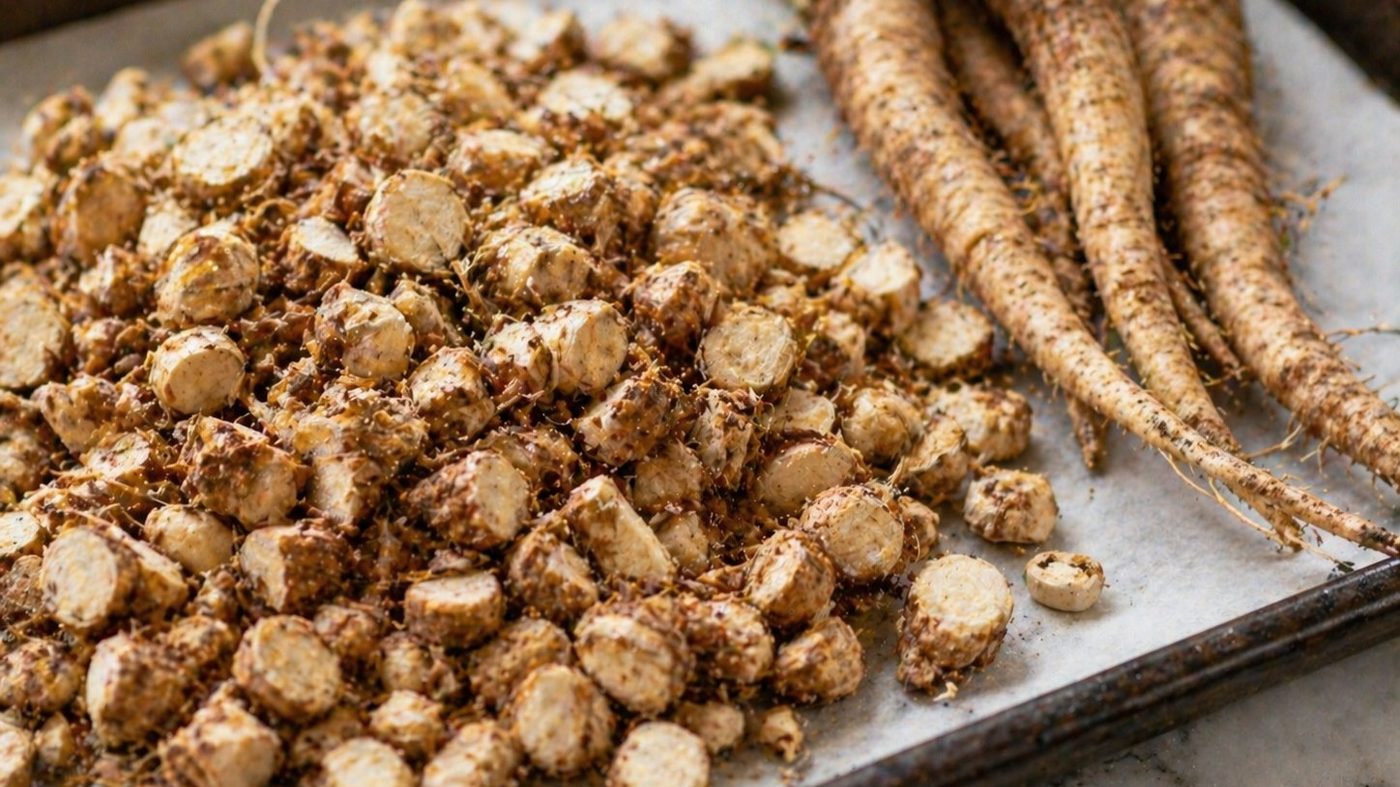
The dandelion root is the underground taproot of the Taraxacum officinale plant — that dandelion growing everywhere from your garden path to sidewalk cracks to open meadows. The root can grow surprisingly deep (sometimes 12+ inches), and it stores a concentrated treasury of nutrients, bitter compounds, and bioactive plant chemicals.
Fresh roots look like small, pale parsnips and smell faintly earthy and sweet. Dried and roasted, they turn dark and develop a rich, coffee-like aroma — which is actually how dandelion root coffee gets its magic.
The root’s composition changes significantly by season. In fall, roots are packed with inulin (a prebiotic fiber) and taste sweeter and milder. In spring, the inulin converts to fructose, making roots more bitter — but still deeply medicinal.
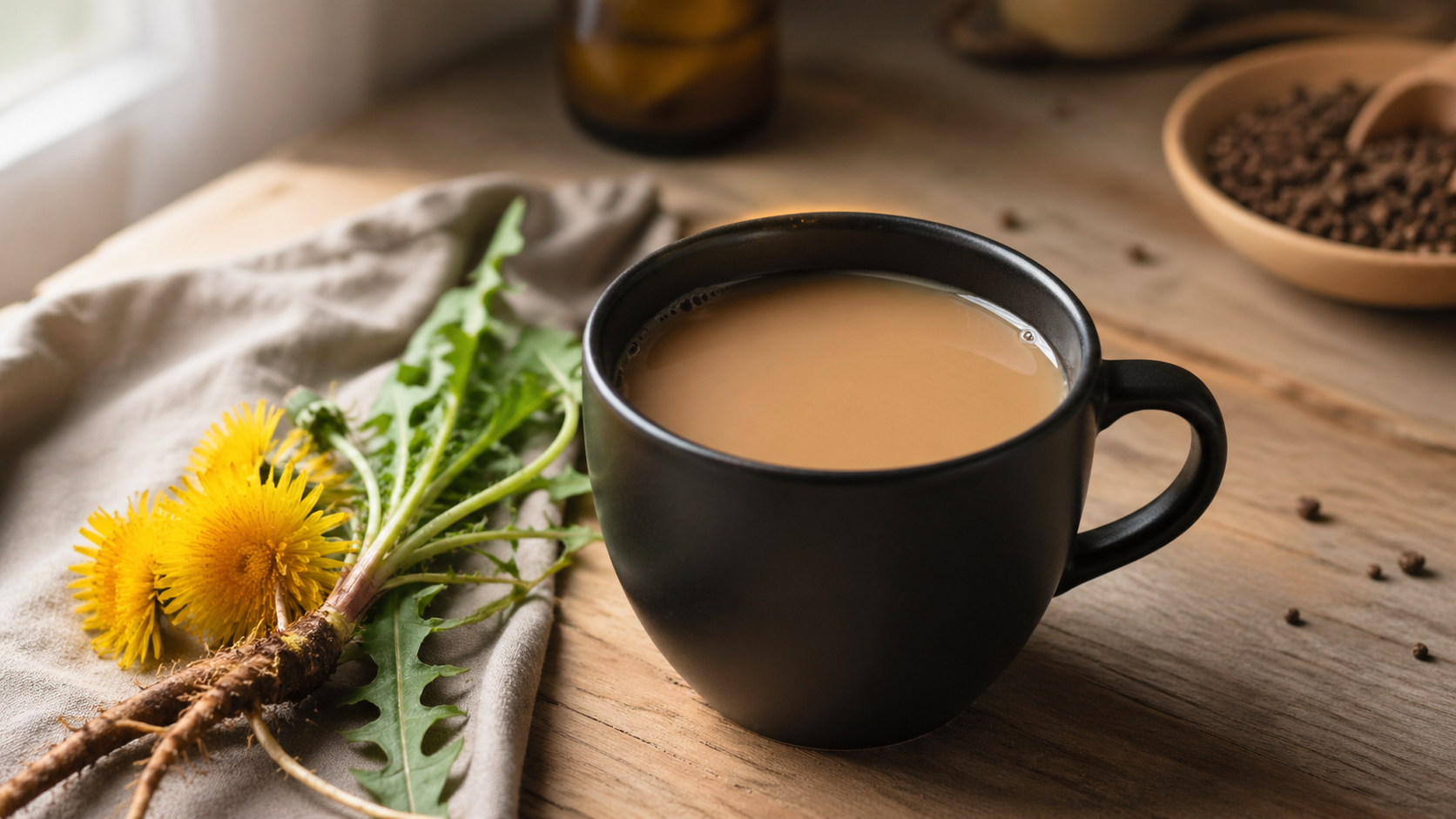
Dandelion Root Coffee — The Cozy Caffeine-Free Drink You’ll Actually Want Every Morning
Warm, earthy, slightly nutty, with a roasted depth that scratches exactly the right itch. Completely caffeine-free, made from foraged roots.
Read the Recipe →
The Top Benefits of Dandelion Root
- Liver support & bile stimulation — bitter compounds like taraxacin help the gallbladder secrete bile for better fat digestion
- Prebiotic gut health — fall roots contain up to 40% inulin by dry weight, feeding your beneficial gut bacteria
- Natural diuretic that replaces potassium — unlike pharmaceutical options, dandelion replenishes what it helps you lose
- Anti-inflammatory polyphenols — chicoric acid, caffeic acid, and luteolin with demonstrated anti-inflammatory activity
- Blood sugar regulation — inulin and chicoric acid may help slow glucose absorption and improve insulin sensitivity
- Packed with nutrients — iron, calcium, potassium, zinc, vitamins A, C, K, and B-complex vitamins
1. It’s One of the Best Foraged Foods for Liver Health
The liver benefit is the most talked-about reason people reach for dandelion root, and for good reason. The root contains taraxacin and taraxacerin — bitter compounds that stimulate bile secretion from the gallbladder. More bile means better fat digestion and smoother processing of fat-soluble nutrients.
Traditional herbalists have used dandelion root for generations as a “hepatic” herb — something that supports liver function and helps clear congestion in the digestive system. While we’re still waiting on more large-scale human trials, animal studies and preliminary research have been genuinely encouraging, and centuries of consistent use across multiple herbal traditions carries serious weight.
For anyone who forages and eats a varied wild diet, keeping your liver running well is essential. Think of dandelion root as a gentle, ongoing maintenance herb rather than a dramatic detox shortcut.
2. Gut Health: The Inulin Factor Is a Big Deal
Here’s something that blew my mind when I first learned it: dandelion root can contain up to 40% inulin by dry weight in the fall. Inulin is a type of soluble fiber that your digestive enzymes cannot break down — but your gut bacteria will absolutely feast on it.
This makes dandelion root a potent prebiotic — food for your existing beneficial microbes, helping them crowd out less helpful bacteria. A well-fed microbiome improves digestion, supports immune function, affects mood through the gut-brain axis, and influences how efficiently you absorb nutrients from food.
The fall-harvested root also tends to taste noticeably sweeter and milder thanks to that inulin content — which makes it better for roasting and adding to soups and stews. The spring root, leaner and more bitter, is ideal for tinctures and decoctions.
💡 Forager’s Dandelion Root Toolkit
- Roasted dandelion root coffee — Chop, roast at 350°F until dark and fragrant, then simmer and strain. No caffeine, all the cozy.
- Root decoction — Simmer cleaned, chopped roots in water for 20 minutes. Earthy, slightly bitter, deeply grounding. Add raw honey to balance.
- Roasted root pieces in soups — Treat like parsnip or roasted carrot. Adds depth and slight bitterness that complements rich broths beautifully.
- Dried and powdered — Add to smoothies, energy balls, or mix into flour for baked goods with a nutritional boost.
- Raw young root — Shaved thin and added to salads. Peppery, bold, and surprisingly good with bitter greens.
- Tincture — Let root pieces steep in food-grade alcohol for 4–6 weeks. A few drops in water or tea is a traditional herbal approach.
3. Anti-Inflammatory Compounds That Actually Do Something
Dandelion root contains a range of polyphenols — including chicoric acid, caffeic acid, and luteolin — that have demonstrated anti-inflammatory activity in laboratory and animal studies. These compounds work by modulating certain inflammatory signaling pathways, particularly NF-κB.
Chronic, low-grade inflammation is linked to basically every modern health issue from joint pain to cardiovascular disease to metabolic syndrome. A whole-food foraging lifestyle already helps address this through dietary diversity — and dandelion root adds another anti-inflammatory tool to the mix.
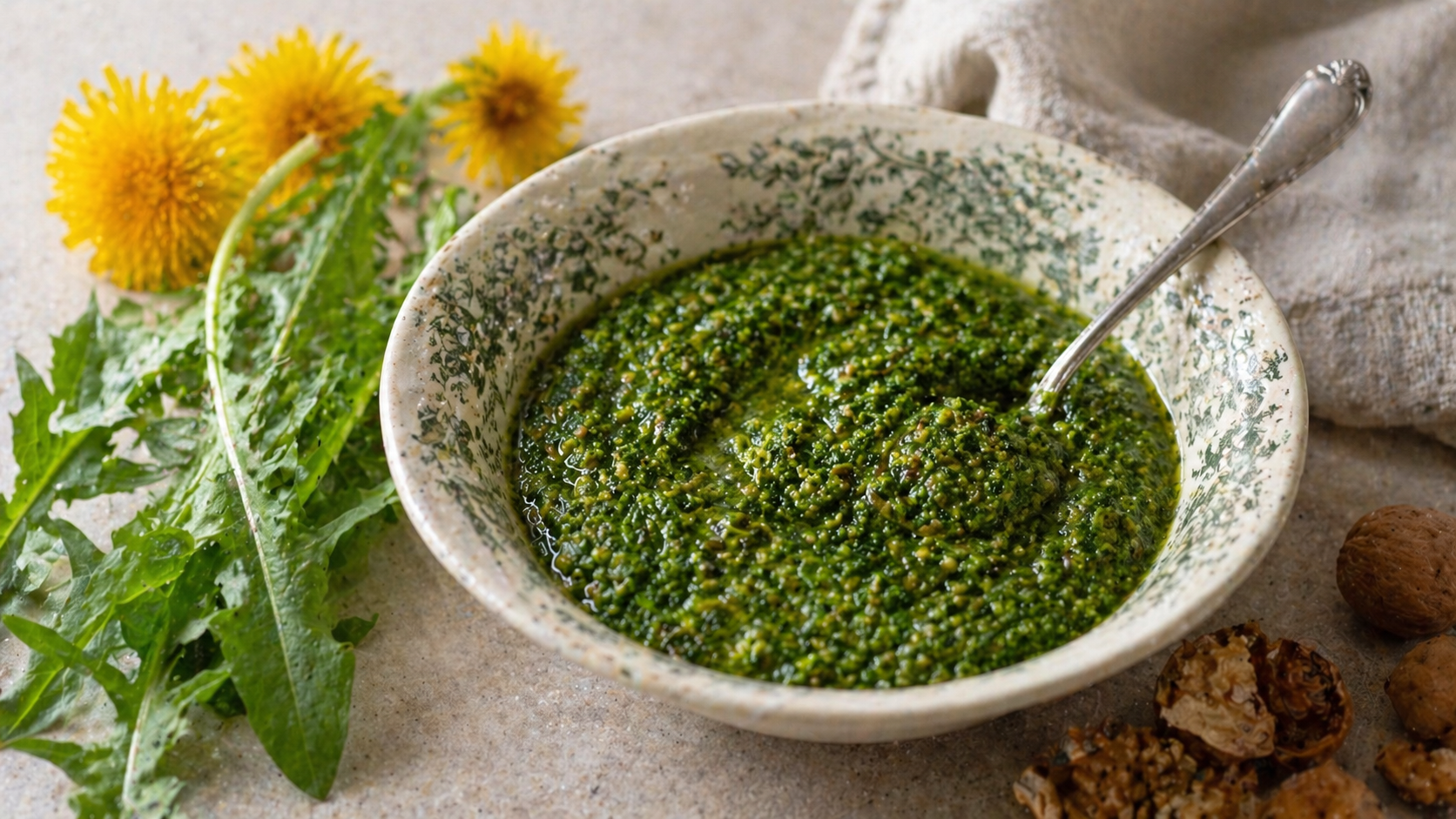
Dandelion Greens Pesto — The Bold, Earthy Sauce That Makes Everything Better
Earthy, bold, slightly bitter in the most interesting way. Ten minutes, a food processor, and you’ll want to put it on everything.
Read the Recipe →
4. A Natural Diuretic That Won’t Tank Your Potassium
One of the things herbalists have historically loved about dandelion (both root and leaf) is that it’s a gentle, natural diuretic — meaning it helps the kidneys filter and expel excess fluid. This is useful for bloating, edema, and high blood pressure related to fluid retention.
What makes it particularly interesting compared to pharmaceutical diuretics? Dandelion naturally contains potassium, so it replaces what it helps you lose. Most conventional diuretics strip potassium from your system, requiring supplementation. The dandelion just handles it. Nature is efficient like that.
5. Blood Sugar & Metabolic Health Support
The chicoric acid and sesquiterpene lactones in dandelion root appear to influence how the body manages blood glucose — specifically by slowing carbohydrate absorption in the gut and potentially improving insulin sensitivity.
Inulin’s role here is also significant. Because it passes through the digestive system without being broken down into glucose, a high-inulin food like dandelion root creates minimal blood sugar impact while still feeling satisfying and filling — interesting for anyone managing blood sugar levels.
When Is the Best Time to Forage Dandelion Root?
This matters more than most beginners realize. The nutritional and flavor profile shifts dramatically throughout the year:
| Season | Root Quality | Best Used For |
|---|---|---|
| 🌱 Early spring | Leaner, bitter, medicinal | Decoctions, tinctures — peak bitter compounds |
| ☀️ Summer | Depleted, fibrous | Skip the root — harvest flowers for syrup instead |
| 🍂 Fall (after first frost) | Fat, sweet, inulin-rich | Roasting, coffee, cooking — absolute prime season |
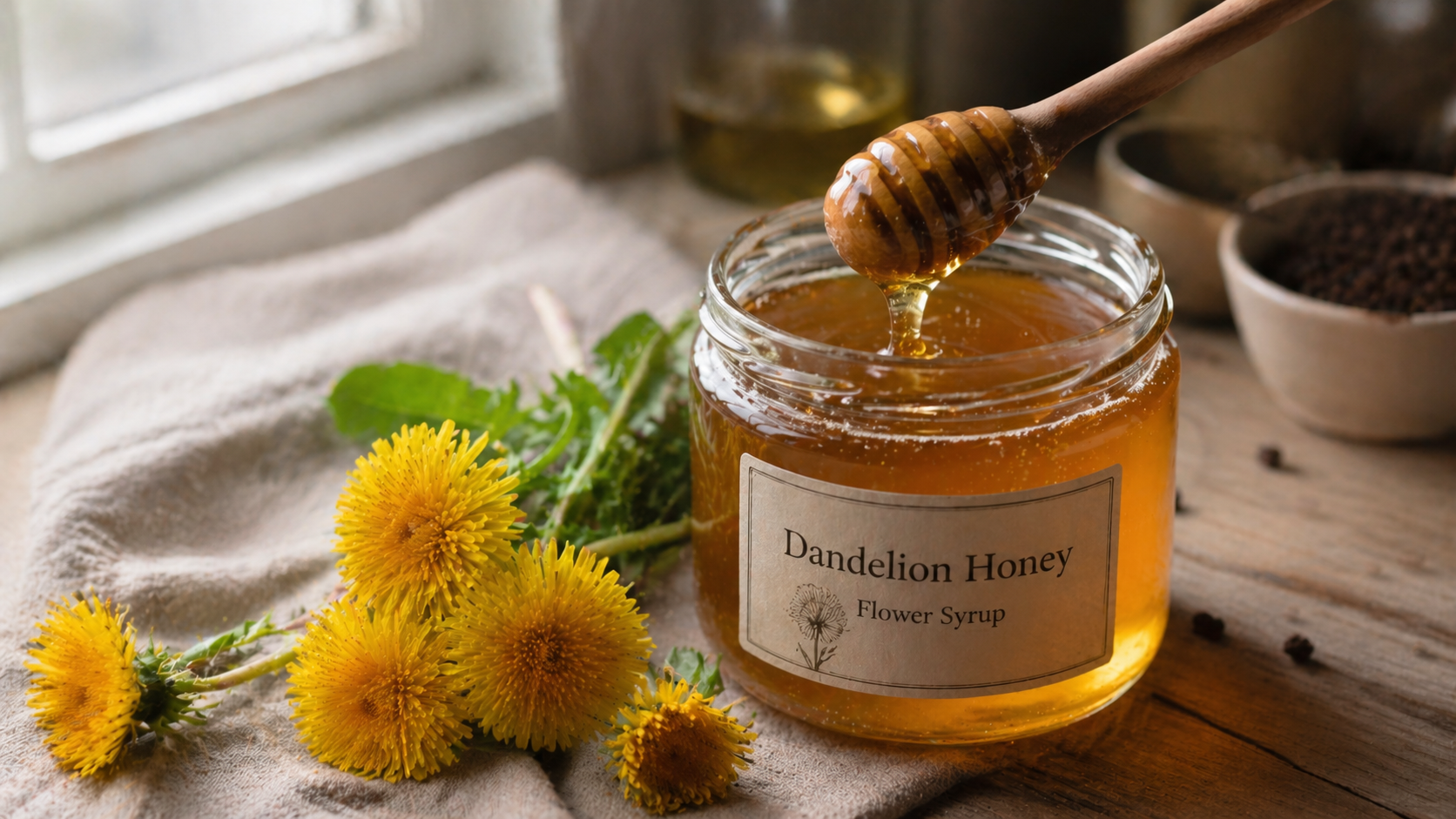
Dandelion Honey Flower Syrup — The Golden Jar of Spring You’ll Want on Absolutely Everything
Sweet, lightly floral, with a subtle sunshine warmth that real honey honestly doesn’t always have. Made from flowers most people step over.
Read the Recipe →
Foraging Dandelion Root Safely: What You Need to Know
Good news: dandelion is one of the safest, most foolproof foraging plants you can start with. There’s no dangerous lookalike in most regions — the main things to watch for are environmental contamination issues.
⚠️ Safety Checklist
- Avoid roadside verges — road runoff and exhaust deposits accumulate in the soil and the plant will absorb them
- Avoid treated lawns — herbicides, pesticides, and synthetic fertilizers are bioaccumulated by dandelion roots
- Skip industrial areas — anywhere near storm drains, factories, or heavily trafficked roads
- Best spots — your own untreated lawn, meadows away from roads, woodland edges, established food forests
- If foraging in public parks — research whether pesticide treatments happen there before harvesting
- Medical note — check with a healthcare provider if you have gallbladder disease, bile duct blockage, or take blood thinners
The Real Reason Foragers Love Dandelion Root
Here’s the thing nobody really says out loud but is absolutely true: part of why dandelion root hits different for foragers is the relationship you develop with it.
When you know every patch on your walking route, when you start recognizing the difference between a fall-fat root and a spring-lean one, when you’ve roasted and simmered and tinctured your way through this one humble plant — you understand something about food that most people never get to experience.
Dandelion root isn’t a supplement you order from the internet. It’s a partnership with a plant that has been keeping humans nourished and well for millennia and is literally right outside your door. That’s kind of extraordinary if you let yourself think about it.
And once you’ve foraged your own roots, roasted them until your kitchen smells like a woodland café, and brewed yourself a cup on a cold fall morning — you will absolutely understand why I’m out there digging in my yard like a happy little goblin every October. 🌿
Frequently Asked Questions
Whether you’re deep in the foraging world or just starting to pay attention to what’s growing around you, dandelion root is genuinely one of the best plants to get to know. The benefits are backed by both traditional use and growing scientific interest — and it’s accessible, sustainable, and delicious when you know what to do with it.
Go find a clean patch. Dig up a root. Smell it. Roast it. Make something. That’s where it starts. 🌿 Let me know in the comments what you make first!

Disclaimer: This post is for informational and culinary purposes only and does not constitute medical advice. Always forage responsibly from clean, unsprayed areas and consult a healthcare provider before using any plant medicinally, especially if you have existing health conditions or take medications.
Get new recipes in your inbox 🍋
No spam — just the good stuff, straight to you.